

New England Photography Guide: Best Places to Photograph

Long Exposure Photograph of Portland Head Light in Portland, Maine. ©2020 Chris Sidoruk
New England is one of the most diverse landscape photography regions in the United States.
Within a relatively small geographic area, photographers can capture dramatic Atlantic coastlines, historic lighthouses, mountain ridgelines, waterfalls, covered bridges, dense forests, and some of the best fall foliage landscapes in the country.
From Maine's rocky shoreline to Vermont's Green Mountains and Connecticut's coastal parks, New England offers an incredible variety of photography opportunities throughout every season.
But the best images rarely come from simply visiting popular locations.
Successful New England landscape photography is about understanding:
where to photograph
when conditions are best
how seasons change each location
how weather transforms the scene
which gear helps you adapt quickly
This guide breaks down the best places to photograph in New England, the best seasons to visit, essential landscape photography gear, and practical techniques for creating stronger images throughout the region.
Based on years of photographing locations throughout Connecticut, Massachusetts, Maine, Vermont, New Hampshire, and beyond, this guide focuses on real-world shooting conditions—not just a list of famous locations.
| Region | Best For | Best Season | Photography Style |
|---|---|---|---|
| Maine Coast | Lighthouses, ocean landscapes | Summer/Fall | Coastal + Long Exposure |
| White Mountains NH | Peaks, foliage, sunrise views | Fall | Mountain Landscape |
| Vermont Green Mountains | Fall colors, valleys | Early-Mid October | Scenic Landscapes |
| Berkshires MA | Mountains + foliage | Mid-Late October | Fine Art Landscape |
| Connecticut Coast | Beaches, sunsets, shoreline | Summer/Fall | Coastal Photography |
Maine Coast
Best For: Lighthouses, ocean landscapes
Best Season: Summer/Fall
Photography Style: Coastal + Long Exposure
White Mountains NH
Best For: Peaks, foliage, sunrise views
Best Season: Fall
Photography Style: Mountain Landscape
Vermont Green Mountains
Best For: Fall colors, valleys
Best Season: Early-Mid October
Photography Style: Scenic Landscapes
Berkshires MA
Best For: Mountains + foliage
Best Season: Mid-Late October
Photography Style: Fine Art Landscape
Connecticut Coast
Best For: Beaches, sunsets, shoreline
Best Season: Summer/Fall
Photography Style: Coastal Photography
Quick Answer: Where Are the Best Photography Locations in New England?
The best New England photography locations depend on what you want to capture.
For coastal photography, Maine's rocky coastline, Portland Head Light, Acadia National Park, Cape Cod, and Connecticut shoreline locations offer some of the strongest opportunities.
For fall foliage photography, Vermont's Green Mountains, New Hampshire's White Mountains, and western Massachusetts provide some of the most iconic autumn landscapes in the region.
For mountain photography, the White Mountains, Green Mountains, and Berkshire Mountains offer elevated viewpoints, atmospheric layers, and dramatic seasonal conditions.
For unique year-round photography, locations with changing weather—such as lighthouses, mountain overlooks, rivers, and forests—often produce the most memorable images.
Best New England Photography Locations by Category
| Photography Style | Best Locations | Best Season |
|---|---|---|
| Coastal Landscapes | Maine Coast, Acadia National Park, Portland Head Light, Cape Cod | Spring–Fall |
| Lighthouses | Portland Head Light, Nubble Lighthouse, New England coastal towns | Year-round |
| Fall Foliage | Vermont Green Mountains, White Mountains, Berkshires | Late September–October |
| Mountain Views | White Mountains, Mount Greylock, Green Mountains | Fall + Winter |
| Waterfalls & Rivers | Vermont, New Hampshire, Western Massachusetts, Connecticut | Spring + Fall |
| Drone Photography | Beaches, mountains, forests, scenic overlooks | Year-round |
| Long Exposure Photography | Coastlines, waterfalls, rivers, harbors | All seasons |
Coastal Landscapes
Best Locations: Maine Coast, Acadia National Park, Portland Head Light, Cape Cod
Best Season: Spring–Fall
Lighthouses
Best Locations: Portland Head Light, Nubble Lighthouse, New England coastal towns
Best Season: Year-round
Fall Foliage
Best Locations: Vermont Green Mountains, White Mountains, Berkshires
Best Season: Late September–October
Mountain Views
Best Locations: White Mountains, Mount Greylock, Green Mountains
Best Season: Fall + Winter
Waterfalls & Rivers
Best Locations: Vermont, New Hampshire, Western Massachusetts, Connecticut
Best Season: Spring + Fall
Drone Photography
Best Locations: Beaches, mountains, forests, scenic overlooks
Best Season: Year-round
Long Exposure Photography
Best Locations: Coastlines, waterfalls, rivers, harbors
Best Season: All seasons
New England Photography Overview: What Makes the Region Unique
New England is not one landscape.
It is a collection of dramatically different environments packed into a relatively small region.
A photographer can move from ocean cliffs to mountain summits, from historic villages to dense forests, all within a single trip.
The region is best understood through four major photography environments:
Coastal Photography: Maine, New Hampshire, Massachusetts, Connecticut, Rhode Island
New England's coastline is one of its greatest photographic strengths.
The combination of:
rocky shorelines
historic lighthouses
ocean waves
fog
dramatic storms
changing tides
creates endless opportunities for landscape photographers.
Best Subjects
Lighthouses
Ocean cliffs
Beaches
Harbor scenes
Long exposure seascapes
Sunrise compositions
Strong Locations
Maine coastline
Acadia National Park
Portland Head Light
Nubble Lighthouse
Cape Cod
Connecticut shoreline
Expect
Rapidly changing weather
Strong winds
Salt spray
Challenging exposure conditions
Limited golden hour windows depending on location
Coastal photography rewards preparation. The best conditions are often not the clearest days, but mornings with fog, clouds, and dramatic light.
Forest & Inland Photography: Connecticut, Massachusetts, Vermont, New Hampshire
The inland areas of New England provide some of the region's most recognizable landscapes.
Dense forests, rivers, covered bridges, and rolling hills create excellent opportunities for photographers looking for seasonal variety.
Best Subjects
Fall foliage
Covered bridges
Rivers and waterfalls
Forest trails
Rural landscapes
Historic towns
Strong Locations
Vermont countryside
Connecticut river valleys
Berkshires
White Mountain forests
Western Massachusetts
Expect
Layered compositions
Soft forest light
Rapid seasonal changes
Strong October color conditions
Unlike coastal photography, inland landscapes often benefit from slower, more deliberate compositions.
Mountain Photography: New Hampshire, Vermont, Maine, Massachusetts
The mountains of New England offer some of the most dramatic landscape photography in the Northeast.
Although they are not the tallest mountains in the country, their combination of elevation, forests, weather, and seasonal change creates powerful compositions.
Best Subjects
Sunrise ridge lines
Mountain layers
Cloud inversions
Fall foliage valleys
Winter landscapes
Strong Locations
White Mountains, New Hampshire
Green Mountains, Vermont
Mount Greylock, Massachusetts
Western Maine mountains
Expect
Rapid weather changes
Fog and haze
Limited visibility
Strong seasonal differences
Mountain photography in New England is often about patience. The best images frequently happen when conditions are changing rather than perfectly clear.
Seasonal Photography Strategy for New England
One of the biggest advantages of photographing New England is that every season creates a completely different environment.
Instead of asking:
"What is the best location?"
A better question is:
"What location matches the season and conditions I want to photograph?"
| Season | Best Photography Subjects | Strongest Regions |
|---|---|---|
| Spring | Waterfalls, rivers, fresh greenery, mountain runoff | Vermont, New Hampshire, Connecticut |
| Summer | Beaches, coastal towns, sunsets, ocean scenes | Maine, Massachusetts, Rhode Island, Connecticut |
| Fall | Foliage, mountain views, scenic roads | Vermont, New Hampshire, Berkshires |
| Winter | Snow landscapes, storms, minimalist scenes | Mountains + Coast |
Spring
Best Photography Subjects: Waterfalls, rivers, fresh greenery, mountain runoff
Strongest Regions: Vermont, New Hampshire, Connecticut
Summer
Best Photography Subjects: Beaches, coastal towns, sunsets, ocean scenes
Strongest Regions: Maine, Massachusetts, Rhode Island, Connecticut
Fall
Best Photography Subjects: Foliage, mountain views, scenic roads
Strongest Regions: Vermont, New Hampshire, Berkshires
Winter
Best Photography Subjects: Snow landscapes, storms, minimalist scenes
Strongest Regions: Mountains + Coast
Best Times for New England Photography
Timing matters as much as location.
The same place can look completely different depending on light, weather, and season.
| Time | Best For |
|---|---|
| Sunrise | Empty locations, soft light, calm conditions |
| Golden Hour | Warm landscape light and mountain scenes |
| Blue Hour | Lighthouses, coastal towns, cityscapes |
| Storm Conditions | Dramatic coastlines and mountain atmosphere |
| Fog | Moody forests, coastlines, and valleys |
Sunrise
Best For: Empty locations, soft light, calm conditions
Golden Hour
Best For: Warm landscape light and mountain scenes
Blue Hour
Best For: Lighthouses, coastal towns, cityscapes
Storm Conditions
Best For: Dramatic coastlines and mountain atmosphere
Fog
Best For: Moody forests, coastlines, and valleys
Planning a New England Photography Trip
A successful New England photography trip is usually built around three factors:
Location + Season + Conditions
A famous location on the wrong day may produce an average photograph.
A less famous location with the right conditions can create an exceptional image.
Before planning a shoot, consider:
Location
What type of image are you trying to create?
coastline
mountains
foliage
waterfalls
architecture
Season
What does that location do best?
autumn colors
winter snow
summer coastline
spring waterfalls
Conditions
What weather improves the scene?
fog
clouds
storms
clear skies
fresh snow
This approach is what separates photographing a place from simply visiting it.
Best New England Photography Locations by State
New England offers thousands of potential photography locations, but the strongest images usually come from places where landscape, weather, and seasonal changes combine.
Rather than creating a simple list of popular destinations, this guide focuses on locations that provide strong photographic opportunities:
diverse compositions
reliable conditions
seasonal variety
unique regional character
Maine Photography Locations
Maine is arguably the strongest state in New England for landscape photography.
Its combination of rugged coastline, rocky islands, historic lighthouses, forests, and dramatic weather creates some of the most recognizable scenes in the region.
Acadia National Park
Acadia National Park is one of the most photographed locations in New England—and for good reason.
The park combines:
rocky Atlantic coastline
granite mountains
forests
lakes
sunrise viewpoints
dramatic seasonal changes
Best Photography Subjects
Ocean cliffs
Coastal rock formations
Mountain overlooks
Fall foliage
Sunrise landscapes
Reflections
Best Conditions
Sunrise for coastal viewpoints
Fall for foliage contrast
Fog for atmospheric scenes
Clear winter days for minimalist landscapes
Photography Tip
Acadia rewards photographers who explore beyond the most famous viewpoints. While sunrise at popular overlooks can be spectacular, quieter areas throughout the park often provide more unique compositions.
Portland Head Light — Cape Elizabeth, Maine
Portland Head Light is one of the most iconic lighthouse photography locations in the United States.
The lighthouse works especially well because of the surrounding environment:
dramatic rock formations
crashing waves
ocean cliffs
changing coastal weather
Best Conditions
Fog
Storm clouds
Blue hour
Winter waves
Sunrise
Long exposure photography is especially effective here because moving water adds energy and atmosphere to the scene.
→ Related guide: Exploring Portland Head: Maine's Historic Lighthouse
Nubble Lighthouse — York, Maine
Nubble Lighthouse is another classic New England photography location.
The isolated lighthouse, rocky coastline, and surrounding ocean create a simple but powerful composition.
Best Photography Opportunities
Sunrise
Winter storms
Holiday lighting
Foggy mornings
Sunset glow
The location is especially effective for photographers who enjoy minimalist coastal compositions.
→ Related guide: Nubble Lighthouse Photography Guide
New Hampshire Photography Locations
New Hampshire is the heart of New England mountain photography.
The state's combination of rugged peaks, scenic highways, waterfalls, and fall foliage makes it one of the best destinations for landscape photographers.
White Mountains
The White Mountains provide some of the most dramatic mountain photography opportunities in the Northeast.
Popular areas include:
Franconia Notch
Kancamagus Highway
Presidential Range
Mount Washington region
Best Photography Subjects
Mountain ridges
Fall foliage valleys
Waterfalls
Covered bridges
Scenic roads
Fog layers
Best Season
Fall is the most popular season because the combination of elevation and forest creates incredible color variation.
However, winter and spring can produce equally unique images with fewer crowds.
Photography Tip
Telephoto lenses are often overlooked in mountain photography. Compressing distant ridges and layers of fog can create stronger images than always shooting wide.
Vermont Photography Locations
Vermont is one of the most consistent fall foliage photography destinations in the country.
Its combination of rolling mountains, farms, forests, and historic towns creates classic New England scenes.
Green Mountains
The Green Mountains offer some of the best foliage photography opportunities in New England.
Best Photography Subjects
Mountain overlooks
Country roads
Barns and farms
Forest trails
Valley landscapes
Best Conditions
Early morning fog
Peak foliage
Overcast autumn days
Golden hour
Overcast weather is often excellent during foliage season because it reduces harsh contrast and helps colors appear more saturated.
Mount Ascutney
Mount Ascutney provides strong elevated viewpoints without requiring the same commitment as larger mountain hikes.
Best For
Sunrise landscapes
Valley views
Fall foliage
Atmospheric mountain layers
The location works especially well when morning haze creates depth between distant ridges.
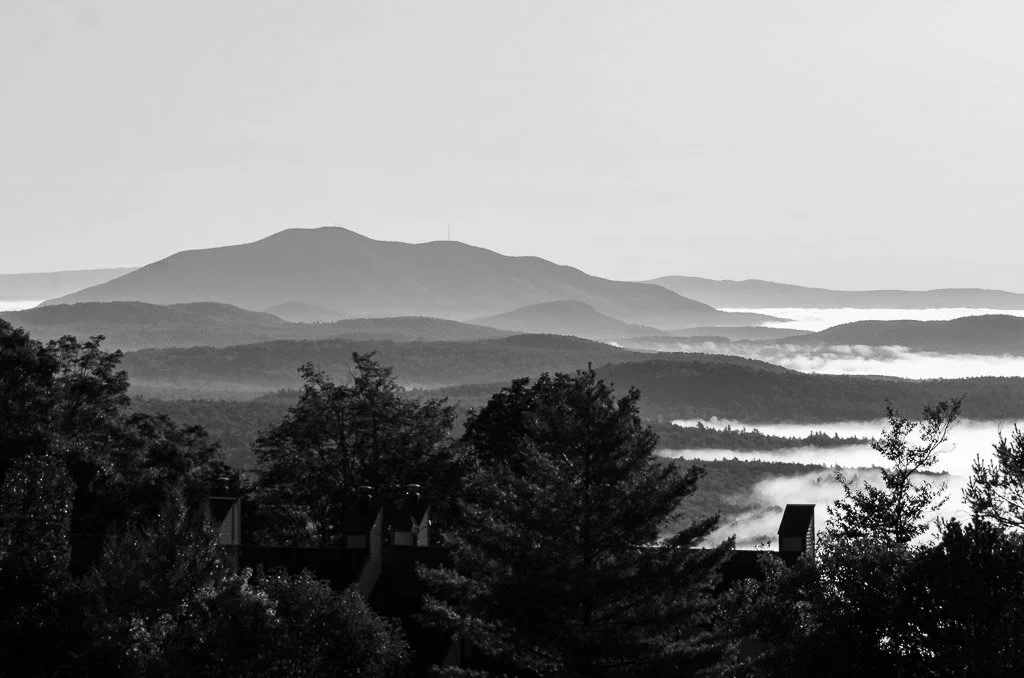
Mount Ascutney in Vermont. Photo- ©2019 Chris Sidoruk
Massachusetts Photography Locations
Massachusetts offers more landscape variety than many photographers realize.
The state combines:
Atlantic coastline
historic towns
mountain landscapes
forests
river valleys
Cape Cod
Cape Cod is one of the strongest coastal photography destinations in Massachusetts.
Best Photography Subjects
Lighthouses
Sand dunes
Beaches
Fishing villages
Coastal textures
Best Conditions
Sunrise on east-facing beaches
Summer mornings
Autumn storms
Fog
Cape Cod is especially effective for photographers who enjoy minimalist coastal compositions.
Mount Greylock — Berkshires
Mount Greylock is the highest point in Massachusetts and one of the strongest mountain photography locations in the state.
Best Photography Subjects
Fall foliage panoramas
Mountain layers
Cloud inversions
Sunrise views
Best Season
Late October is often one of the strongest periods for peak autumn color.
Photography Tip
The summit is excellent, but don't overlook lower elevation viewpoints throughout the Berkshires. Foggy valleys and layered forests often create more interesting compositions.
→ Related guide: Mount Greylock Berkshires MA Photography Guide
Connecticut Photography Locations
Connecticut is often overlooked by landscape photographers, but it offers excellent coastal and inland opportunities.
The advantage of Connecticut is accessibility—many locations can be photographed year-round without major travel.
Silver Sands State Park — Milford, Connecticut
Silver Sands State Park is one of Connecticut's strongest coastal photography locations.
Best Photography Subjects
Sandbar compositions
Long exposure shoreline images
Sunset reflections
Long Island Sound views
Best Conditions
Calm water
Dramatic clouds
Sunset
Low tide
The changing tides make this location especially interesting because the landscape can look completely different depending on conditions.
→ Related guide: Silver Sands State Park & Walnut Beach Photography Guide
Housatonic River Valley
The Housatonic River Valley is one of Connecticut's best inland photography regions.
Best Photography Subjects
Fall foliage
River reflections
Scenic roads
Rural landscapes
Best Conditions
October peak foliage
Morning fog
Overcast autumn days
→ Related guide: Best Places to Take Pictures in Connecticut
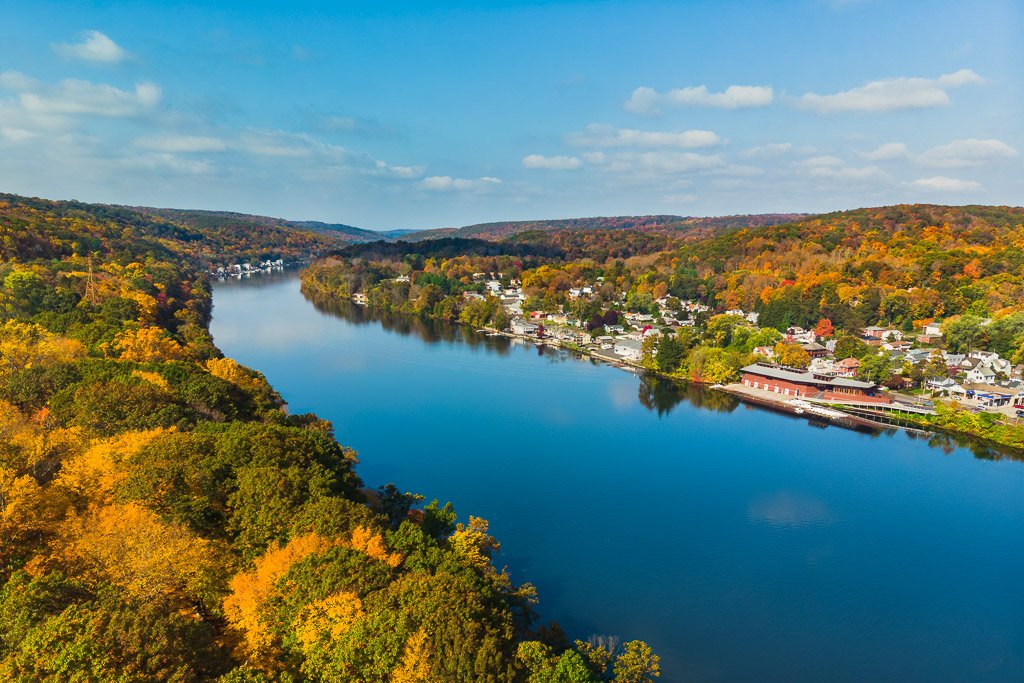
Housatonic River Valley Foliage in Shelton, Connecticut. Photo- ©2020 Chris Sidoruk | Shop Wall Art
Rhode Island Photography Locations
Rhode Island may be the smallest state, but its coastline provides excellent photography opportunities.
Narragansett Coastline
Rhode Island's coastline provides a quieter alternative to some of the more crowded Maine and Massachusetts locations.
Best Photography Subjects
Rocky shorelines
Ocean sunsets
Historic coastal structures
Harbors
Best Conditions
Sunrise
Storm clouds
Winter coastal weather
New England conditions are unpredictable—especially near the coast and in the mountains—so the goal is not having the most gear, but having the right reliable setup for changing conditions.
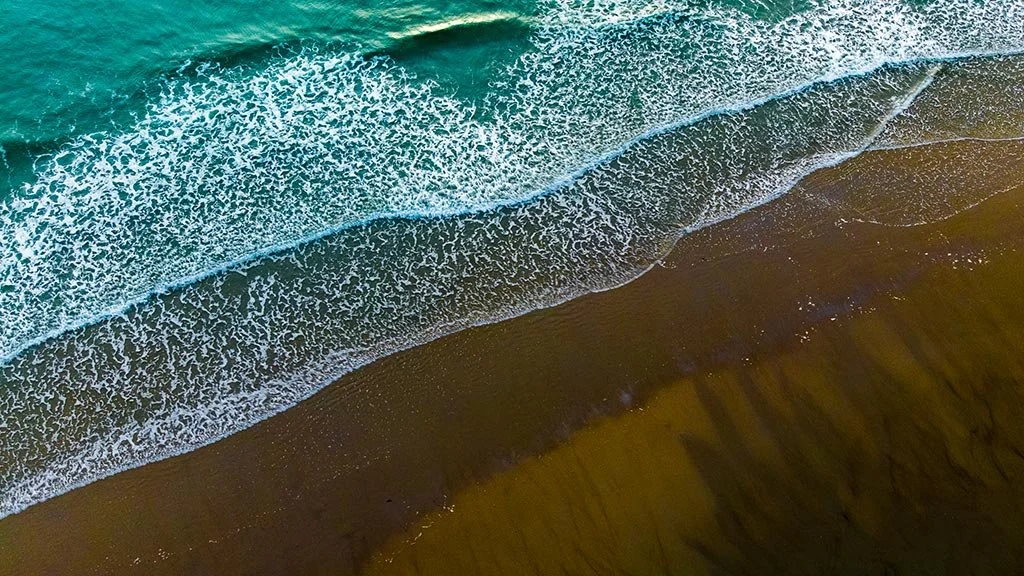
Wells Beach in Wells, Maine. Photo- ©2020 Chris Sidoruk
Regional Photography Strategy: How to Plan New England Shoots
The biggest mistake photographers make when exploring New England is treating every location the same.
Each region has a personality.
Coastal Strategy
Best months:
May–October
Winter storm season
Prioritize:
sunrise
tides
weather patterns
dramatic skies
Best subjects:
lighthouses
waves
rocks
reflections
Mountain Strategy
Best months:
September–October for foliage
Winter for snow
Prioritize:
elevation
weather changes
visibility
atmospheric conditions
Best subjects:
ridges
valleys
fog layers
compressed landscapes
Forest Strategy
Best months:
Spring
Fall
Prioritize:
soft light
overcast conditions
moisture
Best subjects:
rivers
waterfalls
foliage
woodland paths
Building a New England Photography Route
For photographers traveling through the region, combining locations by geography is usually more efficient than chasing individual spots.
Example routes:
Maine Coastal Route
Portland Head Light → York/Nubble Lighthouse → Acadia National Park
Best for:
lighthouses
ocean landscapes
sunrise photography
Vermont + New Hampshire Fall Route
Green Mountains → White Mountains → Scenic mountain roads
Best for:
foliage
mountain layers
autumn landscapes
Connecticut + Massachusetts Regional Route
Connecticut coastline → Housatonic Valley → Berkshires → Mount Greylock
Best for:
accessible landscape photography
fall foliage
mixed coastal and mountain scenes
For a look at autumn conditions in the Berkshires, see my Mount Greylock Fall Foliage Photography Guide
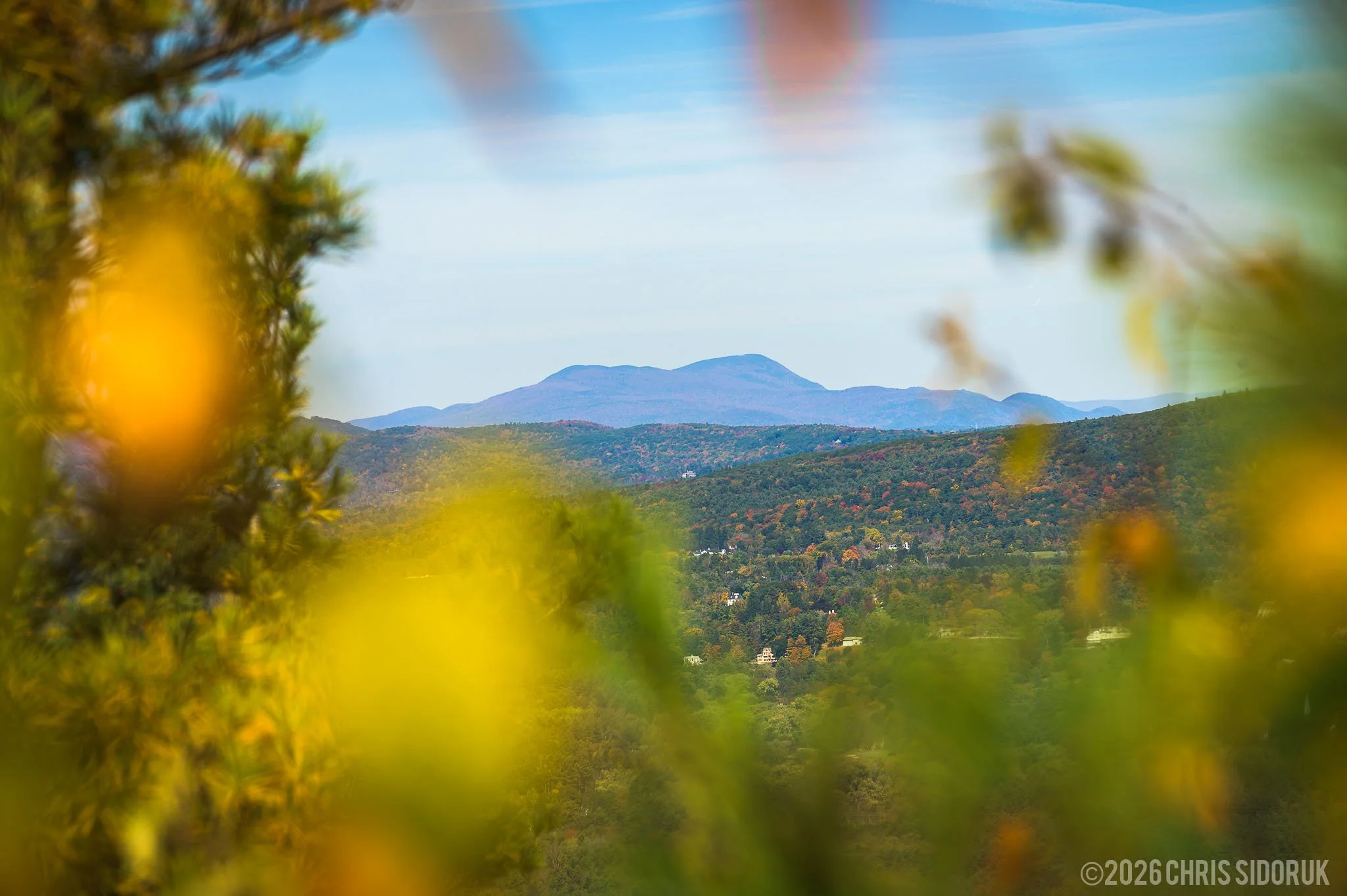
Mount Greylock in the Berkshires of Massachusetts, as viewed from Monument Mountain during near peak foliage in early October 2024. ©2026 Chris Sidoruk
Essential Gear for New England Photography (2026)
New England photography is challenging because the environment changes constantly.
A sunrise shoot on the Maine coast can involve:
strong wind
salt spray
changing tides
rapidly moving clouds
A mountain shoot in Vermont or New Hampshire can involve:
temperature swings
fog
changing visibility
difficult terrain
Because of that, the best New England photography gear is not necessarily the most expensive gear.
It is gear that helps you stay flexible when conditions change.
The ideal setup prioritizes:
reliability
weather resistance
portability
image quality
adaptability
A photographer who can confidently handle changing conditions will usually create stronger images than someone carrying more equipment but missing moments.
Building a New England Landscape Photography Kit
A practical landscape photography kit should allow you to capture:
sweeping coastal scenes
compressed mountain layers
waterfalls
forests
changing weather
long exposures
A versatile setup usually includes:
| Gear Category | Recommended Type | Why It Matters |
|---|---|---|
| Camera Body | Weather-sealed mirrorless camera | Handles changing conditions and provides strong image quality |
| Wide Lens | 14–35mm or 16–35mm equivalent | Coastal landscapes, mountains, architecture |
| Standard Zoom | 24–70mm equivalent | Everyday landscape flexibility |
| Telephoto Lens | 70–200mm equivalent | Mountain layers, foliage compression, distant subjects |
| Tripod | Stable carbon fiber tripod | Long exposures and sharp images |
| Filters | CPL + ND filters | Control reflections and motion |
| Camera Bag | Weather-resistant hiking bag | Protects gear in unpredictable environments |
Camera Body
Recommended Type: Weather-sealed mirrorless camera
Why It Matters: Handles changing conditions and provides strong image quality
Wide Lens
Recommended Type: 14–35mm or 16–35mm equivalent
Why It Matters: Coastal landscapes, mountains, architecture
Standard Zoom
Recommended Type: 24–70mm equivalent
Why It Matters: Everyday landscape flexibility
Telephoto Lens
Recommended Type: 70–200mm equivalent
Why It Matters: Mountain layers, foliage compression, distant subjects
Tripod
Recommended Type: Stable carbon fiber tripod
Why It Matters: Long exposures and sharp images
Filters
Recommended Type: CPL + ND filters
Why It Matters: Control reflections and motion
Camera Bag
Recommended Type: Weather-resistant hiking bag
Why It Matters: Protects gear in unpredictable environments
Best Cameras for New England Photography
Modern cameras are extremely capable, and many different systems can produce professional landscape images.
For New England photography, the most important features are:
high dynamic range
weather sealing
good RAW files
reliable autofocus
battery life
comfortable operation outdoors
Full-Frame Mirrorless Cameras: Best Overall Choice
Full-frame mirrorless cameras remain the most balanced option for many landscape photographers.
Advantages:
excellent image quality
strong low-light performance
wide lens selection
manageable file sizes
good travel balance
Popular systems include:
Nikon Z System
Nikon's full-frame mirrorless cameras are especially strong for landscape photography.
Strengths:
excellent dynamic range
strong ergonomics
high-resolution sensors
outstanding Z lenses
Models such as the Nikon Z8 and Z6 series are excellent choices for photographers who prioritize image quality and versatility.
Sony Alpha System
Sony remains one of the strongest all-around mirrorless ecosystems.
Strengths:
excellent autofocus
huge lens selection
strong third-party support
lightweight options
Cameras like the Sony A7 IV and higher-resolution models provide excellent landscape performance.
Canon EOS R System
Canon's mirrorless lineup offers excellent color rendering, strong ergonomics, and high-quality RF lenses.
Strengths:
intuitive controls
excellent lenses
strong image quality
reliable weather sealing
APS-C Cameras: A Great Lightweight Option
Not every photographer needs full-frame.
Modern APS-C cameras can produce excellent landscape images, especially for:
hiking
travel photography
casual landscape shooting
photographers prioritizing portability
Advantages:
smaller bodies
lighter lenses
lower cost
easier to carry all day
The crop factor can also be useful for mountain photography because it provides extra reach with telephoto lenses.
Medium Format Cameras: Maximum Image Quality
For photographers focused on:
fine art prints
gallery work
large-scale landscapes
medium format systems provide exceptional image quality.
Advantages:
extremely high resolution
excellent tonal transitions
outstanding dynamic range
incredible print capability
Systems like the Fujifilm GFX lineup are popular among landscape and fine art photographers.
However, they are not always the practical choice.
Considerations:
higher cost
larger files
slower workflow
heavier systems
For many photographers, a high-end full-frame camera is the better everyday tool.
Recommended Landscape Lens Setup for New England
Lens choice often matters more than the camera body.
New England landscapes constantly change.
One moment you may need a wide coastal composition.
The next, you may need to isolate distant mountain layers.
A flexible lens kit is usually better than carrying many specialized lenses.
Wide-Angle Lens (16–35mm Equivalent)
Best for:
coastlines
lighthouses
waterfalls
forests
dramatic foregrounds
Examples:
rocky shoreline compositions
ocean waves leading toward a lighthouse
mountain scenes with foreground interest
A wide-angle lens is usually the first lens landscape photographers purchase because it handles so many New England scenes.
Standard Zoom Lens (24–70mm Equivalent)
The standard zoom is one of the most useful landscape lenses.
Best for:
general travel photography
scenic overlooks
towns
environmental landscapes
It provides enough flexibility without constantly changing lenses in unpredictable weather.
For many photographers, this is the lens that stays on the camera most often.
Telephoto Lens (70–200mm Equivalent)
Telephoto lenses are often underrated for landscape photography.
They are especially valuable in New England because the region has:
layered mountains
dense forests
distant viewpoints
colorful foliage
A telephoto lens allows you to:
compress mountain ridges
isolate fog layers
simplify busy scenes
highlight patterns in foliage
Many photographers rely too heavily on wide-angle lenses and miss some of the strongest compositions available.
Prime Lenses for Landscape Photography
Prime lenses are less common for traditional landscapes but can be useful.
Advantages:
excellent sharpness
wider apertures
lighter designs
Useful for:
astrophotography
night landscapes
low-light scenes
However, zoom lenses are usually more practical when hiking or traveling.
Tripods: One of the Most Important Pieces of Gear
A tripod is not optional for serious New England landscape photography.
Many of the region's best images happen in conditions where a tripod provides a major advantage:
sunrise
sunset
blue hour
waterfalls
long exposures
low-light forests
A good tripod helps with:
sharper images
precise composition
longer exposures
consistent panoramas
focus stacking
What Makes a Good Landscape Tripod?
Look for:
Stability Over Weight
A lightweight tripod is convenient, but coastal wind and mountain conditions demand stability.
A tripod that vibrates in strong wind defeats the purpose.
Weather Resistance
New England photography often involves:
rain
snow
sand
salt spray
A tripod should handle outdoor conditions without becoming difficult to operate.
Height
A tripod that is too short can make composition frustrating.
A taller tripod provides more flexibility when:
shooting over vegetation
working on uneven terrain
composing from rocky coastlines

Long exposure photograph of Wadsworth Falls in Middletown, Connecticut. Taken with a tripod and ND filter. ©2020 Chris Sidoruk
Filters for New England Photography
Filters remain extremely useful for landscape photography.
They are especially valuable along the coast and around waterfalls.
Circular Polarizer (CPL)
A polarizer is one of the most useful filters for New England.
It helps with:
reducing glare on water
enhancing foliage color
improving sky contrast
revealing underwater details
Best uses:
lakes
rivers
forests
coastal scenes
Neutral Density (ND) Filters
ND filters allow longer exposures during brighter conditions.
Useful for:
smoothing ocean waves
creating motion in waterfalls
simplifying moving clouds
Common examples:
3-stop ND
6-stop ND
10-stop ND
A 10-stop filter is especially popular for dramatic long exposure coastal photography.
Graduated ND Filters
Graduated filters were more common before modern RAW processing, but they can still be useful.
They help balance:
bright skies
darker foregrounds
They are most useful for:
sunrise
sunset
high-contrast coastal scenes
Weather Protection for New England Photography
New England weather is part of what makes the region visually interesting—but it also creates challenges.
A prepared photographer can stay shooting when others pack up.
Camera Protection
Recommended:
rain cover
weather-sealed camera body
microfiber cloths
lens cloths
protective filters
Coastal Protection
Salt spray is one of the biggest risks near the ocean.
Carry:
multiple microfiber cloths
lens cleaning solution
protective bag covers
Small amounts of salt buildup can quickly affect equipment.
Cold Weather Preparation
Winter photography creates additional challenges.
Cold affects:
batteries
LCD screens
condensation
Recommendations:
carry extra batteries
keep batteries warm when possible
allow equipment to acclimate before opening bags indoors
Drone Photography in New England
Aerial photography can add a completely different perspective to familiar locations.
Drone photography is especially effective for:
beaches
sandbars
forests
mountain landscapes
scenic roads
It can reveal patterns that are difficult to see from ground level:
coastline shapes
river curves
forest textures
human scale within landscapes
However, photographers should always check:
local regulations
park restrictions
weather conditions
wildlife concerns
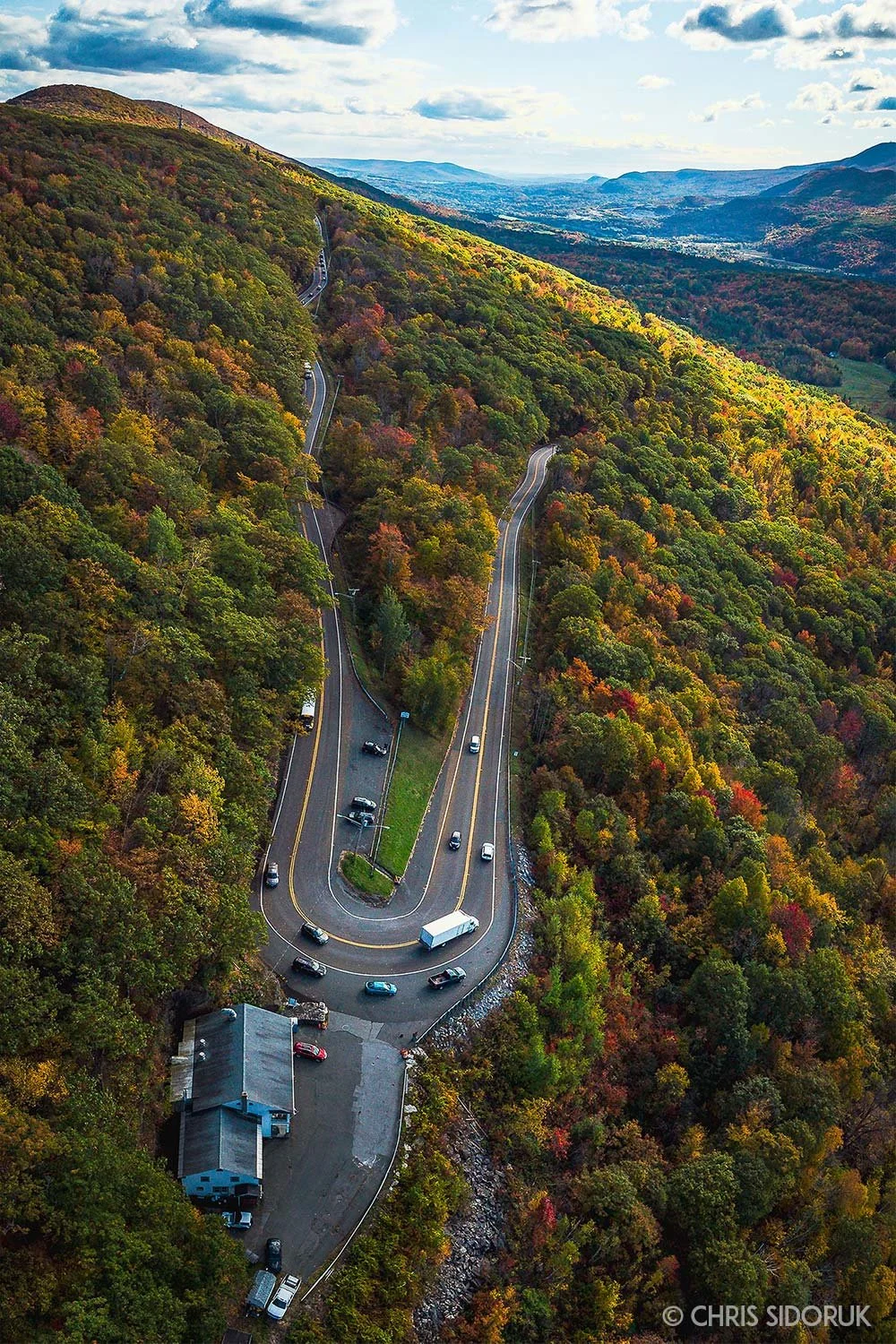
Aerial view of the Hairpin Turn in North Adams, Massachusetts, taken with a drone. ©2026 Chris Sidoruk
The Ideal New England Photography Kit (Practical Setup)
For most landscape photographers, a balanced kit looks like this:
Lightweight Travel Setup
mirrorless camera body
16–35mm lens
24–70mm lens
compact tripod
polarizer
Best for:
day trips
coastal walks
travel photography
Serious Landscape Setup
full-frame mirrorless camera
16–35mm lens
24–70mm lens
70–200mm lens
sturdy tripod
CPL + ND filters
Best for:
dedicated landscape photography
prints
portfolio work
Fine Art Landscape Setup
high-resolution camera
premium lenses
carbon fiber tripod
complete filter system
advanced storage workflow
Best for:
gallery prints
commercial landscape work
fine art photography
The Biggest Gear Mistake Landscape Photographers Make
Many photographers believe better gear automatically creates better images.
In reality, New England photography rewards:
planning
patience
understanding weather
composition
returning to locations repeatedly
The best equipment is the equipment that allows you to stay focused on creating images instead of fighting your setup.
Shooting Techniques for New England Photography
New England is a region where conditions often change faster than expected.
A clear morning can become foggy within minutes. A calm coastline can turn into a dramatic storm scene. A mountain overlook can completely disappear behind clouds and then suddenly reveal a landscape filled with depth and atmosphere.
The photographers who create the strongest New England images are not simply waiting for perfect conditions.
They understand how to work with changing conditions.
The most important skills are:
reading light
adapting composition
using weather creatively
understanding seasonal changes
knowing when to simplify a scene
1. Work With Weather, Not Against It
Many photographers avoid cloudy, rainy, or foggy conditions because they are waiting for a “perfect” day.
In New England, imperfect weather often creates the most memorable images.
Some of the strongest conditions include:
Fog
Fog creates:
depth
mystery
separation between subjects
softer backgrounds
Excellent for:
forests
mountain valleys
lighthouses
rivers
Fog is especially powerful because it simplifies complex landscapes.
A busy forest scene can become a minimalist composition when distant trees disappear into mist.
Storm Light
Storm conditions can create some of the most dramatic landscape photography.
Look for:
breaking clouds
directional sunlight
dark skies
changing contrast
Excellent locations:
Maine coastline
Cape Cod
mountain overlooks
Storm light often creates more visual impact than a perfectly clear blue sky.
Overcast Conditions
Overcast weather is especially useful for:
fall foliage
forests
waterfalls
intimate landscapes
Benefits include:
softer contrast
richer colors
fewer harsh shadows
During autumn, cloudy days can actually produce better foliage images than bright sunlight.
2. Coastal Photography Techniques
New England's coastline is one of the most rewarding environments for landscape photography.
However, coastal photography requires more than simply pointing a camera toward the ocean.
Use Foreground Elements
A common mistake is photographing only the main subject.
For example:
A lighthouse alone can create a simple image.
A lighthouse with:
foreground rocks
moving water
leading lines
reflections
creates a much stronger composition.
Look for:
rocks
tide pools
driftwood
sand patterns
waves
Foreground elements create depth and guide the viewer through the image.
Long Exposure Ocean Photography
Long exposures are one of the most popular techniques for New England coastlines.
They work especially well with:
waves
waterfalls
clouds
moving water
Typical approach:
tripod mounted camera
low ISO
smaller aperture
ND filter when needed
Long exposures can transform chaotic ocean movement into smoother, more intentional compositions.
Pay Attention to Tides
The same coastal location can look completely different depending on the tide.
Before planning a coastal shoot:
Check:
sunrise/sunset time
tide schedule
weather forecast
wind conditions
Low tide may reveal:
sand patterns
tide pools
exposed rocks
High tide may create:
larger waves
dramatic water movement
reflections
3. Mountain Photography Techniques
New England mountain photography is less about capturing a single peak and more about creating depth.
The region's mountains are not always dramatic because of height.
They are dramatic because of:
layered ridges
changing weather
forests
atmospheric conditions
Use Layered Compositions
A strong mountain image often includes:
Foreground
Examples:
trees
rocks
trails
vegetation
Midground
Examples:
hills
forests
valleys
Background
Examples:
distant ridges
mountains
clouds
This creates depth and gives the viewer a sense of scale.
Use Telephoto Compression
Many photographers immediately reach for a wide-angle lens when photographing mountains.
However, telephoto lenses can create some of the strongest mountain images.
A 70–200mm lens can:
compress distant ridges
emphasize fog layers
isolate colorful sections of forest
simplify complex scenes
This technique is especially effective during fall foliage season.
Photograph Atmospheric Conditions
Mountain photography is often about what happens between the mountains.
Look for:
fog filling valleys
clouds wrapping peaks
sunrise haze
layers disappearing into distance
Atmosphere creates depth.
4. Fall Foliage Photography Strategy
Fall is the most popular season for New England photography.
However, photographing foliage successfully requires more than simply arriving during peak color.
Plan Around Elevation
Fall colors do not appear everywhere at the same time.
Higher elevations typically change first.
A general strategy:
| Location Type | Typical Timing |
|---|---|
| Northern New Hampshire / Vermont Mountains | Late September–Early October |
| Central Vermont / White Mountains | Early–Mid October |
| Berkshires / Southern New England | Mid–Late October |
| Coastal Areas | Late October–Early November |
Northern New Hampshire / Vermont Mountains
Typical Timing: Late September–Early October
Central Vermont / White Mountains
Typical Timing: Early–Mid October
Berkshires / Southern New England
Typical Timing: Mid–Late October
Coastal Areas
Typical Timing: Late October–Early November
Exact timing changes every year depending on weather.
Avoid Only Photographing Wide Scenes
A common mistake is trying to capture every tree in one frame.
Instead, look for:
isolated color patches
reflections
forest patterns
individual trees
mountain layers
Telephoto lenses are especially valuable during foliage season because they allow you to compress colors into stronger compositions.
Use Weather to Your Advantage
Some of the best foliage images happen during:
cloudy mornings
light rain
fog
calm conditions
These conditions help colors appear richer and reduce distracting contrast.
5. Waterfall and River Photography
New England has countless rivers, waterfalls, and forest streams.
These locations are especially strong during:
spring runoff
autumn foliage season
after rainfall
Essential Techniques
Use:
tripod
polarizer
slower shutter speeds
A polarizer helps:
reduce reflections
reveal rocks beneath water
enhance foliage
Long exposures help create:
smooth water movement
calmer compositions
more intentional images
6. Sunrise vs Sunset Photography
Both sunrise and sunset can create beautiful images, but they provide different advantages.
Why Sunrise Is Often Better in New England
Advantages:
fewer crowds
calmer conditions
cleaner compositions
softer light
Especially useful for:
popular coastal locations
mountain viewpoints
lighthouses
Examples:
Portland Head Light
Acadia National Park
White Mountain overlooks
Why Sunset Still Works
Sunset is excellent for:
west-facing mountain views
scenic overlooks
inland landscapes
Advantages:
warmer light
easier access
longer preparation time
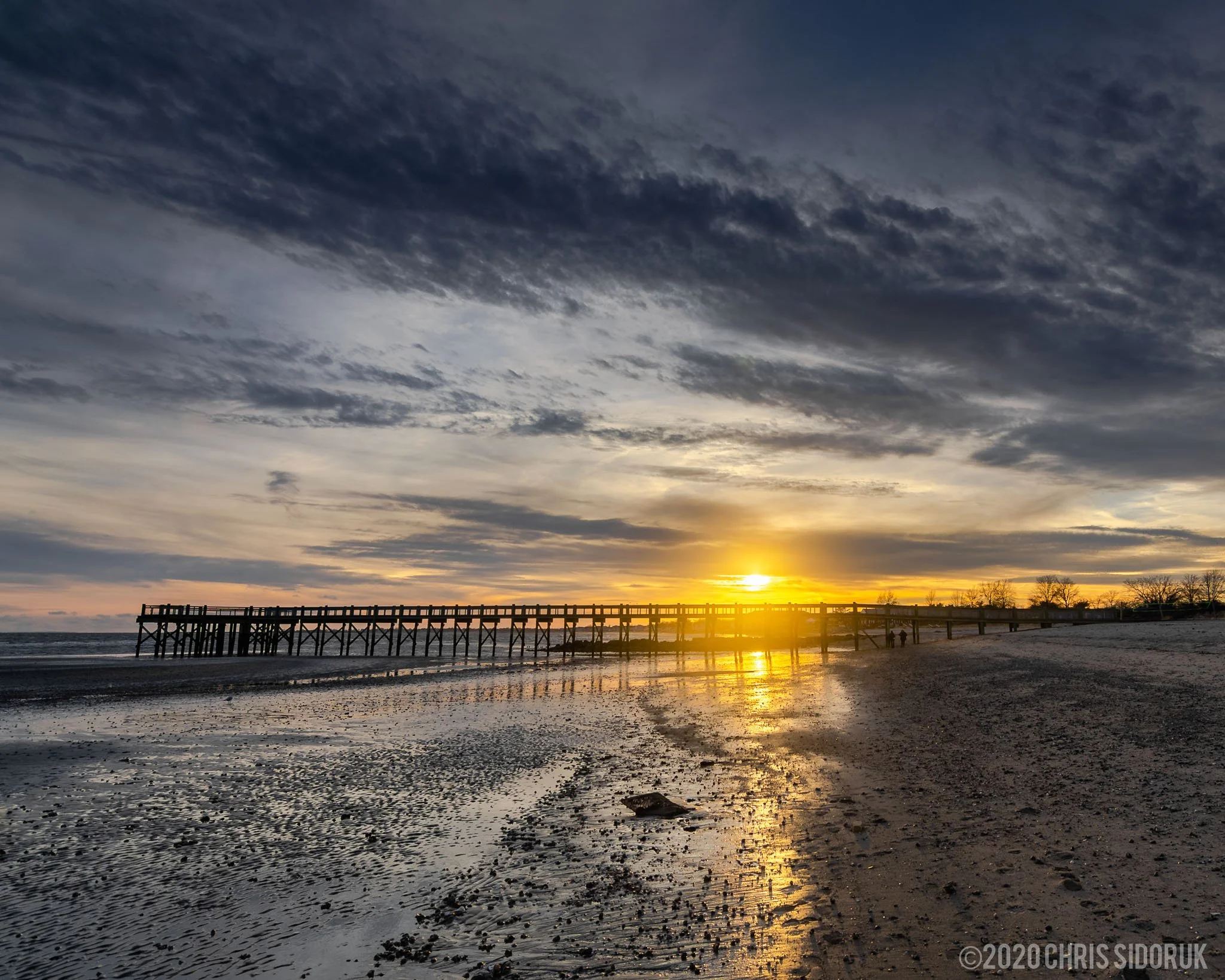
Sunset at Walnut Beach Fishing Pier in Milford, Connecticut. ©2020 Chris Sidoruk
Best Seasons for New England Photography
Each season creates a completely different photographic experience.
Spring Photography (March–May)
Best Subjects
waterfalls
rivers
fresh greenery
mountain runoff
foggy forests
Spring is one of the most underrated seasons in New England.
Benefits:
fewer crowds
dramatic water flow
fresh colors
Best Regions:
Vermont
New Hampshire
Connecticut forests
Western Massachusetts
Summer Photography (June–August)
Best Subjects
coastlines
beaches
harbors
sunsets
scenic towns
Summer provides:
long daylight hours
accessible locations
stable travel conditions
Best Regions:
Maine coastline
Cape Cod
Rhode Island
Connecticut shoreline
Fall Photography (September–November)
Best Subjects
foliage
mountain landscapes
scenic drives
rural New England scenes
Fall is the busiest photography season because it combines:
color
comfortable weather
iconic landscapes
Best Regions:
Vermont Green Mountains
New Hampshire White Mountains
Berkshires
Western Massachusetts
Winter Photography (December–February)
Winter is often overlooked but can produce some of the most unique images.
Best Subjects
snow-covered forests
frozen waterfalls
coastal storms
minimalist landscapes
Winter photography rewards photographers who embrace simplicity.
Snow removes distractions and allows compositions built around:
shape
texture
contrast
Planning a New England Photography Trip
A successful photography trip requires more planning than simply choosing a destination.
The strongest workflow is:
Step 1: Choose the Subject
Decide what you want to photograph.
Examples:
lighthouse
foliage
mountain views
waterfalls
coastline
Step 2: Match the Season
Ask:
What season makes this location strongest?
Examples:
Mount Greylock → fall foliage
Maine coast → year-round
Vermont mountains → autumn
waterfalls → spring
Step 3: Check Conditions
Before leaving, check:
weather
sunrise/sunset
tides
cloud cover
foliage reports
road conditions
Conditions often matter more than the location itself.
Step 4: Arrive Early
Popular New England photography locations become crowded quickly.
Arriving early gives you:
better compositions
more peaceful conditions
time to explore
flexibility if conditions change
Returning to Locations Creates Better Images
One of the biggest differences between casual photography and professional landscape photography is repetition.
The first visit is often about discovery.
The second or third visit is where stronger images happen.
Returning allows you to understand:
how light moves
where compositions work
how weather changes the scene
which conditions create the strongest images
Many iconic landscape photographs come from photographers who revisit the same locations repeatedly.
New England Photography Is About Adaptation
The region rewards photographers who can adjust.
The best image may not happen on the day you planned.
It may happen because:
fog arrived unexpectedly
a storm created dramatic light
clouds improved the composition
changing conditions revealed something new
New England's greatest strength is its unpredictability.
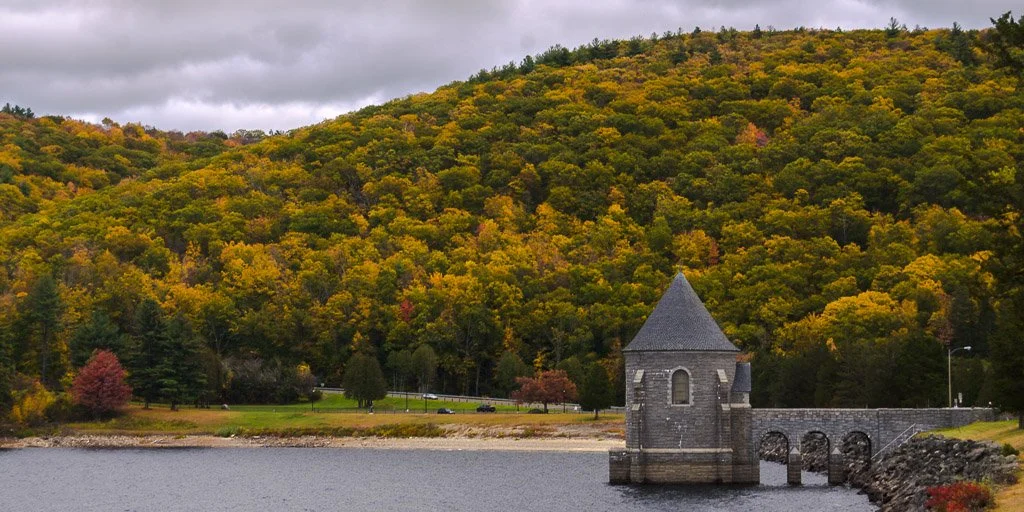
Saville Dam in Barkhamsted, Connecticut. Photo- ©2019 Chris Sidoruk
Final Thoughts: Planning Makes Better New England Photography
New England is one of the most rewarding regions in the country for landscape photography because of its incredible variety.
Within a relatively small geographic area, photographers can capture:
rugged Atlantic coastlines
historic lighthouses
mountain landscapes
fall foliage valleys
waterfalls and rivers
small towns and rural scenery
dramatic seasonal weather
But the best New England photography usually doesn't happen by simply visiting popular locations.
The strongest images come from understanding the relationship between:
location
season
weather
light
composition
A sunrise at a Maine lighthouse creates a completely different photograph than the same location during a winter storm. A Vermont mountain overlook in October tells a different story than that same viewpoint covered in fog during spring.
The landscape is constantly changing—and that is what makes photographing New England so rewarding.
For the best results:
research locations before arriving
plan around seasonal conditions
check sunrise and sunset direction
embrace changing weather
allow time for exploration
focus on storytelling rather than simply collecting locations
The goal is not to photograph every famous spot.
The goal is to create images that communicate what makes each place unique.
Whether you're photographing the coast of Maine, the mountains of New Hampshire, Vermont's fall foliage, or Connecticut's hidden landscapes, New England offers endless opportunities for photographers willing to slow down and work with the environment.
Frequently Asked Questions
What are the best photography locations in New England?
Some of the best photography locations in New England include Acadia National Park, Portland Head Light, the White Mountains, Vermont's Green Mountains, Cape Cod, Mount Greylock, and coastal areas throughout Maine and Massachusetts.
The best location depends on the type of photography you want to create:
Coastal photography:
Maine coastline
Portland Head Light
Cape Cod
Rhode Island shoreline
Mountain photography:
White Mountains
Green Mountains
Mount Greylock
Fall foliage photography:
Vermont
New Hampshire
Western Massachusetts
Connecticut river valleys
Each region offers different opportunities depending on season, weather, and light.
What is the best time of year for New England photography?
The best time depends on the subject you're photographing.
Fall (September–October)
Fall is the most popular season because of the region's famous foliage.
Best for:
mountain landscapes
scenic drives
colorful forests
sunrise ridge photography
Popular locations:
Vermont
New Hampshire
Berkshires
White Mountains
Spring (March–May)
Spring is ideal for:
waterfalls
rivers
fresh greenery
moody forest scenes
Summer (June–August)
Summer works best for:
coastal photography
beaches
lighthouses
ocean landscapes
Winter (December–February)
Winter creates opportunities for:
minimalist landscapes
snow-covered forests
dramatic coastal storms
quiet locations without crowds
Where is the best place to photograph fall foliage in New England?
The strongest fall foliage photography locations are generally found throughout Vermont, New Hampshire, and western Massachusetts.
Top areas include:
Vermont Green Mountains
New Hampshire White Mountains
Mount Greylock and the Berkshires
Connecticut River Valley
For photographers, the best fall images often come from elevation changes, where forests create layers of color across valleys and mountains.
What camera settings are best for New England landscape photography?
There is no single setting that works for every situation, but many landscape photographers start with:
ISO 100–200
aperture around f/8–f/11
tripod for stability
manual or aperture priority mode
RAW capture
For long exposure coastal photography:
slower shutter speeds
ND filters
lower ISO
tripod support
For mountain and foliage photography:
slightly faster shutter speeds
telephoto lenses
careful focus placement
The most important factor is adapting settings to the conditions rather than relying on one formula.
Do I need a tripod for New England landscape photography?
A tripod is highly recommended.
While modern cameras have excellent stabilization, a tripod provides advantages for:
sunrise and sunset photography
long exposures
waterfalls
ocean movement
low-light conditions
maximum image sharpness
A sturdy tripod becomes especially important along the coast, where wind and uneven terrain can make handheld shooting difficult.
What lens is best for photographing New England?
A versatile landscape kit usually includes multiple focal lengths.
Wide-angle lens
Best for:
coastlines
waterfalls
large mountain scenes
architecture
Typical range:
14–35mm or 16–35mm equivalent
Standard zoom
Best for:
travel photography
general landscapes
flexible compositions
Typical range:
24–70mm equivalent
Telephoto lens
Best for:
mountain layers
compressed foliage scenes
distant subjects
isolating details
Typical range:
70–200mm equivalent or longer
For New England specifically, a telephoto lens is often more valuable than many photographers expect because the region's layered mountains and forests create excellent compression opportunities.
What is the most photographed place in New England?
Some of the most photographed locations include:
Portland Head Light in Maine
Acadia National Park
the White Mountains in New Hampshire
Vermont's fall foliage landscapes
Cape Cod
Mount Greylock in Massachusetts
However, some of the most memorable images often come from less-famous locations where photographers discover unique conditions and compositions.
How do I find new photography locations in New England?
Finding great locations usually requires combining research with exploration.
Useful strategies include:
studying maps and satellite imagery
researching sunrise/sunset direction
exploring state parks
looking for elevation changes
checking seasonal conditions
scouting locations before major shoots
Many strong photographs come from understanding a location deeply rather than constantly searching for new places.
Is New England better for sunrise or sunset photography?
Both can work, but sunrise often provides advantages.
Sunrise advantages:
fewer crowds
calmer conditions
better chance of fog
softer light
easier access to popular locations
Sunset advantages:
warmer light
easier scheduling
dramatic clouds after storms
For popular locations like lighthouses and mountain viewpoints, sunrise often provides the best opportunity for a clean composition.
How do I photograph New England lighthouses?
Lighthouse photography is one of the most popular styles in coastal New England.
Tips:
research tide conditions
photograph during sunrise or blue hour
use foreground elements for depth
include waves, rocks, or reflections
use long exposures when conditions allow
Weather can dramatically change the mood.
Fog creates atmosphere.
Storm clouds create drama.
Clear skies create cleaner, more traditional compositions.
What weather conditions create the best New England landscape photos?
Some of the best conditions are not necessarily perfect weather.
Great opportunities include:
foggy mornings
passing storms
dramatic clouds
fresh snow
changing seasons
post-storm sunsets
Clouds and atmosphere often add depth and emotion that clear skies cannot provide.
Can I photograph New England in winter?
Absolutely.
Winter is one of the most underrated seasons for photography.
Advantages include:
fewer crowds
simplified compositions
snow-covered landscapes
dramatic coastal conditions
unique lighting
The biggest challenges are:
cold temperatures
shorter daylight
difficult road conditions
Proper preparation is essential.
==========
Photography by Chris Sidoruk, a Connecticut photographer specializing in coastal landscapes, concert photography, and visual storytelling throughout New England.
Shot using a DJI Mavic Air and Nikon D7000 with settings for landscape photography.
All photographs © Chris Sidoruk. Images are protected by copyright and may not be used, copied, modified, or redistributed without written permission.
Recommended Related Guides
Continue building your New England photography workflow:
Landscape Photography Gear
→ Best Cameras for Landscape Photography
→ Best Lenses for Landscape Photography
→ Best Tripods for Landscape Photography
→ Best ND Filters for Long Exposure Photography
Photography Techniques
→ Sunrise Photography Guide
→ Landscape Photography Composition Tips
→ Long Exposure Photography Guide
Regional Photography Guides
→ Best Places to Take Pictures in Connecticut
→ Silver Sands State Park Photography Guide
→ Mount Greylock Photography Guide
→ Portland Head Light Photography Guide
==========
