

Mount Greylock Photography Guide | Best Photo Locations & Views
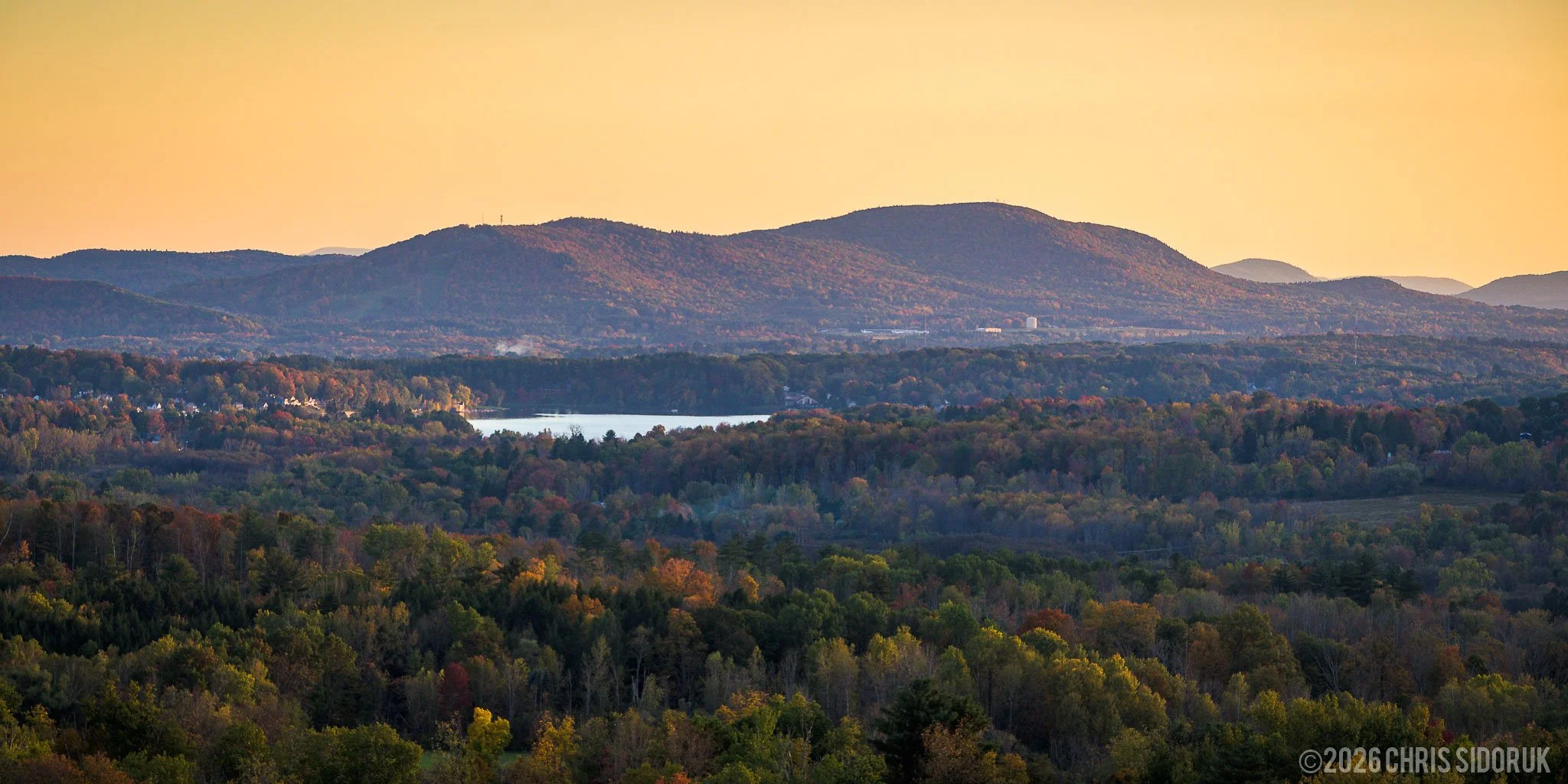
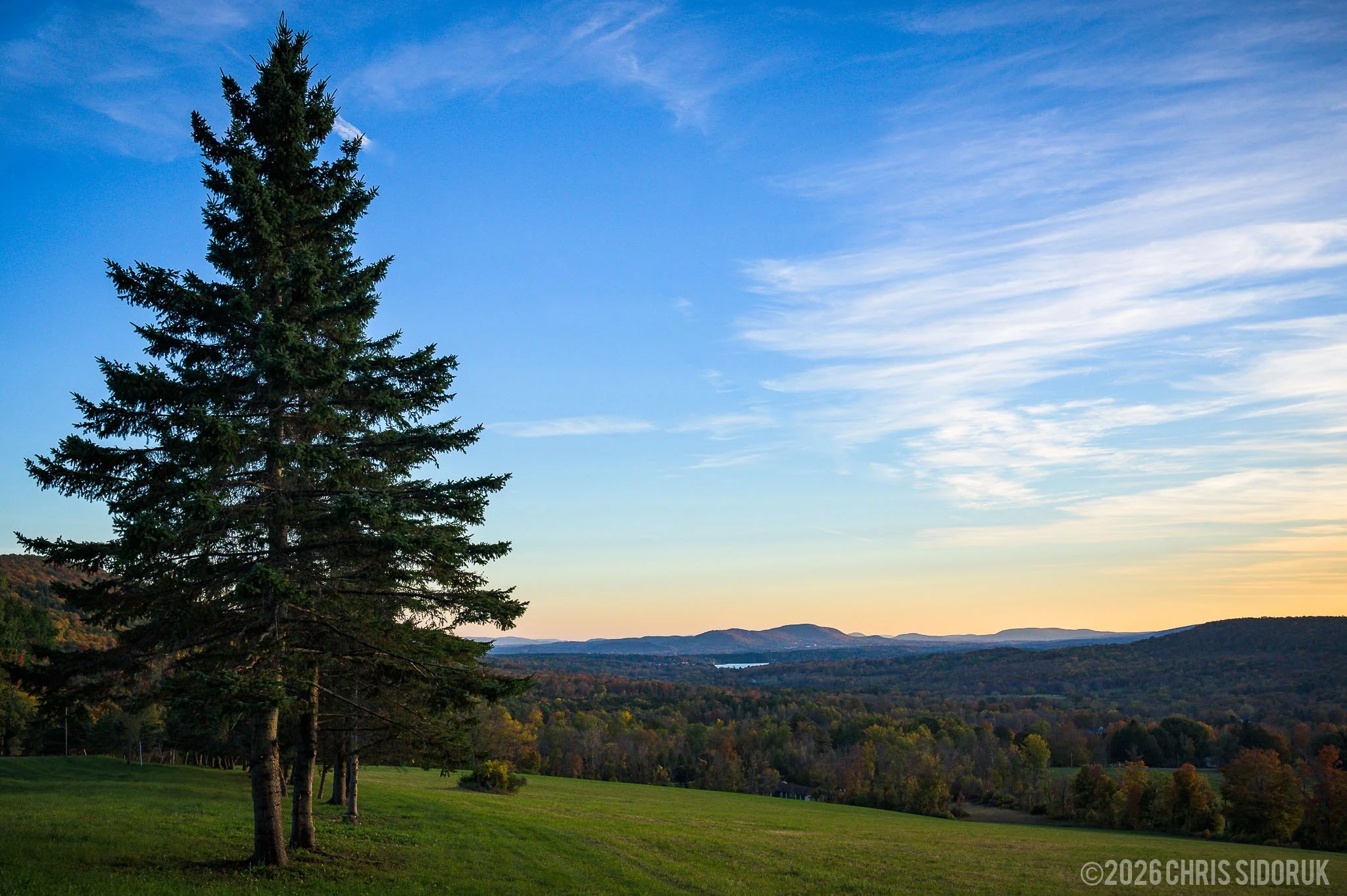
View from Mount Greylock, looking over the Berkshires in Massachusetts at sunset.
Published: 2026, Photographed: October 2024
==========
Quick Jump
- Mount Greylock Photography Overview
- Best Mount Greylock Photography Locations
- Summit & War Memorial Tower Photography
- Scenic Pull-Offs & Lesser-Known Viewpoints
- Mount Greylock Fall Foliage Photography
- Best Light & Weather Conditions
- Best Camera Gear for Mount Greylock Photography
- Planning Your Mount Greylock Photography Trip
- Nearby Berkshires Photography Locations
- Frequently Asked Questions
Mount Greylock is the highest point in Massachusetts and one of the most rewarding landscape photography locations in New England.
Located in the Berkshires of western Massachusetts, the mountain offers photographers a unique combination of elevation, changing weather, expansive views, and diverse terrain.
Unlike many scenic locations that rely on a single viewpoint, Mount Greylock is a collection of photographic opportunities spread across different elevations.
From the summit overlook to forest roads, hiking trails, and roadside viewpoints, each area responds differently to:
changing seasons
cloud movement
visibility conditions
time of day
atmospheric changes
This variety is what makes Mount Greylock such a reliable photography destination.
A clear morning may reveal distant mountain ranges across multiple states, while fog or low clouds can transform the landscape into a quieter, more minimal scene focused on trees, ridgelines, and atmosphere.
For photographers, the goal is not simply reaching the summit.
The best images often come from understanding how elevation, weather, and light interact across the mountain.
Mount Greylock Photography Overview
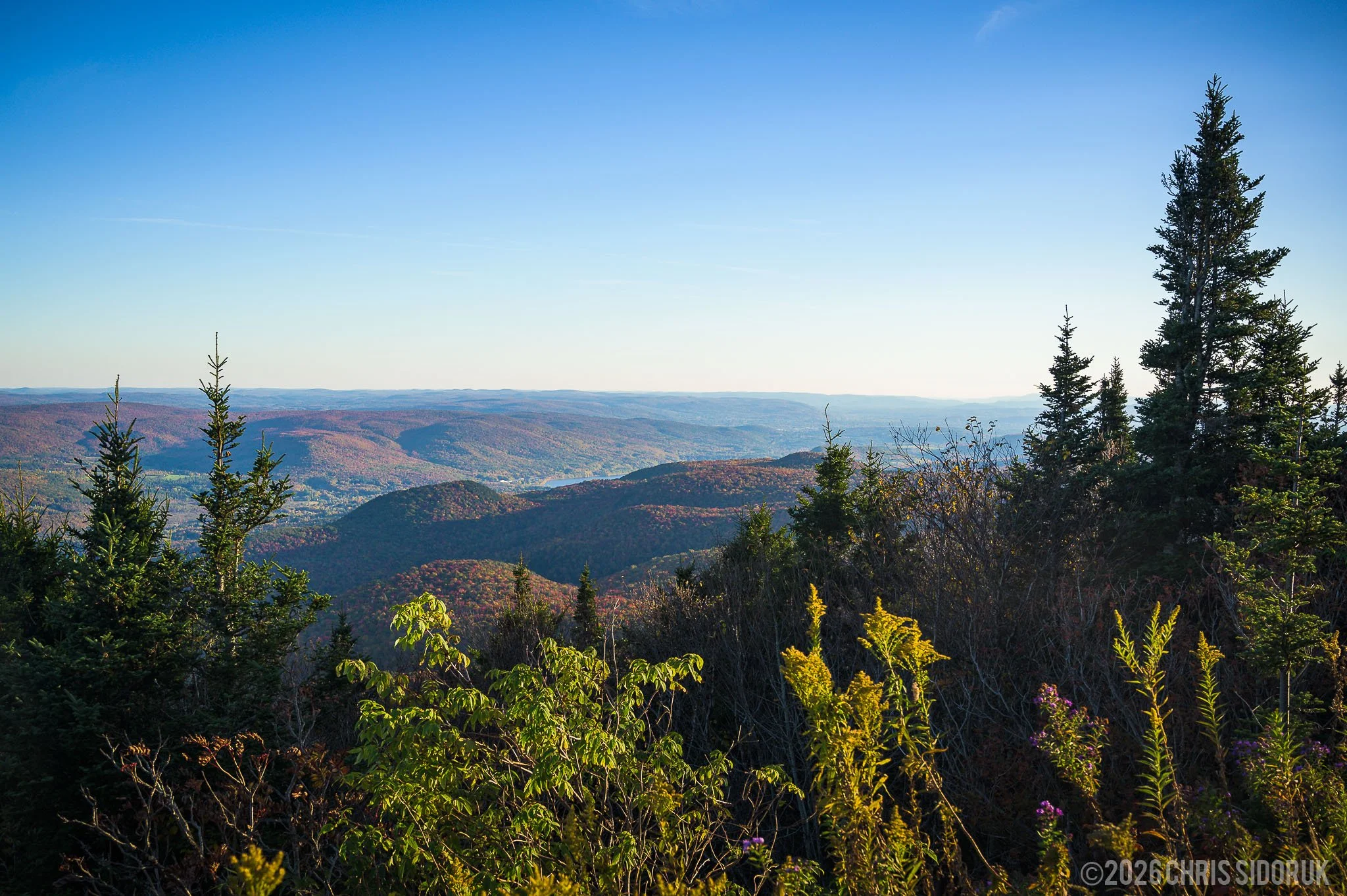
Why Mount Greylock Is a Great Photography Location
Mount Greylock offers several advantages for landscape photographers:
Highest Elevation in Massachusetts
At 3,491 feet, Mount Greylock provides some of the widest landscape views in the state.
On clear days, photographers can capture:
layered mountain ridges
distant valleys
expansive New England landscapes
dramatic sunrise and sunset scenes
The elevation creates a sense of depth that is difficult to replicate at lower viewpoints.
Multiple Photography Environments
One of the strengths of Mount Greylock is the variety of compositions available within a relatively small area.
Photographers can find:
panoramic summit views
forest landscapes
foggy mountain scenes
autumn foliage compositions
architectural subjects
intimate woodland details
This makes the mountain suitable for both wide landscape photography and more focused compositions.
Constantly Changing Conditions
Mount Greylock rarely looks the same twice.
Weather can change quickly due to elevation, creating opportunities for:
dramatic cloud formations
fog rolling through valleys
changing light patterns
atmospheric depth
Some of the most memorable photographs happen during conditions that initially seem less than ideal.
Photography Approach: Think in Elevations, Not Just Locations
A common mistake when visiting Mount Greylock is focusing only on the summit.
While the summit and War Memorial Tower are the most recognizable viewpoints, the mountain is best photographed by exploring different elevations.
Higher areas provide:
distant views
open landscapes
dramatic weather effects
Lower elevations provide:
stronger foreground elements
forest textures
more protected shooting conditions
A flexible approach allows photographers to adapt when visibility, weather, or light changes.
Mount Greylock Photography Throughout the Year
Each season creates a different photographic experience.
Spring
Spring brings:
emerging greenery
flowing streams
changing weather patterns
softer forest colors
Summer
Summer offers:
clear hiking conditions
lush vegetation
longer daylight hours
opportunities for sunset photography
Fall
Fall is the mountain's most famous season, with vibrant foliage covering the Berkshires.
Peak color timing varies each year, but higher elevations typically change first before color moves into surrounding valleys.
Fall foliage planning: Mount Greylock Fall Foliage Photography
Winter
Winter transforms Mount Greylock into a more dramatic and minimal landscape.
Snow, ice, and reduced vegetation create opportunities for:
black-and-white photography
atmospheric mountain scenes
isolated compositions
Best Mount Greylock Photography Locations
Mount Greylock offers a variety of photography locations, each producing a different type of landscape image.
While the summit receives the most attention, some of the strongest compositions come from exploring multiple viewpoints throughout the mountain.
The best approach is to treat Mount Greylock as a collection of photographic environments rather than a single destination.
Different locations work better depending on:
weather conditions
season
visibility
time of day
desired composition style
Summit & War Memorial Tower Photography
The summit of Mount Greylock is the most recognizable photography location on the mountain.
At the top stands the Mount Greylock Veterans War Memorial Tower, a historic landmark offering one of the most expansive viewpoints in Massachusetts.
From this elevation, photographers can capture:
layered mountain ridges
distant New England landscapes
sunrise and sunset panoramas
fall foliage stretching across the Berkshires
The summit is especially effective for wide-angle landscape photography because the open viewpoint creates strong depth between foreground, middle ground, and distant ridgelines.
Best Summit Photography Conditions
The summit performs best during:
Clear mornings
cleaner visibility
stronger separation between mountain layers
softer directional light
Sunset conditions
longer shadows across ridges
warmer tones
increased depth and contrast
Fog or low clouds
minimal distant views
stronger atmosphere
simplified compositions
Fog can completely remove the famous panoramic views, but it often creates some of the most unique photographs by emphasizing nearby trees, structures, and textures.
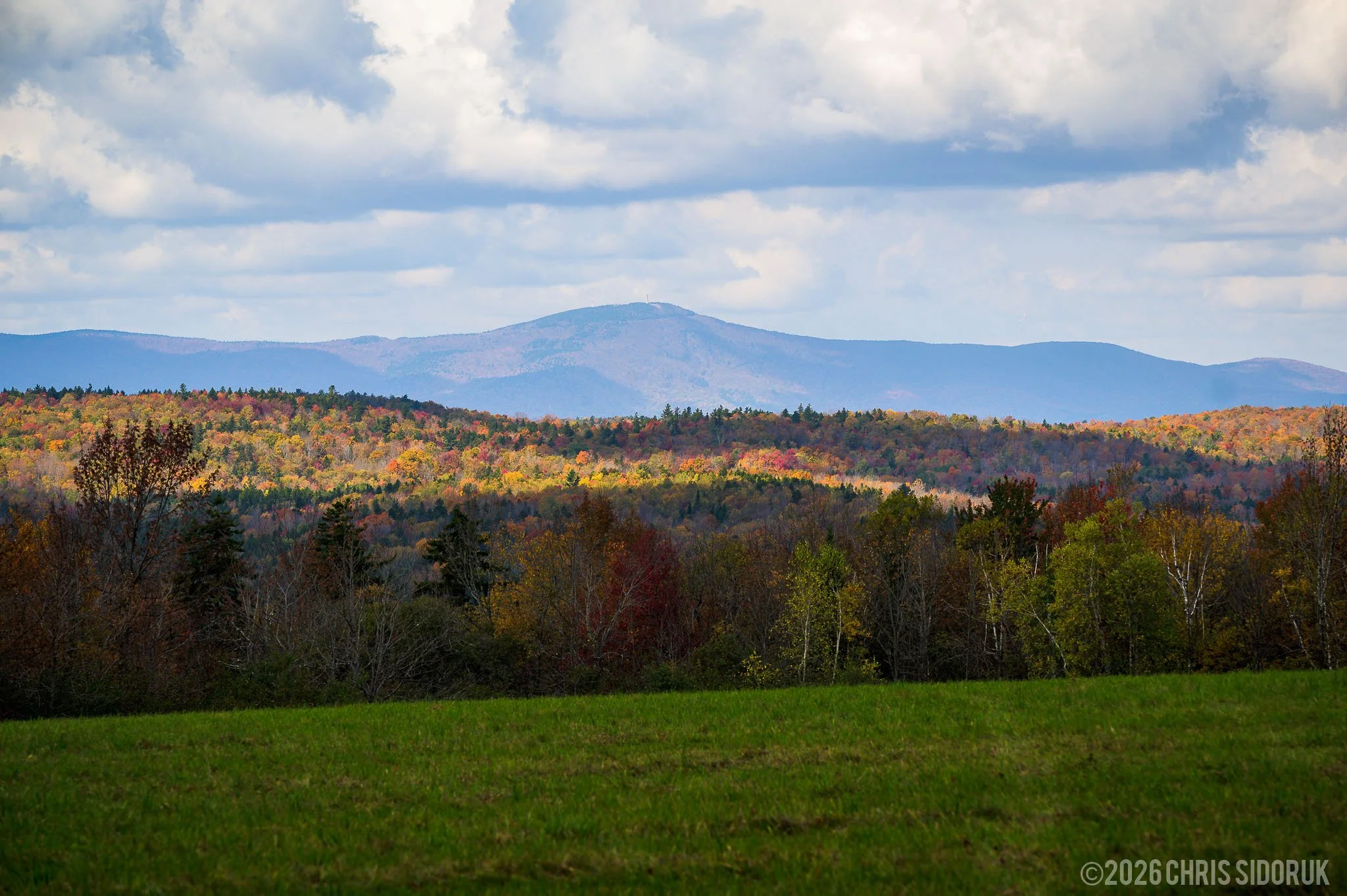
Scenic Pull-Offs & Lesser-Known Viewpoints
Scenic Pull-Offs & Lesser-Known Viewpoints
Some of the best Mount Greylock photographs do not come from the summit.
Throughout the mountain roads, several pull-offs provide opportunities for more balanced compositions.
These locations often have advantages:
fewer visitors
stronger foreground elements
better protection from summit winds
easier composition control
During fall foliage season, these mid-elevation areas can be especially productive because they often place colorful trees closer to the camera.
This creates more depth compared to distant summit panoramas.
Mount Greylock Road Photography
The roads leading through Mount Greylock offer many opportunities for landscape photography.
Instead of rushing directly to the summit, consider stopping along the way.
Look for:
winding roads through forest
openings between trees
changing elevation perspectives
overlooks facing the surrounding valleys
Roadside photography is often overlooked, but these locations can provide some of the strongest storytelling images.
They show the relationship between:
mountain
forest
weather
human access
Hopper Road & Western Views
The western side of Mount Greylock provides quieter and often less crowded photography opportunities.
This area is better suited for photographers looking for more intimate landscape scenes rather than large panoramic views.
Western-facing locations work especially well during:
Late Afternoon Light
The lower-angle sun creates:
stronger shadows
more texture
increased separation between landscape layers
Autumn Photography
The western slopes can produce excellent fall foliage compositions with:
colorful foreground trees
layered hillsides
atmospheric depth
Cloudy Conditions
Soft light reduces harsh contrast and allows photographers to focus on:
forest patterns
mountain shapes
subtle color changes
Choosing the Right Location Based on Conditions
Mount Greylock rewards adaptability.
Use the conditions to determine where to photograph.
Clear Day
Best choices:
Summit
War Memorial Tower
Major overlooks
Goal:
Capture distance and layered mountain views.
Foggy or Cloudy Day
Best choices:
Bascom Lodge area
Forest roads
Lower elevation viewpoints
Goal:
Create atmospheric images with nearby subjects.
Fall Foliage Peak
Best choices:
Mid-elevation pull-offs
Forest roads
Valley overlooks
Goal:
Capture color depth and layered autumn landscapes.
Dramatic Weather
Best choices:
Summit viewpoints
Exposed overlooks
Goal:
Use clouds, wind, and changing light to create more dynamic images.
Mount Greylock Photography Strategy
The strongest Mount Greylock photography sessions usually involve movement.
A productive visit might include:
Start at the summit for wide views
Check visibility and weather conditions
Move between elevations
Look for smaller compositions away from crowds
Return to stronger viewpoints as light changes
The mountain is constantly changing, and the best image is often found by adapting rather than waiting in one location.
Mount Greylock Fall Foliage Photography
Fall is the most recognizable season for Mount Greylock photography.
The combination of elevation, forest density, and expansive Berkshire views makes the mountain one of the strongest autumn landscape photography locations in New England.
However, fall conditions at Mount Greylock are not simply about arriving during peak color. The best photographs usually come from understanding how elevation, weather, and light interact.
Because the mountain rises significantly above the surrounding landscape, foliage changes gradually across different elevations.
Typically:
Higher elevations begin changing first
Mid-elevation forests follow afterward
Lower valleys often peak slightly later
This creates a longer photography window compared to locations with more uniform elevation.
For detailed autumn planning, see the dedicated guide:
Mount Greylock Fall Foliage Photography Guide
That article will focus specifically on:
peak foliage timing
best fall viewpoints
autumn composition ideas
changing conditions throughout the season
This photography guide focuses on Mount Greylock as a year-round location.
Photographing Fall Color at Different Elevations
One of the biggest advantages of Mount Greylock is the ability to photograph multiple layers of autumn color.
Summit Photography
The summit provides:
distant ridgelines
expansive views
layered color across the Berkshires
The challenge is that distant landscapes depend heavily on visibility.
A hazy fall day may reduce detail, while a clear morning can reveal strong depth between mountain ranges.
Mid-Elevation Photography
Mid-elevation areas often provide some of the strongest fall compositions.
These locations offer:
closer foliage
stronger foreground elements
better color saturation
more visual depth
Instead of photographing only distant mountains, these areas allow photographers to combine:
trees
roads
changing elevation
atmospheric conditions
Forest Photography
The mountain's wooded areas provide opportunities for more intimate fall images.
Look for:
isolated trees with strong color
paths through foliage
filtered light through the canopy
textures created by leaves and bark
These compositions often work well when summit visibility is limited.
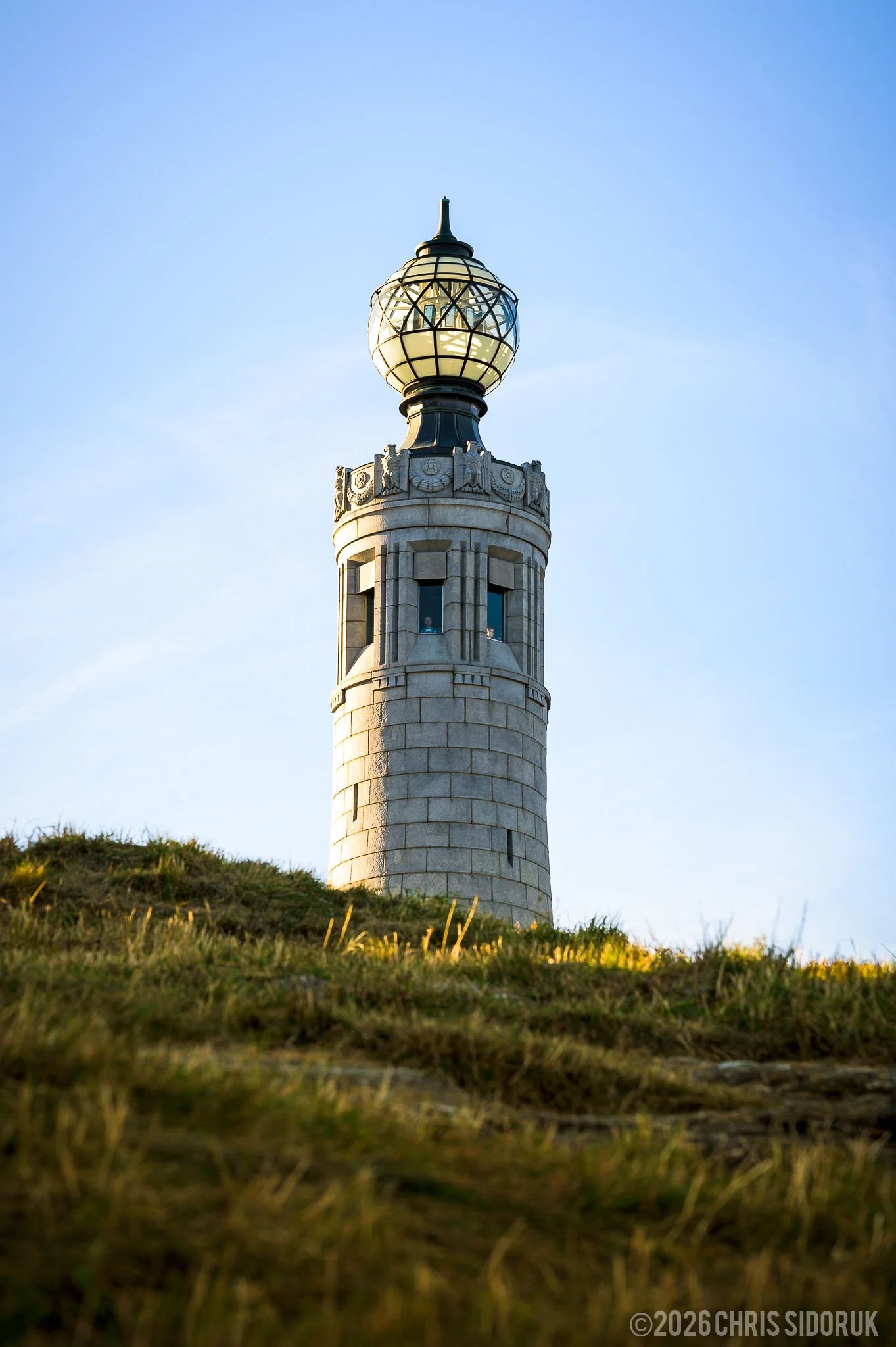
Photographing the War Memorial Tower
The tower itself provides an additional subject beyond the surrounding landscape.
Photographers can approach the structure from several angles:
Wide Environmental Compositions
Include:
tower architecture
surrounding landscape
dramatic skies
These images help communicate the scale of the location.
Detail Photography
Focus on:
stone textures
architectural lines
weathered surfaces
surrounding vegetation
These tighter compositions work especially well during fog or winter conditions when distant views are limited.
Seasonal Changes
The tower changes dramatically throughout the year:
Fall foliage creates strong color contrast
Winter emphasizes structure and texture
Summer provides greener surroundings
Spring introduces softer forest tones
Bascom Lodge Area Photography
Located below the summit, the Bascom Lodge area provides a different perspective from the exposed summit.
While the summit emphasizes distance and scale, this area offers more intimate landscape opportunities.
Photographers can find:
tree-framed compositions
mountain architecture
woodland scenes
changing seasonal details
This location is especially valuable when summit conditions are challenging.
For example:
A cloudy or foggy summit may limit visibility, but the Bascom Lodge area can provide stronger images because nearby subjects remain visible and atmospheric.
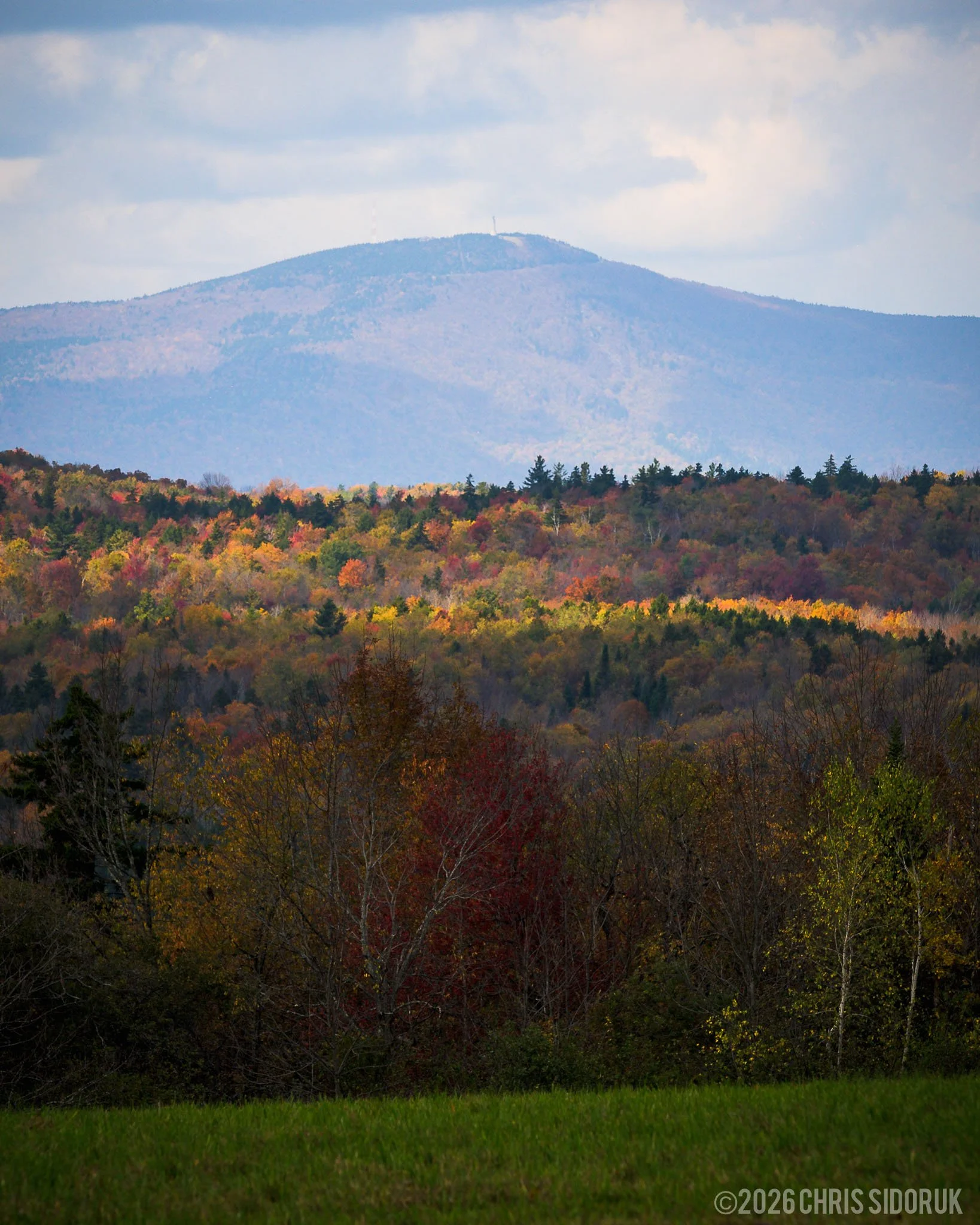
Mount Greylock is heavily influenced by atmospheric conditions.
Because of the elevation changes, weather can completely transform the appearance of the landscape within a short period of time.
Morning Photography Conditions
Early morning is often one of the most reliable times to photograph Mount Greylock.
Advantages include:
softer light
fewer visitors
calmer conditions
reduced atmospheric haze
better opportunities for clear distant views
Morning light is especially effective for:
summit panoramas
fall foliage layers
fog photography
Cold mornings in autumn can also create temporary fog in valleys, adding depth and separation between landscape layers.
Sunset Photography Conditions
Late afternoon and sunset provide a different visual style.
The lower angle of sunlight creates:
stronger shadows
warmer colors
increased texture across ridges
more dramatic landscape depth
Sunset works particularly well from viewpoints facing open valleys.
However, photographers should plan ahead.
At higher elevations:
temperatures drop quickly
wind increases
light disappears faster than expected
Arrive early enough to prepare your composition before the best light arrives.
Fog and Low Cloud Photography
Fog is one of the most underrated conditions at Mount Greylock.
While many visitors hope for clear summit views, fog can create more unique photographs.
Fog can transform the landscape by:
removing distractions
simplifying distant views
emphasizing nearby trees and structures
creating layers of atmosphere
Good fog photography locations include:
Bascom Lodge area
wooded overlooks
forest roads
lower elevation viewpoints
These conditions are especially valuable because they create images that feel different from typical Mount Greylock panoramas.
Overcast Photography
Cloudy conditions are often excellent for landscape photography.
Overcast skies provide:
softer contrast
even lighting
better color saturation
fewer harsh shadows
This is especially useful for:
forest photography
fall foliage close-ups
architectural details
intimate landscape scenes
A gray sky does not mean poor conditions. In many cases, it creates a more balanced and natural image.
Seasonal Photography Guide
Mount Greylock changes significantly throughout the year.
Each season provides a different photographic experience.
Spring Photography
Spring brings a transition period where the mountain begins returning to life.
Photography opportunities include:
emerging foliage
flowing streams
changing weather
softer landscape colors
The combination of bare trees and new growth can create interesting transitional compositions.
Summer Photography
Summer offers the easiest access and longest daylight hours.
Advantages:
comfortable hiking conditions
lush forests
clear road access
opportunities for sunset photography
The dense greenery creates a different look compared with the open structure of fall.
Fall Photography
Fall is the busiest and most photographed season.
Key characteristics:
vibrant foliage
strong color contrast
layered mountain views
changing conditions
The best results often come from avoiding a single "peak day" mindset.
Instead, monitor:
elevation changes
weather forecasts
recent temperature patterns
cloud conditions
The Berkshires can look dramatically different from one week to the next.
Winter Photography
Winter creates some of Mount Greylock's most dramatic conditions.
Snow and reduced vegetation can emphasize:
mountain contours
architecture
isolated trees
atmospheric weather
Winter photography requires more preparation:
extra batteries
weather protection
warm clothing
careful attention to road and trail conditions
The summit can become extremely cold and windy, so conditions should always be checked before visiting.
Understanding Weather as a Photography Tool
At Mount Greylock, weather is not just something to work around.
It is part of the composition.
Different conditions create different visual outcomes:
Best Light & Weather Conditions
| Condition | Photography Style |
|---|---|
| Clear skies | Wide panoramic views and distant layers |
| Fog | Minimal, atmospheric landscapes |
| Broken clouds | Dramatic light and texture |
| Overcast | Soft colors and balanced exposures |
| Storm systems | Dynamic skies and changing conditions |
Clear Skies
Photography Style: Wide panoramic views and distant layers
Fog
Photography Style: Minimal, atmospheric landscapes
Broken Clouds
Photography Style: Dramatic light and texture
Overcast
Photography Style: Soft colors and balanced exposures
Storm Systems
Photography Style: Dynamic skies and changing conditions
The strongest photographers learn to adjust their expectations based on conditions rather than waiting for perfect weather.
Mount Greylock Photography Approach
A successful Mount Greylock photography trip is usually built around flexibility.
The mountain rewards photographers who:
explore multiple elevations
revisit locations under different conditions
adjust compositions based on visibility
use changing weather as an advantage
The summit may provide the widest view, but the most memorable photograph may come from a quiet roadside overlook, a fog-covered forest, or a brief moment of light breaking through the clouds.
Planning Your Mount Greylock Photography Trip
A successful photography trip requires more than arriving at the summit.
Because Mount Greylock covers a large elevation range, planning around conditions is important.
Check Weather Before Visiting
Weather forecasts can change quickly at higher elevations.
Pay attention to:
cloud cover
visibility forecasts
wind conditions
temperature differences
A forecast calling for clouds at lower elevations does not always mean poor photography conditions.
Clouds can create some of the most dramatic mountain images.
Arrive Early for Sunrise Photography
Sunrise is one of the best times to photograph Mount Greylock.
Benefits include:
fewer visitors
softer light
calmer atmosphere
better chances of valley fog
Arriving before sunrise also gives time to:
find compositions
set up equipment
adjust to changing conditions
Allow Time to Explore Multiple Areas
Do not plan your visit around only one viewpoint.
A productive Mount Greylock photography session may include:
Summit viewpoints
War Memorial Tower
Bascom Lodge area
Scenic pull-offs
Forest roads
Conditions can change quickly, so having multiple options improves your chances of creating stronger images.
Hiking and Photography Considerations
Mount Greylock offers both roadside accessibility and hiking opportunities.
Photographers who hike should consider:
carrying lighter equipment
protecting gear from weather
bringing extra batteries
planning additional time for compositions
A lighter kit often results in better photography because it allows more exploration.
A camera that stays in the bag because the equipment is too heavy does not create images.
Mount Greylock is located in one of the most scenic areas of western Massachusetts.
Beyond photography, visitors can explore:
Scenic Drive to the Summit
Driving provides access to many viewpoints without requiring a long hike.
The changing landscape along the route creates opportunities for:
roadside photography
fall foliage images
forest compositions
Appalachian Trail Access
Mount Greylock is part of the Appalachian Trail and offers hiking routes through:
forests
ridgelines
mountain terrain
For photographers, hiking opens opportunities beyond the main overlooks.
Explore Nearby Berkshires Towns
Nearby communities add additional photography and travel opportunities.
North Adams
Known for:
mountain views
cultural attractions
scenic roads
Williamstown
Known for:
historic architecture
museums
classic New England landscapes
A Mount Greylock trip can easily become a broader Berkshires photography weekend.
Things to Do Around Mount Greylock
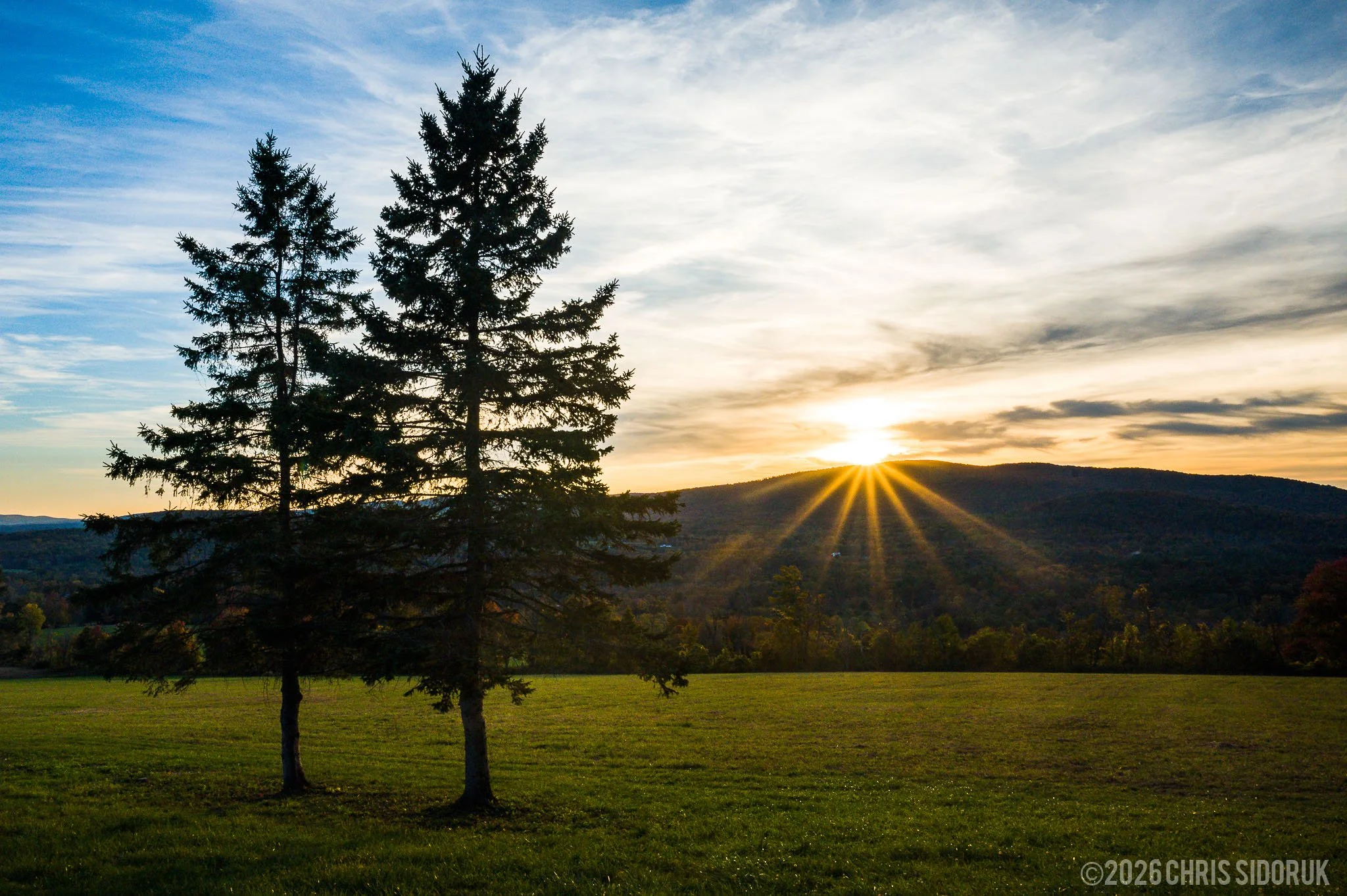
Best Camera Gear for Mount Greylock Photography
Mount Greylock does not require an extreme amount of specialized equipment, but having the right gear can make a significant difference.
Because the mountain offers such a wide range of photography opportunities—from sweeping summit views to detailed forest scenes—a flexible landscape photography setup works best.
The ideal kit should handle:
wide panoramic landscapes
compressed mountain layers
changing weather
hiking conditions
low-light sunrise and sunset situations
Recommended Camera Setup
A modern mirrorless or DSLR camera is more than capable of producing excellent Mount Greylock images.
The most important features are:
strong dynamic range
reliable autofocus
good low-light performance
weather resistance
comfortable handling during longer hikes
High-resolution cameras can be beneficial for landscape photography because they allow more cropping flexibility, especially when photographing distant mountain layers.
However, technique and conditions matter more than megapixel count.
A well-composed image from a mid-range camera will outperform a poorly timed image from expensive equipment.
Best Lenses for Mount Greylock Photography
Because Mount Greylock offers both expansive views and detailed landscape scenes, carrying more than one focal length is ideal.
Wide-Angle Lens (14mm–35mm)
Best for:
summit panoramas
dramatic skies
large foreground elements
environmental landscape images
A wide-angle lens helps capture the scale of the mountain and surrounding valleys.
Useful compositions include:
War Memorial Tower with surrounding landscape
winding mountain roads
dramatic cloud formations
autumn foliage stretching across ridgelines
Standard Zoom Lens (24mm–70mm)
A standard zoom is one of the most versatile options for Mount Greylock.
It works well for:
balanced landscape compositions
trail photography
forest scenes
roadside viewpoints
This range allows photographers to adjust quickly when moving between different viewpoints.
For many visitors, a 24–70mm lens could cover an entire photography trip.
Telephoto Lens (70mm–200mm+)
A telephoto lens is especially useful for Mount Greylock because the landscape naturally creates layered views.
Use it for:
compressed mountain ridges
distant peaks
isolated trees
atmospheric layers
Telephoto compression can create some of the strongest images from summit viewpoints.
Instead of showing the entire landscape, it allows photographers to focus on relationships between distant ridges and changing weather.
Tripod Recommendations
A tripod is not required for every Mount Greylock visit, but it becomes valuable in specific situations.
A tripod helps with:
sunrise photography
sunset photography
long exposures
fog conditions
low-light winter photography
focus stacking
It is especially useful when photographing:
moving clouds
changing light
detailed foreground compositions
For hiking, a lightweight carbon fiber tripod provides the best balance between stability and portability.
Filters for Landscape Photography
Filters can help control challenging lighting conditions.
Polarizing Filter
A circular polarizer can help:
reduce glare on foliage
deepen blue skies
improve contrast in certain conditions
enhance reflections
It is particularly useful during:
summer greenery
fall foliage
clear daylight conditions
Neutral Density (ND) Filters
ND filters allow longer exposures during brighter conditions.
Useful for:
moving clouds
creating smoother atmospheric effects
slowing water movement in streams
While not essential for every Mount Greylock image, they can add creative options.
Camera Bag and Hiking Gear
Mount Greylock photography often involves moving between locations, so comfort matters.
A good landscape photography bag should provide:
camera protection
comfortable hiking support
weather resistance
easy lens access
Additional useful items:
extra batteries
microfiber cloth
rain cover
headlamp for early starts
water and snacks
warm layers
Weather conditions at the summit can be dramatically different from lower elevations.
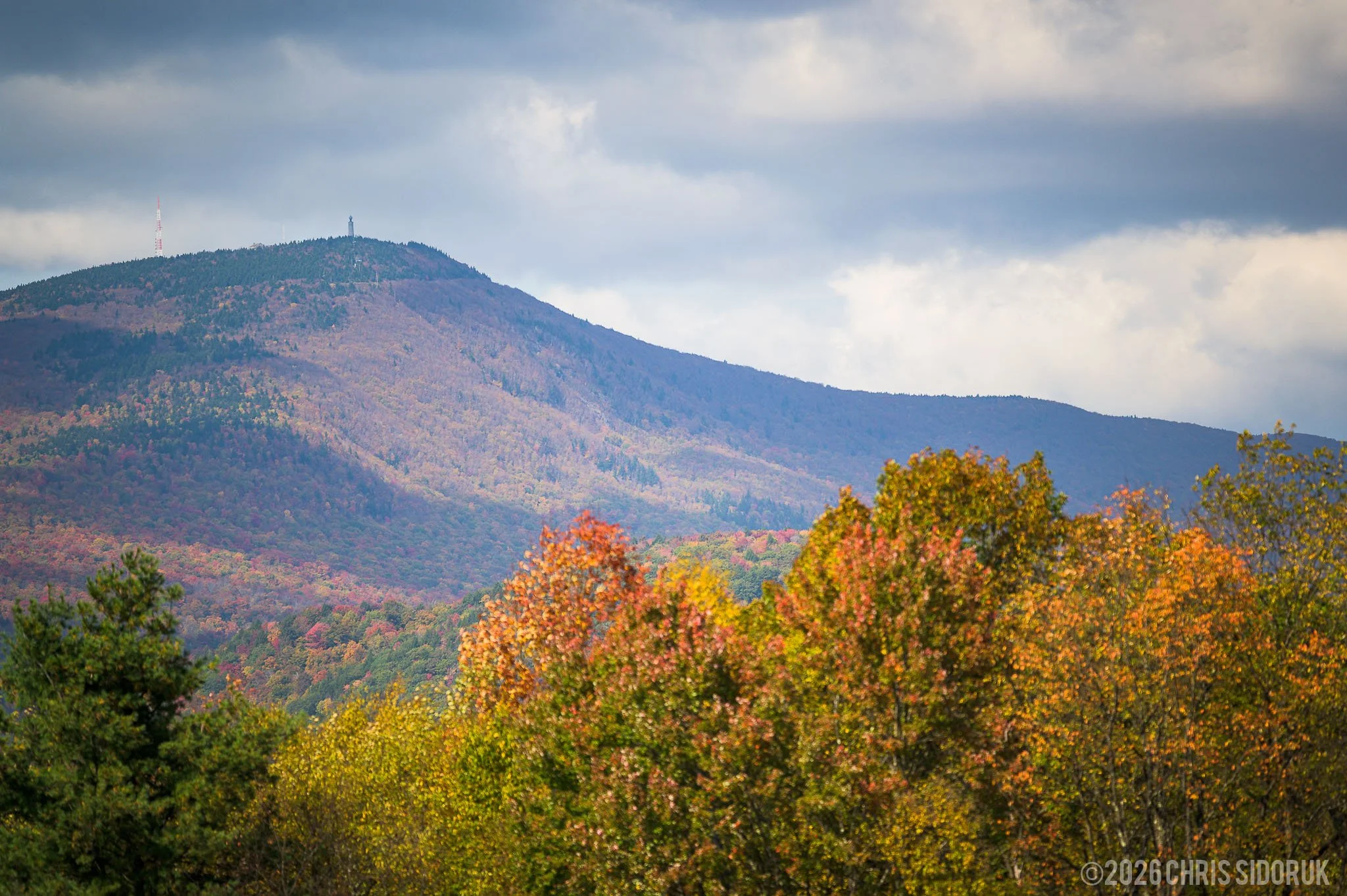
Mount Greylock is one of the strongest landscape photography locations in western Massachusetts, but the surrounding Berkshires offer many additional opportunities for photographers looking to expand their visit.
The region combines:
mountain landscapes
historic towns
scenic roads
forests
rivers
seasonal color changes
A Mount Greylock photography trip can easily become a larger New England landscape photography adventure.
Hairpin Turn — North Adams, Massachusetts
The famous Hairpin Turn overlook near North Adams provides one of the most recognizable roadside views in the Berkshires.
The location offers:
elevated valley views
winding road compositions
layered mountain landscapes
strong sunrise and sunset opportunities
The viewpoint works especially well during fall foliage when the surrounding hillsides transform into layers of color.
Photographers can use:
wide-angle lenses for environmental scenes
telephoto lenses for compressed mountain layers
Nearby Berkshires Photography Locations
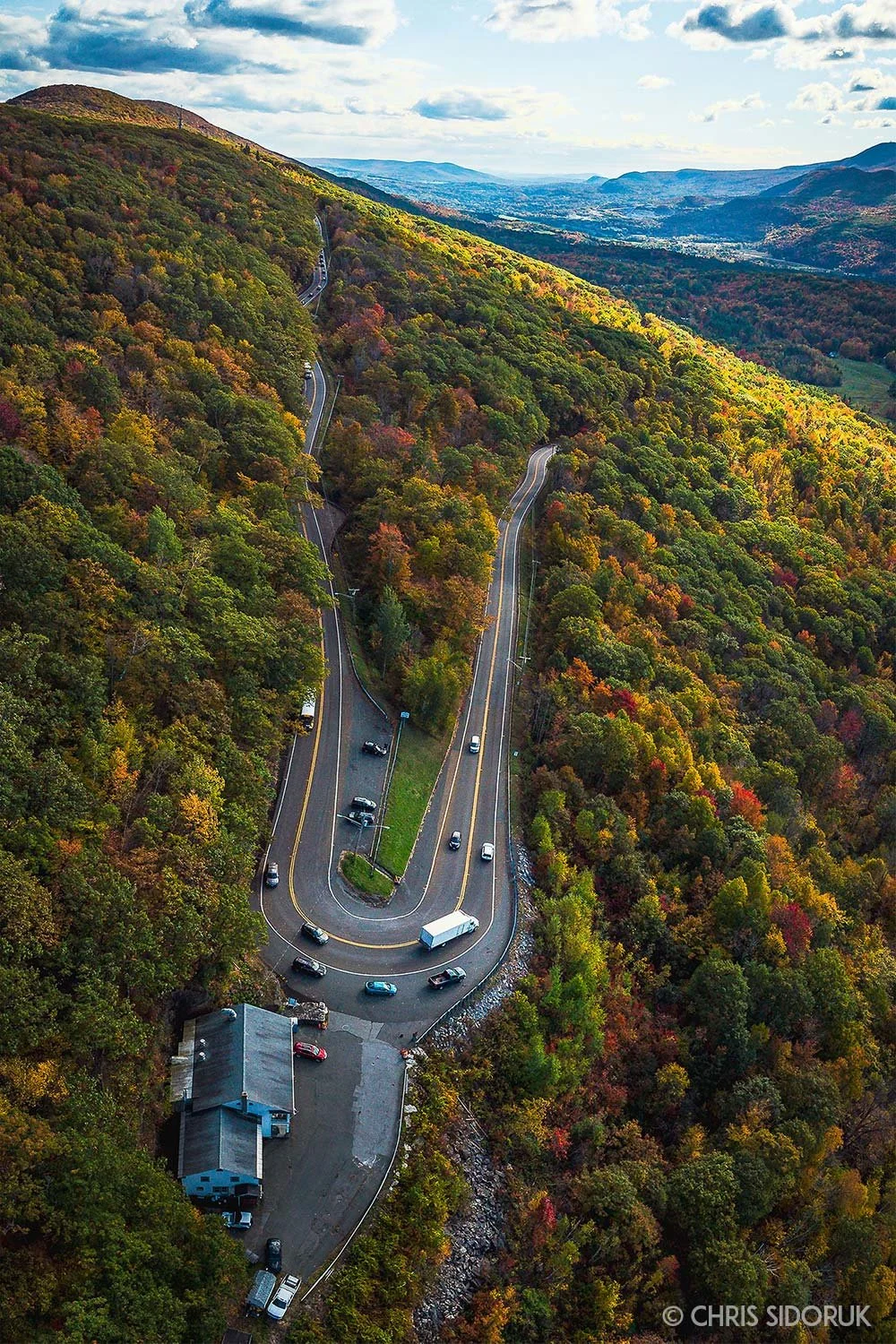
Famous hairpin turn in North Adams, Massachusetts
Natural Bridge State Park
Located in North Adams, Natural Bridge State Park offers a completely different type of landscape photography experience.
Instead of wide mountain views, the location focuses on:
rock formations
forest textures
flowing water
geological details
This makes it a good complement to Mount Greylock, especially during:
spring water flow
fall foliage
overcast conditions
Williamstown Photography Locations
The town of Williamstown provides classic New England scenery with:
historic buildings
tree-lined roads
mountain backdrops
seasonal landscapes
The area works well for photographers looking to combine landscape and travel photography.
More New England Landscape Photography
For photographers exploring beyond the Berkshires:
Explore additional locations:
Silver Sands State Park in Milford, Connecticut — coastal photography focused on tides, shoreline, and open water
Nubble Lighthouse in York, Maine — iconic coastal compositions and lighthouse photography
Portland Head Light in Cape Elizabeth, Maine — dramatic Atlantic coastline and historic architecture
Mount Greylock Photography Field Checklist
Before heading to Mount Greylock, consider bringing:
Camera Equipment
✓ Camera body with charged batteries
✓ Wide-angle lens for summit views
✓ Standard zoom lens for flexibility
✓ Telephoto lens for mountain layers
✓ Tripod for sunrise, sunset, and long exposures
Landscape Photography Accessories
✓ Polarizing filter
✓ Neutral density filter
✓ Lens cloth
✓ Weather protection
✓ Extra memory cards
Outdoor Essentials
✓ Warm layers
✓ Water and snacks
✓ Comfortable footwear
✓ Headlamp for early mornings
✓ Weather-resistant camera bag
Planning Checklist
Before leaving:
✓ Check mountain weather conditions
✓ Confirm road access
✓ Review sunrise/sunset timing
✓ Allow time to explore multiple viewpoints
✓ Be prepared for changing temperatures
Final Thoughts
Mount Greylock represents what makes New England landscape photography unique.
It is not simply a viewpoint with a single famous scene.
It is a changing landscape shaped by:
elevation
weather
seasons
light
atmosphere
The summit may provide the widest views, but some of the strongest photographs often come from adapting to conditions and exploring beyond the obvious locations.
A clear morning can reveal distant mountain layers. Fog can simplify the landscape into quiet shapes and textures. Fall can transform the entire mountain into a display of color.
The key to photographing Mount Greylock successfully is flexibility.
Return in different seasons. Explore different elevations. Let changing conditions become part of the image.
Location Information
Mount Greylock is located in the Berkshires of western Massachusetts near Adams and North Adams.
The mountain is accessible by several routes, with the summit area providing some of the most expansive views in Massachusetts.
Because conditions vary significantly by elevation, visitors should check current access information and weather conditions before traveling.
Frequently Asked Questions
What is the best time of year to photograph Mount Greylock?
The best time depends on the type of photography you want to create.
Fall is the most popular season because of the vibrant Berkshire foliage, but Mount Greylock offers opportunities year-round.
Spring provides fresh vegetation and changing weather
Summer offers easier access and longer daylight
Fall provides colorful mountain landscapes
Winter creates dramatic, minimal scenes
What is the best time of day for Mount Greylock photography?
Early morning and late afternoon are generally the best times for landscape photography.
Sunrise provides:
softer light
fewer visitors
calmer conditions
possible valley fog
Sunset provides:
warmer directional light
longer shadows
stronger landscape depth
Can you photograph Mount Greylock without hiking?
Yes.
Many of the most popular viewpoints, including the summit and War Memorial Tower area, are accessible by road when seasonal access allows.
However, hiking provides additional opportunities away from the most visited areas.
Is Mount Greylock good for fall foliage photography?
Yes.
Mount Greylock is one of the premier fall foliage photography locations in Massachusetts.
The mountain's elevation changes create a longer color transition period, with higher elevations often changing before surrounding valleys.
For detailed autumn planning, see:
Mount Greylock Fall Foliage Photography Guide (coming soon)
What lens is best for Mount Greylock?
A versatile landscape photography setup works best.
Recommended ranges:
16–35mm for wide summit landscapes
24–70mm for general-purpose shooting
70–200mm for compressed mountain layers
A telephoto lens is especially useful because Mount Greylock's distant ridgelines create strong opportunities for layered compositions.
Is a tripod necessary for Mount Greylock photography?
A tripod is not required, but it is useful for certain conditions.
It helps with:
sunrise and sunset photography
long exposures
fog photography
winter low-light conditions
detailed landscape compositions
For casual visits, a handheld setup can still produce excellent results.
Are drones allowed at Mount Greylock?
Drone regulations can change depending on land management rules and restrictions.
Always verify current regulations before flying.
Respect:
park rules
wildlife concerns
other visitors
privacy considerations
=====
Photography by Chris Sidoruk, a Connecticut photographer specializing in coastal landscapes, concert photography, and visual storytelling throughout New England.
Shot using a Nikon Z6 with settings for landscape photography.
All photographs © Chris Sidoruk. Images are protected by copyright and may not be used, copied, modified, or redistributed without written permission.
Explore More Photography Resources
Continue exploring New England photography locations:
Mount Greylock Fall Foliage Photography Guide
A dedicated guide covering peak autumn timing, foliage conditions, and fall landscape compositions.
Nubble Lighthouse Photography Guide | York, Maine
A coastal photography guide covering viewpoints, composition strategies, and changing ocean conditions.
Portland Head Light Photography Guide | Cape Elizabeth, Maine
Explore one of Maine's most iconic lighthouse locations through landscape photography.
New England Photography Guide
A collection of scenic locations, photography tips, and landscape inspiration throughout the Northeast.