

Best Camera Backpacks for Hiking (2026 Lightweight Guide)
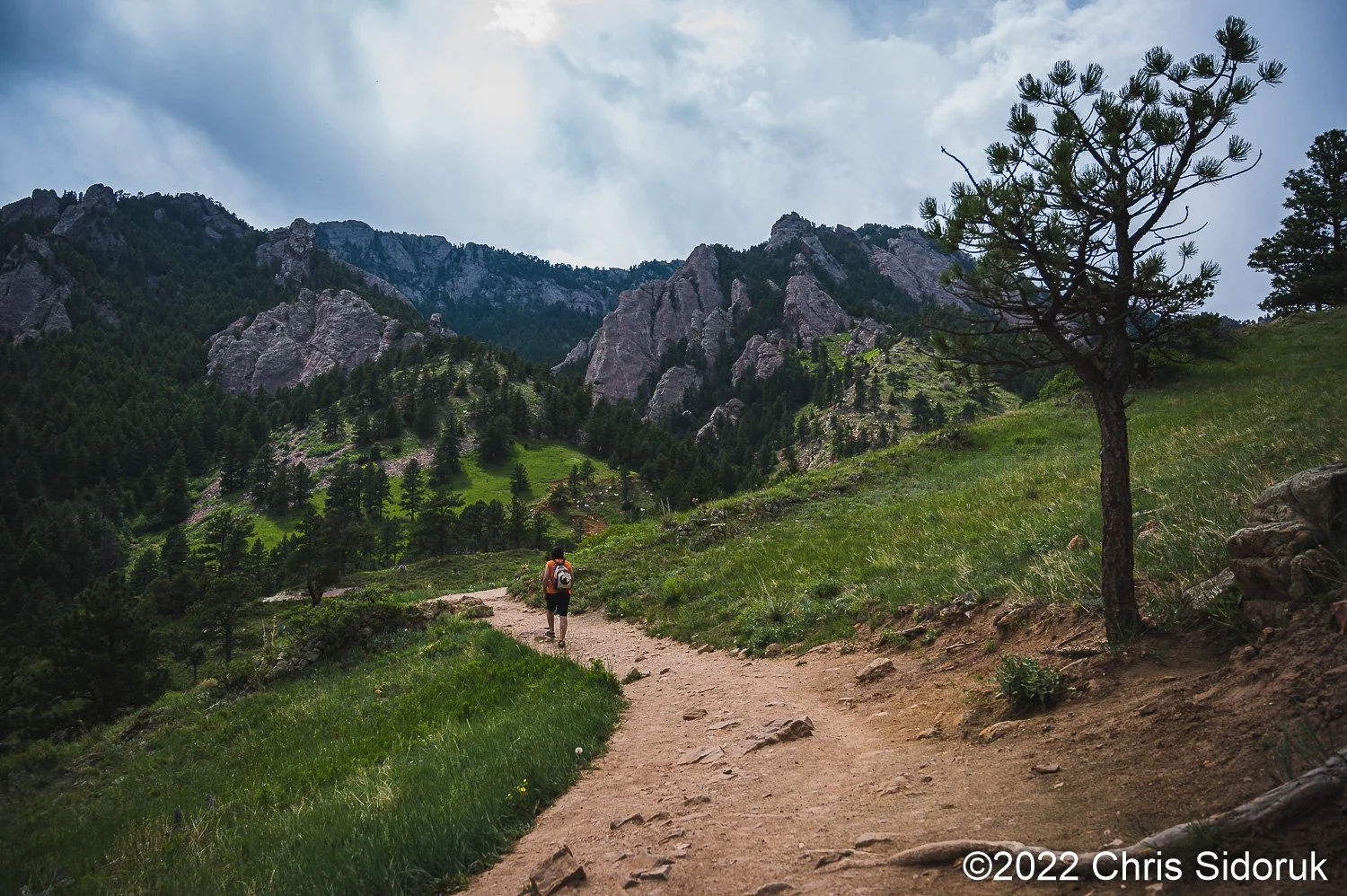
Hiking in Boulder, Colorado. photo- ©2022, Chris Sidoruk
*Some links in this article are affiliate links. If you purchase through them, it helps support my work at no extra cost to you.
==========
Last updated: July 2026
Quick Jump
A camera backpack can determine whether a hiking photography trip feels enjoyable or exhausting.
For landscape photographers, the best hiking camera backpack is not simply the one that carries the most equipment. A great outdoor photography backpack needs to balance several competing priorities:
comfortable carrying over long distances
protection from weather and rough conditions
quick access to your camera gear
enough space for hiking essentials
reasonable weight before you even load it
A backpack that works well in a city or airport may not be the best choice on a trail.
When hiking with a camera, you are usually carrying more than just photography equipment. You may also need:
water
extra layers
snacks
gloves
batteries
filters
tripod support
rain protection
The best camera backpacks for hiking are designed around that reality.
For 2026, the strongest options fall into a few categories:
lightweight day-hike backpacks
premium adventure photography packs
modular outdoor camera bags
compact minimalist setups
hybrid hiking and travel backpacks
In this guide, I’ll break down the best camera backpacks for hiking photographers, including lightweight options for landscape photography, outdoor adventures, and travel.
Quick Picks: Best Camera Backpacks for Hiking in 2026
If you want the short version, these are the hiking camera backpacks I would recommend for different types of photographers.
| Category | Backpack | Best For |
|---|---|---|
| Best Overall Hiking Camera Backpack | Lowepro PhotoSport Outdoor Backpack BP 24L AW III | Most landscape photographers |
| Best Premium Adventure Backpack | Shimoda Explore V2 30 | Serious outdoor photographers |
| Best Modular Lightweight Option | Peak Design Outdoor Backpack 25L | Flexible hiking setups |
| Best Compact Hiking Backpack | Think Tank BackLight 18L | Minimal camera kits |
| Best Hiking + Travel Hybrid | WANDRD PRVKE 21L | Photographers who do both |
Best Overall Hiking Camera Backpack
Backpack: Lowepro PhotoSport Outdoor Backpack BP 24L AW III
Best For: Most landscape photographers
Best Premium Adventure Backpack
Backpack: Shimoda Explore V2 30
Best For: Serious outdoor photographers
Best Modular Lightweight Option
Backpack: Peak Design Outdoor Backpack 25L
Best For: Flexible hiking setups
Best Compact Hiking Backpack
Backpack: Think Tank BackLight 18L
Best For: Minimal camera kits
Best Hiking + Travel Hybrid
Backpack: WANDRD PRVKE 21L
Best For: Photographers who do both
Camera Backpack Comparison Table
Choosing a hiking camera backpack comes down to how much gear you carry and how much hiking you actually do.
A photographer carrying one mirrorless body and two lenses has very different needs than someone carrying a full landscape kit with multiple lenses, tripod, filters, and outdoor equipment.
| Backpack | Capacity | Best For | Key Advantage | Considerations |
|---|---|---|---|---|
| Lowepro PhotoSport Outdoor BP 24L AW III | 24L | Landscape photographers and day hikes | Designed specifically for hiking and photography | Less premium feel than adventure packs |
| Shimoda Explore V2 30 | 30L | Serious outdoor and travel photographers | Excellent comfort and modular system | Higher price and heavier build |
| Peak Design Outdoor Backpack 25L | 25L | Lightweight modular setups | Flexible camera + outdoor storage | Requires inserts for best camera organization |
| Think Tank BackLight 18L | 18L | Minimalist photographers | Fast rear camera access | Limited space for larger kits |
| WANDRD PRVKE 21L | 21L | Travel and hiking combination | Stylish hybrid design | Less trail-focused than dedicated hiking bags |
Lowepro PhotoSport Outdoor BP 24L AW III
Capacity: 24L
Best For: Landscape photographers and day hikes
Key Advantage: Designed specifically for hiking and photography
Considerations: Less premium feel than adventure packs
Shimoda Explore V2 30
Capacity: 30L
Best For: Serious outdoor and travel photographers
Key Advantage: Excellent comfort and modular system
Considerations: Higher price and heavier build
Peak Design Outdoor Backpack 25L
Capacity: 25L
Best For: Lightweight modular setups
Key Advantage: Flexible camera + outdoor storage
Considerations: Requires inserts for best camera organization
Think Tank BackLight 18L
Capacity: 18L
Best For: Minimalist photographers
Key Advantage: Fast rear camera access
Considerations: Limited space for larger kits
WANDRD PRVKE 21L
Capacity: 21L
Best For: Travel and hiking combination
Key Advantage: Stylish hybrid design
Considerations: Less trail-focused than dedicated hiking bags
What Makes a Good Hiking Camera Backpack?
Not every camera backpack is designed for hiking.
Many bags are excellent for:
airports
city photography
studio work
commuting
but become uncomfortable after several miles on a trail.
A good hiking camera backpack needs to function like both a camera bag and an outdoor pack.
Comfort and Carrying System
The most important feature of a hiking camera backpack is comfort.
A bag that feels fine for 30 minutes may become painful after several hours.
Look for:
padded shoulder straps
breathable back panel
adjustable torso support
hip belt support
balanced weight distribution
A good harness system moves weight away from your shoulders and distributes it through your hips and core.
This matters especially when carrying heavier camera systems such as:
full-frame bodies
telephoto lenses
multiple batteries
tripod equipment
Weight
A backpack’s weight matters before you add any gear.
A heavy camera bag can quickly turn a comfortable hike into a frustrating experience.
For landscape photographers, lighter is usually better because you are often:
walking longer distances
climbing elevation
waiting for changing light
carrying a tripod
However, the lightest bag is not always the best option.
A slightly heavier backpack may be worthwhile if it provides:
better comfort
improved weather protection
stronger support
easier organization
The goal is balance.
Camera Access
How quickly you can reach your camera matters.
Different photographers prefer different access styles.
Side Access
Advantages:
quick lens changes
fast camera retrieval
useful when actively shooting
Best for:
hiking photographers who stop frequently
wildlife photographers
changing conditions
Rear Access
Advantages:
better security
cleaner organization
keeps camera compartment away from dirt
Best for:
landscape photographers
wet environments
photographers who set up carefully
Top Access
Advantages:
simple storage
easy access to personal gear
Best for:
hybrid hiking/travel bags
Space for Hiking Essentials
A common mistake is buying a backpack that fits camera gear but nothing else.
A good hiking camera backpack should leave room for:
water bottle or hydration system
rain jacket
snacks
gloves
maps or electronics
personal items
For most photographers, a 20L–30L backpack is the sweet spot.
It provides enough room for a serious photography setup without becoming unnecessarily bulky.
Weather Protection
Outdoor photography means unpredictable conditions.
A good hiking camera backpack should provide protection against:
rain
dust
snow
accidental drops
rough terrain
Important features include:
weather-resistant materials
sealed zippers
included rain cover
durable exterior fabric
Remember:
Most camera backpacks are weather resistant, not completely waterproof.
For serious storms or exposed environments, additional protection is still recommended.
Tripod Carrying Options
Landscape photographers often carry a tripod, making tripod storage an important consideration.
Look for:
dedicated tripod attachment points
side pockets
compression straps
secure mounting systems
A poorly designed tripod attachment can make a backpack feel awkward and unbalanced.
Camera Protection and Organization
A good hiking backpack should protect your equipment without making access frustrating.
Important features include:
padded camera compartments
removable dividers
customizable layouts
separate accessory pockets
The best systems let you customize the bag around your actual kit.
A photographer carrying a Nikon Z9 with large lenses needs a different setup than someone hiking with a compact mirrorless camera.
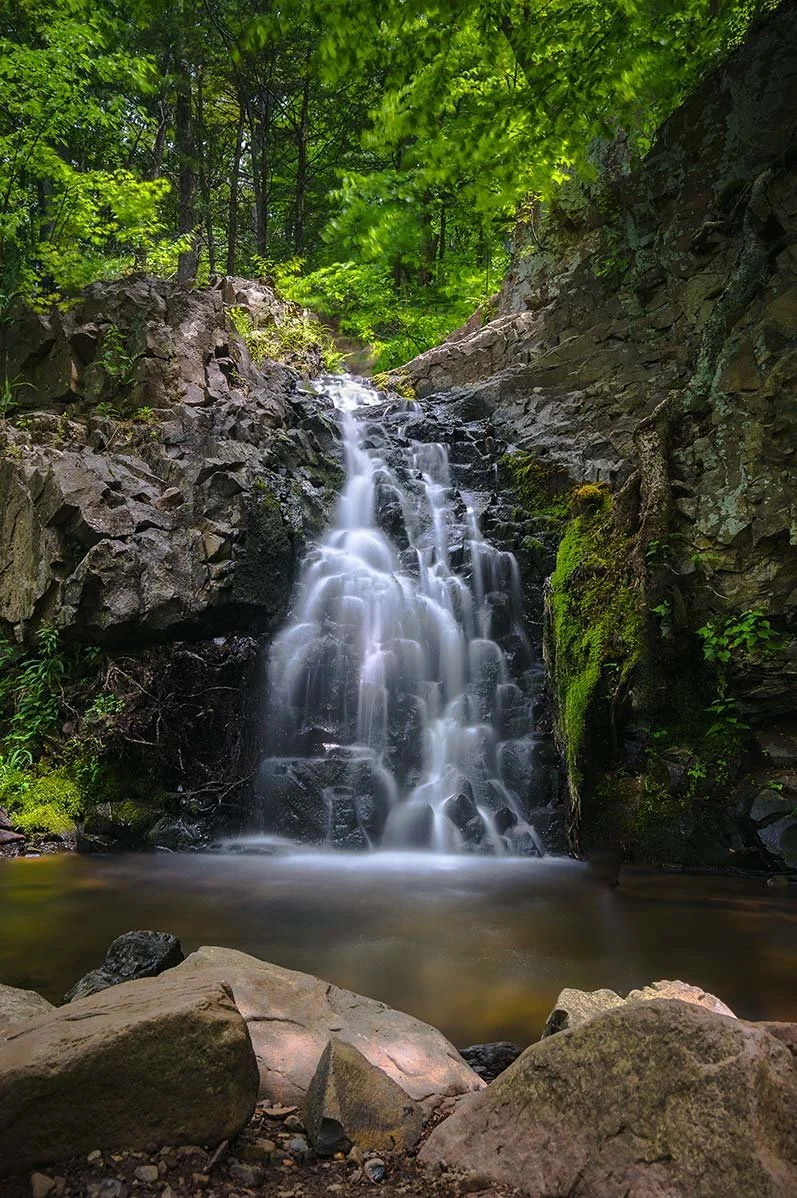
Westfield Falls in Middletown, Connecticut. photo- ©2020, Chris Sidoruk
Best Camera Backpacks for Hiking in 2026
The best hiking camera backpack depends on how you actually photograph outdoors.
A landscape photographer hiking several miles to reach sunrise light has different needs than a travel photographer walking through a city or a photographer carrying a full professional kit.
The backpacks below represent the strongest options for different types of hiking photographers in 2026, ranging from lightweight day-hike solutions to premium adventure packs.
1. Lowepro PhotoSport Outdoor Backpack BP 24L AW III
Best Overall Hiking Camera Backpack
Best for: Landscape photographers, day hikes, outdoor photography
Capacity: 24L
Ideal kit: Mirrorless or DSLR body, 2–4 lenses, tripod, hiking essentials
The Lowepro PhotoSport Outdoor Backpack BP 24L AW III remains one of the easiest recommendations for photographers who actually spend time on trails.
Unlike many camera backpacks that are designed primarily around carrying equipment, the PhotoSport line was built specifically around outdoor photography. It combines a traditional hiking-style carrying system with dedicated camera storage, making it one of the better-balanced options for landscape photographers.
The biggest advantage of this backpack is that it does not feel like a camera bag pretending to be a hiking pack.
It provides:
comfortable hiking support
dedicated camera protection
space for outdoor essentials
weather protection
practical trail organization
For photographers who regularly hike to locations like waterfalls, mountain overlooks, coastlines, or remote landscape viewpoints, this type of design makes a noticeable difference.
Why Landscape Photographers Will Like It
The PhotoSport 24L hits a practical middle ground.
It is large enough for:
camera body
multiple lenses
batteries
filters
accessories
tripod support
but still compact enough that it does not feel excessive on shorter hikes.
For a typical landscape setup such as:
full-frame mirrorless camera
wide-angle lens
standard zoom
telephoto lens
tripod
this capacity is usually enough.
Strengths
✔ Designed specifically for hiking photographers
✔ Comfortable harness system for longer hikes
✔ Good balance between camera gear and personal storage
✔ Lightweight compared with larger adventure packs
✔ Includes weather protection features
✔ Great size for day hikes
Considerations
✘ Less premium materials than higher-end adventure bags
✘ Limited expansion compared with larger modular systems
✘ Not ideal for carrying extremely large professional kits
Who Should Buy the Lowepro PhotoSport 24L?
This is the backpack I would recommend for most landscape photographers.
It makes the most sense for:
hiking photographers
waterfall photographers
mountain landscape shooters
travel photographers who spend time outdoors
photographers who want one practical everyday adventure pack
If you want a backpack that you will actually bring on the trail regularly, this is one of the safest choices.
Check current price and availability:
2. Shimoda Explore V2 30
Best Premium Adventure Camera Backpack
Best for: Serious outdoor photographers, travel photographers, multi-day adventures
Capacity: 30L
Ideal kit: Multiple bodies, lenses, drone equipment, larger accessories
The Shimoda Explore V2 30 is one of the strongest choices for photographers who want a premium outdoor photography system.
Shimoda has built a reputation around adventure-focused camera backpacks, and the Explore V2 represents the type of bag designed for photographers who push beyond casual day hikes.
The biggest advantage of Shimoda is flexibility.
The modular insert system allows photographers to configure the bag around their specific equipment instead of forcing everyone into the same layout.
Why It Stands Out
The Explore V2 is especially appealing for photographers carrying more equipment.
It works well for:
multiple camera bodies
larger lenses
drones
filters
accessories
additional outdoor gear
Compared with smaller hiking backpacks, it feels more like a complete expedition photography system.
Comfort and Carrying
Where Shimoda separates itself is comfort.
For heavier loads, features like:
adjustable torso height
supportive harness design
hip belt support
balanced weight distribution
become increasingly important.
A backpack that feels comfortable with 10 pounds of gear may feel completely different with 25 pounds.
Strengths
✔ Excellent carrying comfort
✔ Premium construction quality
✔ Highly customizable interior
✔ Great for larger camera kits
✔ Strong adventure/travel crossover
✔ Better suited for demanding conditions
Considerations
✘ More expensive
✘ Heavier than lightweight day-hike options
✘ More backpack than some photographers need
Who Should Buy the Shimoda Explore V2 30?
This is the better choice if photography is the primary purpose of your adventure.
It makes sense for:
serious landscape photographers
travel photographers
photographers carrying drones
multi-day hiking trips
photographers with expensive camera systems
If you regularly find yourself wishing your backpack had more room, Shimoda is worth considering.
Check current price and availability:
3. Peak Design Outdoor Backpack 25L
Best Lightweight Modular Hiking Camera Backpack
Best for: Minimalist photographers, flexible setups, outdoor/travel crossover
Capacity: 25L
Ideal kit: Mirrorless camera, small lens collection, hiking essentials
Peak Design has always focused on creating camera gear that blends into everyday life, and the Outdoor Backpack 25L represents a more hiking-focused direction.
Compared with traditional camera backpacks, it feels less like a dedicated gear case and more like a versatile outdoor pack that can adapt around photography.
That flexibility is the biggest reason to consider it.
Why It Works for Hiking
The Outdoor Backpack 25L is appealing because many photographers do not want to carry a bulky camera-specific bag.
Instead, they want something that can handle:
camera equipment
jackets
water
snacks
travel items
everyday carry
Peak Design’s modular approach makes this possible.
Strengths
✔ Lightweight design
✔ Flexible organization
✔ Excellent everyday usability
✔ Good for travel + hiking combination
✔ Modern minimalist design
Considerations
✘ Requires thoughtful setup for camera organization
✘ Not as hiking-specific as Lowepro or Shimoda
✘ Large professional kits may feel cramped
Who Should Buy the Peak Design Outdoor Backpack 25L?
This is best for photographers who prefer a lighter, simpler approach.
Great for:
mirrorless photographers
travel photographers
casual landscape shooters
photographers who dislike bulky bags
It is especially appealing if you want one backpack that can serve multiple purposes.
Check current price and availability:
4. Think Tank BackLight 18L
Best Compact Hiking Camera Backpack
Best for: Minimalist hikers, smaller camera kits, fast access shooting
Capacity: 18L
Ideal kit: One camera body, 2–3 lenses, essentials
The Think Tank BackLight 18L is a great option for photographers who intentionally keep their hiking kit small.
Not every outdoor photographer needs a 30-liter backpack.
For many day hikes, carrying less gear actually leads to better experiences because you spend more time photographing and less time managing equipment.
The Biggest Advantage: Access
Think Tank’s rear-access design is one of its biggest selling points.
Instead of placing your bag on the ground to access your equipment, you can rotate it around and reach your camera gear while keeping the harness clean.
This is especially useful for:
muddy trails
wet environments
rocky viewpoints
quick composition changes
Strengths
✔ Excellent camera access system
✔ Compact and lightweight
✔ Comfortable for smaller kits
✔ Good organization
✔ Great for travel
Considerations
✘ Limited capacity
✘ Less room for hiking equipment
✘ Not ideal for large telephoto lenses
Who Should Buy the Think Tank BackLight 18L?
This is ideal for photographers who believe less is more.
Great for:
mirrorless shooters
lightweight hikers
photographers carrying one camera body
short day trips
Check current price and availability:
5. WANDRD PRVKE 21L
Best Hiking + Travel Hybrid Camera Backpack
Best for: Travel photographers, city-to-trail photographers, hybrid use
Capacity: 21L
Ideal kit: Camera gear plus personal items
The WANDRD PRVKE 21L sits in an interesting category.
It is not the most trail-focused backpack here, but it remains popular because it bridges photography, travel, and everyday use.
For photographers who frequently move between:
airports
cities
outdoor locations
casual hikes
the PRVKE remains a compelling option.
Why People Like It
The PRVKE is designed around flexibility.
It works well when you need:
camera protection
laptop storage
travel organization
clean design
everyday usability
It looks less like a hiking backpack and more like a premium travel bag.
Strengths
✔ Excellent travel functionality
✔ Attractive minimalist design
✔ Durable construction
✔ Good camera protection
✔ Works well beyond photography
Considerations
✘ Not the most comfortable for long hikes
✘ Less outdoor-focused than Lowepro or Shimoda
✘ Limited ventilation compared with hiking-specific packs
Who Should Buy the WANDRD PRVKE 21L?
This is best for photographers who want one bag for everything.
It makes sense for:
travel photographers
photographers who mix hiking and urban shooting
creators who need laptop storage
casual outdoor photographers
Check current price and availability:
Quick Recommendation Summary
| If You Are... | Choose |
|---|---|
| Hiking frequently with landscape gear | Lowepro PhotoSport 24L AW III |
| Carrying a professional outdoor kit | Shimoda Explore V2 30 |
| Wanting a lightweight flexible backpack | Peak Design Outdoor Backpack 25L |
| Hiking with minimal gear | Think Tank BackLight 18L |
| Wanting one bag for travel + photography | WANDRD PRVKE 21L |
Hiking frequently with landscape gear
Choose: Lowepro PhotoSport 24L AW III
Carrying a professional outdoor kit
Choose: Shimoda Explore V2 30
Wanting a lightweight flexible backpack
Choose: Peak Design Outdoor Backpack 25L
Hiking with minimal gear
Choose: Think Tank BackLight 18L
Wanting one bag for travel + photography
Choose: WANDRD PRVKE 21L
Best Camera Backpack by Photographer Type
One of the biggest mistakes photographers make is choosing a backpack based solely on storage capacity.
The better approach is to choose a backpack that matches how you photograph.
Someone hiking five miles with one mirrorless camera has very different needs than a photographer carrying a drone, telephoto lens, and camping gear. Comfort, access, and organization often matter more than simply fitting the most equipment.
Best Overall for Most Landscape Photographers
Lowepro PhotoSport Outdoor Backpack BP 24L AW III
If I could only recommend one hiking camera backpack to most photographers, this would be it.
It strikes an excellent balance between:
comfort
weight
camera protection
hiking functionality
affordability
It's built for photographers who actually spend time on trails rather than simply carrying gear from a parking lot to a viewpoint.
Recommended for:
Landscape photographers
Waterfall photography
Coastal photography
Day hikes
State and national parks
Best Premium Adventure Backpack
Shimoda Explore V2 30
If photography is a serious part of your outdoor adventures, Shimoda is difficult to beat.
This backpack is ideal for photographers carrying:
multiple camera bodies
telephoto lenses
drones
filters
larger accessories
The adjustable harness system is one of its biggest strengths, especially on longer hikes with heavier loads.
Recommended for:
Professional photographers
Adventure travel
Multi-day hiking trips
Large mirrorless kits
Best Lightweight Modular Backpack
Peak Design Outdoor Backpack 25L
Peak Design's Outdoor Backpack is ideal for photographers who want flexibility.
Instead of being dedicated solely to photography, it adapts well between:
hiking
travel
commuting
everyday carry
It's a great option if photography is only one part of your outdoor activities.
Recommended for:
Mirrorless users
Minimalist photographers
Outdoor travel
Everyday carry
Best Compact Hiking Backpack
Think Tank BackLight 18L
Sometimes carrying less gear results in better photography.
The BackLight 18L is perfect for photographers who intentionally keep their kit small.
Its rear-panel access is especially useful on muddy or rocky trails because you don't have to place the backpack directly on the ground.
Recommended for:
One-camera kits
Short hikes
Lightweight landscape photography
Minimalist workflows
Best Hiking + Travel Backpack
WANDRD PRVKE 21L
The PRVKE is one of the best hybrid options available.
It isn't quite as hiking-focused as the Lowepro or Shimoda, but it transitions exceptionally well between:
airports
cities
hiking trails
everyday photography
If you only want to own one backpack, this is one of the strongest all-around choices.
Camera Backpack vs Hiking Backpack
Many photographers eventually ask the same question:
Do I actually need a dedicated camera backpack?
The answer depends on how often photography is the primary purpose of your hike.
Dedicated Camera Backpack
Advantages:
Better camera protection
Faster access
Padded dividers
Better lens organization
Tripod carrying systems
Best for:
Landscape photography
Wildlife photography
Dedicated photo trips
Traditional Hiking Backpack
Advantages:
Usually lighter
Better ventilation
More room for hiking equipment
Often more comfortable over long distances
Many photographers successfully combine a quality hiking backpack with a removable camera insert.
This approach can work well if your priority is hiking first and photography second. It's also a common recommendation among experienced hikers who carry smaller camera kits.
Which Is Better?
If photography is the reason you're heading into the mountains, I would recommend a dedicated hiking camera backpack.
If hiking is the primary activity and you only carry one camera with a small lens, adapting a hiking backpack with a camera insert can also work well.
How Much Camera Backpack Capacity Do You Need?
One of the easiest mistakes is buying too much backpack.
Bigger is not always better.
18–20 Liters
Ideal for:
One mirrorless camera
Two lenses
Batteries
Filters
Snacks
Water bottle
Best for:
Short hikes
Travel
Minimalist photographers
24–25 Liters
This is my favorite size range.
It provides enough room for:
Camera body
3–4 lenses
Tripod
Jacket
Filters
Batteries
Lunch
without becoming bulky.
For most landscape photographers, this is the sweet spot.
30 Liters
Ideal if you carry:
Drone
Multiple bodies
Telephoto lenses
Extra clothing
More outdoor equipment
Excellent for:
Full-day hikes
Adventure travel
Professional work
40L+
Generally only recommended for:
Overnight trips
Winter photography
Expedition-style travel
For normal landscape photography, these bags often become unnecessarily large.
Important Features to Look For
A backpack's feature list can quickly become overwhelming.
In practice, I would prioritize these features above everything else:
Comfort
The best camera backpack is the one you can comfortably wear for hours.
A quality harness system matters far more than having dozens of pockets.
Weather Resistance
Look for:
water-resistant fabric
weather-sealed zippers
included rain cover
Even weather-resistant backpacks should be paired with extra protection during heavy rain.
Tripod Carry System
Landscape photographers almost always carry a tripod.
Look for secure attachment points that keep the tripod balanced against the backpack.
Poor tripod placement often causes unnecessary shoulder fatigue.
Camera Access
Think about your shooting style.
If you frequently stop for quick compositions, side access may save time.
If you carefully set up every shot, rear access generally provides better organization and security.
Organization
Good organization means less time digging through your bag.
Features worth having:
removable dividers
accessory pockets
battery storage
memory card organization
hydration compatibility
Final Buying Advice
No backpack is perfect for every photographer.
Instead of asking,
"Which backpack is the best?"
ask,
"Which backpack best matches the way I photograph?"
If you're primarily photographing landscapes throughout New England—as I often do—a lightweight backpack that balances camera protection with hiking comfort is far more valuable than one designed to carry every piece of equipment you own.
For most photographers, my recommendations are:
Best Overall:Lowepro PhotoSport Outdoor Backpack BP 24L AW III
Best Premium:Shimoda Explore V2 30
Best Lightweight Modular:Peak Design Outdoor Backpack 25L
Best Compact:Think Tank BackLight 18L
Best Travel Hybrid:WANDRD PRVKE 21L
No matter which one you choose, remember that the best camera backpack is the one you'll actually want to carry on the trail.
Final Thoughts
A camera backpack is one of those pieces of gear you rarely think about until you've spent several hours hiking with one that doesn't fit well.
After that, it becomes one of the most important purchases you'll make.
The right backpack protects your equipment, distributes weight comfortably, and lets you focus on the trail and the photographs you're there to create—not on sore shoulders or constantly rearranging your gear. When matched to your camera kit and hiking style, a good backpack becomes an essential part of your landscape photography workflow rather than just another piece of equipment.
Frequently Asked Questions
What is the best camera backpack for hiking?
For most photographers, the Lowepro PhotoSport Outdoor Backpack BP 24L AW III offers the best balance of comfort, protection, weight, and outdoor functionality.
What size backpack is best for hiking with camera gear?
For most day hikes, a 24–30L backpack provides enough room for camera gear, water, snacks, an extra layer, filters, and a tripod without becoming overly bulky.
Are camera backpacks waterproof?
Most camera backpacks are weather resistant rather than fully waterproof.
Look for models with durable water-resistant materials and an included rain cover for additional protection in heavy rain.
Is carbon fiber tripod storage important?
Yes.
Landscape photographers almost always carry a tripod, so secure tripod attachment points are an important consideration when choosing a hiking backpack.
Can I use a regular hiking backpack instead?
Absolutely.
Many photographers successfully use hiking backpacks combined with padded camera inserts.
However, dedicated camera backpacks provide better organization, faster access, and more protection for photography equipment.
What's the best hiking backpack for mirrorless cameras?
If you carry a relatively compact mirrorless setup, the Peak Design Outdoor Backpack 25L, Think Tank BackLight 18L, and Lowepro PhotoSport Outdoor Backpack BP 24L AW III are all excellent choices depending on how much additional hiking gear you typically carry.
==========
Explore More Photography Gear
If you're building a complete outdoor photography kit, these guides may also help:
→ Best Cameras for Landscape Photography
→ Best Lenses for Landscape Photography
→ Best Tripods for Landscape Photography
→ Best Cameras for Astrophotography
