

Best Camera Settings for Landscape Photography (Complete Guide)
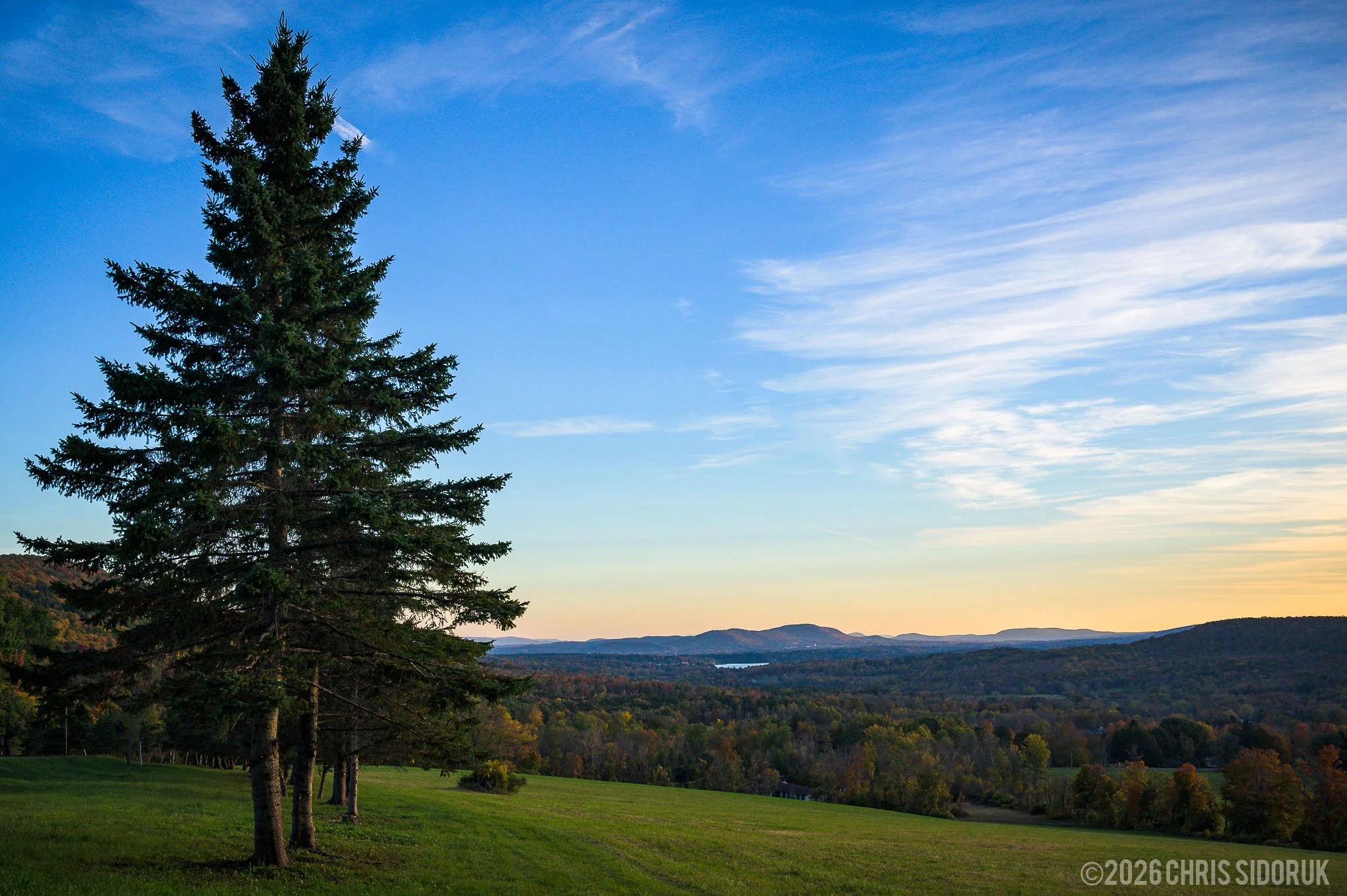
Sunset over the Berkshires, taken from Mount Greylock.
==========
Getting the right camera settings for landscape photography doesn’t need to be complicated.
Most great landscape images come down to a few simple choices: aperture, ISO, shutter speed, and how you balance them based on the scene in front of you.
This guide breaks down the best settings for landscape photography in a practical, real-world way so you can spend less time adjusting your camera and more time actually shooting.
Quick Settings
| Setting | Starting Point |
|---|---|
| ISO | 100 |
| Aperture | f/8–f/11 |
| Shutter Speed | Adjust for conditions |
| Focus | Single-point or manual focus |
| File Type | RAW |
ISO
100
Aperture
f/8–f/11
Shutter Speed
Adjust for conditions
Focus
Single-point or manual focus
File Type
RAW
The Best Starting Settings for Landscape Photography
If you want a simple baseline, start here:
Aperture: f/8 to f/11
ISO: 100 (or lowest native ISO)
Shutter Speed: adjust based on light
Focus: single point or manual focus
These settings will work for most landscape situations and give you a strong starting point.
Getting your settings right is only part of the process though. Composition plays just as big of a role in how your final image looks.
See: Landscape Photography Composition Tips
👉: See real landscape settings in action
Aperture: Where Sharpness Comes From
Aperture controls depth of field, which is one of the most important parts of landscape photography.
Best aperture for landscapes:
👉 f/8 to f/11
This range gives you:
sharp foreground and background
strong overall image quality
minimal diffraction
When to adjust:
Use f/5.6 if you need more light
Use f/13–f/16 if you need extra depth (but avoid going too high)
👉 Your lens choice plays a big role here. See my full breakdown of the Best Lenses for Landscape Photography
ISO: Keep It Low
For landscape photography, you almost always want the lowest ISO possible.
Best ISO:
👉 ISO 100
This gives you:
the cleanest image
the most dynamic range
the best color detail
When to raise ISO:
handheld shooting
low light without a tripod
windy conditions
👉 If you’re shooting handheld often, your camera matters more. See the Best Cameras for Landscape Photography
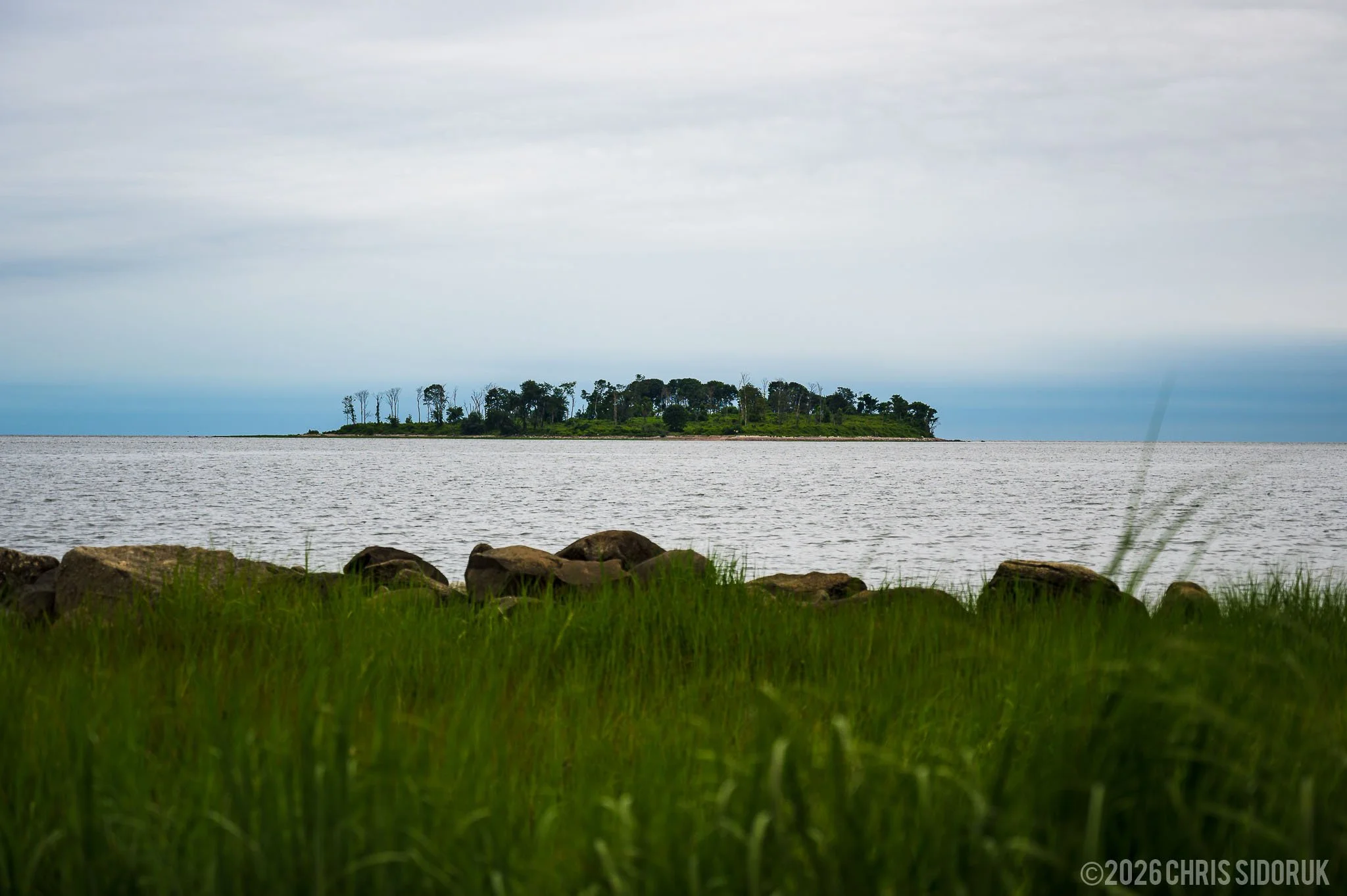
Charles Island viewed from the boardwalk at Silver Sands State Park in Milford, CT.
Shutter Speed: Controlled by the Scene
Shutter speed is the most flexible setting in landscape photography.
Instead of choosing it first, you adjust it based on your aperture and ISO.
General rule:
👉 Let shutter speed fall where it needs to
Examples:
Bright daylight → faster shutter
Sunrise/sunset → slower shutter
Long exposure → very slow shutter
👉 For slower shutter speeds, stability becomes critical. See the Best Tripods for Landscape Photography
Focus Settings for Landscapes
Focus is often overlooked, but it matters.
Best options:
Single-point autofocus
Manual focus (for more control)
Where to focus:
👉 About one-third into the scene
This helps keep both foreground and background sharp.
Shooting Mode: Aperture Priority vs Manual
Both work well.
Aperture Priority (A/Av)
faster
easier for changing light
Manual Mode
more control
better for consistent exposures
👉 If you’re starting out, Aperture Priority is usually the easiest choice.
When to Use a Tripod
A tripod isn’t always required, but it makes a big difference.
Use one when:
light is low
you want maximum sharpness
you’re shooting long exposures
👉 See my full guide to the Best Tripods for Landscape Photography
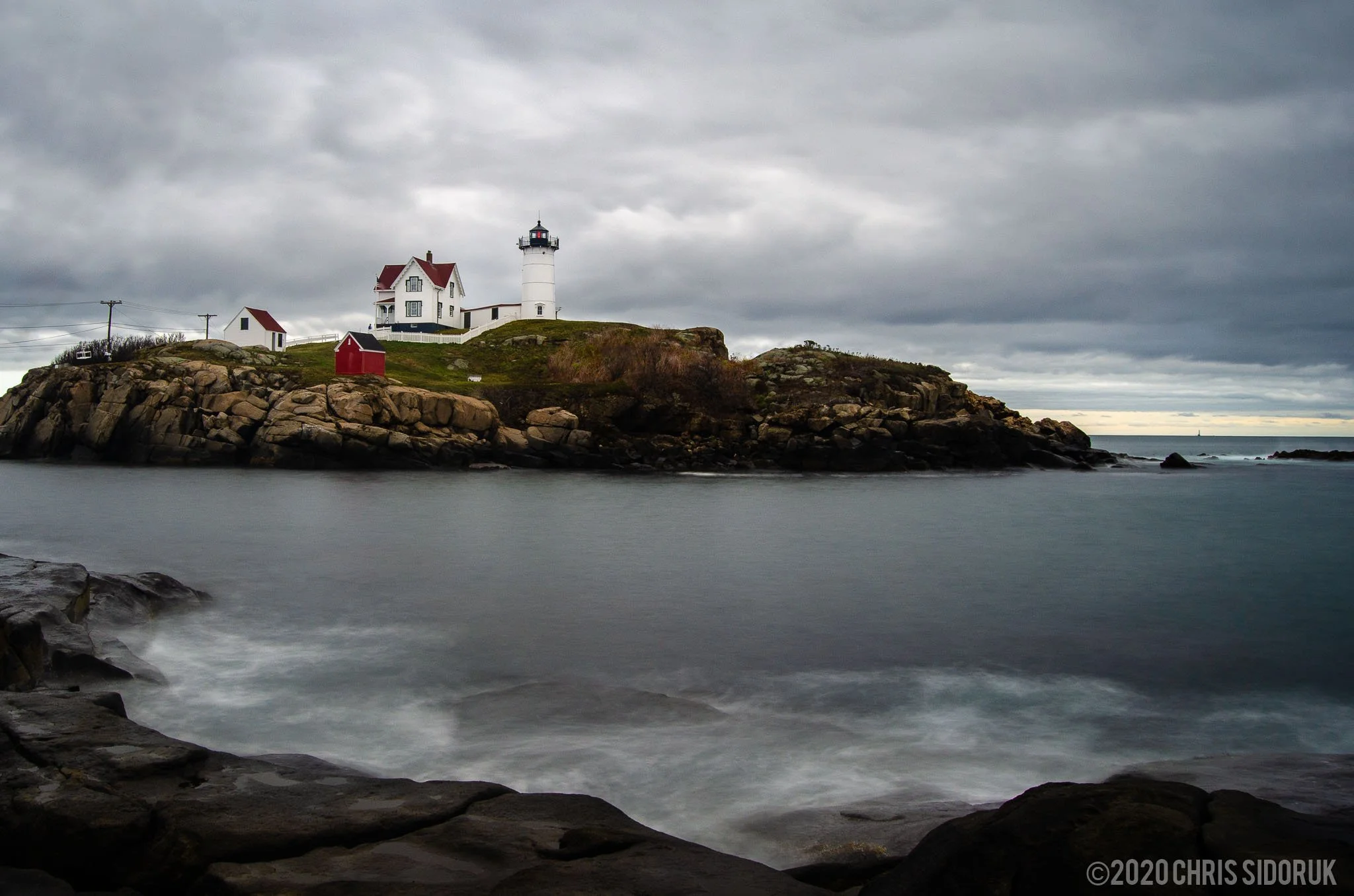
Long exposure photograph taken at Nubble Lighthouse in York, Maine.
Long Exposure Settings (Quick Guide)
If you want motion in your image:
ISO: 100
Aperture: f/8
Shutter: 5–30 seconds
👉 Full breakdown here:
How to Shoot Long Exposure Landscape Photos
Common Mistakes to Avoid
1. Using too high ISO
This reduces image quality for no reason.
2. Using very small apertures (f/22)
Leads to soft images from diffraction.
3. Ignoring stability
Even slight movement can ruin sharpness.
4. Overthinking settings
Most landscapes fall into similar ranges.
Final Thoughts
If you want one takeaway:
You don’t need perfect settings. You need consistent ones.
Start with:
f/8 to f/11
ISO 100
adjust shutter speed
From there, your results will improve quickly as you refine based on the scene.
If your current setup is limiting you, upgrading your camera doesn’t have to be expensive.
👉 See:Best Cameras Under $1000
👉: Browse real landscape captures from the field
Frequently Asked Questions
Q: What are the best camera settings for landscape photography?
A: A good starting point is f/8 to f/11, ISO 100, and adjusting shutter speed based on light conditions.
Q: What aperture is best for landscape photography?
A: Most photographers use f/8 to f/11 for a balance of sharpness and depth of field.
Q: Should I use ISO 100 for landscapes?
A: Yes, whenever possible. It gives you the best image quality and dynamic range.
Q: Do I need a tripod for landscape photography?
A: Not always, but it helps significantly in low light and for maximum sharpness.
==========
All photographs © Chris Sidoruk. Images are protected by copyright and may not be used, copied, modified, or redistributed without written permission.
Explore more photography resources:
