

Long Exposure Landscape Photography: Complete Guide (2026)

Long exposure landscape photography example using a tripod and slow shutter speed
==========
Last Updated: July 2026
- What Is Long Exposure Photography?
- Why Use Long Exposure Photography?
- Essential Gear for Long Exposure Photography
- Best Camera Settings for Long Exposure Photography
- Step-by-Step Long Exposure Photography Workflow
- Long Exposure Photography Examples
- Using ND Filters for Long Exposure Photography
- Advanced Long Exposure Techniques
- Common Long Exposure Mistakes
- Editing Long Exposure Photos
- Frequently Asked Questions
Long exposure photography is one of the most effective ways to create images that feel different from what the human eye normally sees.
Instead of freezing a single moment, a long exposure captures movement over time — transforming flowing water into smooth textures, turning clouds into streaks across the sky, and creating a sense of motion and atmosphere in a still photograph.
For landscape photographers, long exposure techniques are especially powerful because nature is constantly moving.
Water flows.
Clouds shift.
Waves crash.
Light changes.
A carefully chosen shutter speed allows you to capture those movements and turn an ordinary landscape into something more intentional and artistic.
In this guide, I’ll break down how to shoot long exposure landscape photography in real-world situations, including:
the gear you actually need
camera settings that work
when to use ND filters
how to photograph waterfalls, oceans, clouds, and moving landscapes
common mistakes to avoid
editing tips for improving long exposure images
Long exposure photography does not require the most expensive camera equipment. The biggest improvements usually come from understanding light, composition, and how shutter speed changes the way motion appears in your image.
What Is Long Exposure Photography?
Long exposure photography is the process of using a slower shutter speed to capture movement over a longer period of time.
A normal photograph freezes a moment.
A long exposure records what happens during that moment.
For example:
A waterfall photographed at 1/1000 second will freeze individual drops of water.
The same waterfall photographed at 5–15 seconds transforms the moving water into a smooth, flowing texture.
The camera is essentially collecting light and movement over time, creating effects that cannot be seen in a quick snapshot.
Common examples of long exposure photography include:
smooth waterfalls and rivers
soft ocean waves
moving clouds
light trails from cars
star trails
nighttime city scenes
fireworks photography
Long exposures work because movement becomes part of the composition rather than something to eliminate.
A strong long exposure image is not just about using a slow shutter speed. The most successful photographs still rely on:
strong composition
interesting foreground elements
intentional framing
good lighting conditions
A slow shutter speed can enhance a great scene, but it cannot fix a weak composition.
Why Use Long Exposure Photography?
The biggest reason photographers use long exposures is to create a sense of motion and atmosphere.
A landscape photograph captured at a normal shutter speed shows what a location looks like.
A long exposure shows how that location feels.
Some creative benefits include:
Creating Smooth Water Effects
Moving water is one of the most popular subjects for long exposure photography.
Slower shutter speeds can transform:
waterfalls into silky white streams
rivers into smooth reflections
ocean waves into mist-like textures
This works especially well when you have contrast between moving water and stationary elements like rocks, trees, or buildings.
Adding Motion to Clouds
Cloud movement can create dramatic leading lines and a stronger sense of depth.
Long exposures can turn a cloudy sky into:
streaking patterns
directional movement
dramatic atmosphere
Windy days are often ideal because faster-moving clouds create more visible effects.
Simplifying Busy Scenes
Long exposure photography can also remove visual distractions.
Moving elements become blurred while stationary subjects remain sharp.
This can help simplify:
crowded beaches
busy waterfalls
urban environments
areas with distracting movement
The result is often a cleaner, more minimal composition.
Creating a More Artistic Look
Long exposure images often feel more intentional because they interpret a scene instead of simply recording it.
This is why the technique is popular among landscape photographers, architectural photographers, and fine art photographers.
The goal is not just documentation.
It is creating a visual experience.
Essential Gear for Long Exposure Photography
You do not need an enormous amount of equipment to start shooting long exposures.
The camera matters, but the accessories are what make the technique possible.
Tripod (Most Important)
A stable tripod is the foundation of long exposure photography.
When your shutter stays open for several seconds, even tiny camera movements can create blur.
A tripod allows you to:
use slower shutter speeds
maintain sharp details
carefully compose your image
make adjustments between exposures
For landscape photography, a tripod is often the single most important accessory you can own.
A lightweight travel tripod can work well, but stability matters more than saving a few ounces.
Especially in:
windy conditions
uneven terrain
near moving water
during sunrise or sunset
A strong tripod helps you execute the shot you already composed.
Related guide:
→ Best Tripods for Landscape Photography
Camera
Almost any modern interchangeable lens camera can shoot long exposures.
Mirrorless and DSLR cameras both work well.
Important features include:
manual exposure control
RAW file support
low ISO settings
good dynamic range
interchangeable lenses
Full-frame cameras provide advantages in some situations, especially for:
low-light landscapes
nighttime long exposures
cleaner high ISO performance
However, APS-C cameras can still produce excellent results.
The technique matters more than sensor size.
Related guide:
→ Best Cameras for Landscape Photography
Lens Choice
Wide-angle lenses are the most common choice for landscape long exposures.
Typical focal lengths:
14–24mm for dramatic foregrounds and large landscapes
16–35mm for general landscape work
24–70mm for more compressed compositions
Wide lenses work especially well for:
waterfalls
coastlines
mountain scenes
cloud movement
A longer lens can also be useful when you want to isolate:
distant mountains
layered landscapes
specific details
Related guide:
→ Best Lenses for Landscape Photography
Neutral Density (ND) Filters
ND filters reduce the amount of light entering the camera.
This allows you to use slower shutter speeds even during bright daylight.
Without an ND filter, a bright sunny scene may only allow:
1/30 second
1/60 second
or faster
With an ND filter, you may be able to shoot:
5 seconds
15 seconds
30 seconds
or longer
Common ND strengths:
ND8 (3 stops)
slight motion effects
ND64 (6 stops)
common landscape choice
ND1000 (10 stops)
dramatic daytime long exposures
ND filters are not required to start, but they become extremely useful once you want more control over motion.
Related guide:
→ Best ND Filters for Long Exposure Photography
Remote Shutter or Self-Timer
Pressing the shutter button can introduce small vibrations.
To avoid this, use:
a remote shutter release
a camera app
the built-in 2-second timer
This is a small adjustment that can noticeably improve sharpness.
Extra Batteries and Memory Cards
Long exposures can drain batteries faster because:
the sensor remains active longer
image processing takes more time
multiple attempts are common
Always carry:
spare batteries
extra memory cards
Especially for:
sunrise shoots
sunset sessions
remote locations
travel photography
Best Camera Settings for Long Exposure Photography
Long exposure photography is less about finding one “perfect” setting and more about understanding how each adjustment changes the final image.
The three settings that matter most are:
shutter speed
aperture
ISO
Shutter speed controls how much movement appears.
Aperture controls depth of field and light.
ISO controls brightness and image quality.
For most landscape long exposures, you want maximum image quality and control, which usually means:
low ISO
moderate aperture
carefully chosen shutter speed
Recommended Starting Settings
| Setting | Starting Point |
|---|---|
| Shooting Mode | Manual |
| File Type | RAW |
| ISO | 64–100 |
| Aperture | f/8–f/11 |
| Shutter Speed | 1–30 seconds |
| Focus | Autofocus, then switch to manual |
| White Balance | Manual or RAW adjustment later |
| Stabilization | Turn off when using tripod |
Shooting Mode
Starting Point: Manual
File Type
Starting Point: RAW
ISO
Starting Point: 64–100
Aperture
Starting Point: f/8–f/11
Shutter Speed
Starting Point: 1–30 seconds
Focus
Starting Point: Autofocus, then switch to manual
White Balance
Starting Point: Manual or RAW adjustment later
Stabilization
Starting Point: Turn off when using tripod
These settings provide a strong starting point for most landscape situations.
Understanding Shutter Speed for Long Exposures
Shutter speed is the creative control that defines the look of the image.
A faster shutter speed freezes movement.
A slower shutter speed reveals movement.
Different shutter speeds create different effects.
1/2 Second to 2 Seconds
Creates subtle motion.
Good for:
slightly blurred waves
moving leaves
small waterfalls
adding a sense of movement without completely smoothing details
This range works well when you still want some texture in the subject.
5–15 Seconds
This is one of the most common ranges for landscape photography.
Great for:
silky waterfalls
smooth rivers
ocean movement
drifting clouds
This is often the “classic” long exposure look most photographers recognize.
20+ Seconds
Creates more dramatic motion.
Useful for:
fast-moving clouds
ocean scenes with heavy movement
minimalist compositions
bright daytime scenes using strong ND filters
At these shutter speeds, moving objects can become almost completely abstract.
Aperture and ISO Settings for Long Exposure Landscapes
Aperture
For most landscape long exposures, f/8 to f/11 is the ideal range.
Benefits:
sharpness across the frame
enough depth of field
good lens performance
Going extremely small, such as f/16 or f/22, is usually unnecessary unless you specifically need more depth of field.
Very narrow apertures can introduce diffraction, which slightly reduces sharpness.
ISO
Use the lowest native ISO available.
Typical choices:
ISO 64
ISO 100
Lower ISO provides:
cleaner files
better dynamic range
less noise
Since you are already using a tripod, there is usually no reason to raise ISO.
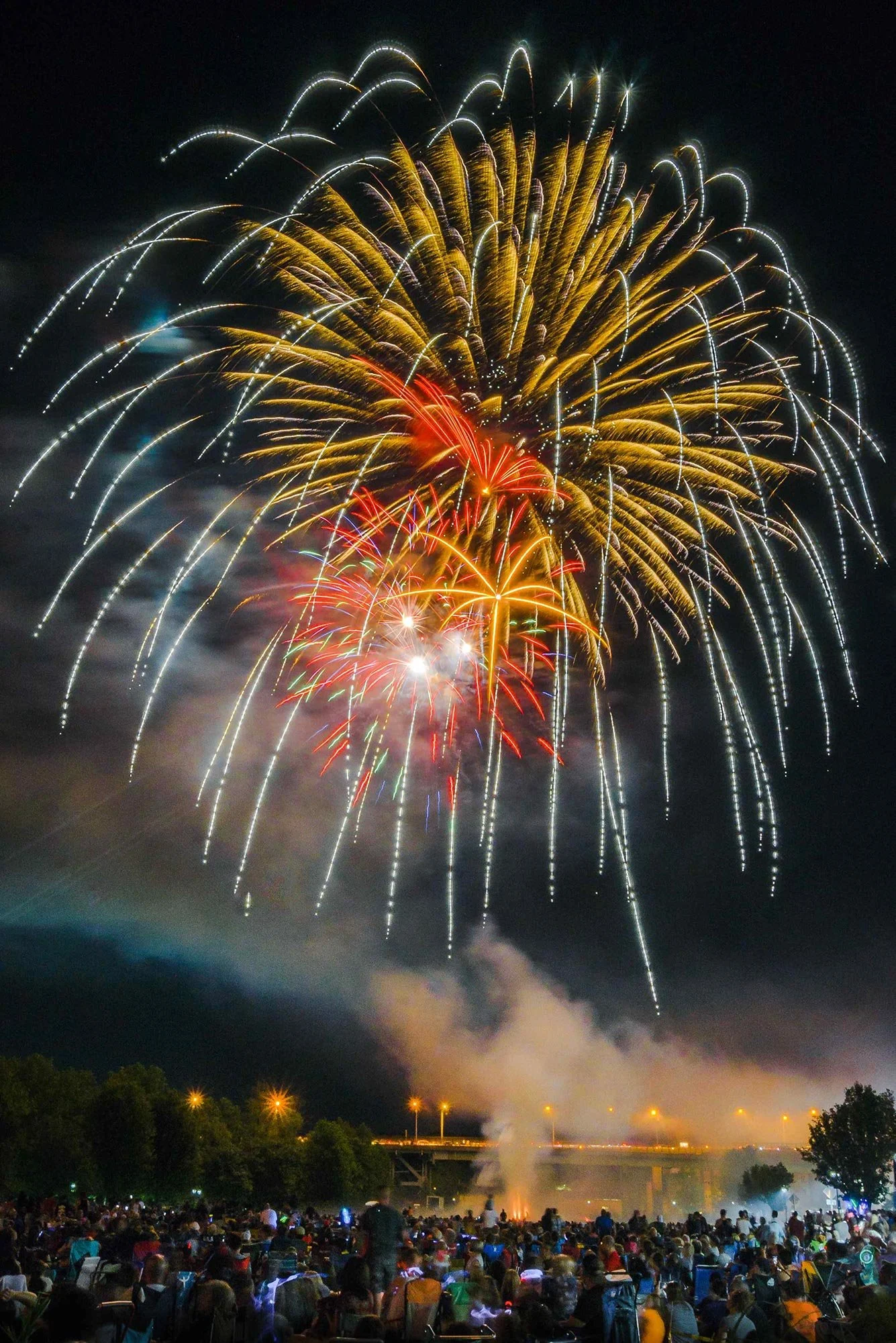
Long exposure photography example from a firework display on 4th of July
Step-by-Step Long Exposure Photography Workflow
A successful long exposure usually happens before you press the shutter.
The setup process matters.
Step 1 — Find Your Composition First
Before worrying about settings, build the image.
Look for:
strong foreground elements
leading lines
interesting textures
balance between sky and land
movement within the scene
Long exposure works best when the composition already works without the effect.
A slow shutter speed should enhance the image, not become the entire reason for the image.
Step 2 — Set Up Your Tripod
Once you find your composition:
place your tripod securely
level the camera
tighten all connections
avoid unstable surfaces
For waterfalls and coastal photography especially, make sure the tripod is planted firmly.
Moving water and wind can create vibration.
Step 3 — Compose and Focus
The easiest workflow:
Compose the image
Autofocus on your subject
Confirm sharp focus
Switch the lens to manual focus
This prevents the camera from hunting for focus during the exposure.
For landscapes, focusing roughly one-third into the scene often works well, but the exact focus point depends on the composition.
Step 4 — Set Exposure
Start with:
ISO 100
f/8–f/11
desired shutter speed
Then adjust.
If the image is too bright:
lower ISO
close aperture slightly
add an ND filter
If the image is too dark:
increase exposure time
remove the ND filter
adjust settings carefully
Step 5 — Eliminate Camera Movement
Before taking the photo:
turn off lens stabilization if using a tripod
use a 2-second timer or remote shutter
avoid touching the camera during exposure
Small vibrations become much more noticeable during long exposures.
Step 6 — Review the Image
Do not judge only by the LCD preview.
Check:
histogram
highlights
sharpness
motion effect
Ask:
Is the water movement too smooth?
Are clouds moving enough?
Is the exposure balanced?
Does the composition still work?
Often the best long exposure requires experimentation.
Real-World Long Exposure Settings Examples
Every scene is different, but these starting points work well in the field.
Waterfall Photography
Example Conditions:
Overcast day with even lighting
Recommended settings:
Aperture: f/11
ISO: 64–100
Shutter speed: 5–10 seconds
Why:
Cloudy conditions reduce harsh contrast and allow longer exposures without extreme ND filters.
Longer shutter speeds create:
smooth water
soft highlights
a more peaceful appearance
For faster waterfalls, you may need a shorter exposure to preserve texture.
Ocean and Wave Photography
Example Conditions:
Sunrise or sunset shoreline
Recommended settings:
Aperture: f/8–f/11
ISO: 100
Shutter speed: 10–30 seconds
Long exposures can transform waves into:
mist
smooth patterns
flowing textures
Experiment with different shutter speeds.
A 2-second exposure and a 30-second exposure can create completely different images from the same beach.
Cloud Movement Photography
Example Conditions:
Windy day with changing skies
Recommended settings:
Aperture: f/8
ISO: 100
Shutter speed: 15–60 seconds
Long exposures work best when clouds have clear movement across the frame.
A completely still sky often produces a less interesting result.
Fireworks Photography
Fireworks are another excellent long exposure subject.
Recommended settings:
Aperture: f/8–f/11
ISO: 100
Shutter speed: 2–10 seconds
The goal is not freezing one explosion.
Instead, the longer exposure captures:
multiple bursts
light trails
patterns in the sky
A tripod is essential.
Night Photography and City Lights
For nighttime scenes:
Recommended settings:
Aperture: f/8–f/11
ISO: 100–400
Shutter speed: 5–30 seconds
Long exposures can create:
vehicle light trails
reflections
smoother water surfaces
cleaner night landscapes
At night, you may need higher ISO depending on the subject, but keeping ISO low usually provides the best quality.
Field Tips for Better Long Exposure Photos
A few practical lessons make a big difference:
Arrive Early
Long exposure photography often requires experimentation.
Arrive before the best light so you have time to:
set up
test compositions
adjust settings
Watch the Wind
Wind is one of the biggest challenges.
It can create:
blurry trees
camera shake
unstable tripods
Sometimes movement in trees adds interest, but unwanted vibration can ruin sharpness.
Take Multiple Exposures
Do not leave with only one version.
Try:
shorter exposure
longer exposure
different compositions
The “obvious” shutter speed is not always the best one.
Protect Your Equipment
Long exposure landscapes often happen near:
waterfalls
ocean spray
sand
changing weather
Use:
lens cloths
protective filters when appropriate
weather protection
Using ND Filters for Long Exposure Photography
A neutral density (ND) filter is one of the most useful accessories for long exposure photography.
An ND filter works like sunglasses for your camera lens. It reduces the amount of light entering the camera, allowing you to use slower shutter speeds even during bright conditions.
Without an ND filter, a daytime long exposure can easily become overexposed because too much light reaches the sensor.
When Do You Need an ND Filter?
ND filters become useful when:
the scene is too bright for a slow shutter speed
you want smoother water during daylight
you want motion blur in clouds
you want longer exposures during sunrise or sunset
Examples:
A waterfall on a cloudy morning may only need a few seconds.
A bright beach scene at noon may require a strong ND filter to reach the same effect.
Common ND Filter Strengths
ND2 (1 Stop)
Good for:
slightly extending exposure times
subtle motion effects
ND8 (3 Stops)
Useful for:
cloudy conditions
waterfalls
softer movement
ND64 (6 Stops)
One of the most popular landscape choices.
Great for:
daytime waterfalls
ocean photography
moving clouds
ND1000 (10 Stops)
Used for dramatic long exposures.
Creates:
extremely smooth water
disappearing clouds
minimalist landscapes
A 10-stop filter can turn a normal daytime scene into a completely different image.
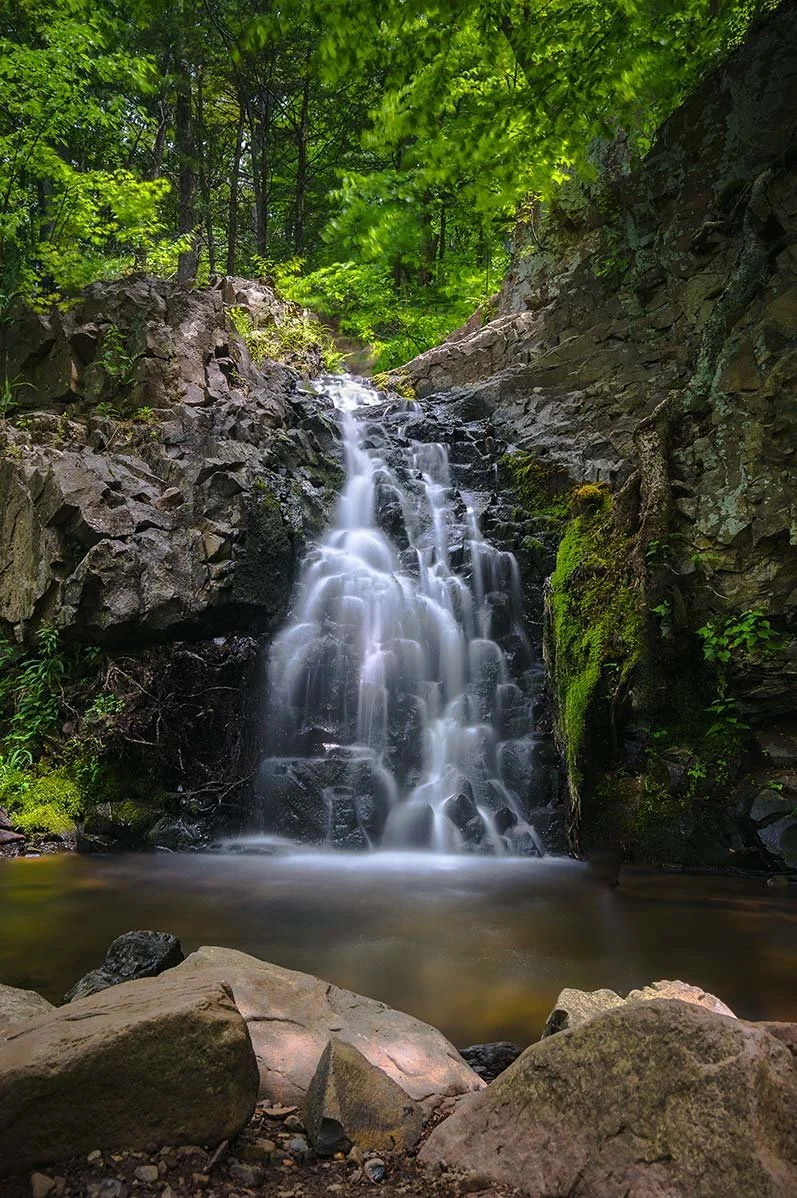
Longer shutter speeds create smoother motion in water and clouds
How to Use an ND Filter in the Field
The easiest workflow:
Step 1 — Compose Without the Filter
ND filters are dark, making it difficult for cameras to autofocus and meter accurately.
Start by:
composing your image
focusing
setting your camera position
Step 2 — Lock Focus
After focusing:
switch the lens to manual focus
avoid changing focus after installing the filter
Step 3 — Add the ND Filter
Attach the filter carefully without moving your composition.
Step 4 — Adjust Exposure Time
Increase shutter speed based on the strength of the filter.
A longer exposure may require:
several seconds
30 seconds
multiple minutes
Step 5 — Check the Histogram
Long exposures can easily create:
clipped highlights
overly bright skies
Always review exposure before moving locations.
Advanced Long Exposure Photography Techniques
Once you understand the basics, long exposure photography opens up many creative possibilities.
Motion Blending
Instead of simply smoothing movement, use motion as part of the composition.
Examples:
waves moving around rocks
clouds creating direction toward a subject
flowing water leading through the frame
The movement becomes a compositional element.
Intentional Camera Movement (ICM)
Intentional camera movement uses motion during the exposure to create an artistic effect.
Examples:
vertical movements with trees
horizontal movements with landscapes
abstract city scenes
Typical settings:
shutter speed: 1/2 second to 2 seconds
controlled movement during exposure
This is different from traditional long exposure because the camera itself becomes part of the creative process.
Multiple Exposures and Long Exposure Blending
Some photographers combine multiple exposures to create a final image.
Examples:
blending different exposures for dynamic range
combining moving water with detailed landscapes
creating more controlled highlights
This can be done:
in-camera
with editing software
Related guide:
→ Multiple Exposure Photography Guide
Long Exposure Star Photography
Long exposures can also be used for night landscapes.
Examples:
star trails
moonlit landscapes
Milky Way foregrounds
However, astrophotography requires different considerations:
wider apertures
higher ISO
shorter individual exposures
Related guide:
Long Exposure Photography Examples by Subject
Waterfalls
Waterfalls are one of the most common long exposure subjects.
Long exposures create:
smooth flowing water
softer highlights
a calmer feeling
Recommended approach:
cloudy conditions
tripod
ISO 64–100
2–10 second exposures
The ideal shutter speed depends on the speed of the water.
Fast waterfalls may look better with some texture remaining.
Ocean Photography
The ocean is constantly changing, making it one of the best long exposure subjects.
Long exposures can create:
misty waves
smooth reflections
leading lines along the shoreline
Try photographing:
rocks surrounded by water
waves moving toward shore
reflections during sunrise or sunset
Landscape Photography
Long exposure landscapes work best when movement contrasts with stable elements.
Strong combinations:
moving clouds + mountains
flowing water + rocks
ocean + coastline
wind + vegetation
The still elements provide structure while the movement creates atmosphere.
Concert Photography
Long exposure is less common in concert photography because photographers usually need to freeze performers.
However, creative long exposures can work for:
intentional motion effects
light trails
abstract stage movement
crowd energy
Examples:
slower shutter speeds during dramatic lighting changes
combining movement with stage lights
capturing the feeling of a performance rather than a frozen moment
For standard concert photography, faster shutter speeds are usually preferred.
Related guide:
Common Long Exposure Photography Mistakes
1. Not Using a Stable Tripod
This is the most common mistake.
A slow shutter speed magnifies every vibration.
Solutions:
use a sturdy tripod
avoid extending the center column when possible
use a timer or remote shutter
2. Making the Exposure Too Long
Longer is not always better.
A 60-second exposure does not automatically create a better image than a 5-second exposure.
Too much motion can remove:
texture
detail
visual interest
The goal is controlled movement.
3. Ignoring Composition
Long exposure effects cannot fix a weak composition.
Before slowing the shutter:
Look for:
strong foreground
leading lines
balance
interesting light
The photograph still needs a strong foundation.
4. Forgetting Moving Objects
Long exposures capture everything moving in the scene.
Consider:
people walking through the frame
boats
trees
clouds
Sometimes this improves the image.
Sometimes it creates distractions.
5. Not Checking Exposure
Bright areas can easily become overexposed.
Always check:
histogram
highlights
sky detail
Editing Long Exposure Photography
Long exposure images often benefit from careful editing, but the goal should be enhancing the photograph rather than creating an unrealistic effect.
Basic Editing Workflow
Step 1 — Adjust Exposure
Correct:
overall brightness
highlights
shadows
Step 2 — Improve Contrast
Long exposures can sometimes look flat.
Adjust:
contrast
blacks
whites
carefully.
Step 3 — Enhance Color
Landscape long exposures often benefit from:
white balance adjustment
subtle saturation
improved color separation
Step 4 — Sharpen Details
Apply sharpening selectively.
Focus on:
rocks
mountains
architecture
Avoid excessive sharpening in smooth water and skies.
Advanced Editing Techniques
Some photographers combine multiple exposures to improve:
highlight recovery
moving elements
overall balance
Examples:
one exposure for sky
one exposure for foreground
one longer exposure for water
This creates a more controlled final image.
Final Recommendations
Long exposure photography is one of the most rewarding landscape techniques because it changes how we see movement.
The equipment is simple:
camera
tripod
lens
optional ND filter
The biggest improvement comes from learning how shutter speed changes the feeling of a scene.
For beginners:
Start with:
tripod
ISO 100
f/8–f/11
2–10 second exposures
Practice with:
waterfalls
rivers
coastlines
clouds
As you improve, experiment with:
ND filters
longer exposures
creative motion techniques
The best long exposure images are not created by using the slowest shutter speed possible.
They are created by choosing the shutter speed that best tells the story of the scene.
Frequently Asked Questions
Do you need a tripod for long exposure photography?
Yes.
A tripod is essential because slow shutter speeds make handheld photography impossible in most situations.
What shutter speed is best for long exposure photography?
It depends on the subject.
Typical examples:
waterfalls: 2–10 seconds
ocean waves: 5–30 seconds
clouds: 15–60 seconds
fireworks: 2–10 seconds
The best shutter speed is the one that creates the desired movement.
Do I need an ND filter for long exposure photography?
Not always.
ND filters are most useful during bright conditions when you need longer shutter speeds.
You can create many long exposures without one during:
sunrise
sunset
cloudy weather
What ISO should I use for long exposure landscapes?
Use the lowest native ISO possible.
Most landscape photographers use:
ISO 64
ISO 100
This provides the best image quality and dynamic range.
What aperture should I use for long exposure photography?
Most landscapes work well around:
f/8
f/11
This provides good sharpness and depth of field.
Can you shoot long exposure without a camera?
For true long exposure photography, a camera with manual controls is recommended.
Smartphones can simulate long exposure effects computationally, but they work differently from traditional camera-based long exposure.
==========
All photographs © Chris Sidoruk. Images are protected by copyright and may not be used, copied, modified, or redistributed without written permission.
Related Landscape Photography Guides
→ Best Cameras for Landscape Photography
→ Best Lenses for Landscape Photography
→ Best Tripods for Landscape Photography
→ Landscape Photography Composition Tips
→ RAW vs JPG Photography Guide
