

Best Cameras for Concert Photography (2026 Low Light Guide)

Creamery Station performing in Greenfield, Massachusetts. | photo- ©2023 Chris Sidoruk
*Some links in this guide are affiliate links. If you purchase through them, it helps support my work at no extra cost to you.
==========
Last updated: 07/26/2026
Quick Jump
Concert photography is one of the most demanding forms of photography.
You are constantly balancing:
Low light
Fast-moving performers
Difficult autofocus situations
Changing stage colors and contrast
Limited shooting positions
High ISO performance
A camera that performs well in a studio or outdoor daylight environment can struggle immediately when placed in a dark venue with flashing lights and unpredictable movement.
The best concert photography cameras are not necessarily the ones with the highest megapixel count or the most expensive specifications.
They are the cameras that can:
Lock focus quickly in difficult lighting
Maintain image quality at high ISO settings
Capture decisive moments without hesitation
Handle long shooting sessions comfortably
Produce files that are easy to edit afterward
This guide focuses on real-world concert photography performance, not just technical specifications.
The recommendations are based on how cameras perform in environments photographers actually encounter:
Small clubs
Theater performances
Indoor venues
Outdoor stages
Music festivals
Examples from the archive:
→ Mihali live at Levitt Pavilion in Westport, CT
→ Eggy at The Acoustic in Bridgeport, CT
→ Creamery Station at Strange Creek Music Festival
As a concert photographer, I spend far more time evaluating how a camera handles real performances than comparing benchmark charts.
The best camera is the one that helps you capture the moment when the lights change, the performer moves, and you only have a fraction of a second to react.
Quick Picks: Best Cameras for Concert Photography in 2026
If you just want the short answer:
Best Overall Concert Photography Camera
Nikon Z6 III
A balanced full-frame camera with excellent low-light performance, fast autofocus, and the right combination of speed and file size for live music.
Best Hybrid Camera (Photo + Video)
Canon EOS R6 Mark III / Canon EOS R6 Mark II
Excellent autofocus, strong low-light capability, and one of the best choices for photographers who also create video content.
Best Autofocus Performance
Sony A7 IV
A reliable full-frame option with excellent subject tracking and autofocus consistency in unpredictable stage lighting.
Best Professional Festival Camera
Nikon Z9
A flagship camera built for demanding professional workflows, large events, and photographers who need maximum speed and reliability.
Best Budget Full-Frame Camera
Sony A7 III / Nikon Z6 II / Canon EOS R8
Older and lower-cost full-frame bodies can still produce professional concert images when paired with fast lenses.
Best Beginner Concert Camera
Canon EOS R10 / Sony A6700
Affordable APS-C options that provide strong autofocus performance without the cost of a full-frame setup.
Looking for camera deals?
Camera prices change frequently, especially around major sales events. Check current discounts before upgrading your setup.
COncert Cameras Comparison (2026)
| Camera | Best For | Sensor | Key Strengths | Price Tier |
|---|---|---|---|---|
| Nikon Z6 III | Best Overall Concert Camera | Full Frame | Excellent low-light performance, fast autofocus, balanced files | $$$ |
| Sony A7 IV | Best Autofocus Performance | Full Frame | Industry-leading tracking, strong ISO performance, reliable AF | $$$ |
| Canon EOS R6 Mark II | Best Hybrid Photo + Video Camera | Full Frame | Excellent autofocus, fast burst shooting, strong video features | $$$ |
| Nikon Z6 II | Best Value Full Frame | Full Frame | Proven low-light performance, excellent used value | $$ |
| Sony A7 III | Best Budget Full Frame | Full Frame | Great ISO performance, affordable used option | $$ |
| Canon EOS R8 | Best Affordable Full Frame | Full Frame | Modern autofocus, lightweight, excellent image quality | $$ |
| Canon EOS R10 | Best Beginner Camera | APS-C | Affordable, fast autofocus, easy entry into concert photography | $ |
| Sony A6700 | Best APS-C Hybrid Option | APS-C | Advanced autofocus, compact size, strong video features | $$ |
Nikon Z6 III
Best For: Best Overall Concert Camera
Sensor: Full Frame
Key Strengths: Excellent low-light performance, fast autofocus, balanced files
Price Tier: $$$
Sony A7 IV
Best For: Best Autofocus Performance
Sensor: Full Frame
Key Strengths: Industry-leading tracking, strong ISO performance, reliable AF
Price Tier: $$$
Canon EOS R6 Mark II
Best For: Best Hybrid Photo + Video Camera
Sensor: Full Frame
Key Strengths: Excellent autofocus, fast burst shooting, strong video features
Price Tier: $$$
Nikon Z6 II
Best For: Best Value Full Frame
Sensor: Full Frame
Key Strengths: Proven low-light performance, excellent used value
Price Tier: $$
Sony A7 III
Best For: Best Budget Full Frame
Sensor: Full Frame
Key Strengths: Great ISO performance, affordable used option
Price Tier: $$
Canon EOS R8
Best For: Best Affordable Full Frame
Sensor: Full Frame
Key Strengths: Modern autofocus, lightweight, excellent image quality
Price Tier: $$
Canon EOS R10
Best For: Best Beginner Camera
Sensor: APS-C
Key Strengths: Affordable, fast autofocus, easy entry into concert photography
Price Tier: $
Sony A6700
Best For: Best APS-C Hybrid Option
Sensor: APS-C
Key Strengths: Advanced autofocus, compact size, strong video features
Price Tier: $$
What Actually Matters in a Concert Photography Camera
Many camera comparisons focus on specifications that matter less in real concert environments.
For live music photography, these features matter most:
Low-Light Performance
Concerts are often photographed at:
ISO 1600
ISO 3200
ISO 6400
ISO 12800 or higher
A camera with good high ISO performance allows you to maintain:
Faster shutter speeds
Cleaner shadows
Better color accuracy
More usable images
However, sensor performance is only part of the equation.
A fast lens is equally important.
A camera with excellent ISO performance paired with a slow lens can still struggle in dark venues.
👉 Related:
Best Lenses for Concert Photography
Autofocus Reliability
Autofocus is one of the biggest differences between average and professional concert cameras.
Live performances are challenging because:
Performers move constantly
Lighting changes rapidly
Backgrounds can confuse autofocus systems
Stage lights create difficult contrast
Important autofocus features include:
Eye detection
Subject tracking
Low-light AF sensitivity
Fast acquisition speed
Modern mirrorless cameras have improved dramatically in this area.
Burst Speed and Responsiveness
Concert moments happen quickly.
A great camera should respond instantly when:
A musician jumps
A singer reaches the microphone
A guitarist hits a dramatic pose
Stage lighting peaks at the right moment
Frame rate matters, but responsiveness matters just as much.
A camera with a fast burst rate is not useful if autofocus cannot keep up.
Ergonomics and Handling
Concert photographers often work in dark environments where changing settings quickly matters.
Important features:
Easy-to-reach controls
Custom buttons
Good grip comfort
Dual card slots for professional work
Reliable battery life
A camera should become an extension of your workflow.
You should not be searching menus while a performer is creating the shot.
Resolution: More Megapixels Are Not Always Better
A common mistake is assuming more megapixels automatically means a better concert camera.
In reality:
A clean 24MP file with excellent low-light performance is often more useful than a noisy high-resolution image.
Higher resolution can help with:
Heavy cropping
Large prints
Commercial work
But for most concert photography, the priorities are:
Autofocus
Low-light performance
Lens quality
Reliability
Your Lens Often Matters More Than Your Camera Body
One of the biggest mistakes photographers make is upgrading camera bodies while using slow lenses.
A fast lens can dramatically improve:
Available light
Autofocus performance
Background separation
Shutter speed flexibility
For concert photography, common professional combinations include:
24–70mm f/2.8
Best all-around concert lens.
70–200mm f/2.8
Best for festivals and distant stages.
50mm f/1.8 or f/1.4
Best affordable low-light option.
85mm f/1.8 or f/1.4
Best for performer portraits and emotional moments.
👉 See the full guide:
Best Lenses for Concert Photography
Best Cameras for Different Concert Situations
The "best" camera depends heavily on what type of shows you photograph.
A photographer shooting small clubs has different needs than someone covering large festivals.
Best Camera for Small Clubs
Small venues usually mean:
Limited shooting space
Darker environments
Performers close to the audience
Constant movement
Recommended cameras:
Pair with:
24–70mm f/2.8
35mm f/1.4
50mm f/1.8
Best Camera for Concert Pits
Photo pits require:
Fast autofocus
Quick framing changes
Reliable performance under pressure
Recommended cameras:
Pair with:
24–70mm f/2.8
70–200mm f/2.8
Best Camera for Festivals
Festival photography adds:
Longer distances
Multiple stages
Outdoor lighting changes
Longer shooting days
Recommended cameras:
Pair with:
70–200mm f/2.8
100–400mm zoom
24–70mm f/2.8

Creamery Station performing in Hartford, Connecticut.
Best Overall Cameras for Concert Photography in 2026
There is no single perfect concert camera.
Different photographers prioritize different things:
Maximum low-light performance
Autofocus reliability
Hybrid photo/video capability
Resolution
Budget
Existing lens collection
However, the cameras below represent some of the strongest options for photographers who regularly shoot live music.
Nikon Z6 III (Best Overall Concert Photography Camera)
The Nikon Z6 III is one of the best-balanced cameras available for concert photography in 2026.
It combines:
Strong low-light performance
Fast autofocus
Excellent handling
Manageable file sizes
Professional-level reliability
For many concert photographers, this combination matters more than having the absolute highest resolution sensor or fastest possible burst rate.
The Z6 III is built around the realities of event photography.
Why the Nikon Z6 III Works for Concert Photography
Excellent Low-Light Performance
Concert venues often create difficult lighting conditions:
Dark stages
Colored LED lighting
Strong backlighting
Rapid exposure changes
The Z6 III performs well in these situations, producing clean files at higher ISO settings while maintaining strong dynamic range.
This gives photographers more flexibility when exposure conditions change unexpectedly.
Reliable Autofocus in Difficult Lighting
Modern concert photography depends heavily on autofocus.
The Z6 III performs well when tracking:
Moving performers
Musicians crossing the stage
Singers moving toward and away from the microphone
Subjects under changing stage lights
Its autofocus system helps increase keeper rates when moments happen quickly.
Balanced Resolution and Workflow
The Z6 III provides enough resolution for:
Editorial work
Website publishing
Social media delivery
Client galleries
Moderate cropping
At the same time, files remain manageable for photographers who process thousands of images after a festival or multi-band event.
Real-World Concert Photography Use
The Nikon Z6 series is especially well suited for:
Small clubs
Theater performances
Music festivals
Corporate events
Touring performances
It offers the flexibility needed when you do not know exactly what lighting conditions you will encounter.
Where the Nikon Z6 III Falls Short
No camera is perfect.
Potential limitations:
Not the highest-resolution option available
Not designed specifically for extreme sports-style burst shooting
Less specialized than flagship cameras like the Nikon Z9
For most concert photographers, these limitations are minor.
Bottom Line
The Nikon Z6 III is one of the safest recommendations for photographers who want one camera that can handle nearly every live music situation.
It delivers the combination that matters most:
Good autofocus
Strong low-light performance
Professional handling
Reliable image quality
👉 Check current Nikon Z6 III pricing
Related: Nikon Z6 III Review
Nikon Z6 II (Best Value Nikon Concert Camera)
Although newer cameras have replaced it, the Nikon Z6 II remains a strong option for concert photographers looking for value.
The Z6 II was already proven in difficult environments, and its full-frame sensor continues to perform well for live music.
Why the Nikon Z6 II Still Works
Strengths:
Excellent high ISO performance
Strong dynamic range
Comfortable professional body design
Access to Nikon Z-mount lenses
Dual card slots
For photographers upgrading from older DSLRs, the Z6 II remains a major step forward.
Who Should Consider the Z6 II?
The Z6 II makes sense for:
Photographers upgrading from DSLR systems
Shooters buying used equipment
Second camera bodies
Budget-conscious professionals
A slightly older full-frame camera with a fast lens can outperform a newer entry-level body with slower glass.
Canon EOS R6 Mark II (Best Hybrid Concert Camera)
The Canon EOS R6 Mark II is one of the strongest choices for photographers who need both still photography and video capability.
Concert creators increasingly need more than photos.
Many photographers also produce:
Social media clips
Behind-the-scenes footage
Artist content
Promotional videos
The R6 Mark II handles both workflows extremely well.
Why the Canon EOS R6 Mark II Works for Concert Photography
Excellent Autofocus Performance
Canon's Dual Pixel autofocus system is one of the strongest autofocus systems available.
It performs well with:
Face detection
Eye tracking
Moving performers
Difficult stage lighting
This is especially useful when photographing artists who move constantly.
Strong Low-Light Performance
The R6 Mark II's full-frame sensor performs very well in:
Dark clubs
Indoor venues
Evening festivals
Theater environments
It provides clean files at the higher ISO settings commonly required for concerts.
Fast Burst Shooting
Concert moments disappear quickly.
The R6 Mark II provides the speed needed to capture:
Expressions
Guitar movements
Microphone moments
Dramatic lighting changes
Hybrid Photo + Video Strength
This is where the R6 Mark II separates itself.
It is especially attractive for photographers who also create:
Performance clips
Artist reels
Venue content
Promotional videos
One body can handle multiple content needs.
Where the Canon EOS R6 Mark II Falls Short
Limitations:
Lower resolution than high-megapixel alternatives
Not designed for extreme cropping
Less emphasis on maximum detail compared with cameras like the EOS R5 series
For typical concert photography, these are rarely major issues.
Bottom Line
The Canon EOS R6 Mark II is one of the best choices for photographers who want a camera that can handle modern content demands.
It is especially strong for:
Concert photographers
Music creators
Hybrid shooters
Event professionals
👉 Check current Canon EOS R6 Mark II pricing
Canon EOS R8 (Best Entry-Level Full-Frame Canon Option)
The Canon EOS R8 provides an affordable path into full-frame concert photography.
It shares some technology with higher-end Canon models while maintaining a smaller and lighter design.
Why the Canon EOS R8 Works
Advantages:
Full-frame sensor
Strong autofocus
Excellent image quality
Lightweight body
Lower entry cost
Paired with a fast lens, the R8 is capable of producing professional-quality concert images.
Limitations
The lower price comes with compromises:
Smaller body
Less professional ergonomics
Fewer advanced controls
Less suited for heavy professional workloads
It is best viewed as an excellent entry point rather than a flagship workhorse.
Sony A7 IV (Best Autofocus Concert Camera)
The Sony A7 IV remains one of the strongest all-around cameras for concert photography, especially for photographers who prioritize autofocus reliability.
Sony has built a strong reputation among event and live music photographers because of its:
Subject tracking
Eye autofocus performance
Sensor technology
Mirrorless lens ecosystem
In a concert environment where lighting changes constantly and performers move unpredictably, autofocus consistency can make the difference between capturing the moment and missing it.
Why the Sony A7 IV Works for Concert Photography
Industry-Leading Autofocus Tracking
Concert photography creates difficult autofocus situations:
Performers moving across dark stages
Colored lights changing rapidly
Microphones and instruments crossing faces
Strong backlighting
The A7 IV performs extremely well in these conditions.
Its autofocus system helps photographers maintain focus on:
Faces
Eyes
Moving performers
Key moments during a performance
Strong Full-Frame Low-Light Performance
The A7 IV's full-frame sensor provides excellent image quality in challenging lighting.
It performs well when shooting:
Dim clubs
Theater stages
Outdoor night performances
Mixed lighting environments
The combination of a capable sensor and fast lenses allows photographers to maintain usable shutter speeds without pushing image quality too far.
Excellent Dynamic Range
Stage lighting often creates extreme contrast:
Bright spotlights
Deep shadows
Colored LED lighting
The A7 IV provides strong files with enough flexibility for editing:
Shadow recovery
Highlight adjustments
Color correction
This is especially useful when stage lighting changes every few seconds.
Real-World Concert Photography Use
The Sony A7 IV is especially strong for:
Club photography
Touring artists
Festival coverage
Music media assignments
Hybrid creators
It is a dependable camera for photographers who need consistent results in unpredictable conditions.
Where the Sony A7 IV Falls Short
Potential limitations:
Not Sony's fastest professional body
Menu system can take time to customize
Lower burst speed than flagship models
High-resolution workflows may require a different camera
For most concert photographers, these are small tradeoffs.
Bottom Line
The Sony A7 IV is one of the most reliable concert photography cameras available.
Choose it if your priority is:
Autofocus confidence
Full-frame image quality
Reliable performance in difficult lighting
👉 Check current Sony A7 IV pricing
Related: Sony A7 IV Review
Sony A7 III (Best Used Full-Frame Value Camera)
The Sony A7 III remains one of the most popular full-frame cameras ever made.
Even years after release, it continues to be used by photographers because it delivers excellent results at a much lower price point.
Why the Sony A7 III Still Works for Concert Photography
Strengths:
Excellent high ISO performance
Reliable autofocus
Strong battery life
Large used market
Access to Sony FE lenses
For photographers moving from APS-C cameras or older DSLRs, the A7 III remains a significant upgrade.
Who Should Consider the Sony A7 III?
It is a strong choice for:
Beginners moving into professional concert photography
Photographers building a first full-frame kit
Backup camera bodies
Budget-conscious shooters
The A7 III paired with a fast prime lens can still produce excellent concert images.
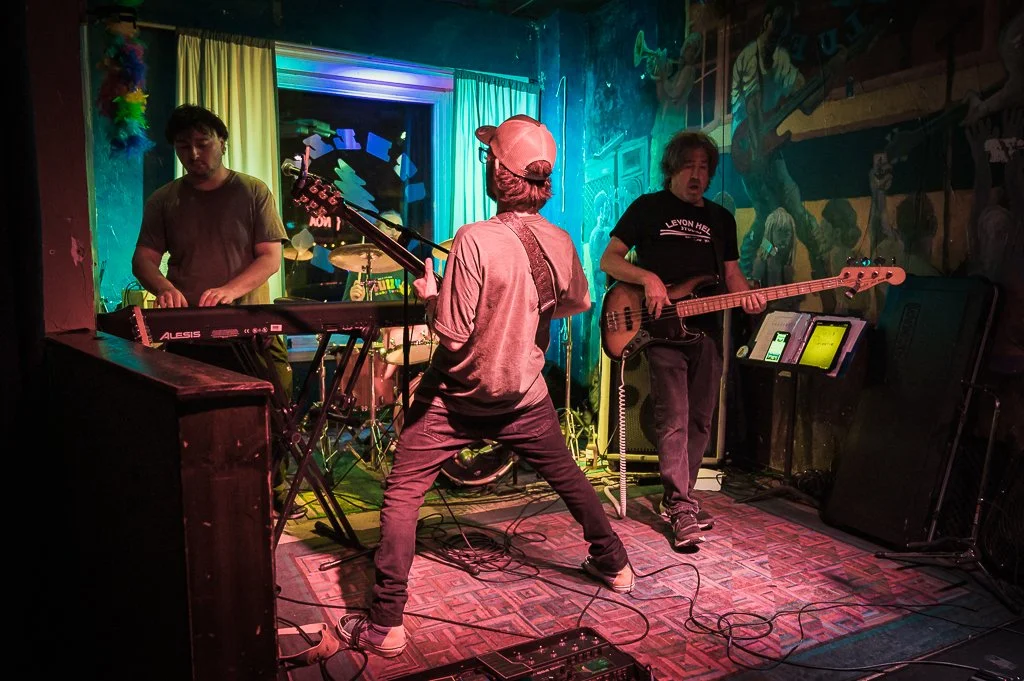
The Arctic Tortugas performing in Middletown, Connecticut.
Professional-Level Cameras for Concert Photography
Most photographers do not need flagship cameras.
However, professionals covering:
Major festivals
Touring artists
Large productions
Commercial assignments
may benefit from higher-end bodies.
These cameras provide advantages in:
Speed
Durability
Autofocus performance
Buffer capacity
Advanced video features
Nikon Z9 (Best Professional Concert Camera)
The Nikon Z9 represents the highest level of Nikon mirrorless performance.
It is designed for photographers who need maximum reliability in demanding environments.
Why the Nikon Z9 Works for Concert Photography
Flagship Autofocus Performance
The Z9 provides advanced subject detection and tracking designed for fast-moving subjects.
This is useful for:
Energetic performers
Large stages
Complex lighting
Fast action moments
Exceptional Speed
Concert photography often requires reacting instantly.
The Z9 provides:
Fast continuous shooting
Large buffer capacity
Minimal hesitation between moments
This makes it valuable for photographers who cannot afford to miss important performances.
Professional Build Quality
The Z9 is built for demanding professional use.
Advantages include:
Durable construction
Excellent ergonomics
Long shooting sessions
Professional workflow support
Where the Nikon Z9 Falls Short
The main disadvantages are:
Higher price
Larger body size
More camera than many photographers actually need
For many concert photographers, the Z6 III offers a better balance.
Bottom Line
The Nikon Z9 is an excellent choice for:
Touring photographers
Festival professionals
Commercial music assignments
Photographers who need maximum reliability
It is not the camera most photographers need, but it is one of the best available.
Sony A1 / A1 II (Flagship Sony Option)
Sony's flagship Alpha cameras are designed for photographers who need maximum speed and resolution.
They combine:
High-resolution sensors
Fast autofocus
Professional performance
Why the Sony A1 Series Works for Concert Photography
Advantages:
Excellent autofocus tracking
High-resolution files
Fast burst performance
Strong low-light capability
The extra resolution can help with:
Heavy cropping
Large prints
Commercial licensing
Editorial assignments
Where the Sony A1 Falls Short
For many concert photographers:
Resolution may be unnecessary
Files are larger
Cost is significantly higher
A lower-resolution camera may provide a better workflow for everyday live music coverage.
Canon EOS R5 Mark II (High-Resolution Professional Option)
The Canon EOS R5 Mark II is designed for photographers who want maximum detail while maintaining professional speed.
It is especially attractive for photographers who also work in:
Commercial photography
Editorial photography
Large-format printing
Why the EOS R5 Mark II Works
Advantages:
High-resolution sensor
Strong autofocus
Excellent image quality
Professional hybrid capabilities
It provides extra flexibility when images need to be:
Cropped heavily
Printed large
Used commercially
Where It Falls Short
The biggest consideration is workflow.
Higher-resolution files require:
More storage
More processing power
More editing time
For many concert photographers, speed and efficiency are more important than maximum resolution.
Best Budget Cameras for Concert Photography in 2026
You do not need a flagship camera to create professional concert images.
Many older full-frame cameras and newer APS-C models perform extremely well when paired with fast lenses.
Nikon Z6 II (Best Used Nikon Value)
A proven full-frame option with:
Excellent low-light performance
Strong dynamic range
Reliable autofocus
Professional ergonomics
Great for photographers entering the Nikon Z system.
Sony A7 III (Best Used Sony Value)
Still one of the strongest budget full-frame choices.
Best for:
First full-frame setup
Smaller budgets
Backup bodies
Canon EOS R8 (Best Affordable Canon Full Frame)
A lightweight full-frame option with:
Modern autofocus
Excellent image quality
Lower entry cost
Canon EOS R10 (Best Beginner APS-C Camera)
The EOS R10 is a strong beginner option.
Advantages:
Excellent autofocus
Lightweight design
Affordable RF lens system
It works well for:
Smaller venues
Daytime festivals
New photographers learning concert photography
Sony A6700 (Best APS-C Sony Option)
The Sony A6700 brings many modern autofocus features into a smaller APS-C body.
Strengths:
Excellent tracking
Compact size
Strong image quality
It is a good option for photographers who want a lightweight system.
Do You Really Need a Full-Frame Camera for Concert Photography?
The short answer:
No — but it does make concert photography easier.
Full-frame cameras are popular among concert photographers because they provide advantages in some of the most difficult shooting conditions:
Dark venues
High ISO situations
Fast-moving performers
Challenging stage lighting
However, a camera is only one part of the system.
A modern APS-C camera with a fast lens can outperform an entry-level full-frame camera paired with slower glass.
The lens, technique, and shooting environment all matter.
Advantages of Full-Frame Cameras for Concert Photography
Better High ISO Performance
The biggest advantage of full-frame sensors is improved low-light performance.
Concert photographers often work at:
ISO 1600
ISO 3200
ISO 6400
ISO 12800+
A larger sensor generally provides:
Cleaner shadows
Better noise performance
More usable files at high ISO
This is especially valuable in dark clubs and theaters.
More Dynamic Range
Stage lighting creates extreme contrast:
Bright spotlights
Dark backgrounds
Colored LEDs
Rapid exposure changes
Full-frame sensors often provide more flexibility when recovering:
Shadow detail
Highlight information
Color transitions
This can help when editing difficult lighting situations.
More Lens Options for Professional Work
Full-frame systems typically have access to a wider range of professional lenses, including:
24–70mm f/2.8 zooms
70–200mm f/2.8 zooms
35mm f/1.4 primes
50mm f/1.2 or f/1.4 lenses
85mm portrait lenses
These lenses are common choices among working concert photographers.
When APS-C Cameras Make Sense for Concert Photography
APS-C cameras are not a limitation for many photographers.
Modern APS-C bodies provide:
Excellent autofocus
Strong image quality
Lower cost
Smaller setups
They can be excellent choices for:
Beginners
Secondary camera bodies
Smaller venues
Outdoor festivals
Advantages of APS-C Cameras
Lower Cost Entry Point
A photographer can build a capable concert setup for much less.
Money saved on the camera body can be invested into:
Faster lenses
Extra batteries
Memory cards
Storage
Education
Smaller and Lighter Systems
APS-C cameras are easier to carry for:
Long festival days
Travel photography
Multiple-day events
Extra Reach Advantage
The crop factor can actually help in some concert situations.
A 70–200mm lens on APS-C provides more effective reach, which can be useful when:
Shooting large stages
Photographing from the crowd
Working farther from performers
Best APS-C Cameras for Concert Photography
Canon EOS R10
A strong beginner option with:
Excellent autofocus
Good image quality
Lightweight design
Best for:
Small venues
Learning concert photography
Building a Canon RF system
Sony A6700
A modern APS-C option with advanced autofocus technology.
Best for:
Photographers who prioritize tracking
Travel-friendly setups
Hybrid photo/video work
Nikon D500 (Used)
Although older, the Nikon D500 remains a respected concert photography camera.
It offers:
Excellent autofocus
Professional ergonomics
Strong durability
Great reach with telephoto lenses
It remains a capable option for photographers who already own Nikon F-mount lenses.
Full-Frame vs APS-C: Which Should You Buy?
Choose full-frame if:
✓ You regularly shoot dark indoor venues
✓ You want the best high ISO performance
✓ You work professionally
✓ You need maximum lens flexibility
Choose APS-C if:
✓ You are starting out
✓ Budget matters
✓ You want a smaller kit
✓ You mainly shoot outdoor events or smaller shows
For most serious concert photographers, full-frame is the long-term destination.
But a great APS-C camera with a fast lens can absolutely create professional results.
Best Cameras for Concert Photography by Brand
Camera systems are more than individual bodies.
The best choice often depends on:
Existing lenses
Editing workflow
Personal preferences
Future upgrade path
Best Sony Cameras for Concert Photography
Sony has become one of the most popular systems among event and concert photographers.
The biggest reasons:
Excellent autofocus
Strong sensor performance
Large lens selection
Reliable mirrorless technology
Sony A7 IV
Best overall Sony concert camera
The A7 IV provides:
Excellent autofocus
Strong low-light performance
Great image quality
Professional versatility
Best for:
Clubs
Festivals
Editorial work
General live music coverage
Sony A7 III
Best value Sony full-frame option
The A7 III remains a strong choice because of:
Excellent ISO performance
Reliable autofocus
Affordable used pricing
A fast 50mm or 85mm lens turns it into a very capable concert setup.
Sony A7 V
Future-focused upgrade option
For photographers already invested in Sony, newer-generation bodies offer improvements in:
Processing
Autofocus refinement
Workflow speed
Sony A1 Series
Professional flagship option
Best for photographers who need:
Maximum resolution
Maximum speed
Commercial flexibility
Why Sony Works Well for Concert Photography
Sony systems are especially strong for:
Subject tracking
Eye autofocus
Hybrid shooting
Low-light performance
This makes them popular among photographers who need consistency in unpredictable live environments.
Best Canon Cameras for Concert Photography
Canon remains one of the strongest choices for photographers who value:
Autofocus reliability
Natural color rendering
Hybrid performance
Ergonomics
Canon EOS R6 Mark II
Best overall Canon concert camera
Excellent for:
Live music
Events
Hybrid creators
Strengths:
Fast autofocus
Strong ISO performance
Excellent handling
Canon EOS R8
Best affordable Canon full-frame option
Great for photographers who want:
Full-frame image quality
Modern autofocus
Lower cost
Canon EOS R10 / R50
Best beginner Canon options
Good choices for:
New photographers
Smaller venues
Learning live music photography
Canon EOS R5 Mark II
Professional high-resolution option
Best for:
Commercial work
Heavy cropping
Large prints
Why Canon Works Well for Concert Photography
Canon is especially strong in:
Face and eye detection
Performer tracking
Skin tone rendering
Photo/video workflows
For photographers who create both images and video content, Canon remains a very strong option.
Best Nikon Cameras for Concert Photography
Nikon has a long history in professional photography, and its current mirrorless lineup is especially strong for low-light work.
Strengths include:
Excellent dynamic range
Strong ergonomics
Professional build quality
Sharp Z-mount lenses
Nikon Z6 III
Best overall Nikon concert camera
The Z6 III provides the best balance of:
Speed
Image quality
Handling
Price
Nikon Z6 II
Best value Nikon full-frame option
Still excellent for:
Clubs
Events
Budget-conscious upgrades
Nikon Z9
Professional flagship
Best for:
Touring photographers
Major festivals
Commercial assignments
Nikon D500 (Used)
Best Nikon DSLR value option
Still useful for photographers who prefer:
DSLR handling
Optical viewfinder
F-mount lens investment
Why Nikon Works Well for Concert Photography
Nikon cameras are especially strong in:
Shadow recovery
Dynamic range
Low-light image quality
Long-session ergonomics
These advantages are valuable when editing difficult stage lighting.
The Arctic Tortugas performing in New Haven, Connecticut. ©2022 Chris Sidoruk
What Matters More for Concert Photography: Camera or Lens?
This is one of the most common questions photographers ask when building a concert photography setup.
The answer:
Your camera and lens work together, but the lens often has the bigger impact on your results.
A modern camera body helps with:
Autofocus tracking
High ISO performance
Burst speed
Buffer capacity
But your lens determines:
How much light reaches the sensor
How fast you can shoot
How much background separation you get
How close you can frame the performer
A $2,000 camera with a slow kit lens may struggle more than a $1,000 camera paired with a fast prime lens.
Why Lens Choice Matters So Much in Concert Photography
Concert environments create several challenges:
Extremely low light
Fast performer movement
Changing stage lighting
Limited ability to reposition
A fast lens gives you more flexibility.
For example:
A 50mm f/1.8 lens allows much more light than a typical f/4–6.3 kit zoom.
That extra light can mean:
Faster shutter speeds
Lower ISO
Sharper images
More keepers during important moments
Recommended Concert Photography Gear Setups
The best camera setup depends on the type of shows you photograph.
A photographer shooting small clubs needs a different kit than someone shooting large festivals.
Beginner Concert Photography Setup
If you are just starting, focus on learning technique before buying expensive gear.
Recommended setup:
Camera Options
Lens Options
Start with:
50mm f/1.8
35mm f/1.8
18–50mm f/2.8 zoom
Why this works:
Affordable
Lightweight
Excellent for learning exposure
Fast enough for many venues
A fast prime lens will usually improve your results more than immediately upgrading your camera body.
Small Club Concert Setup
Small venues often have:
Dark lighting
Close stage distance
Limited shooting space
Recommended setup:
Camera
Any modern full-frame mirrorless body:
Lenses
Ideal combination:
24–70mm f/2.8
For:
Full band shots
Environmental images
Medium portraits
50mm f/1.8
For:
Dark venues
Vocalist shots
Emotional moments
85mm f/1.8
For:
Performer portraits
Isolated shots
Medium Venue Concert Setup
For theaters, clubs, and larger indoor stages, flexibility becomes more important.
Recommended setup:
Two Lens Combination
24–70mm f/2.8
Primary lens.
Handles:
Most stage coverage
Band interactions
Wide compositions
70–200mm f/2.8
Secondary lens.
Handles:
Distance from stage
Performer close-ups
Background separation
This combination is one of the most common professional concert photography setups.
Festival Photography Setup
Festivals create completely different challenges.
You may deal with:
Large stages
Long distances
Multiple performers
Changing environments
Recommended setup:
Camera Bodies
Professional options:
Lens Combination
70–200mm f/2.8
Essential for:
Main stages
Distant performers
Crowd shots
24–70mm f/2.8
For:
Full-stage images
Artist interactions
Environmental storytelling
14–24mm or 16–35mm
For:
Crowd energy
Lighting design
Large stage atmosphere
Best Single Camera + Lens Combination for Concert Photography
If you could only bring one setup:
Camera
Choose a modern full-frame mirrorless camera:
Lens
Choose:
24–70mm f/2.8
Why?
It covers the widest range of situations:
Small clubs
Medium venues
Festivals
Portraits
Wide stage shots
It is the most practical "one lens" choice for live music photography.
Best Two-Lens Concert Photography Kit
For photographers shooting regularly:
Lens 1: 24–70mm f/2.8
Your everyday workhorse.
Lens 2: 70–200mm f/2.8
Your reach and compression lens.
Together they cover:
Wide shots
Medium compositions
Performer close-ups
Large stages
This is the classic professional concert photography combination.
Best Three-Lens Concert Photography Kit
For photographers who want maximum flexibility:
14–24mm / 16–35mm f/2.8
For:
Crowd shots
Stage atmosphere
Dramatic perspectives
24–70mm f/2.8
For:
General coverage
70–200mm f/2.8
For:
Reach and portraits
Optional addition:
50mm or 85mm f/1.8 Prime
For:
Extremely dark venues
Creative portraits
Maximum subject separation
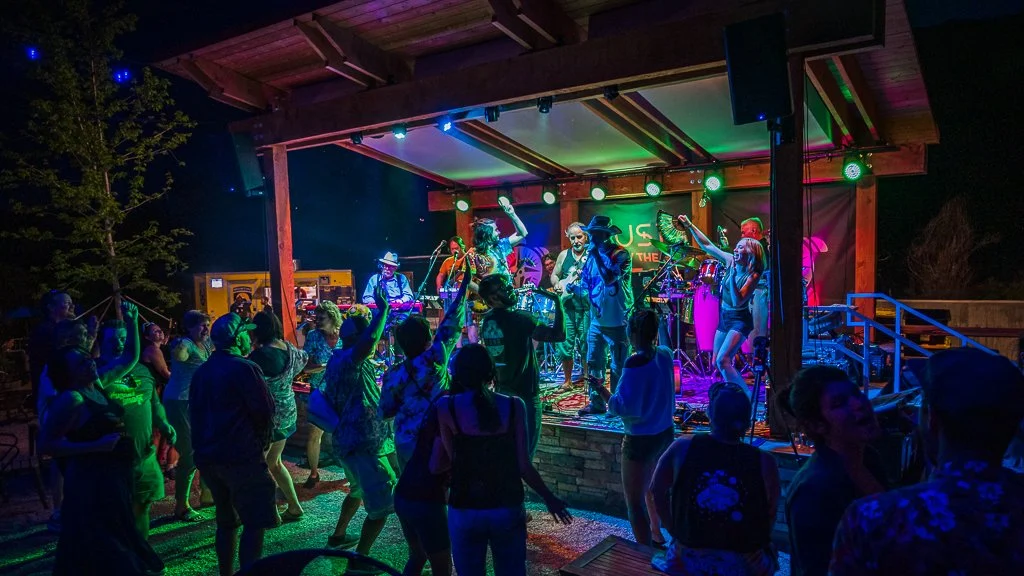
Creamery Station performing in Golden, Colorado. | photo- ©2022 Chris Sidoruk
Common Mistakes When Choosing a Concert Camera
Many photographers focus on the wrong upgrades.
Avoid these mistakes:
Buying Too Many Megapixels
High resolution sounds impressive, but concert photography usually benefits more from:
Clean high ISO files
Fast autofocus
Reliable performance
A 24MP camera can produce excellent professional results.
Prioritizing Camera Body Over Lenses
A newer camera body will not solve every problem.
A faster lens often provides a larger improvement.
Ignoring Ergonomics
Concert photography requires quick decisions.
Important features include:
Comfortable grip
Easy ISO control
Custom buttons
Fast autofocus controls
A camera that feels natural helps you capture moments faster.
Forgetting About Workflow
Professional photographers also need:
Fast memory cards
Backup storage
Reliable editing systems
Efficient Lightroom workflows
The camera is only one part of the process.
Final Recommendations: Best Cameras for Concert Photography in 2026
After considering real-world performance, autofocus, low-light ability, and workflow, these are the strongest choices.
Best Overall Concert Camera
Nikon Z6 III
Best balance of:
Low-light performance
Autofocus
Speed
File size
Price
Best Hybrid Camera (Photo + Video)
Canon EOS R6 Mark II
Best for photographers who also create:
Music videos
Social content
Behind-the-scenes footage
Best Autofocus Performance
Sony A7 IV
Excellent for:
Moving performers
Difficult lighting
Fast-paced environments
Best Professional Upgrade
Nikon Z9 / Canon EOS R5 Mark II / Sony A1
For photographers who need:
Maximum reliability
Professional assignments
Commercial flexibility
Best Budget Full-Frame Options
Sony A7 III
Still one of the best values for concert photography.
Nikon Z6 II
Excellent performance at a lower price point.
Canon EOS R8
Affordable access to Canon full-frame mirrorless.
The Best Concert Camera Is the One You Can Trust
The best camera for concert photography is not necessarily the newest flagship.
It is the camera that allows you to consistently capture:
Sharp images
Emotional moments
Difficult lighting situations
Fast-moving performances
For most photographers, the biggest improvement comes from combining:
A capable mirrorless camera
A fast lens
Proper exposure technique
Experience reading stage lighting
Your equipment matters, but knowing how to use it matters more.
Continue Building Your Concert Photography Setup
A camera is only one piece of a successful live music photography workflow.
Explore:
→ Best Lenses for Concert Photography
→ Best Camera Settings for Concert Photography
→ Concert Photography Low Light Tips
→ Music Festival Photography Guide
Part of the Photography Gear Buying Guide Series
Explore all of my camera, lens, computer, storage, tripod, and printer recommendations.
Frequently Asked Questions
What is the best camera for concert photography in 2026?
The best overall concert photography cameras in 2026 include the Nikon Z6 III, Canon EOS R6 Mark II, and Sony A7 IV. These cameras provide the combination of autofocus reliability, low-light performance, and speed needed for live music environments.
Do I need a full-frame camera for concert photography?
No. Full-frame cameras provide advantages in low light and high ISO performance, but APS-C cameras can still produce excellent results when paired with fast lenses.
Is mirrorless better than DSLR for concert photography?
For most photographers, yes.
Modern mirrorless cameras typically offer:
Better autofocus tracking
Eye detection
Faster subject recognition
Improved low-light focusing
However, professional DSLR cameras like the Nikon D500 can still perform extremely well.
What matters more for concert photography: camera or lens?
The lens often has the larger impact.
A fast lens allows:
More light
Faster shutter speeds
Lower ISO
Better subject separation
A good camera paired with a poor lens may struggle more than an older camera with excellent glass.
What ISO should I use for concert photography?
Most concert photographers shoot between:
ISO 1600
ISO 6400
ISO 12800+
The ideal ISO depends on:
Venue lighting
Lens aperture
Camera sensor performance
Desired shutter speed
Modern cameras handle these higher ISO settings far better than older generations.
What is the best beginner camera for concert photography?
Good beginner options include:
Canon EOS R10
Canon EOS R50
Sony A6400
Nikon Z50
Pairing one of these cameras with a fast 35mm or 50mm prime lens is an excellent way to learn.
Is a 50mm lens good for concert photography?
Yes.
A 50mm f/1.8 lens is one of the best beginner concert photography lenses because it offers:
Excellent low-light performance
Affordable pricing
Natural perspective
Strong subject separation
Should concert photographers use two cameras?
Many professionals do.
A two-camera setup allows photographers to quickly switch between:
Wide and telephoto lenses
Different focal lengths
Different lighting situations
It also reduces the need to change lenses in fast-moving environments.
How many megapixels do I need for concert photography?
Most photographers do not need extreme resolution.
A 24MP full-frame camera is more than enough for:
Web publishing
Editorial work
Social media
Medium-sized prints
Autofocus and low-light performance are usually more important.
==========
All concert images © Chris Sidoruk. No use, copying, or redistribution without license.
Explore more:
