

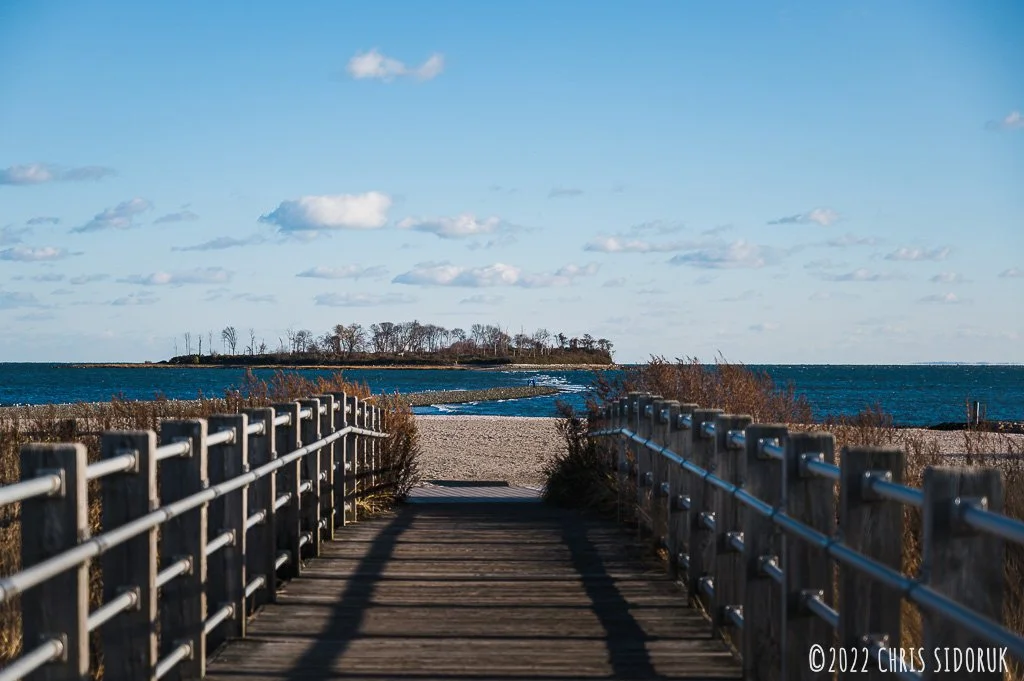
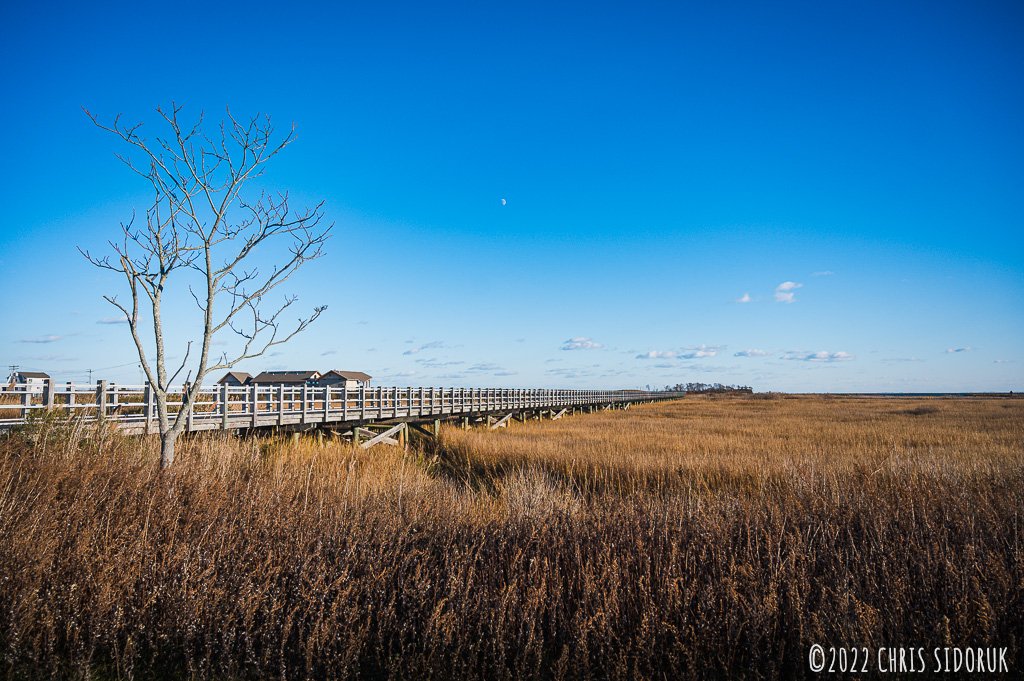
The boardwalk entrance to Silver Sands State Park in Milford, CT. | © 2022 Chris Sidoruk [License this image]
==========
Last Update: October 29, 2026
The boardwalk, tidal marshes, sandy shoreline, and views of Charles Island make Silver Sands State Park in Milford, Connecticut, a versatile location for coastal photography. Whether you're photographing a colorful sunset, looking for leading lines, or working with changing tides, the park offers a variety of compositions within a relatively compact area.
Walnut Beach is also nearby, adding a fishing pier and a more open shoreline to explore during the same visit.
For access information, directions, and additional planning details, see the Silver Sands State Park and Walnut Beach Photography Guide.
About Silver Sands State Park
Silver Sands State Park is a coastal preserve in Milford, Connecticut, overlooking Long Island Sound and Charles Island. Its landscape includes sandy shoreline, salt marshes, tidal flats, and an elevated boardwalk connecting the park area with the surrounding shoreline.
For photographers, the appeal is the variety of subjects in one location. The boardwalk provides strong lines and structure, the marshes change with the tide, and Charles Island offers a recognizable focal point across the water.
Conditions can look very different from one visit to the next. Tide levels, cloud cover, fog, wind, and the position of the sun all influence the photographs you can make.
Why Silver Sands State Park Is a Great Photography Location
Silver Sands stands out for its mix of environments in a small footprint:
Wide sandy shoreline along Long Island Sound
Salt marshes with shifting tidal patterns
Elevated boardwalks that create natural leading lines
Direct views of Charles Island
Easy access to Walnut Beach and its fishing pier
The variety of textures and open space makes it adaptable across seasons and lighting conditions.
Best Photography Spots at Silver Sands and Walnut Beach
1. The Boardwalk and Leading Lines
The boardwalk entrance is one of the most recognizable photographic features of Silver Sands. Its long, repeating lines can lead the viewer's eye toward the beach, marsh, or distant water.
Compositions to try:
Use a wide-angle lens to emphasize the boardwalk's length and create depth.
Position the boardwalk centrally for a balanced, symmetrical composition.
Try an off-center viewpoint for a more dynamic arrangement.
Photograph in soft morning light or fog for a quieter, more minimalist image.
Include the marsh and sky to create layers rather than filling the frame entirely with the boardwalk.
Look for changes in light and cloud cover that add atmosphere without distracting from the strong geometry.
2. Marshes and Tidal Flats
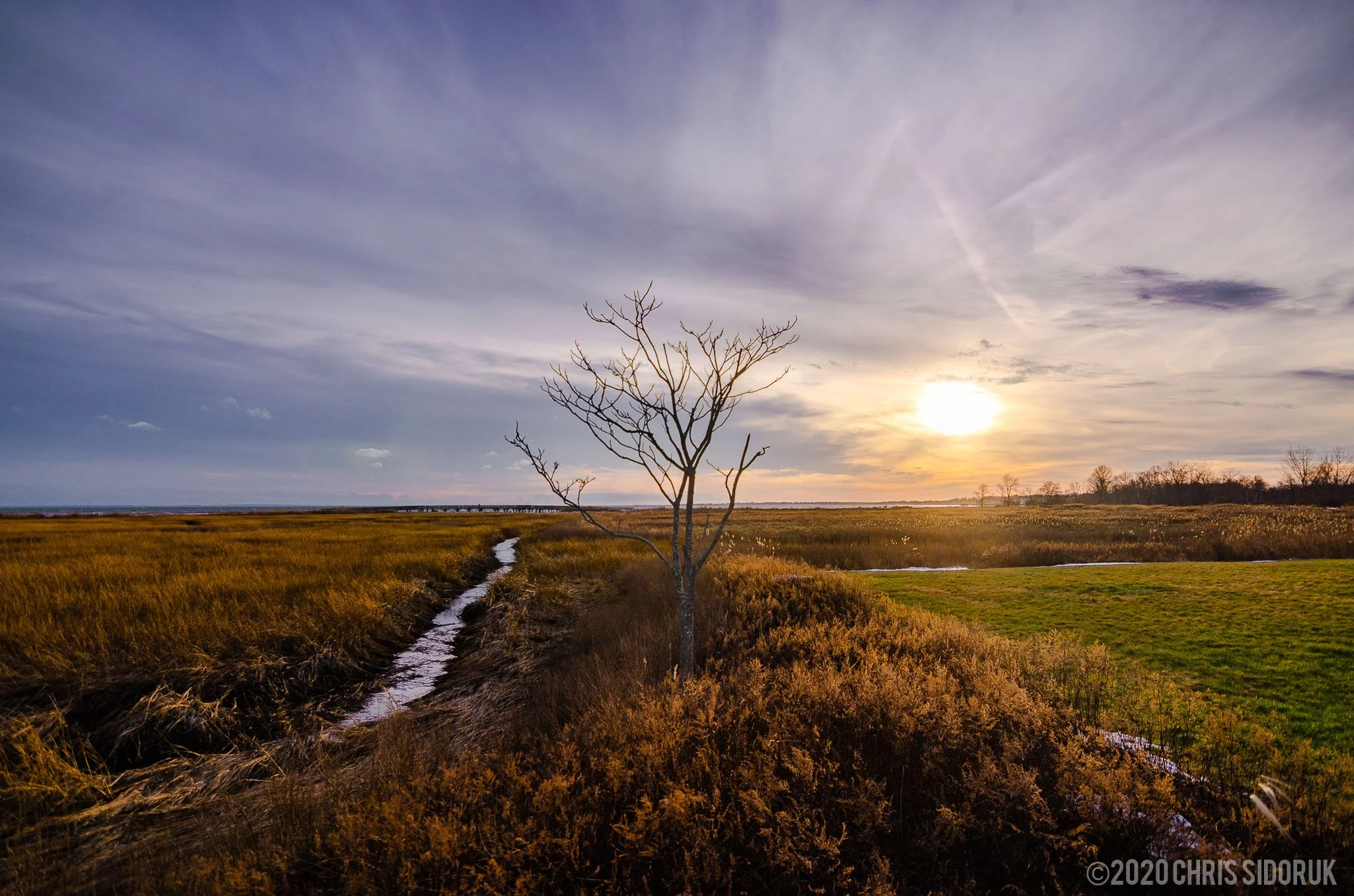
The marshes and tidal flats offer more subtle compositions than the open beach. Grasses, channels, reflections, and patterns in the exposed mud can become foreground elements or subjects in their own right.
At low tide:
Look for exposed textures and winding tidal channels.
Use foreground details to add depth to a wider composition.
Watch for small reflective pools and patterns in the sand or mud.
At high tide:
Look for simpler waterlines and reflections.
Use the water to separate the foreground from the distant shoreline.
Try compositions that emphasize the sky and Charles Island.
Tide levels change the appearance of the park considerably. Check local tide predictions before visiting if you have a particular composition in mind, and stay clear of areas where rising water could cut off a route back.
3. Charles Island Views
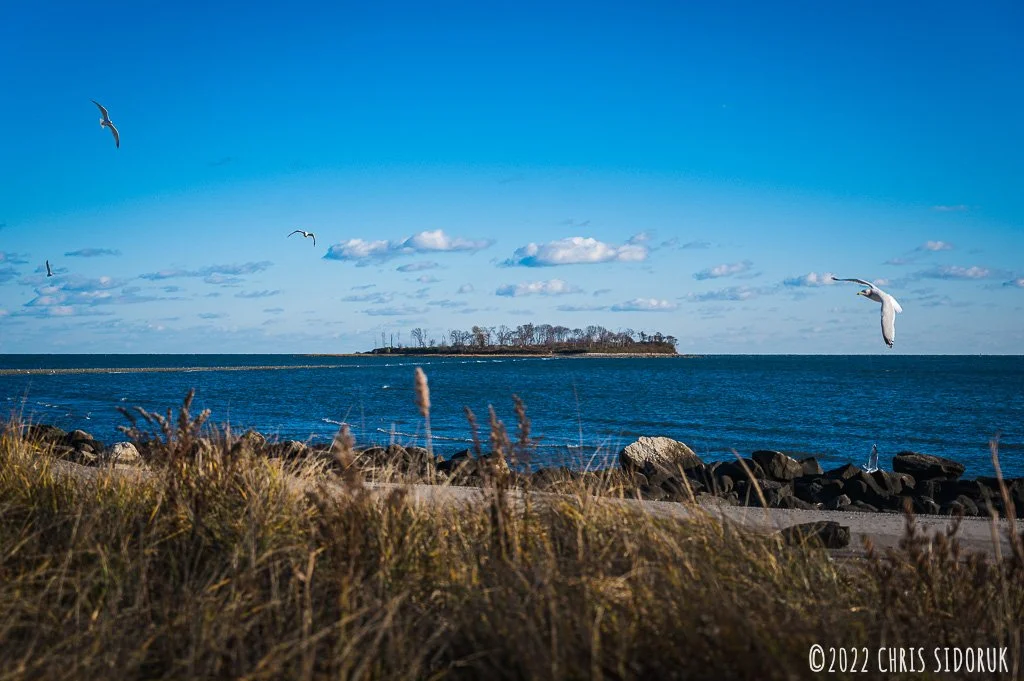
Charles Island is a defining feature of the Silver Sands landscape. From the shoreline and boardwalk area, it can serve as a focal point in wide coastal scenes or as the main subject in a tighter composition.
Ideas for photographing Charles Island:
Use a telephoto lens to make the island more prominent in the frame.
Include the shoreline or tidal flats as a foreground element.
Photograph the island against dramatic clouds or soft evening color.
Try a minimalist composition with the island, water, and sky.
Return under different weather conditions to capture changes in contrast and atmosphere.
Sunset can produce appealing silhouettes, but the island's appearance depends on the season, cloud cover, and viewing angle. Scout the shoreline before settling on a composition.
Charles Island is visible from the park, but do not assume it is safe or permitted to walk there. Access is affected by tides and conservation restrictions. Check current official guidance and posted signs, and never attempt the crossing if conditions are unsafe.
4. Walnut Beach and the Fishing Pier
Walnut Beach provides another set of coastal compositions close to Silver Sands. The open shoreline and fishing pier work well for photographs that emphasize geometry, reflections, and the relationship between the built structure and the water.
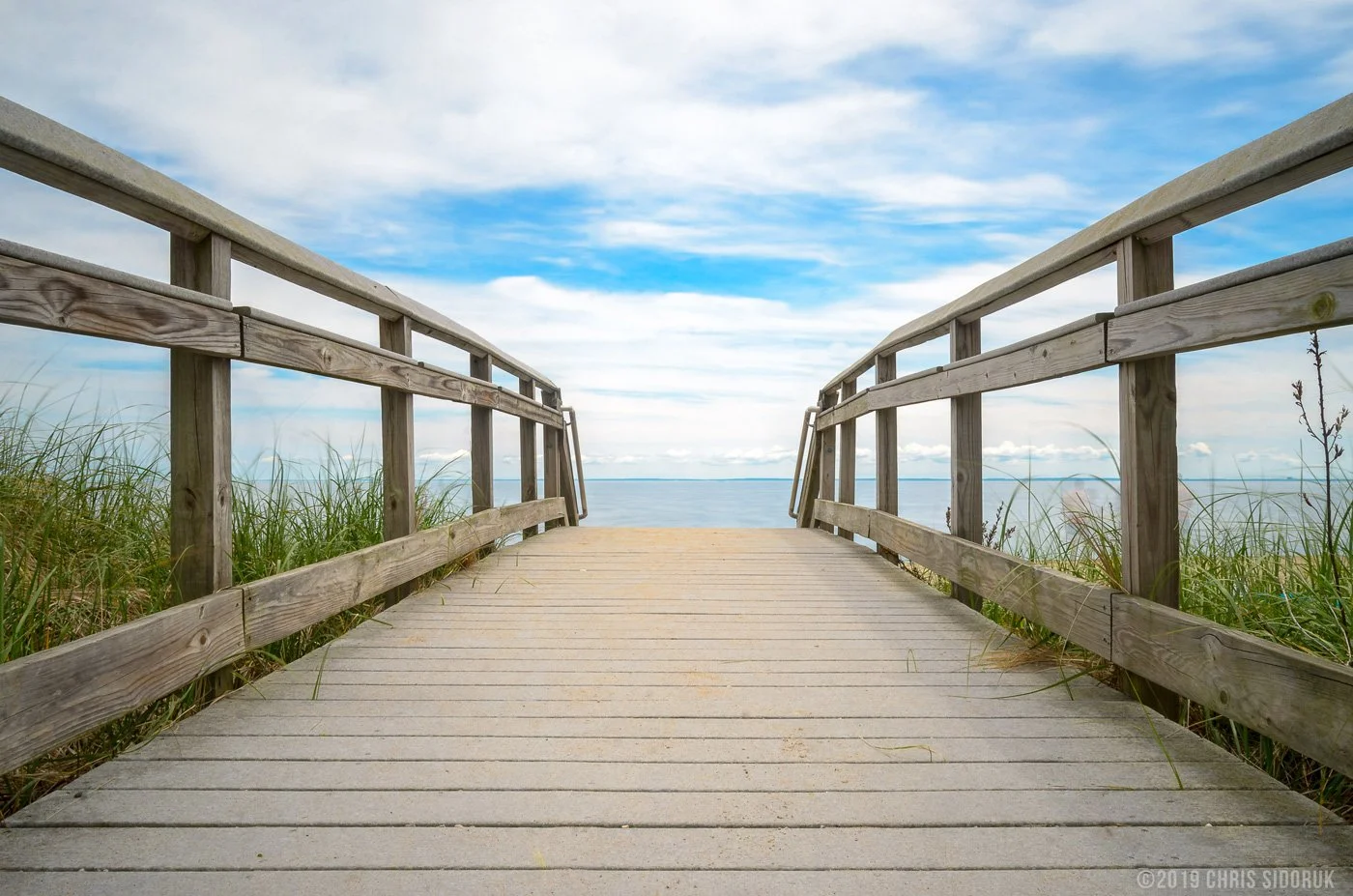
Walnut Beach in Milford, Connecticut. | © 2019 Chris Sidoruk [License this image]
Aerial Photography at Silver Sands
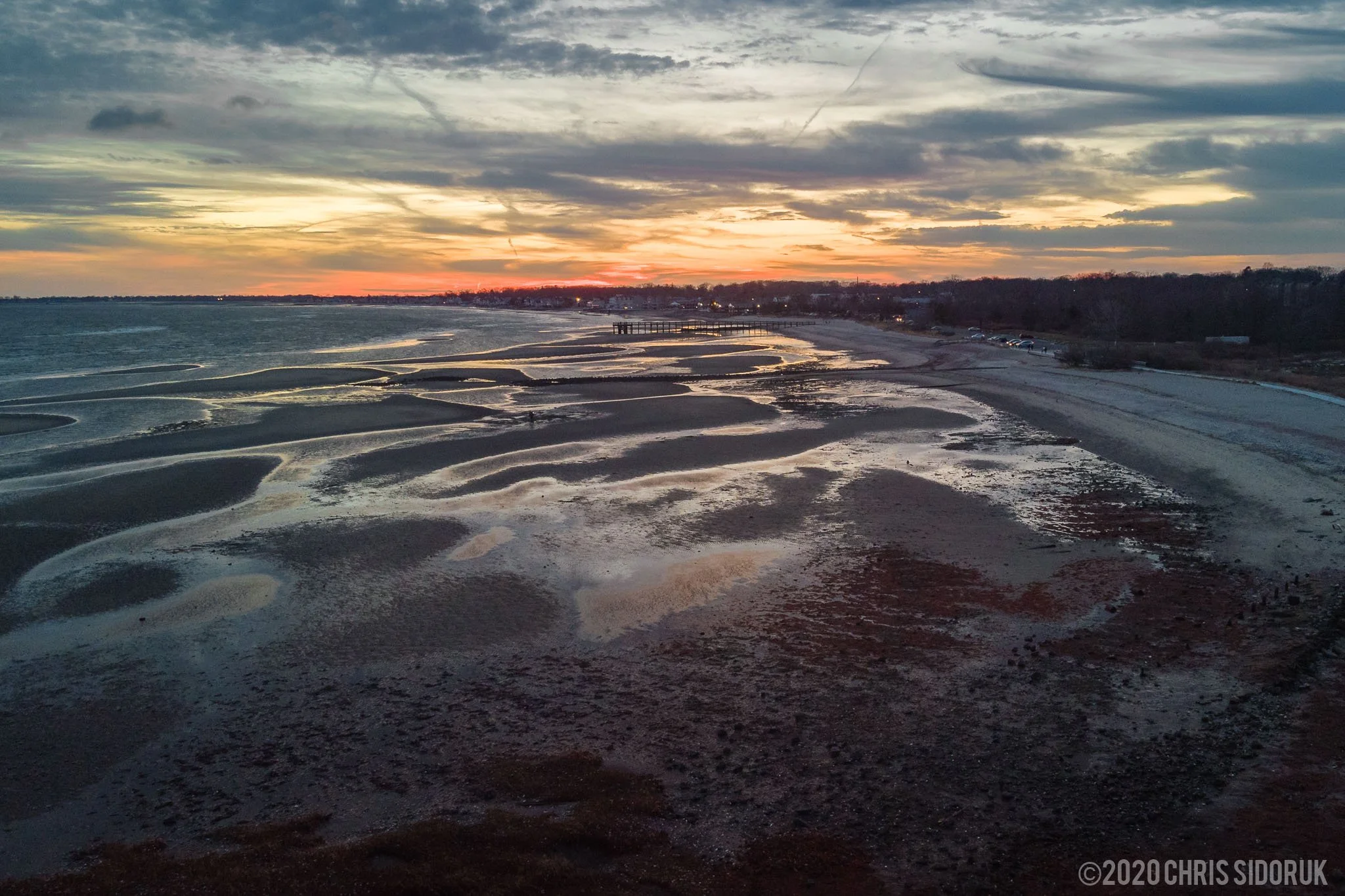
Coastal Milford, CT and Walnut Beach at sunset. | © 2020 Chris Sidoruk [License this image]
Aerial photography can reveal the shape of the shoreline, the relationship between the beach and marshes, and the wider pattern of the Milford coast.
However, drone operators should check current Connecticut state park policies, local restrictions, airspace requirements, and FAA rules before planning a flight. Do not assume that launching from a nearby beach makes a flight over a state park permissible. The launch location, flight path, airspace, and applicable land-management rules all matter.
The aerial photograph shown here was taken from a flight launched at Walnut Beach, rather than from within Silver Sands State Park boundaries. That detail does not, by itself, establish whether a future flight is permitted under current rules.
Best Lighting Conditions for Photography
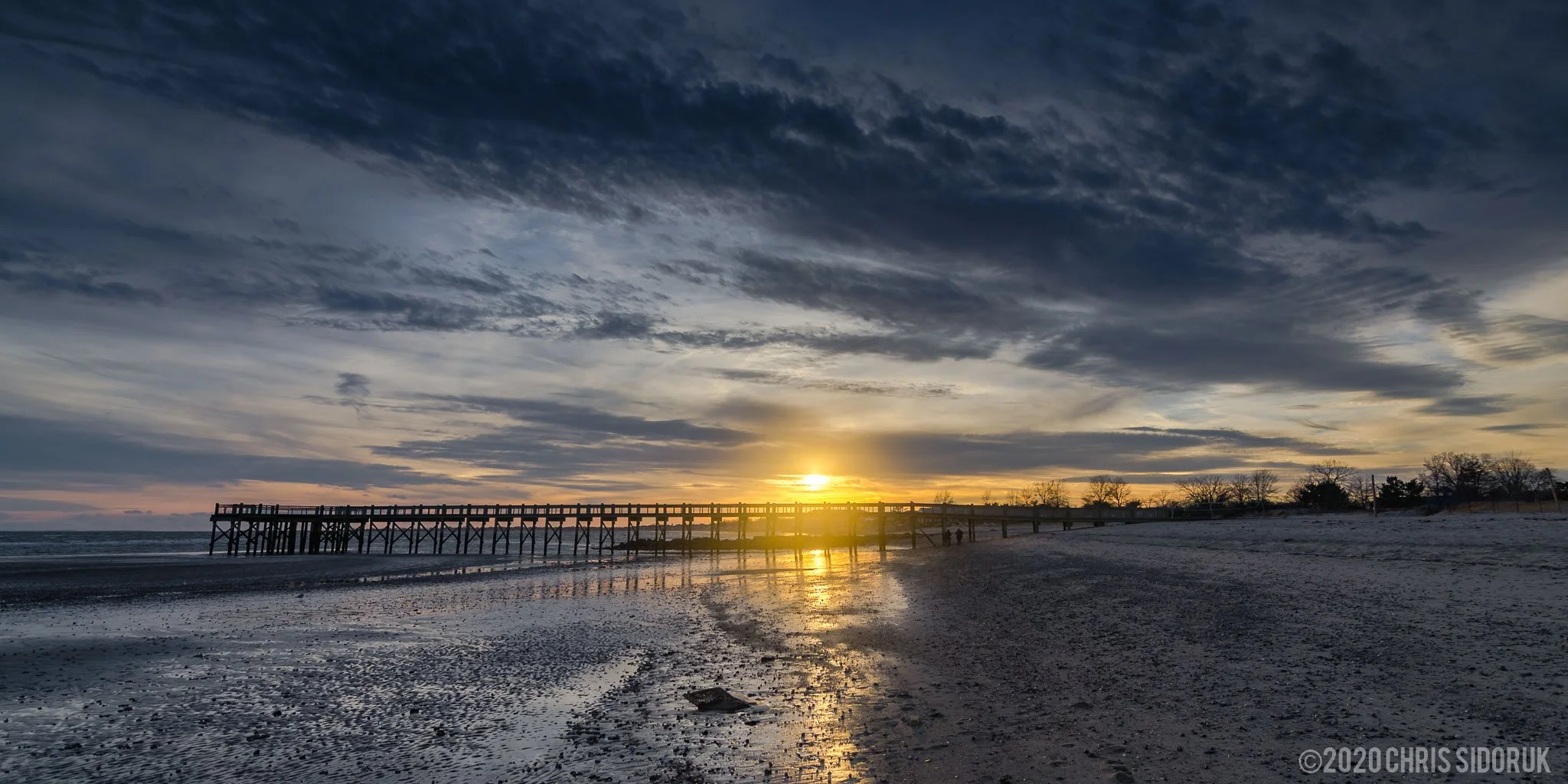
Walnut Beach pier in Milford, Connecticut. | © 2020 Chris Sidoruk Shop Wall Art - License this image
Sunrise
Sunrise can be a good choice if you want quieter surroundings and softer light. Depending on the weather, you may find pastel colors, mist, or subtle reflections across the water and tidal flats.
Try the boardwalk and marshes first, then explore the shoreline for foreground details.
Sunset
Sunset is especially useful for compositions featuring the pier, open water, and Charles Island. Warm light can add color to the water, while changing skies provide opportunities for silhouettes and dramatic coastal scenes.
Arrive early enough to explore several viewpoints before the light peaks. The best composition may be away from the most obvious viewing area.
Overcast Skies and Fog
Cloudy conditions can be excellent for photographing the boardwalk, marshes, and shoreline textures. Softer light reduces harsh contrast and helps keep detail in both the land and sky.
Fog can simplify a scene and create separation between foreground and background elements. If visibility becomes poor, take extra care near the shoreline and boardwalk edges.
Seasonal Photography at Silver Sands
Silver Sands offers different photographic opportunities throughout the year. Weather and tide conditions can matter as much as the season itself.
Spring
Look for fresh marsh growth, changing skies, and softer light. Wind and unsettled weather can create dramatic conditions over Long Island Sound.
Summer
Longer days provide more flexibility for evening photography. Expect busier beach conditions, particularly during warm weather and weekends, so consider visiting early or later in the day.
Fall
Lower sun angles can create longer shadows and warm light across the boardwalk and shoreline. Changing cloud cover can also add atmosphere to coastal scenes.
Winter
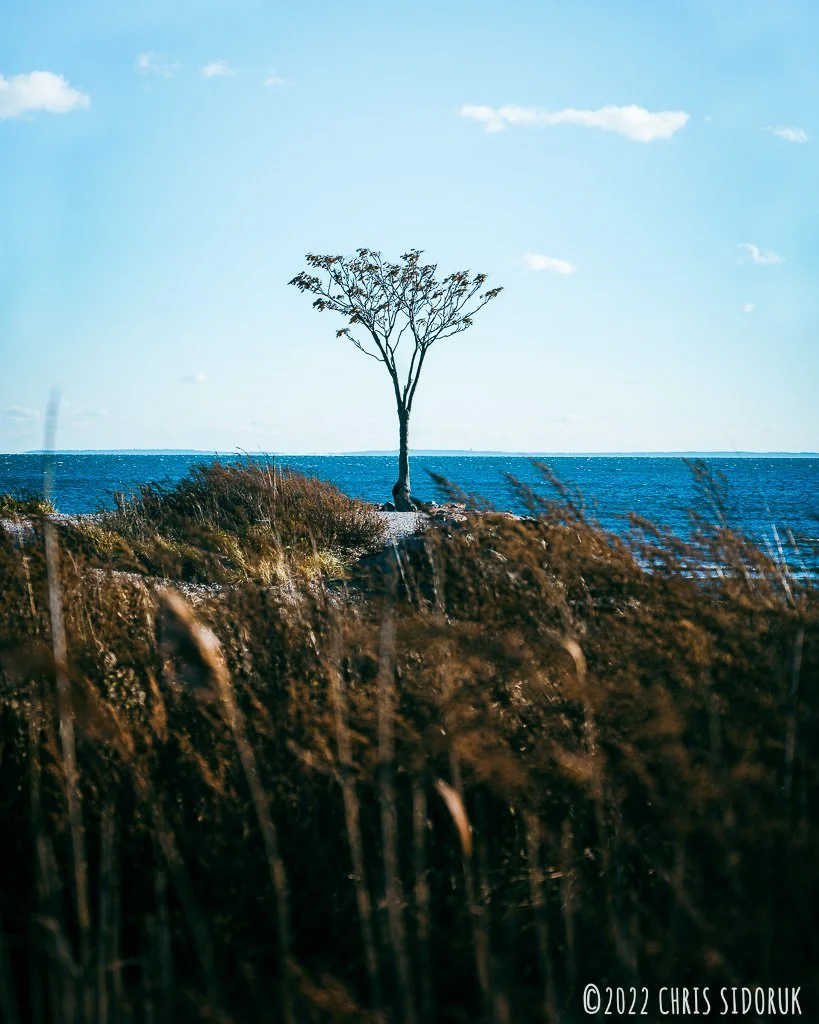
Winter can simplify the landscape, with fewer distractions and stronger contrasts between the boardwalk, beach, and water. Check weather, wind, ice, and access conditions before setting out, and stay away from unstable or icy edges.
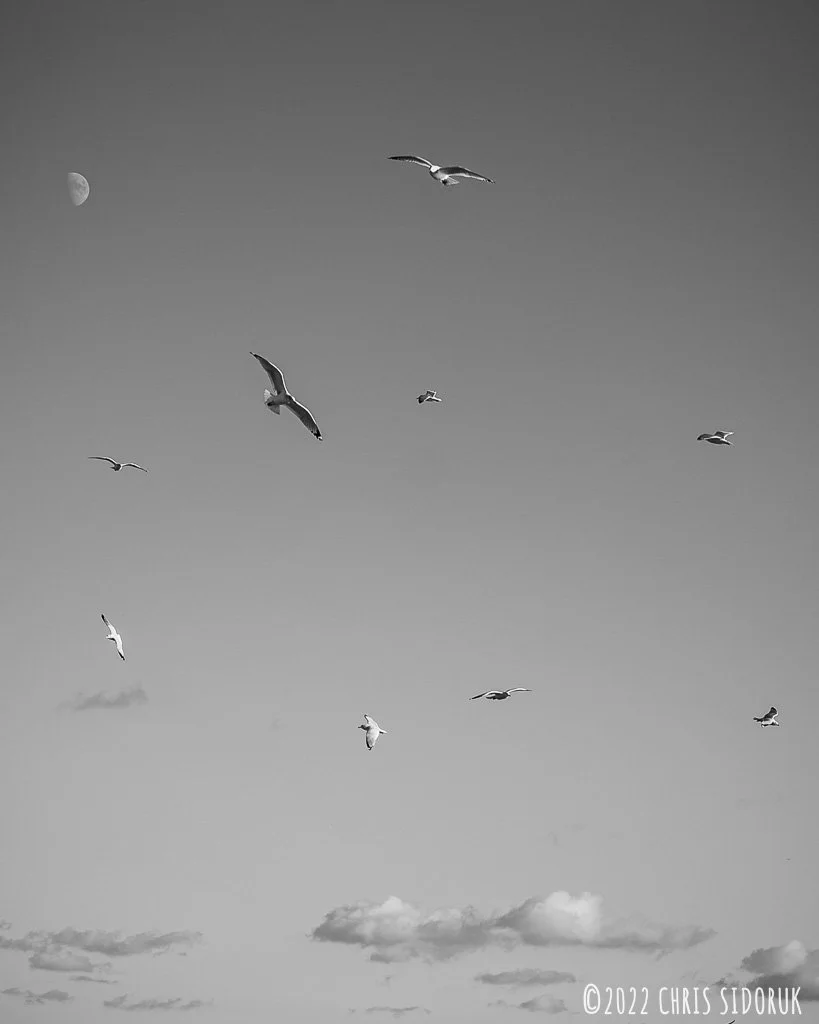
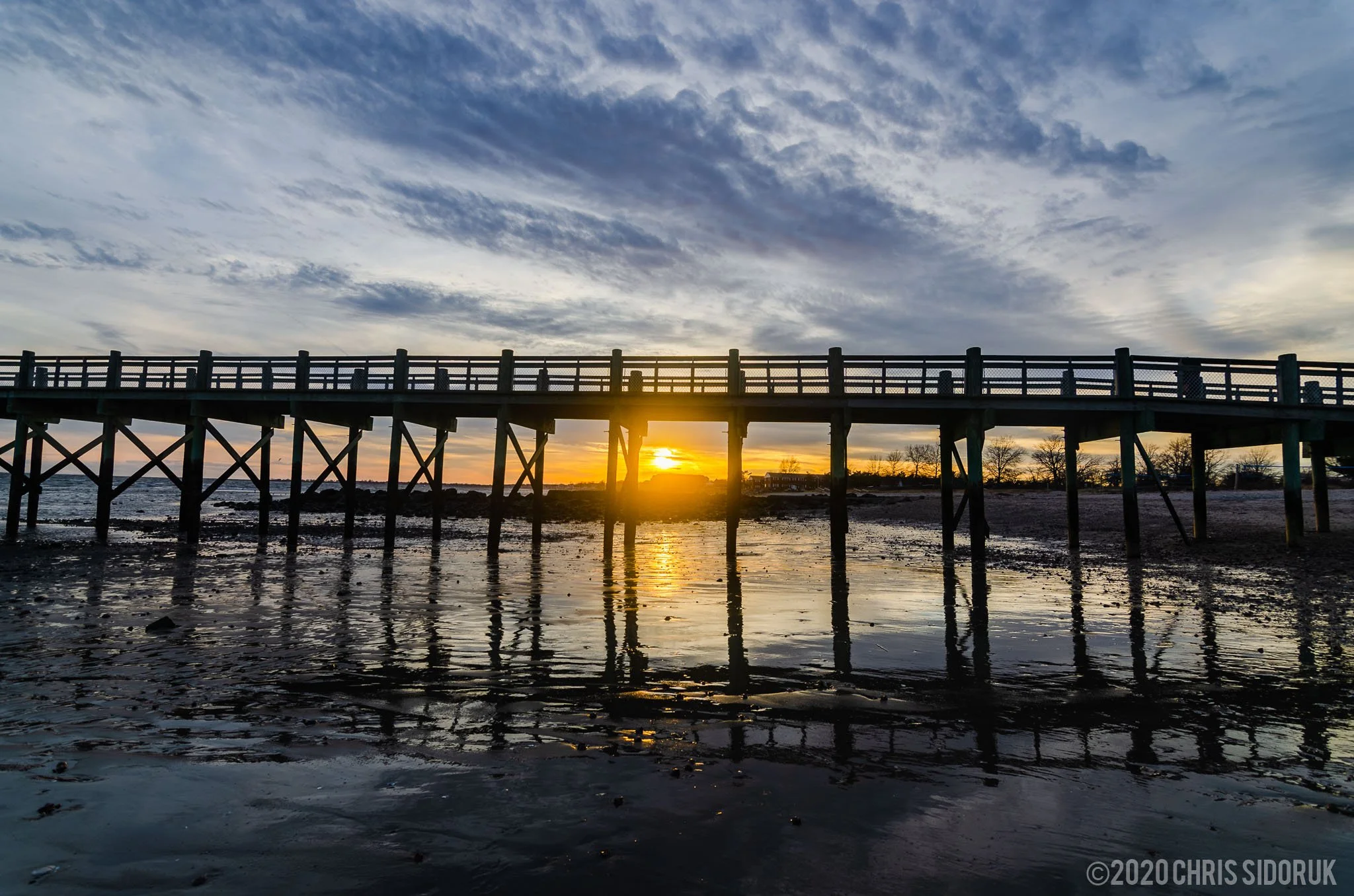
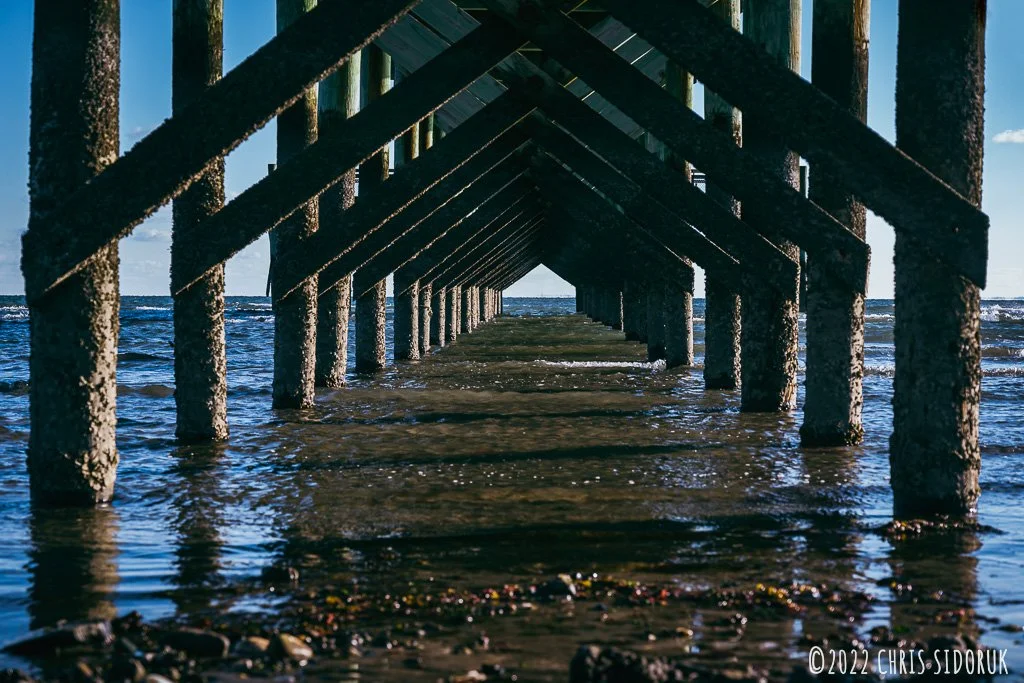
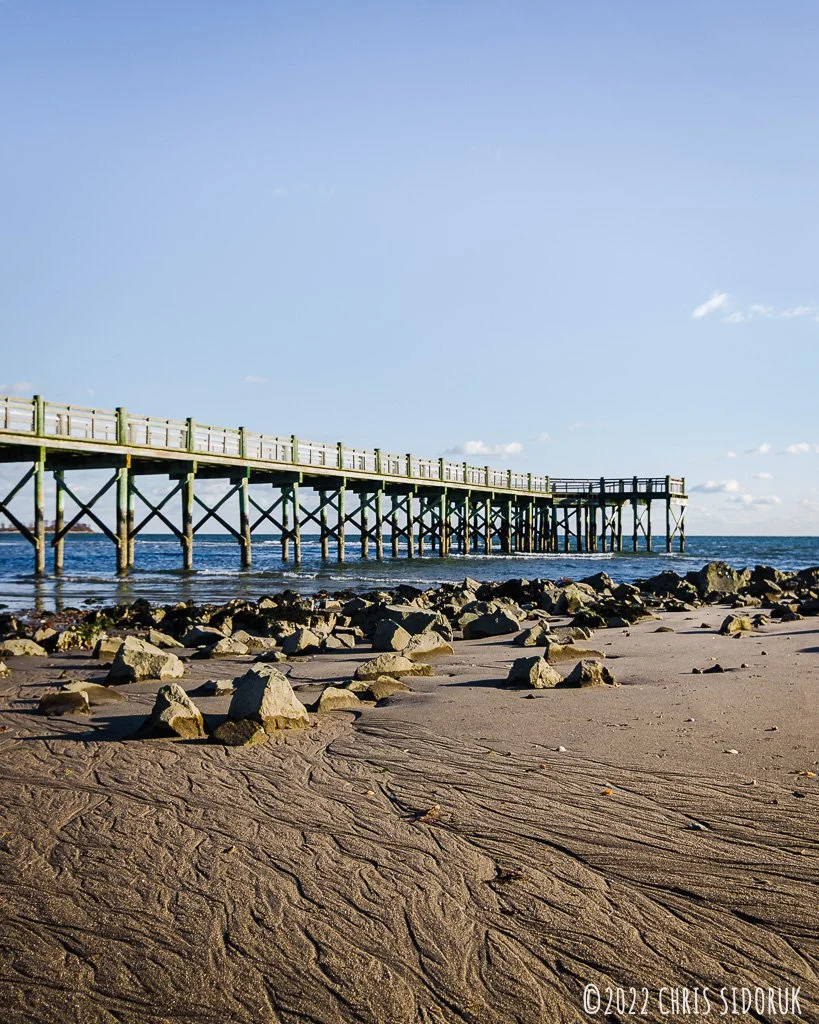
© Chris Sidoruk [License an image]
Practical Photography Tips
A successful visit usually depends more on light, tide, and composition than on specialized equipment.
Use a wide-angle lens for boardwalk lines, broad shoreline views, and foreground-to-background depth.
Bring a telephoto lens to make Charles Island more prominent or isolate distant details.
Check the tide before visiting if you want exposed flats, reflective pools, or a particular shoreline composition.
Use a tripod for long exposures when you want to smooth moving water or work in low light. Keep it stable and out of the way of other visitors.
Consider a polarizing filter to manage reflections and glare. Its effect varies with the angle of the sun and the water.
Use an ND filter when you want longer shutter speeds in daylight. Check your exposure and watch for changing waves.
Protect your gear from salt spray, sand, and wind. Clean equipment carefully after a coastal session.
Revisit in different conditions. The same viewpoint can produce a very different image with a new tide, cloud pattern, or season.
Nearby Connecticut Coastal Photography Locations
If you want to explore more of the Connecticut shoreline, consider these nearby or regional locations:
Hammonasset Beach State Park: A longer stretch of shoreline with open coastal views and opportunities for sunrise, sunset, and beach photography.
Compo Beach in Westport: A coastal setting with open water, beach views, and changing light.
Housatonic River shoreline areas: River views and changing seasonal conditions offer a different approach to landscape photography. See the Housatonic River photography guide.
Each location offers different shoreline shapes, foregrounds, and opportunities to work with the light.
Frequently Asked Questions
When is the best time to photograph Silver Sands State Park?
Sunrise and sunset are both good options. Sunrise can offer softer light and quieter conditions, while sunset often creates warm colors and silhouettes around Charles Island and the shoreline. Overcast days are useful for photographing the boardwalk, marshes, and textures.
Can you walk to Charles Island?
Do not assume that walking to Charles Island is permitted or safe. Access depends on tidal conditions and conservation restrictions. Check current official guidance and posted signs, and never attempt the crossing when conditions are unsafe.
Is Walnut Beach good for photography?
Yes. Walnut Beach is well suited to pier compositions, reflections, long exposures, and wide coastal sunset photographs. It also provides additional viewpoints to explore during a visit to Silver Sands.
What makes Silver Sands State Park unique for photographers?
The park combines a boardwalk, salt marshes, tidal flats, open shoreline, and views of Charles Island in one coastal setting. These features provide opportunities for wide landscapes, minimalist compositions, and more detailed studies of coastal textures.
Can you photograph Charles Island from Silver Sands State Park?
Yes. Charles Island is visible from the shoreline and boardwalk areas. It can work well as a focal point in wide coastal scenes or as the main subject in telephoto compositions, especially when the sky and light add atmosphere.
Is Silver Sands State Park good for sunrise photography?
Yes. Sunrise can offer softer light, fewer visitors, and opportunities for reflections or atmospheric conditions across the tidal flats and Long Island Sound. The results depend on cloud cover, wind, tide, and the season.
What lens is best for Silver Sands State Park photography?
A wide-angle lens is useful for boardwalk compositions, open shoreline scenes, and foreground detail. A telephoto lens helps make Charles Island more prominent and isolate distant features. A standard zoom is a flexible option if you prefer to travel light.
==========
Photography by Chris Sidoruk, a Connecticut photographer specializing in coastal landscapes, concert photography, and visual storytelling throughout New England.
Shot using a DJI Mavic Air and Nikon D7000 with settings for landscape photography.
All photographs © Chris Sidoruk. Images are protected by copyright and may not be used, copied, modified, or redistributed without written permission.
Explore more: