

Best Places to Photograph in Connecticut (Photo Locations Guide)

Saville Dam in Barkhamsted, CT, surrounded by vibrant autumn foliage. ©2020 Chris Sidoruk
Last Update: July 2026
Quick Jump
- Connecticut Photography Overview
- Best Coastal Photography Locations
- Best Waterfall & River Photography Locations
- Best Historic & Architectural Photography Locations
- Best Fall Foliage & Forest Photography Locations
- Best Scenic Views & Overlooks
- Best Seasons for Connecticut Photography
- Camera Gear for Connecticut Photography
- Photography Tips for Connecticut Locations
- Frequently Asked Questions
Connecticut may be one of the smallest states in the country, but it offers an incredible variety of photography locations.
From the rocky coastline along Long Island Sound to waterfalls, forests, historic landmarks, and scenic river valleys, Connecticut provides photographers with diverse subjects throughout every season.
Some of the best places to photograph in Connecticut include:
coastal beaches and shoreline landscapes
waterfalls and rivers
historic castles and architecture
covered bridges and industrial landmarks
fall foliage destinations
scenic overlooks and reservoirs
What makes Connecticut unique is the ability to photograph completely different environments within a short distance. A single photography trip can include sunrise along the coast, a waterfall hike midday, and a historic landmark during golden hour.
This guide highlights some of the best photography locations in Connecticut, including what makes each location unique, the best conditions to visit, and tips for capturing stronger images.
Whether you are looking for landscape photography, outdoor photo locations, or places to explore with a camera, Connecticut offers opportunities in every season.
Connecticut Photography Overview
Connecticut photography is defined by a mix of natural landscapes and historic environments.
Unlike larger states where destinations are spread across hundreds of miles, Connecticut allows photographers to explore several different types of scenery in a single day.
The strongest photography opportunities fall into several categories:
Coastal Photography
Connecticut’s shoreline is one of the most recognizable photography regions in the state.
Best subjects include:
beaches
lighthouses
tidal areas
Long Island Sound views
sunrise and sunset landscapes
Coastal photography works especially well during changing conditions, including:
fog
dramatic clouds
storms
low tide patterns
Popular locations include:
Silver Sands State Park
Hammonasset Beach State Park
Connecticut shoreline lighthouses
Waterfall and River Photography
Connecticut’s rivers and waterfalls provide some of the best opportunities for long exposure photography.
Common subjects include:
cascading waterfalls
river reflections
wooded landscapes
bridges and historic structures
These locations are especially strong during:
spring runoff
autumn foliage
overcast weather
Popular locations include:
Wadsworth Falls State Park
Indian Well State Park
Devil’s Hopyard State Park
Westfield Falls
Historic and Architectural Photography
Connecticut’s history creates unique photography opportunities beyond traditional landscapes.
Photographers can capture:
castles
stone structures
historic bridges
industrial landmarks
These locations work especially well because they combine human history with natural surroundings.
Popular examples include:
Gillette Castle State Park
Saville Dam
Shelton’s historic river landmarks
Fall Foliage Photography
Autumn is one of Connecticut’s most popular photography seasons.
The combination of forests, rivers, and historic locations creates a wide range of compositions.
Strong fall subjects include:
mountain overlooks
forest roads
reservoirs
river valleys
Peak foliage usually occurs from early to mid October, although timing varies each year.
Best Coastal Photography Locations in Connecticut
Connecticut’s coastline offers some of the most accessible landscape photography opportunities in New England.
The shoreline provides photographers with:
open horizons
dramatic skies
water reflections
changing tides
unique seasonal conditions
Silver Sands State Park — Milford, Connecticut
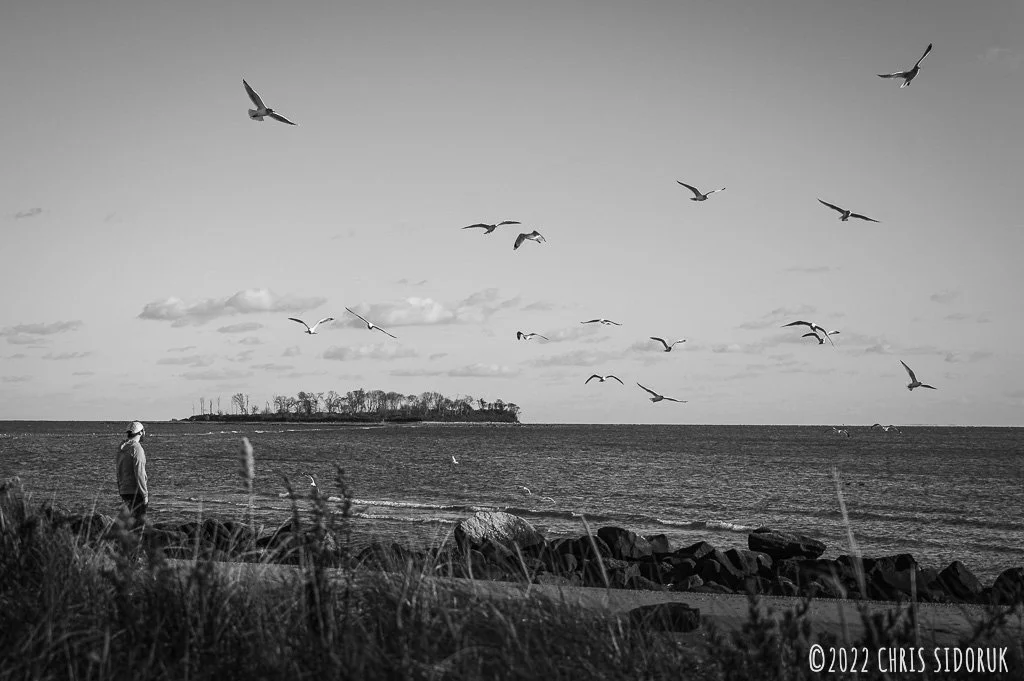
Seagulls in flight over Silver Sands State Park, with Charles Island in the background. ©2022 Chris Sidoruk
Silver Sands State Park is one of Connecticut’s strongest coastal photography locations.
Located along Long Island Sound, the park features:
sandy shoreline
boardwalk views
Charles Island in the distance
tidal landscapes
The location works especially well for:
Sunrise Photography
Morning light provides:
softer colors
fewer crowds
calmer conditions
Long Exposure Photography
The shoreline is ideal for:
smoothing waves
emphasizing movement
creating minimalist compositions
Weather Photography
Fog and storm clouds can dramatically change the appearance of the landscape.
Related guide:
→ Silver Sands State Park Photography Guide
Hammonasset Beach State Park — Madison, Connecticut
Hammonasset is one of Connecticut’s largest coastal parks and offers more variety than many shoreline locations.
Photography opportunities include:
beaches
marshes
dunes
sunsets
wildlife
The park is especially useful for photographers looking for different compositions in one location.
Best conditions:
sunrise for peaceful shoreline scenes
sunset for warm colors
cloudy days for softer landscapes
Connecticut Lighthouse Photography
Lighthouses are some of the most recognizable coastal subjects in Connecticut.
They combine:
architecture
maritime history
ocean landscapes
Strong lighthouse compositions often include:
foreground rocks
waves
dramatic skies
reflections
For photographers interested in broader lighthouse photography:
Best Waterfall & River Photography Locations in Connecticut
Connecticut’s rivers and waterfalls provide some of the most rewarding landscape photography opportunities in the state.
These locations are especially popular because they combine:
moving water
forest environments
natural textures
seasonal changes
long exposure opportunities
Waterfall photography in Connecticut is often best during spring and after periods of rainfall when water levels are higher. However, each season offers something different—from green summer forests to colorful autumn surroundings.
Wadsworth Falls State Park — Middletown, Connecticut

Long exposure photograph of Wadsworth Falls in Middletown, CT. ©2020 Chris Sidoruk
Wadsworth Falls State Park is one of Connecticut’s most accessible waterfall photography locations.
Located in Middletown, the park features a scenic waterfall surrounded by forest and rocky terrain.
The falls provide opportunities for photographers interested in:
long exposure photography
woodland compositions
water movement
seasonal landscape images
Best Photography Conditions
Wadsworth Falls works especially well during:
spring when water flow is strongest
overcast days with soft light
autumn when surrounding foliage adds color
Photography Tips
For stronger waterfall images:
use a tripod for sharp exposures
use an ND filter to control shutter speed
include foreground rocks or vegetation for depth
A wide-angle lens works well for showing the relationship between the waterfall and surrounding landscape.
Indian Well State Park — Shelton, Connecticut
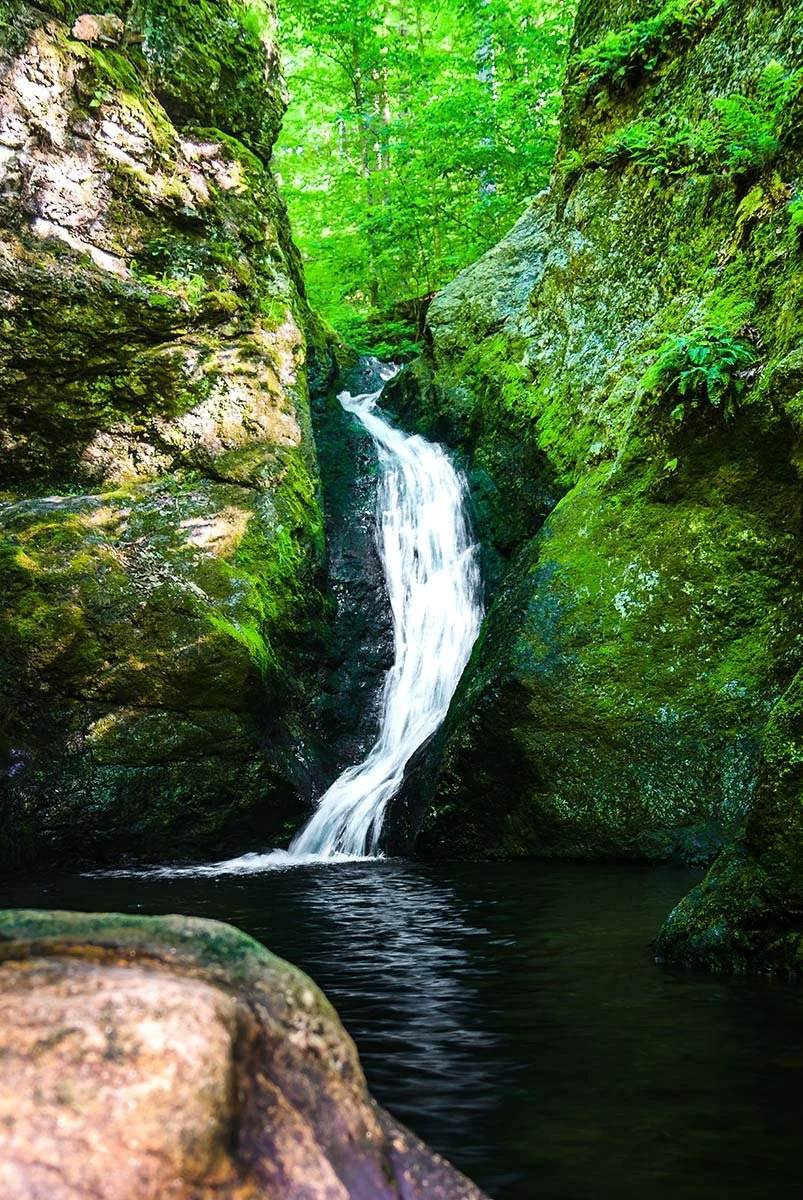
Waterfall at Indian Well State Park, a serene natural oasis in Connecticut. ©2020 Chris Sidoruk
Located along the Housatonic River in Shelton, Indian Well State Park is one of the area’s most scenic natural locations.
The park features:
waterfall views
river access
wooded trails
rocky shoreline areas
The combination of moving water and forest makes it a strong location for landscape photography.
Best Subjects
Photographers can capture:
the waterfall itself
river reflections
surrounding forest scenes
seasonal foliage
Spring and fall are particularly strong seasons because changing vegetation adds additional color and texture.
Related guide:
→ Historic Shelton CT Landmarks & Housatonic River Photography
Devil’s Hopyard State Park — East Haddam, Connecticut
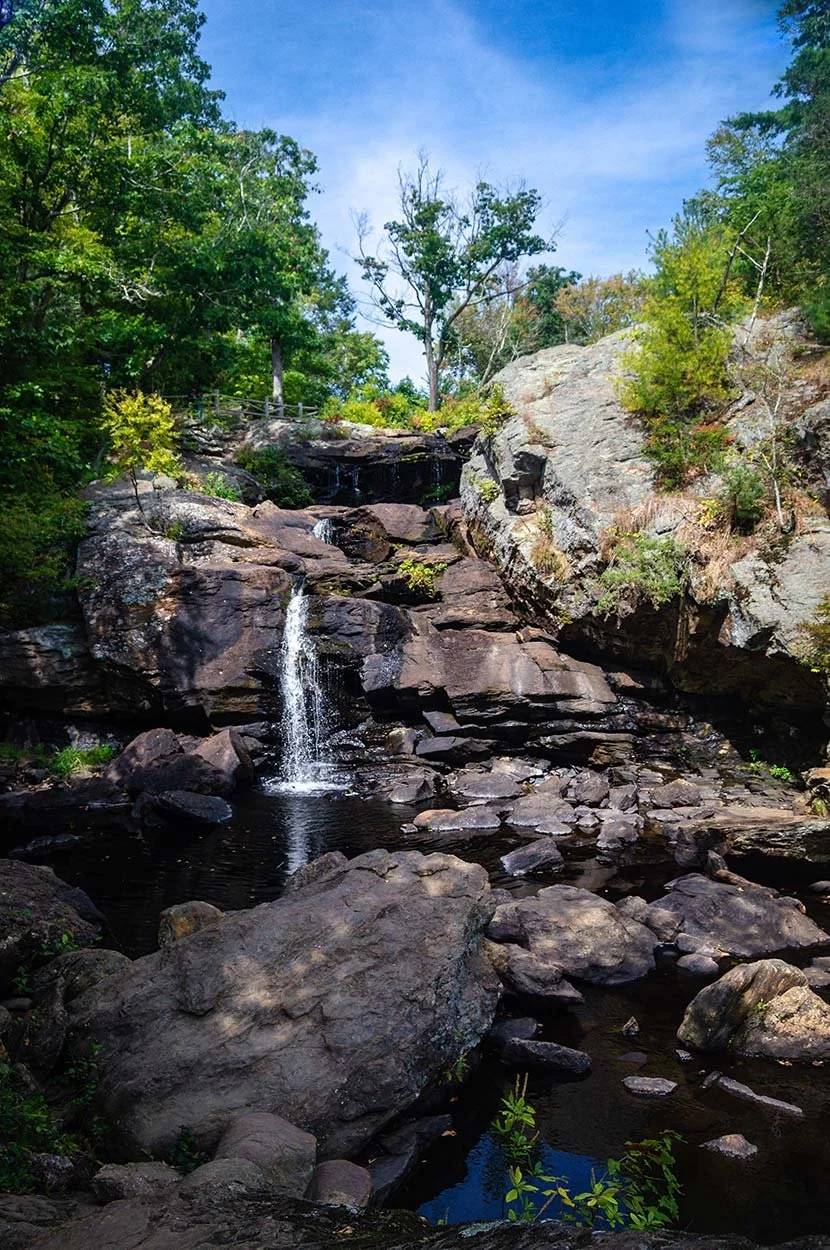
Chapman Falls, a multi-tiered cascade of water surrounded by lush foliage at Devil's Hopyard State Park. ©2020 Chris Sidoruk
Devil’s Hopyard State Park is home to Chapman Falls, one of Connecticut’s most recognizable waterfalls.
The multi-tiered waterfall creates a variety of compositions depending on water flow, lighting, and season.
Photography opportunities include:
cascading water
moss-covered rocks
forest scenes
close-up nature details
Best Conditions
The location is especially photogenic during:
spring runoff
cloudy weather
autumn foliage season
Overcast conditions often work best because they reduce harsh highlights and create more even exposure throughout the scene.
Westfield Falls — Middletown, Connecticut
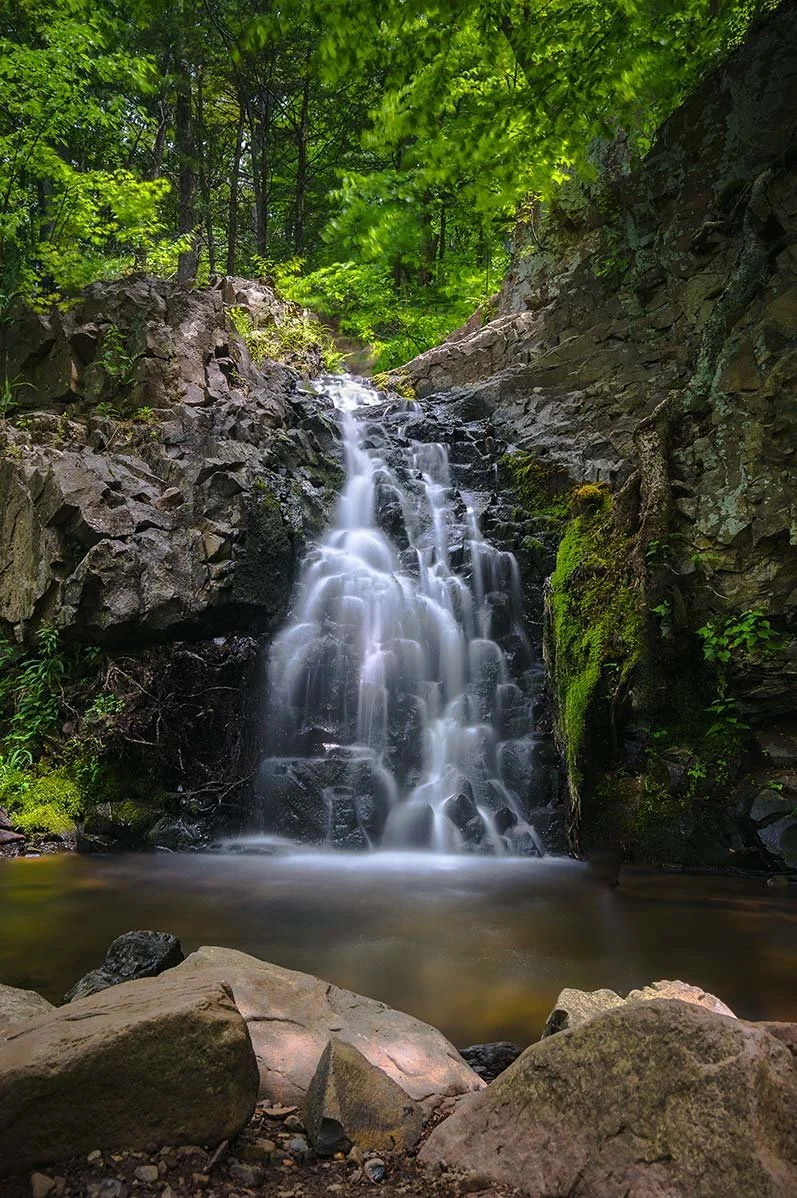
Westfield Falls, a serene multi-tiered waterfall nestled within the lush embrace of Westfield State Forest. ©2020 Chris Sidoruk
Westfield Falls is a smaller and less crowded waterfall location that rewards photographers willing to explore.
The falls feature:
multiple cascading sections
forest surroundings
natural rock formations
Because it is less developed than larger state parks, it provides a more natural woodland photography experience.
Photography Approach
Good compositions often include:
leading lines created by flowing water
trees framing the waterfall
reflections in calmer sections of water
A tripod and polarizing filter can help reduce glare and capture more detail in wet rocks and foliage.
Best Historic & Architectural Photography Locations in Connecticut
Connecticut’s photography opportunities extend beyond natural landscapes.
The state’s history has created unique subjects including:
castles
dams
railroad bridges
industrial landmarks
historic structures
These locations work especially well because they combine architecture with the surrounding environment.
Gillette Castle State Park — East Haddam, Connecticut
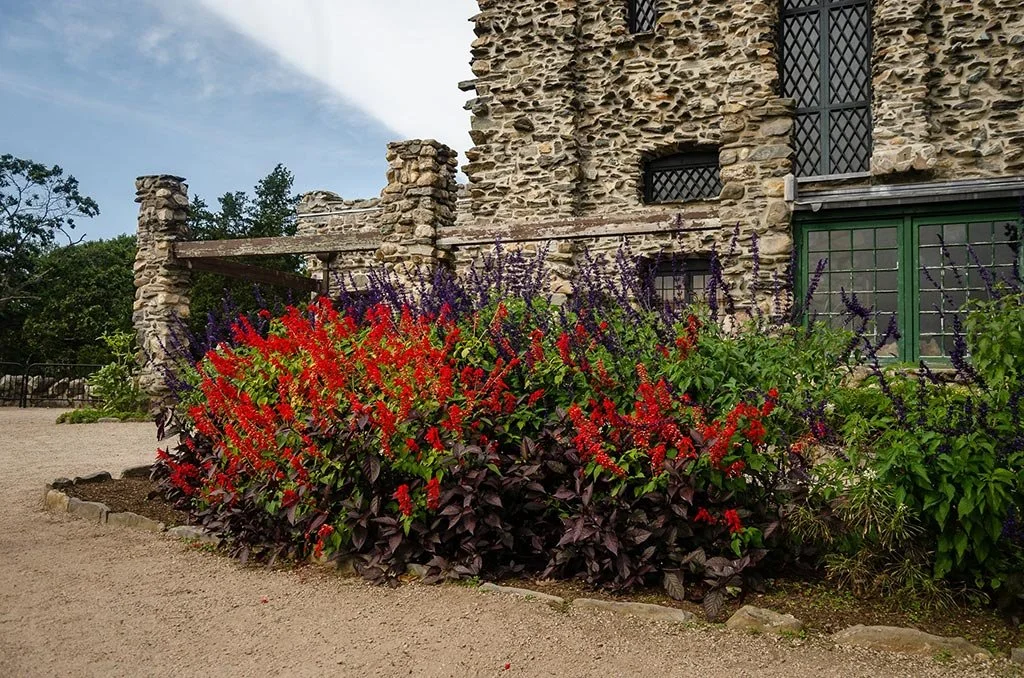
Gillette Castle Flower Blooms. ©2020 Chris Sidoruk
Gillette Castle is one of Connecticut’s most recognizable historic landmarks.
Built by actor William Gillette, the castle features unique medieval-inspired architecture overlooking the Connecticut River.
For photographers, the location offers a combination of:
stone architecture
wooded landscapes
river views
seasonal scenery
Best Photography Opportunities
Strong compositions include:
the castle framed by surrounding trees
architectural details
Connecticut River viewpoints
spring flowers and autumn foliage
Each season changes the character of the location.
Spring highlights colorful vegetation, summer provides dense greenery, and fall creates some of the strongest landscape combinations.
Saville Dam — Barkhamsted, Connecticut
Saville Dam is one of the most impressive architectural photography locations in Connecticut.
Located along the Barkhamsted Reservoir, the masonry structure creates a dramatic contrast between engineering and nature.
Photography opportunities include:
the dam structure itself
reservoir reflections
surrounding forests
seasonal landscapes
Best Conditions
Saville Dam is especially photogenic during:
fall foliage season
winter snow conditions
early morning light
The elevated viewpoint allows photographers to capture the scale of the reservoir and surrounding landscape.
Shelton CT Historic Landmarks — Housatonic River
Shelton provides a unique combination of:
river landscapes
industrial history
railroad infrastructure
bridges
The Housatonic River creates opportunities for both traditional landscape photography and more urban-industrial compositions.
Popular subjects include:
historic train trestle bridge
river reflections
sunrise scenes
aerial photography
The area is especially effective during:
foggy mornings
sunrise
autumn foliage
Related guides:
→ Historic Train Trestle Bridge Shelton CT Photography
→ Housatonic River Shelton CT Photography & Scenic Views
Photography Strategy for Waterfalls & Historic Locations
Regardless of location, several techniques consistently improve Connecticut landscape photography.
Visit During Changing Conditions
Some of the strongest images happen during:
fog
light rain
overcast skies
changing seasons
Flat weather often creates the most interesting atmosphere.
Use a Tripod
A tripod helps with:
waterfall long exposures
sunrise photography
low-light conditions
sharper images
Look Beyond the Main Subject
Instead of photographing only the obvious landmark, look for:
reflections
textures
smaller details
surrounding environment
A strong image often tells the story of the location rather than simply documenting it.
Best Fall Foliage & Forest Photography Locations in Connecticut
Fall is one of the most popular seasons for photography in Connecticut.
The combination of hardwood forests, rolling hills, rivers, and historic landmarks creates some of the most colorful landscapes in the state.
Connecticut’s foliage season typically peaks from early to mid October, although timing varies depending on elevation, weather, and yearly conditions.
The best fall photography locations often include:
elevated viewpoints
forest roads
reservoirs
river valleys
historic structures surrounded by changing leaves
Litchfield Hills — Northwestern Connecticut
The Litchfield Hills region is one of Connecticut’s strongest areas for fall landscape photography.
The area features:
rolling hills
scenic roads
forests
farms
historic New England landscapes
Photographers can create a wide variety of compositions, from wide landscape scenes to intimate details of autumn foliage.
Best Photography Opportunities
Strong subjects include:
winding country roads
old stone walls
farm fields
tree-covered hillsides
The region is especially effective during:
early morning fog
golden hour
overcast autumn days
Soft light helps preserve detail in colorful foliage while adding atmosphere to the landscape.
Saville Dam & Barkhamsted Reservoir — Barkhamsted, Connecticut
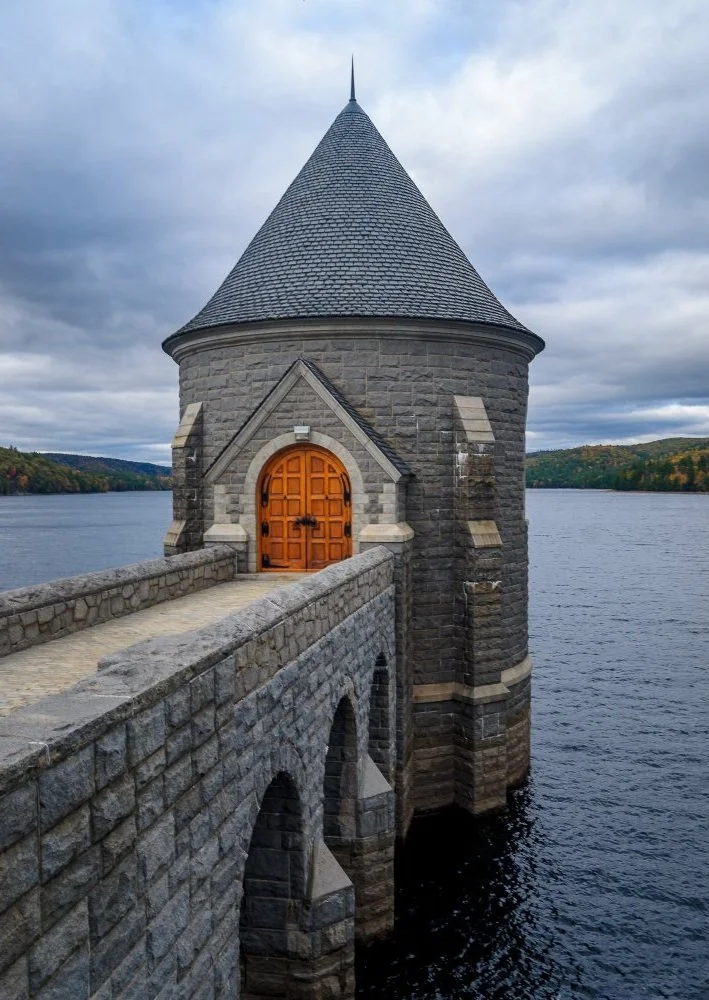
Saville Dam overlooking the tranquil Barkhamsted Reservoir. ©2019 Chris Sidoruk | SHOP WALL ART
While already known as an architectural photography location, Saville Dam is also one of Connecticut’s strongest fall foliage destinations.
The combination of:
colorful forests
calm water reflections
historic masonry architecture
creates a classic New England landscape scene.
Best compositions include:
the dam framed by autumn trees
reflections across the reservoir
elevated views overlooking the water
Housatonic River Valley — Western Connecticut
The Housatonic River Valley provides some of the best opportunities for river and foliage photography in Connecticut.
The area combines:
flowing water
wooded hillsides
bridges
historic communities
Fall is especially effective because the river creates opportunities for reflections and layered compositions.
Strong subjects include:
river bends
bridges surrounded by foliage
sunrise mist over the water
Related guide:
→ Housatonic River Shelton CT Photography & Scenic Views
Sleeping Giant State Park — Hamden, Connecticut
Sleeping Giant State Park is one of Connecticut’s most recognizable hiking and scenic photography locations.
The park features:
mountain ridges
forest trails
elevated viewpoints
seasonal foliage
The summit provides panoramic views of the surrounding landscape.
Best photography opportunities include:
fall foliage from higher elevations
sunrise landscapes
layered forest views
A wide-angle lens works well for expansive scenes, while a telephoto lens can compress distant ridges and foliage layers.
Best Scenic Views & Overlooks in Connecticut
Connecticut does not have the dramatic elevation changes of nearby New Hampshire or Vermont, but it still offers several scenic viewpoints with impressive landscape photography potential.
The strongest overlooks typically combine:
elevation changes
distant landscapes
seasonal color
atmospheric conditions
Haystack Mountain State Park — Norfolk, Connecticut
Haystack Mountain offers one of northwestern Connecticut’s best elevated viewpoints.
The stone observation tower provides views over:
forested hills
surrounding valleys
seasonal foliage
Fall is the most popular time for photography because the surrounding landscape becomes a mix of warm autumn colors.
Dennis Hill State Park — Norfolk, Connecticut
Dennis Hill provides another scenic overlook in the Litchfield Hills region.
The location offers:
open views
forest surroundings
historic structures
It works especially well during:
sunrise
fall foliage season
clear winter days
Mount Tom State Park — Litchfield, Connecticut
Mount Tom State Park is known for its short hike and scenic tower overlooking the surrounding landscape.
Photography opportunities include:
lake views
wooded hills
seasonal landscapes
The location is especially useful for photographers looking for a quick-access viewpoint.
Connecticut Photography by Subject
For photographers planning trips around specific subjects, Connecticut offers strong options across several categories.
| Photography Subject | Best Locations |
|---|---|
| Coastal Landscapes | Silver Sands State Park, Hammonasset Beach |
| Waterfalls | Wadsworth Falls, Devil’s Hopyard, Indian Well |
| Fall Foliage | Litchfield Hills, Barkhamsted Reservoir, Housatonic River Valley |
| Historic Architecture | Gillette Castle, Saville Dam |
| River Photography | Housatonic River, Connecticut River locations |
| Scenic Overlooks | Haystack Mountain, Dennis Hill, Mount Tom |
Coastal Landscapes
Best Locations: Silver Sands State Park, Hammonasset Beach
Waterfalls
Best Locations: Wadsworth Falls, Devil’s Hopyard, Indian Well
Fall Foliage
Best Locations: Litchfield Hills, Barkhamsted Reservoir, Housatonic River Valley
Historic Architecture
Best Locations: Gillette Castle, Saville Dam
River Photography
Best Locations: Housatonic River, Connecticut River locations
Scenic Overlooks
Best Locations: Haystack Mountain, Dennis Hill, Mount Tom
Planning a Connecticut Photography Trip
Because Connecticut is compact, photographers can combine multiple locations into efficient photography trips.
Examples:
Coastal Photography Day
Morning:
Silver Sands State Park sunrise
Afternoon:
nearby shoreline locations
Evening:
coastal sunset photography
Waterfall & Forest Photography Day
Morning:
Wadsworth Falls
Afternoon:
Devil’s Hopyard or Indian Well
Evening:
nearby scenic roads or historic locations
Fall Foliage Photography Day
Morning:
Barkhamsted Reservoir
Midday:
Litchfield Hills scenic roads
Sunset:
elevated overlook location
Choosing Locations Based on Conditions
The best Connecticut photography location depends heavily on weather and season.
Fog
Best subjects:
rivers
bridges
forests
reservoirs
Strong locations:
Housatonic River
Barkhamsted Reservoir
Shelton landmarks
Cloudy Weather
Best subjects:
waterfalls
forests
architecture
Cloud cover creates softer light and reduces harsh contrast.
Clear Skies
Best subjects:
overlooks
sunsets
wide landscapes
Clear conditions work well when photographing distant views and colorful skies.
Best Seasons for Connecticut Photography
One of the advantages of photographing Connecticut is that every season creates a completely different landscape.
The same location can look dramatically different depending on:
time of year
weather conditions
available light
water levels
seasonal changes
Instead of searching for one “best” season, photographers can plan around the type of image they want to create.
Spring Photography in Connecticut (March–May)
Spring is one of the best seasons for waterfall and river photography.
Melting snow and increased rainfall often create stronger water flow, making this season ideal for long exposure photography.
Best subjects:
waterfalls
rivers
fresh greenery
flowering trees
wooded landscapes
Recommended locations:
Wadsworth Falls State Park
Indian Well State Park
Devil’s Hopyard State Park
Best Conditions
Spring photography works especially well during:
cloudy days
light rain
early morning fog
Soft spring light helps maintain detail in both water and surrounding vegetation.
Summer Photography in Connecticut (June–August)
Summer provides long daylight hours and easier access to outdoor locations.
This season is especially strong for:
coastal photography
beaches
sunsets
outdoor architecture
Recommended locations:
Silver Sands State Park
Hammonasset Beach State Park
Gillette Castle State Park
Summer Photography Tips
Because summer locations can become crowded, photographers often get better results by:
arriving before sunrise
shooting during golden hour
avoiding harsh midday light
Fall Photography in Connecticut (September–November)
Fall is the most popular photography season in Connecticut.
The combination of colorful foliage, historic landmarks, and waterways creates classic New England landscapes.
Best subjects:
forests
reservoirs
mountains
river valleys
scenic roads
Recommended locations:
Litchfield Hills
Barkhamsted Reservoir
Housatonic River Valley
Sleeping Giant State Park
Fall Photography Tips
For stronger foliage images:
photograph reflections in calm water
use telephoto lenses to compress layers of color
look for fog after cool nights
include structures for scale
Winter Photography in Connecticut (December–February)
Winter creates a quieter and more minimalist photography environment.
Snow and reduced vegetation simplify compositions and emphasize:
architecture
textures
contrast
atmosphere
Best subjects:
frozen waterfalls
snow-covered landscapes
rivers
historic structures
Recommended locations:
Saville Dam
Housatonic River
Connecticut waterfalls
Winter often rewards photographers willing to work in changing conditions.
Camera Gear for Connecticut Landscape Photography
You do not need an extensive camera system to photograph Connecticut successfully.
The most important factors are:
reliable equipment
weather protection
stability
choosing the right lens for the subject
A practical Connecticut landscape photography kit should include:
camera body
wide-angle lens
standard zoom lens
tripod
filters
weather protection
Camera Bodies
Modern mirrorless cameras are excellent choices for Connecticut landscape photography because they offer:
strong dynamic range
improved autofocus
electronic viewfinders
lightweight systems
Important features include:
good low-light performance
weather sealing
high-resolution sensors
reliable battery life
Full-frame cameras provide advantages for:
sunrise photography
low-light conditions
maximizing dynamic range
APS-C cameras remain excellent options because they are:
affordable
lightweight
capable of producing high-quality images
Recommended Landscape Photography Lenses
Lens choice often impacts your images more than the camera body.
Wide-Angle Lens (14–35mm)
Best for:
waterfalls
coastlines
architecture
large landscapes
Examples:
Silver Sands shoreline compositions
Gillette Castle surroundings
waterfall scenes
Standard Zoom Lens (24–70mm)
A versatile choice for:
travel photography
general landscape work
historic locations
This range is useful when compositions change quickly.
Telephoto Lens (70–200mm or Longer)
Telephoto lenses are valuable for:
foliage layers
distant mountains
compressed landscapes
isolating details
They are especially useful during fall photography.
Tripods
A tripod is one of the most useful accessories for Connecticut landscape photography.
It helps with:
waterfall long exposures
sunrise photography
low-light scenes
sharper images
A sturdy tripod is especially important near:
waterfalls
windy coastlines
bridges
elevated viewpoints
Filters
Filters can significantly improve landscape images.
Polarizing Filter
Useful for:
reducing water reflections
enhancing foliage
increasing contrast
Neutral Density (ND) Filter
Useful for:
smoothing waterfalls
creating long coastal exposures
controlling bright daylight
Graduated ND Filter
Useful when:
skies are much brighter than the landscape
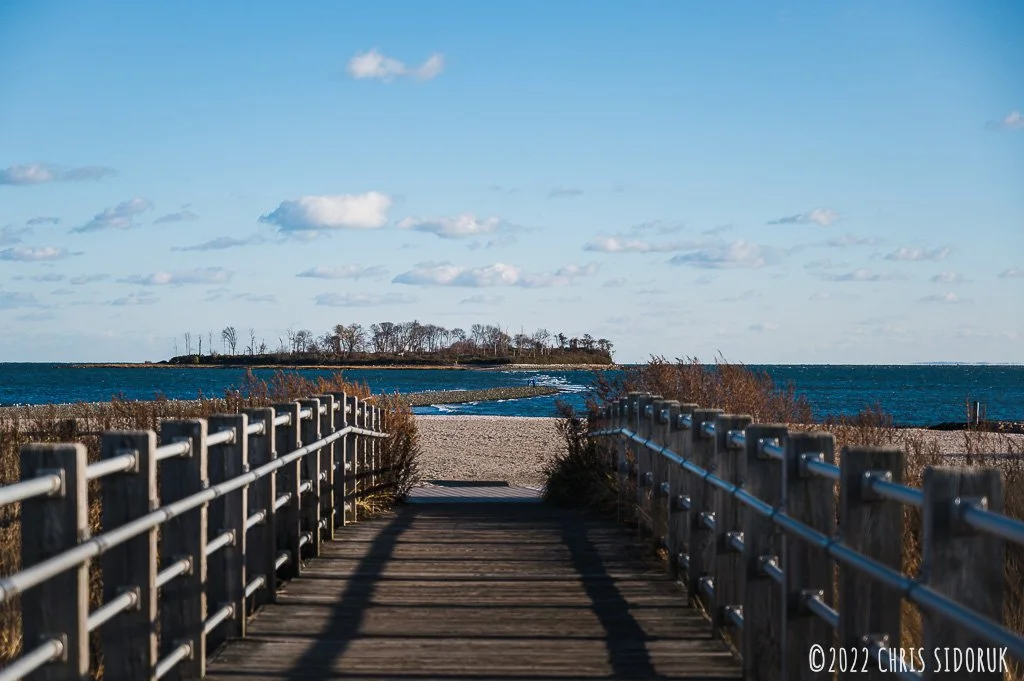
Boardwalk at Silver Sands State Park leading to view of Charles Island. ©2022 Chris Sidoruk
Photography Tips for Connecticut Locations
Strong landscape photography is not just about arriving at a location.
The best images usually come from understanding:
light
weather
composition
timing
Photograph During the Best Light
The strongest landscape photography usually happens during:
Sunrise
Advantages:
fewer crowds
softer light
calmer conditions
possible fog
Great for:
rivers
coastlines
bridges
Golden Hour
Advantages:
warm tones
directional light
stronger shadows
Great for:
architecture
landscapes
foliage
Blue Hour
Useful for:
historic structures
city scenes
bridges
Blue hour can create dramatic images with balanced ambient light.
Use Weather to Your Advantage
Many photographers avoid poor weather, but changing conditions often create the most memorable images.
Examples:
Fog:
adds atmosphere to rivers
separates landscape layers
creates mood
Clouds:
create dramatic skies
improve exposure balance
Storm conditions:
add energy to coastal scenes
Include Foreground Elements
A common mistake in landscape photography is creating flat compositions.
Adding foreground elements creates depth.
Examples:
rocks
tree branches
shoreline textures
pathways
reflections
This helps guide the viewer through the image.
Explore Multiple Angles
Popular locations often have obvious viewpoints.
However, stronger images may come from:
moving along trails
changing elevation
using different focal lengths
revisiting under different conditions
A familiar location can produce completely different images throughout the year.
Final Thoughts: Exploring Connecticut Through Photography
Connecticut may be one of the smaller states in New England, but its photography opportunities are surprisingly diverse.
From coastal landscapes along Long Island Sound to waterfalls, forests, rivers, and historic landmarks, the state offers subjects for photographers in every season.
The strongest Connecticut photography locations are not always defined by popularity. They are defined by:
changing light
seasonal conditions
atmosphere
composition opportunities
A waterfall photographed after rainfall, a river covered in morning fog, or a historic structure surrounded by autumn foliage can all create memorable images when conditions align.
The best approach is to plan around the subject you want to photograph:
coastal locations for sunrise and long exposures
waterfalls for spring and overcast conditions
forests and mountains for fall color
historic landmarks for architecture and seasonal atmosphere
Connecticut’s landscapes continue to change throughout the year, making even familiar locations worth revisiting.
Frequently Asked Questions
What are the best places to photograph in Connecticut?
Some of the best places to photograph in Connecticut include:
Silver Sands State Park for coastal landscapes
Saville Dam for architecture and fall foliage
Gillette Castle for historic photography
Wadsworth Falls for waterfall photography
Indian Well State Park for rivers and forests
Devil’s Hopyard for waterfall and woodland scenes
Housatonic River locations for sunrise, fog, and seasonal landscapes
Connecticut offers a wide range of photography subjects, including beaches, waterfalls, forests, historic landmarks, and scenic overlooks.
Where is the best fall foliage photography in Connecticut?
Some of the strongest fall foliage photography locations in Connecticut include:
Litchfield Hills
Barkhamsted Reservoir
Housatonic River Valley
Sleeping Giant State Park
northwestern Connecticut scenic roads
Fall photography is especially effective when colorful foliage is combined with water, historic structures, or elevated viewpoints.
What is the best time of day for photography in Connecticut?
The best time for landscape photography in Connecticut is typically around sunrise and sunset.
Sunrise often provides:
softer light
fewer visitors
calmer conditions
potential fog
Sunset provides:
warmer colors
dramatic skies
longer shadows
For waterfalls and forests, overcast days can also create excellent conditions because the light is softer and more balanced.
Where can I photograph waterfalls in Connecticut?
Some of the best waterfall photography locations in Connecticut include:
Wadsworth Falls State Park
Indian Well State Park
Devil’s Hopyard State Park
Westfield Falls
Spring and periods after rainfall often provide the strongest water flow.
A tripod and ND filter can help create smoother long exposure waterfall images.
What camera gear is best for photographing Connecticut landscapes?
A practical Connecticut landscape photography setup includes:
mirrorless or DSLR camera
wide-angle lens
standard zoom lens
tripod
polarizing filter
ND filter
A wide-angle lens is useful for waterfalls, coastlines, and large landscapes, while telephoto lenses help capture distant foliage layers and compressed compositions.
Do I need a tripod for Connecticut landscape photography?
A tripod is highly recommended, especially for:
sunrise photography
waterfall long exposures
low-light conditions
coastal photography
It allows photographers to use slower shutter speeds while maintaining sharp images.
What are the most scenic places in Connecticut?
Some of Connecticut’s most scenic photography locations include:
the Connecticut coastline
Housatonic River Valley
Litchfield Hills
Barkhamsted Reservoir
state parks with waterfalls and forests
The most scenic location often depends on the season and weather conditions.
Are there hidden photography locations in Connecticut?
Yes. While popular destinations receive the most attention, many smaller locations offer excellent photography opportunities.
Examples include:
lesser-known waterfalls
river access points
local parks
scenic roads throughout western Connecticut
Exploring beyond the most photographed locations often leads to more unique images.
==========
Photography by Chris Sidoruk, a Connecticut photographer specializing in coastal landscapes, concert photography, and visual storytelling throughout New England.
Shot using a Nikon Z6 and D7000 with settings for landscape photography.
All photographs © Chris Sidoruk. Images are protected by copyright and may not be used, copied, modified, or redistributed without written permission.
Explore More Connecticut & New England Photography Guides
→ New England Photography Guide: Best Places to Photograph
→ Housatonic River Shelton CT Photography & Scenic Views
→ Historic Train Trestle Bridge Shelton CT Photography
→ Silver Sands State Park & Walnut Beach Photography Guide
→ Mount Greylock Photography Guide (Berkshires, MA)
→ Portland Head Light Photography Guide (Cape Elizabeth, Maine)
