

Housatonic River Shelton CT Photography & Scenic Views
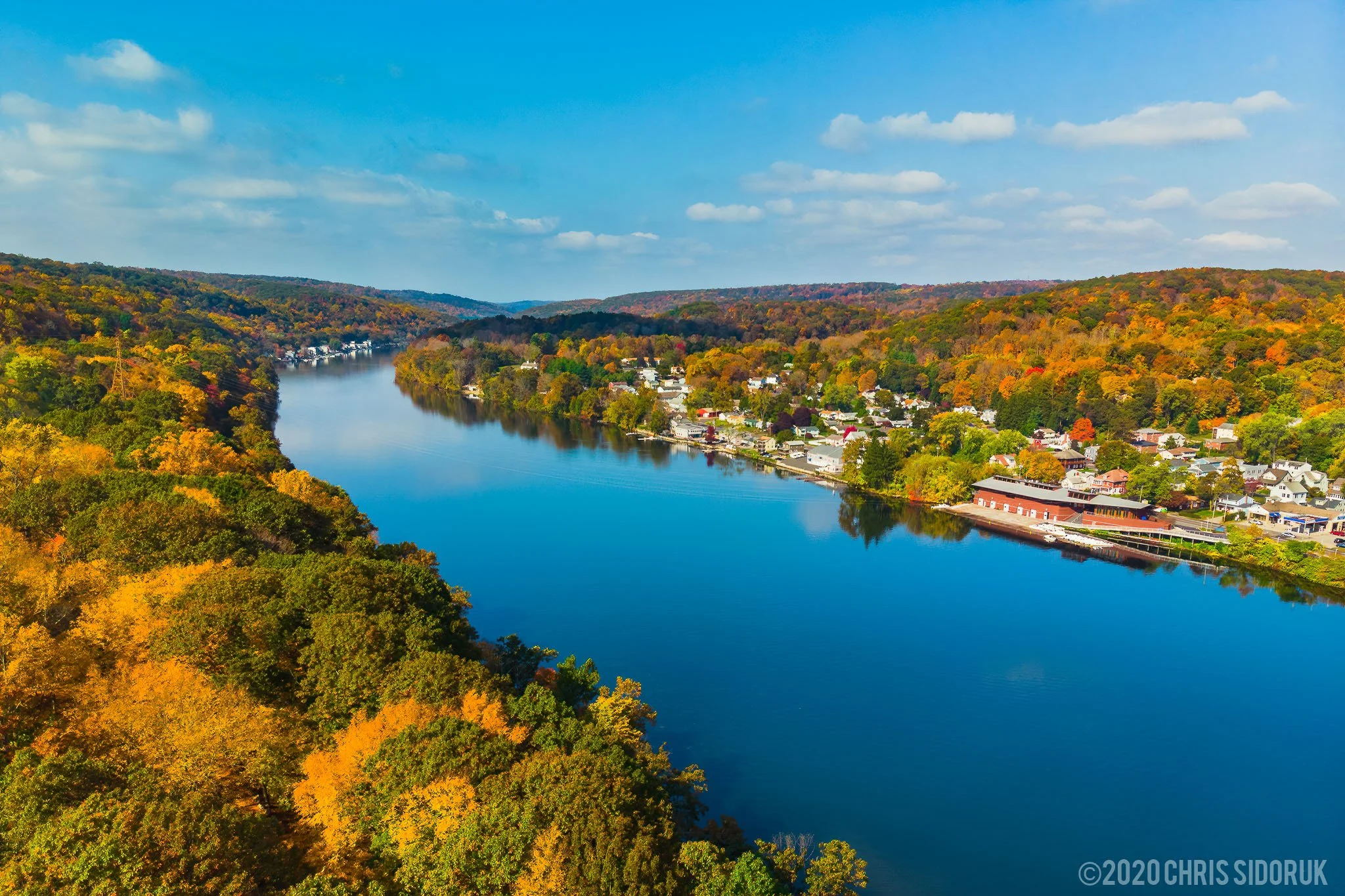
Aerial view of the Housatonic River in fall with colorful foliage, from Shelton, Connecticut. ©2020 Chris Sidoruk | View as a fine art print
==========
Quick Jump
- Housatonic River Shelton CT Photography Overview
- The Housatonic River Through Shelton
- Indian Well State Park Photography
- Shelton CT Bridges, Dams & Historic Landmarks
- Best Photography Locations Along the Housatonic River
- Best Times and Conditions for Photography
- Camera Gear for Housatonic River Photography
- Seasonal Photography Guide
- Exploring Shelton, Connecticut
- Final Thoughts
- Frequently Asked Questions
Shelton, Connecticut is a unique photography location because it combines natural scenery, historic infrastructure, and industrial heritage along one of the state's most important waterways.
The Housatonic River runs through the heart of Shelton, creating a landscape where:
flowing water meets historic structures
forests and riverbanks surround industrial landmarks
bridges and dams create strong architectural elements
changing seasons transform the entire scene
Unlike traditional scenic destinations focused only on nature, Shelton offers a different type of landscape photography opportunity.
The strongest images here often come from the relationship between the natural environment and the structures built around it.
This guide explores the best photography opportunities along the Housatonic River in Shelton, Connecticut, including:
river views
historic bridges
Indian Well State Park
aerial photography perspectives
sunrise and seasonal conditions
locations for landscape photography
What Makes the Housatonic River in Shelton Unique for Photography
The Housatonic River creates one of the most visually interesting landscapes in southern Connecticut because it combines several different photographic subjects in one area.
Photographers can capture:
peaceful river reflections
historic railroad infrastructure
waterfalls and wooded areas
industrial architecture
changing seasonal landscapes
The area is especially compelling because it tells a story.
A photograph of the Housatonic River in Shelton is not simply a scenic landscape—it represents the connection between Connecticut's industrial history and its natural environment.
A Landscape Shaped by Water, Industry, and History
The identity of Shelton has always been connected to the Housatonic River.
The river influenced:
settlement patterns
industrial development
transportation routes
recreation areas
Historic mills, dams, rail infrastructure, and bridges remain visible reminders of this history.
For photographers, these elements create opportunities for images with depth and character.
A wide river scene can become a study of:
movement
reflection
scale
contrast between nature and human engineering
Why Shelton Is Different From Traditional Landscape Locations
Many landscape photography locations are defined by one primary subject:
mountains
coastlines
waterfalls
forests
Shelton is different because the subject changes depending on where you stand.
One viewpoint may highlight:
the Housatonic River
Another may emphasize:
the railroad trestle bridge
Another may reveal:
fall foliage surrounding the river valley
This variety makes Shelton a strong location for photographers who enjoy exploring rather than simply documenting a single landmark.
Best Photography Subjects Along the Housatonic River
The Shelton area offers several recurring subjects for landscape photographers.
Historic Bridges
Bridges provide:
strong leading lines
repeating patterns
architectural contrast
opportunities for sunrise and aerial photography
The Shelton CT trestle bridge is one of the most recognizable examples.
Related guide:
→ Historic Train Trestle Bridge in Shelton CT — History & Photography
River Landscapes
The Housatonic River provides changing conditions throughout the year.
Photographers can capture:
calm reflections
moving water
fog layers
winter ice patterns
seasonal foliage along the shoreline
Industrial Landscapes
Shelton's industrial history creates a unique photography style that blends:
old infrastructure
modern landscape
natural surroundings
These scenes often work well for photographers interested in environmental storytelling.
Photography Style Opportunities
The Housatonic River in Shelton works well for several photography approaches.
Landscape Photography
Best for:
sunrise scenes
fall foliage
river reflections
wide environmental compositions
Aerial Photography
Best for:
showing river patterns
revealing bridge structures
capturing seasonal changes
Long Exposure Photography
Best for:
smoothing water movement
creating atmospheric scenes
emphasizing reflections
Documentary Photography
Best for:
historic structures
industrial features
changing communities
Why This Location Deserves More Attention
While locations like coastal Connecticut and New England mountain viewpoints often receive more attention, the Housatonic River in Shelton offers a different type of photographic opportunity.
It rewards photographers who look beyond traditional scenery and recognize the visual relationship between:
landscape
history
architecture
seasonal change
For Connecticut photographers, it is one of the strongest examples of how local environments can create compelling photography without traveling far.
The Housatonic River Through Shelton
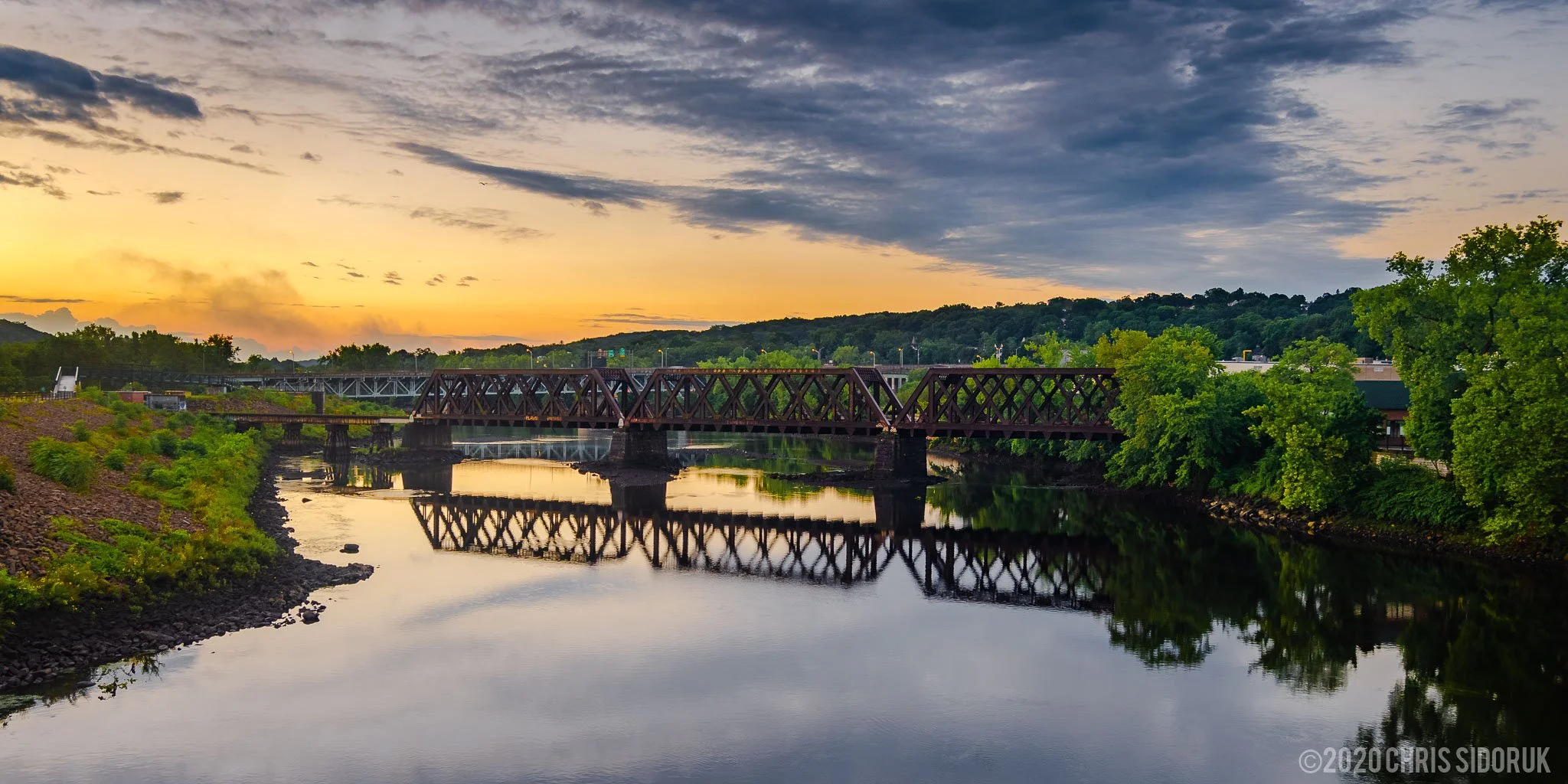
Sunrise at the train trestle bridge over the Housatonic River, viewed from the Shelton-Derby bridge. ©2020, Chris Sidoruk
The Housatonic River is the defining landscape feature of Shelton, Connecticut.
The river shapes the city's geography, history, and visual identity. From wide open sections of calm water to narrower areas influenced by dams and infrastructure, the character of the river changes constantly depending on location, weather, and season.
For photographers, this creates a landscape with many different possibilities.
A single area can look completely different depending on:
sunrise versus sunset
fog versus clear conditions
summer greenery versus fall foliage
calm water versus active river movement
aerial versus ground-level perspective
The Housatonic River is not just a background element—it is the central feature connecting Shelton's natural and historic landmarks.
Sunrise Photography Along the Housatonic River
Early morning is one of the strongest times to photograph the river.
Sunrise conditions often provide:
softer directional light
warmer colors
calmer water reflections
fewer distractions
increased atmospheric conditions
Fog is especially valuable for photography because it adds depth and separation between layers.
A misty morning can transform a familiar scene by:
softening distant objects
creating a sense of scale
emphasizing silhouettes
adding mood to industrial structures
The combination of river, bridge structures, and morning light creates some of the most recognizable Shelton landscape images.
River Reflections and Water Movement
The Housatonic River offers opportunities for both minimalist and detailed compositions.
On calm mornings, reflections can emphasize:
bridge shapes
tree lines
changing skies
surrounding architecture
During periods of increased water movement, the river becomes a stronger visual element.
Photographers can use:
faster shutter speeds to freeze movement
slower shutter speeds to create smooth water textures
longer exposures to simplify the scene
A tripod is especially useful when photographing the river during lower light conditions.
Indian Well State Park Photography
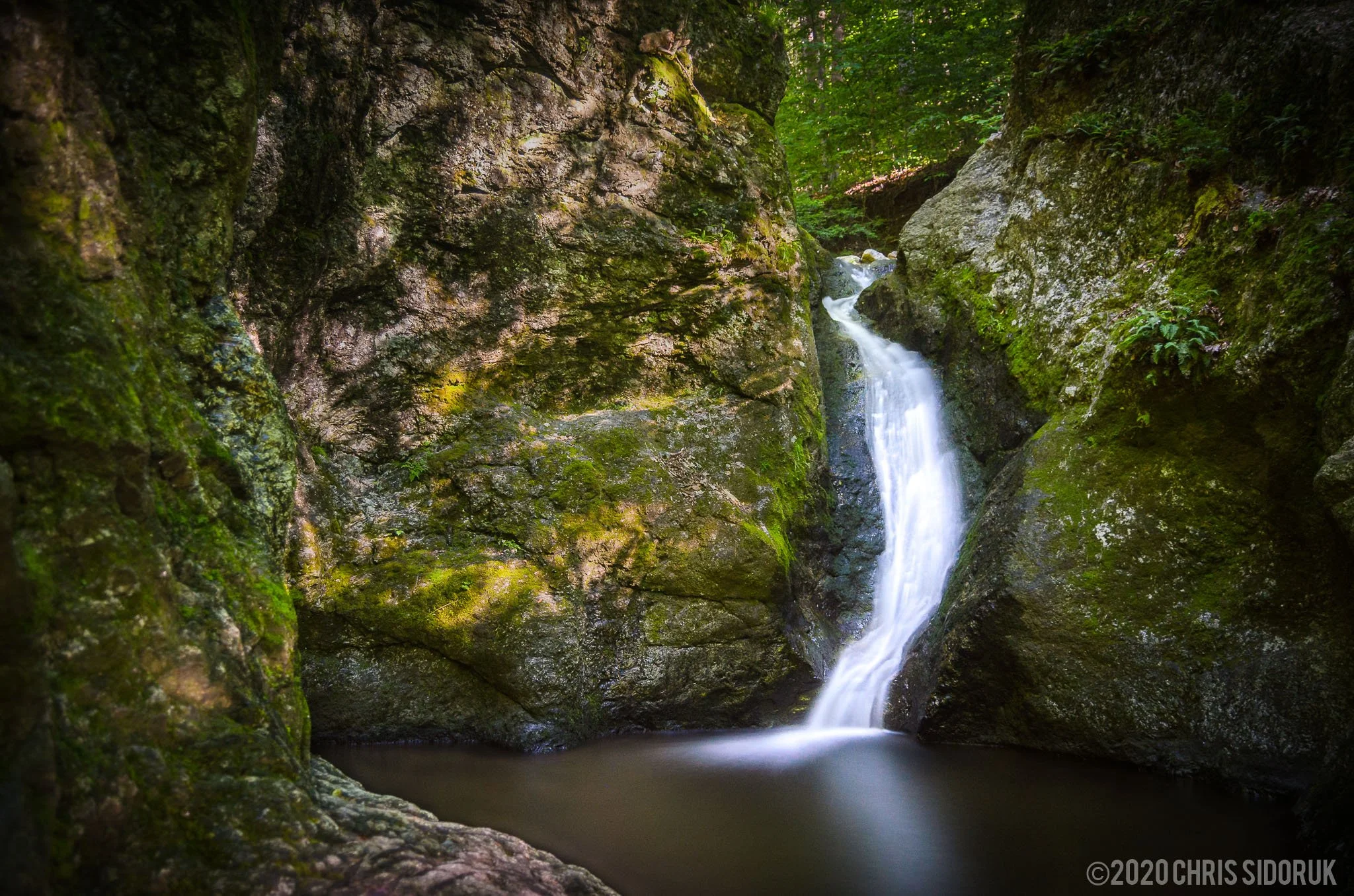
Small waterfall and well at Indian Well State Park in Shelton, Connecticut. ©2020, Chris Sidoruk
Indian Well State Park is one of Shelton's most recognizable natural landmarks and offers a different perspective from the city's riverfront and industrial locations.
Located along the Housatonic River, the park combines:
woodland trails
waterfalls
rocky terrain
river access
seasonal changes
This makes it one of the strongest photography locations in Shelton for nature-focused compositions.
Photographing the Waterfall at Indian Well State Park
The waterfall is the primary photographic feature at Indian Well State Park.
The scene works especially well during:
spring runoff
periods after rainfall
overcast conditions
autumn foliage season
Soft lighting helps preserve detail in:
flowing water
surrounding rocks
forest textures
A tripod and neutral density filter can be useful for creating longer exposures that smooth the waterfall while maintaining sharp environmental details.
Best Photography Conditions at Indian Well State Park
The strongest conditions are often not bright sunny days.
Consider photographing during:
Overcast Weather
Cloud cover creates softer light and reduces harsh shadows.
This works well for:
waterfalls
forest scenes
detailed textures
Fall Foliage
Autumn adds color contrast between:
orange and red leaves
dark rocks
flowing water
green forest areas
After Rain
Recent rainfall can improve photography conditions by:
increasing waterfall flow
deepening colors
creating richer textures
Composition Ideas at Indian Well State Park
Instead of only photographing the waterfall directly, look for environmental compositions.
Consider including:
surrounding trees
rock formations
river sections
trail elements
A wider composition often tells a stronger story by showing how the waterfall fits into the surrounding landscape.
Shelton CT Bridges, Dams & Historic Landmarks
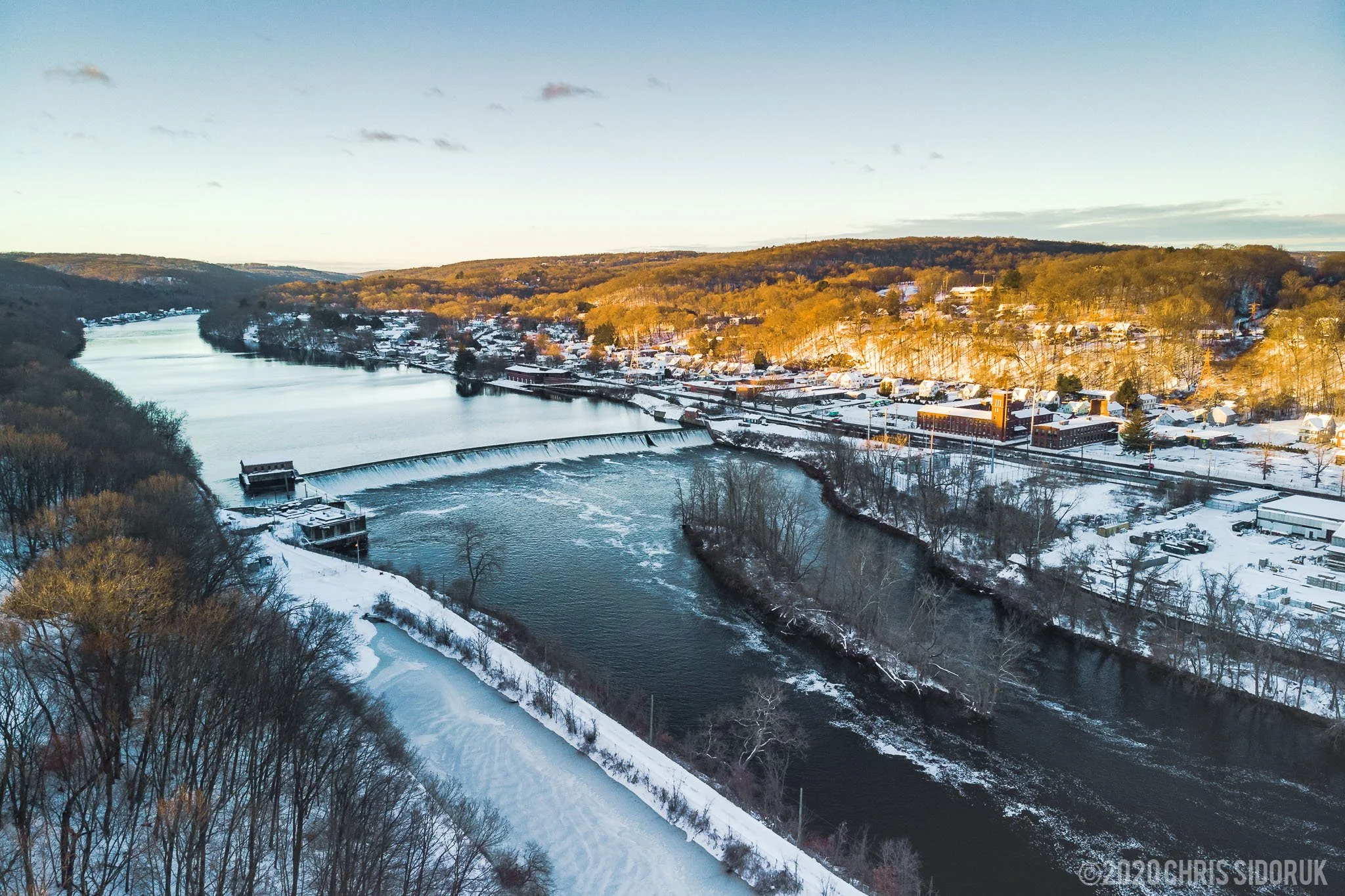
Aerial view from Shelton, Connecticut, of the Housatonic River and Ousatonic Dam in winter, with snow-covered riverbanks. ©2020, Chris Sidoruk
Shelton's photography appeal comes from the interaction between natural scenery and historic infrastructure.
The city's bridges and river structures create strong visual anchors that help define the landscape.
Historic Railroad Trestle Bridge
The Shelton CT trestle bridge is one of the most photographed structures along the Housatonic River.
Its steel framework creates several strong photographic opportunities:
repeating geometric patterns
leading lines across the river
contrast between industrial structure and natural surroundings
aerial perspectives showing its relationship with the landscape
The bridge is especially effective during:
sunrise
fog
fall foliage
winter conditions
Related guide:
→ Shelton CT Trestle Bridge Photography (Housatonic River)
Ousatonic Dam Photography
The Ousatonic Dam adds another layer of visual interest to the Housatonic River landscape.
The movement of water around the dam creates opportunities for:
long exposure photography
abstract water patterns
wide river compositions
During higher water flow, the dam becomes a more dramatic subject as the movement of the river becomes more visible.
Shelton-Derby Bridge Views
The Shelton-Derby Bridge provides elevated viewpoints of the Housatonic River and surrounding landscape.
From this perspective, photographers can capture:
river bends
bridge structures
sunrise reflections
wider environmental scenes
This type of viewpoint is valuable because it shows how the different elements of Shelton connect together.
The river, bridges, and surrounding landscape become one composition rather than separate subjects.
Photographing Industrial History as Landscape
One of the unique aspects of Shelton photography is that historic infrastructure is part of the scenery.
Rather than viewing bridges, dams, and industrial structures as distractions, photographers can use them as storytelling elements.
Strong compositions often combine:
old structures
natural surroundings
changing light
seasonal atmosphere
This creates images that document both the landscape and the history of the area.
Seasonal Changes Across Shelton's River Landscape
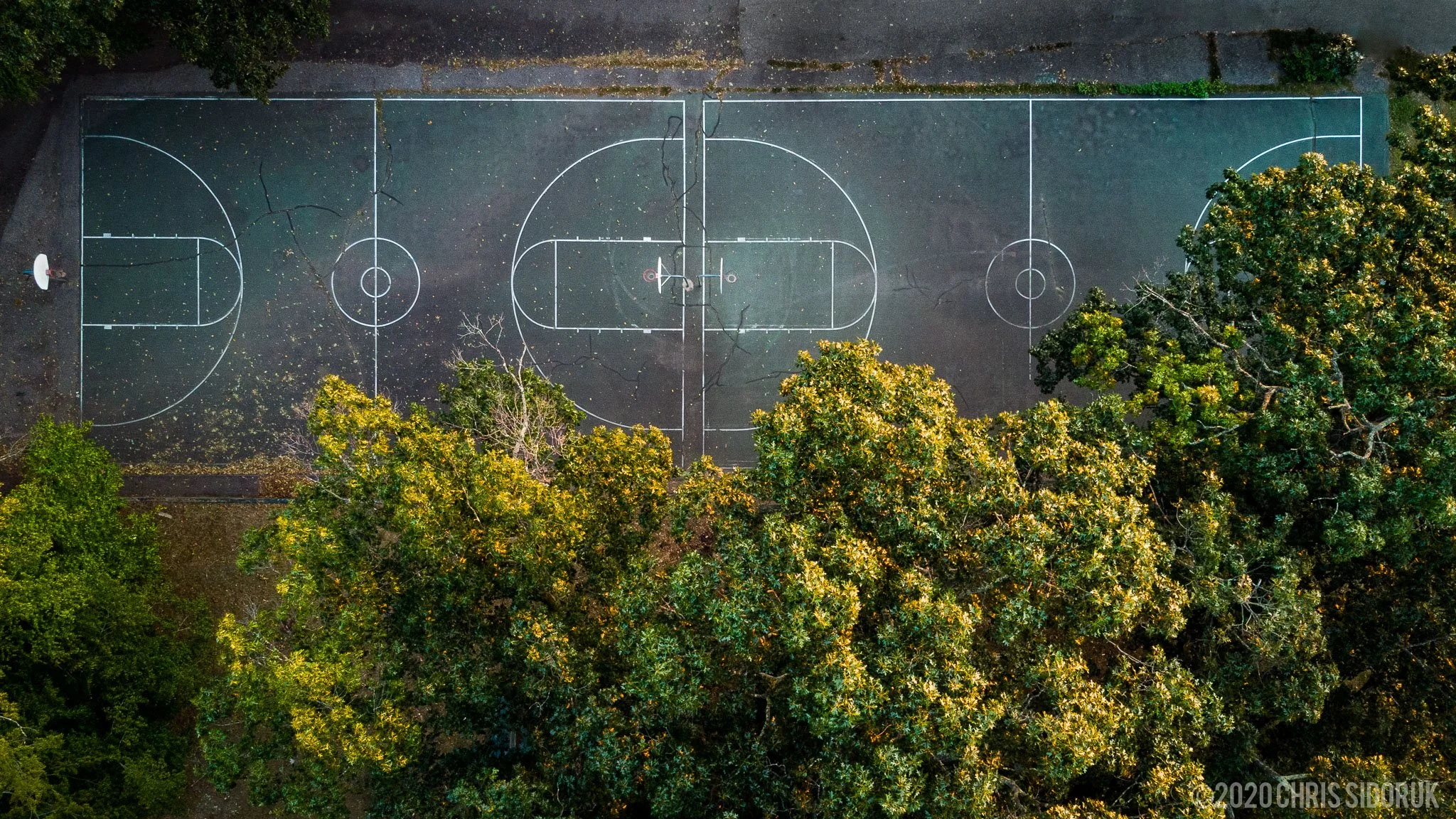
Bird’s-eye view of the basketball courts at Riverview Park in Shelton, Connecticut. ©2020, Chris Sidoruk
The Housatonic River changes dramatically throughout the year.
Spring
Best subjects:
increased waterfall flow
fresh vegetation
reflections
softer colors
Summer
Best subjects:
green riverbanks
longer daylight
aerial landscape views
Fall
Best subjects:
colorful foliage
river reflections
dramatic contrast with bridges and structures
Winter
Best subjects:
snow-covered landscapes
simplified compositions
atmospheric conditions
Each season creates a different interpretation of the same locations.
Photography Strategy for Exploring Shelton
The strongest images usually come from revisiting locations rather than photographing them once.
Small changes in:
weather
water level
light direction
season
can completely change the final image.
For photographers exploring Shelton, the goal should not simply be finding a viewpoint.
The goal is understanding how the Housatonic River landscape changes over time.
Best Photography Locations Along the Housatonic River
The Housatonic River in Shelton offers several photography opportunities, but the strongest images often come from understanding how each location presents the landscape differently.
Rather than focusing on a single landmark, photographers can explore different viewpoints that highlight:
river reflections
historic structures
seasonal foliage
changing light
the relationship between nature and infrastructure
Below are some of the strongest areas for photography throughout Shelton.
Riverwalk and Downtown Shelton Views
The Riverwalk area provides accessible viewpoints of the Housatonic River and surrounding landscape.
This location works well for photographers looking for:
sunrise reflections
bridge compositions
urban landscape photography
views combining water and architecture
The Riverwalk is especially useful because it provides multiple angles rather than one fixed composition.
Small changes in position can alter:
the relationship between the river and bridges
foreground elements
reflection patterns
the amount of surrounding landscape included
For photographers exploring Shelton, walking the riverfront is one of the easiest ways to discover different compositions.
Shelton-Derby Bridge Viewpoints
The Shelton-Derby Bridge provides one of the best elevated perspectives of the Housatonic River.
From this area, photographers can capture wider scenes showing:
the river corridor
railroad infrastructure
surrounding shoreline
changing weather conditions
This viewpoint works particularly well for:
Sunrise Photography
Morning light can illuminate the river while creating softer contrast across the landscape.
Fog Photography
Low fog over the river can separate layers and add atmosphere.
Aerial Photography
The elevated perspective becomes even more dramatic when viewed from above, revealing the relationship between the river, bridges, and surrounding terrain.
Historic Trestle Bridge Viewpoints
The historic railroad trestle bridge remains one of the most recognizable photography subjects in Shelton.
The bridge works well because it combines:
geometric structure
industrial history
natural surroundings
Different viewpoints create completely different images.
Wide Landscape Composition
Include:
river foreground
surrounding trees
sky
bridge structure
This emphasizes the bridge's relationship with the environment.
Tight Architectural Composition
Focus on:
steel framework
repeating patterns
structural details
This creates a more abstract industrial photograph.
Aerial Perspective
Aerial photography reveals:
the length of the bridge
river patterns
surrounding landscape
This is one of the strongest ways to show the scale of the structure.
Related guide:
→ Shelton CT Trestle Bridge Photography (Housatonic River)
Indian Well State Park
Indian Well State Park offers a completely different photographic experience from the riverfront.
Instead of large-scale river scenes, photographers can focus on:
waterfalls
forest textures
rocks
flowing water
seasonal changes
The location is especially strong for photographers who enjoy intimate landscape photography.
Best conditions include:
spring water flow
autumn foliage
overcast days
recent rainfall
Related subjects:
waterfall photography
woodland photography
long exposure photography
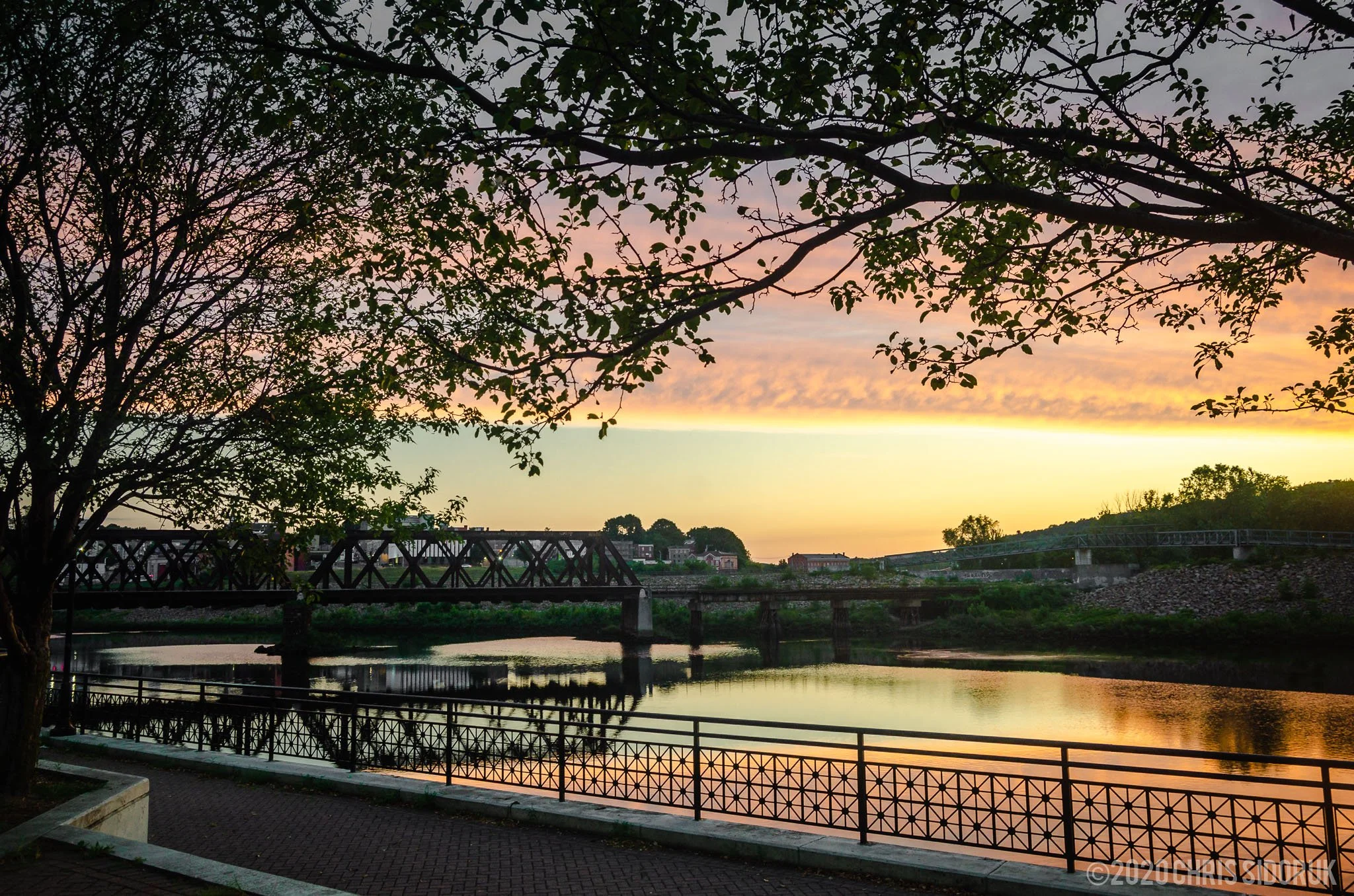
Sunrise over the Housatonic River in Shelton, Connecticut, viewed from the Riverwalk. ©2020, Chris Sidoruk
Best Times to Photograph the Housatonic River
The Housatonic River changes dramatically depending on the time of day and weather conditions.
There is no single “perfect” time to photograph Shelton, but certain conditions consistently produce stronger results.
Sunrise Photography
Sunrise is often the most reliable time for landscape photography along the Housatonic River.
Advantages include:
softer light
fewer distractions
calmer atmosphere
potential fog
stronger reflections
Morning conditions are especially effective for:
bridge photography
river reflections
aerial landscapes
Foggy sunrise conditions are among the most unique opportunities because they transform familiar locations into more atmospheric scenes.
Golden Hour Photography
Late afternoon and sunset provide warmer light and stronger contrast.
Golden hour works well for:
illuminating bridge structures
highlighting fall foliage
creating warm reflections on the river
However, sunset compositions require more planning because many viewpoints face different directions relative to the setting sun.
Fog and Atmospheric Conditions
Fog is one of the best conditions for photographing the Housatonic River.
It helps create:
depth
separation
mood
simplified compositions
Fog is especially effective around:
bridges
tree lines
river bends
Instead of seeing fog as a limitation, photographers should treat it as a creative opportunity.
Overcast Weather
Cloudy conditions are often overlooked but can produce excellent results.
Overcast skies provide:
softer contrast
even lighting
more detail retention
These conditions work especially well for:
waterfalls
forest scenes
industrial landscapes
Winter Photography Conditions
Winter simplifies the landscape.
Without dense vegetation, photographers can emphasize:
bridge structures
river patterns
shoreline shapes
Snow can add contrast and create a completely different interpretation of familiar locations.
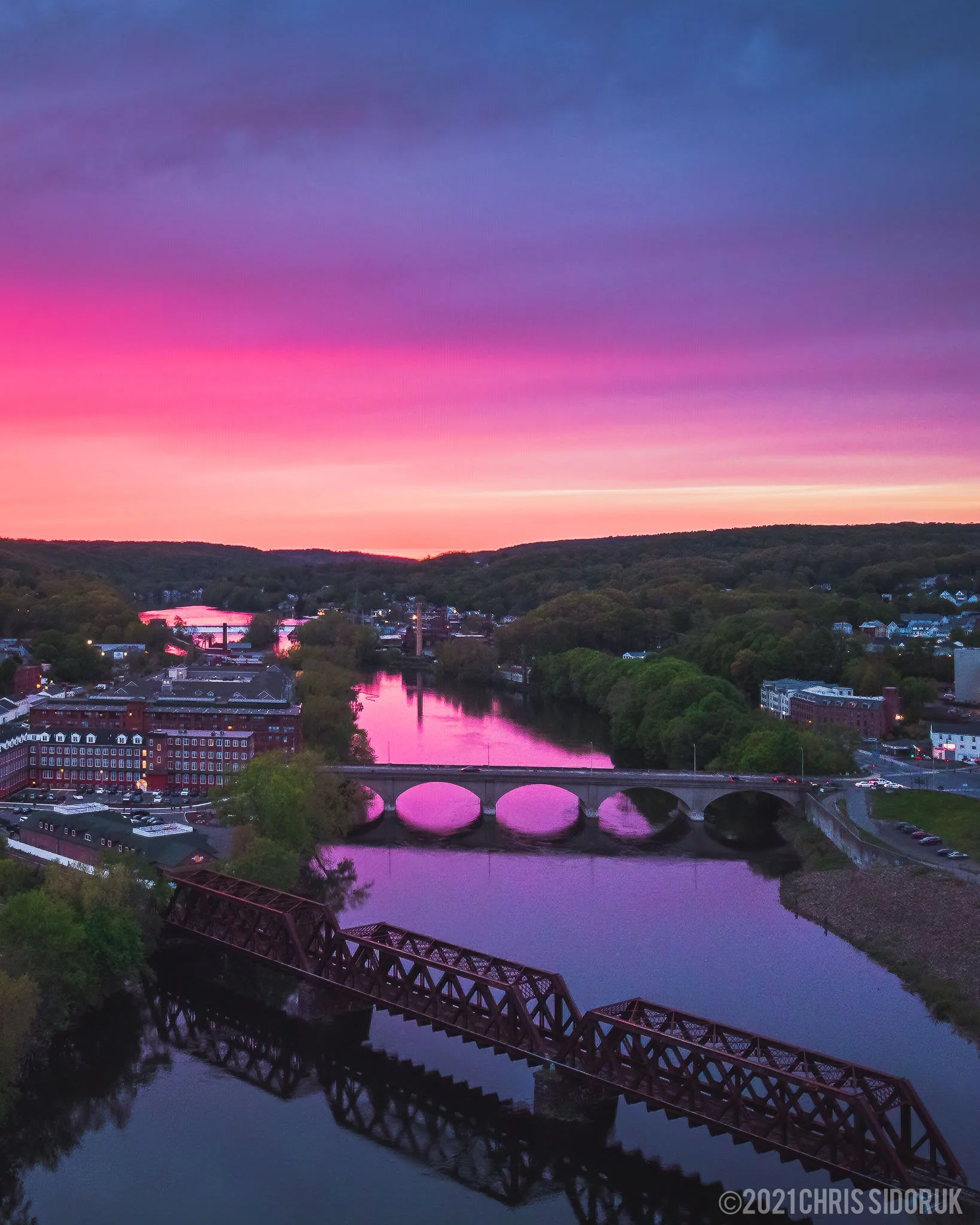
Dramatic sunset over the train trestle bridge, the Shelton-Derby bridge, and Housatonic River in Shelton, Connecticut. ©2021, Chris Sidoruk
Camera Gear for Housatonic River Photography
The Housatonic River does not require an extensive setup, but having versatile equipment makes it easier to adapt to changing conditions.
A practical landscape photography kit should prioritize:
flexibility
stability
weather protection
image quality
Camera Body
A modern mirrorless or DSLR camera works well for photographing Shelton's landscapes.
Important features include:
good dynamic range
reliable autofocus
strong low-light performance
weather resistance
The ability to recover shadow detail is especially useful when photographing:
bright skies
dark bridge structures
shaded forests
Recommended Lens Setup
A versatile lens combination allows photographers to capture both wide landscapes and detailed subjects.
Wide-Angle Lens (14–35mm)
Best for:
river scenes
bridges
waterfalls
environmental compositions
Wide lenses help show the relationship between the landscape and surrounding structures.
Standard Zoom (24–70mm)
Best all-around option for:
changing compositions
general exploration
travel photography
A standard zoom is often the most practical lens for walking along the river.
Telephoto Lens (70–200mm)
Useful for:
compressing river scenes
isolating bridge details
capturing distant foliage layers
Telephoto lenses are especially valuable during fall foliage season when distant hills and trees create layered compositions.
Tripod and Filters
A tripod is highly recommended for Housatonic River photography.
It helps with:
sunrise shooting
long exposures
waterfall photography
low-light conditions
Useful filters include:
Polarizing Filter
Helps reduce:
water reflections
glare
atmospheric haze
Useful for river scenes and foliage.
Neutral Density Filter
Useful for:
smoothing waterfall movement
creating longer river exposures
controlling bright daylight conditions
Composition Techniques for Shelton Photography
Strong compositions usually come from combining the natural and historic elements of the landscape.
Use Leading Lines
The river, bridges, and shoreline naturally create leading lines.
Use them to guide the viewer toward:
the bridge
distant landscape
reflections
Include Foreground Elements
Foreground elements add depth.
Consider including:
rocks
shoreline vegetation
tree branches
river textures
This prevents wide landscapes from feeling flat.
Balance Natural and Industrial Elements
The strongest Shelton images often combine:
water
trees
bridges
historic structures
The contrast between these elements is what makes the location visually unique.
Look for Changing Conditions
The same composition can produce completely different images depending on:
season
weather
water levels
light
Returning to a location is often more valuable than constantly searching for new ones.
Seasonal Photography Guide for Shelton CT
One of the biggest advantages of photographing the Housatonic River in Shelton is how dramatically the landscape changes throughout the year.
The same viewpoint can create completely different images depending on:
foliage conditions
water levels
weather patterns
available light
seasonal atmosphere
Rather than being a single-location photography destination, Shelton offers a constantly changing landscape.
Spring Photography Along the Housatonic River
Spring brings new life to the river valley and is one of the best seasons for photographing moving water.
As temperatures rise, photographers can find:
stronger waterfall flow
fresh greenery
reflections along the river
softer atmospheric conditions
Indian Well State Park is especially effective during spring because increased water flow can make the waterfall more dramatic.
Best subjects:
waterfalls
river movement
forest trails
early morning fog
Recommended conditions:
cloudy mornings
recent rainfall
sunrise light
Spring photography in Shelton is often less crowded than fall, allowing photographers to focus on quieter, more intimate scenes.
Summer Photography in Shelton
Summer creates a greener, more vibrant interpretation of the Housatonic River landscape.
Longer daylight hours make it easier to explore different locations and return for changing light.
Strong summer subjects include:
river reflections
wooded areas
aerial photography
sunset landscapes
Summer is also a good season for exploring multiple viewpoints because of the extended shooting window.
Challenges include:
stronger midday contrast
thicker vegetation
increased humidity
The best summer images usually come from shooting:
early morning
late afternoon
after storms
Fall Foliage Photography Along the Housatonic River
Fall is one of the strongest seasons for photographing Shelton.
The combination of:
colorful foliage
river reflections
historic structures
changing light
creates some of the most visually compelling scenes of the year.
The Housatonic River corridor works especially well because the surrounding trees add color contrast around:
bridges
shoreline areas
elevated viewpoints
Best fall photography subjects:
aerial river landscapes
trestle bridge compositions
reflections
wooded trails
Peak conditions typically occur during October, but timing changes each year depending on temperature and weather.
Winter Photography in Shelton
Winter offers a completely different style of photography.
Without dense foliage, the landscape becomes simpler and more focused on:
structure
atmosphere
textures
contrast
Snow can transform familiar locations by emphasizing:
bridge geometry
river patterns
shoreline shapes
Winter is especially effective for photographers interested in:
minimalist landscapes
black and white photography
moody environmental scenes
Cold conditions also create opportunities for:
fog over warmer water
frost patterns
dramatic winter skies
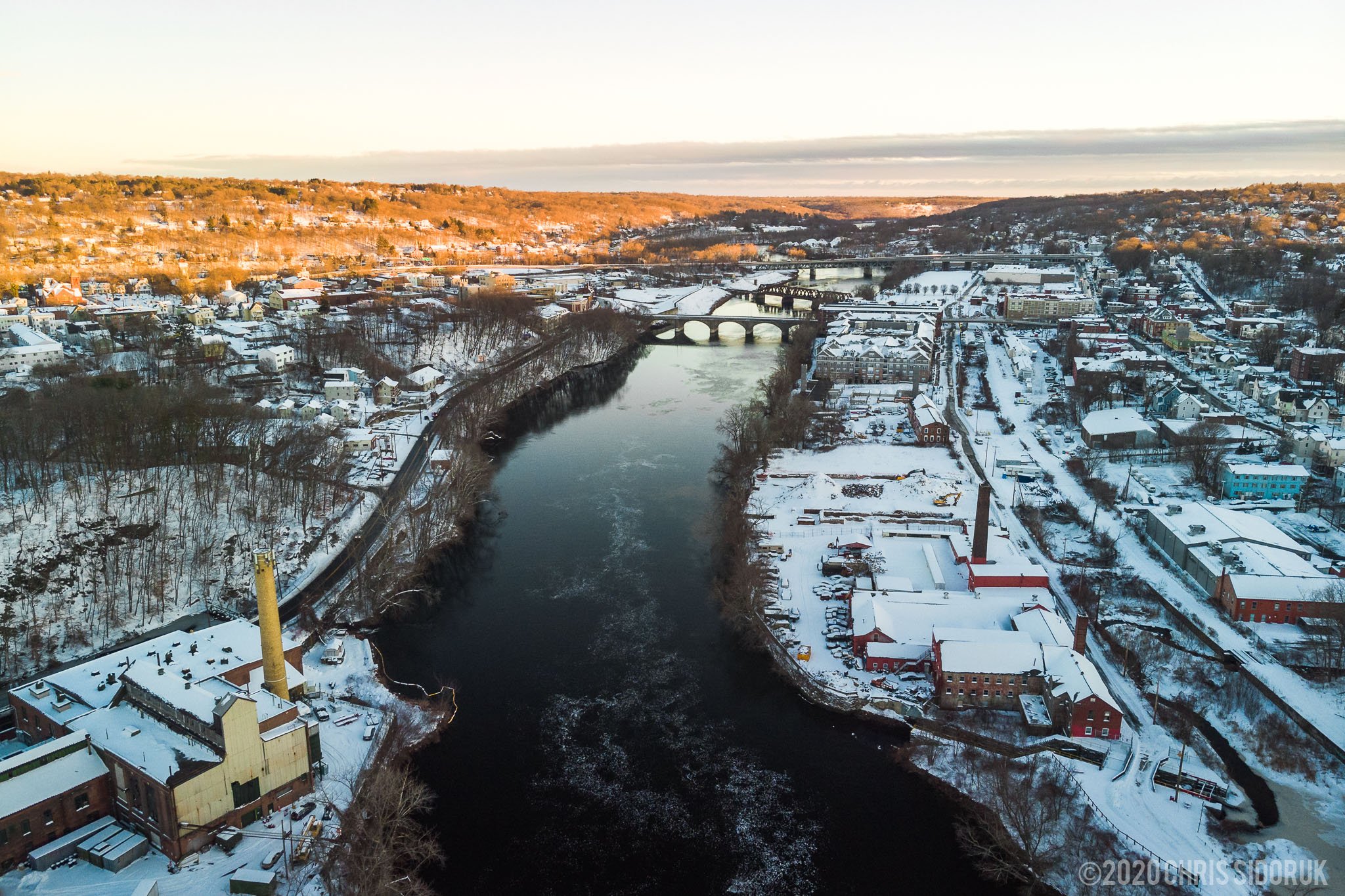
Aerial photograph of the Housatonic River along parts of Shelton and Derby, after snowfall. ©2020, Chris Sidoruk | View as a fine art print
Photographing Shelton During Different Weather Conditions
Weather plays a major role in creating unique images.
Many photographers wait for clear skies, but some of the strongest Housatonic River photographs happen during changing conditions.
Fog
Fog is one of the most valuable conditions for this location.
It creates:
depth separation
softer backgrounds
atmospheric mood
Fog works particularly well with:
bridges
river scenes
distant tree lines
Rain and Storm Conditions
Rain can add character by creating:
darker skies
stronger reflections
richer colors
After storms, the river may also show more movement and contrast.
Cloudy Days
Overcast conditions are ideal for:
waterfalls
forests
detailed landscape photography
The softer light prevents harsh shadows and allows more balanced exposures.
Exploring Shelton, Connecticut
Photographing Shelton is not only about finding individual landmarks.
The strongest experience comes from exploring how the Housatonic River connects different parts of the city.
The area offers opportunities for:
walking along the river
discovering historic structures
photographing changing seasons
observing how light interacts with the landscape
Shelton Riverfront Exploration
The riverfront provides access to different perspectives of the Housatonic River.
Walking along the river allows photographers to discover:
alternate bridge angles
reflections
shoreline compositions
changing views throughout the day
Small adjustments in position can completely change the composition.
A scene that appears ordinary from one location may become much stronger when:
the camera is lowered closer to the water
foreground elements are included
the light direction changes
Combining Photography With Local Exploration
Shelton is a good example of why local photography often rewards repeated visits.
A single trip may reveal:
one strong sunrise composition
A return visit may reveal:
fall colors
fog
winter atmosphere
different river conditions
Landscape photography is often about building familiarity with a location rather than simply checking it off a list.
Photography Tips for Capturing the Housatonic River
The Housatonic River offers many possible compositions, but a few techniques consistently produce stronger results.
Use the River as a Leading Element
Water naturally guides the viewer through an image.
Use the river to lead toward:
bridges
distant landscape
reflections
points of interest
Avoid placing every composition directly centered.
Instead, experiment with:
diagonal river lines
off-center subjects
layered perspectives
Capture Multiple Perspectives
A location can look completely different depending on viewpoint.
Try photographing:
Ground Level
Best for:
reflections
foreground details
immersive landscapes
Elevated Viewpoints
Best for:
showing river patterns
revealing relationships between structures
Aerial Perspective
Best for:
documenting the overall landscape
showing how the river shapes Shelton
Use Light to Define Structure
Historic bridges and industrial landmarks become more visually interesting when light emphasizes texture.
Side lighting can highlight:
steel framework
weathered surfaces
architectural details
Backlighting can create:
silhouettes
atmospheric scenes
dramatic contrast
Do Not Ignore Small Details
While wide landscapes are often the first instinct, smaller details can create equally strong images.
Look for:
reflections in the water
textures on bridges
tree patterns
shoreline details
seasonal changes
A complete photography collection should include both:
wide establishing images
detailed environmental moments
Build a Story Through Multiple Images
The best way to photograph Shelton is not always creating one perfect image.
Instead, create a visual story.
A strong collection might include:
Wide aerial view showing the river landscape
Medium composition showing bridges and surroundings
Detail image showing textures or seasonal elements
This approach creates a more complete representation of the location.
Photography Ethics and Respecting the Location
When photographing natural and historic areas, it is important to:
stay on designated paths when possible
respect private property boundaries
avoid disturbing wildlife
follow park rules
leave locations unchanged
Protecting these areas ensures they remain available for future photographers.
Final Thoughts
The Housatonic River is one of Shelton, Connecticut’s defining landscapes.
What makes this area unique is the combination of natural scenery and historic structures. The river, bridges, dams, and surrounding forests create a landscape that changes constantly with season, weather, and light.
For photographers, Shelton offers more than a single landmark. It provides a collection of connected scenes where history and nature exist together.
The strongest images often come from returning under different conditions:
a foggy sunrise revealing the trestle bridge
autumn foliage reflecting across the river
winter snow simplifying the landscape
spring water movement at Indian Well State Park
Like many New England photography locations, the real opportunity is not simply finding the location—it is learning how that location changes over time.
The Housatonic River continues to be one of Connecticut’s most rewarding subjects for landscape, aerial, and historical photography.
Frequently Asked Questions
Where is the Housatonic River in Shelton, CT?
The Housatonic River runs directly through Shelton, Connecticut, forming a major part of the city’s landscape and history.
Several viewpoints throughout Shelton provide opportunities to photograph:
the river itself
historic bridges
industrial structures
surrounding forests and shoreline areas
The river is especially visible from areas near the downtown waterfront, Riverwalk, bridges, and nearby parks.
What are the best places to photograph the Housatonic River in Shelton?
Some of the strongest photography locations in Shelton include:
Shelton Riverwalk viewpoints
Shelton-Derby Bridge viewpoints
Historic railroad trestle bridge areas
Indian Well State Park
Elevated aerial viewpoints along the river corridor
Each location offers a different perspective, from waterfalls and forests to industrial landmarks and wide landscape scenes.
Is the Housatonic River in Shelton good for photography?
Yes. The Housatonic River is an excellent location for photography because it combines several types of subjects in one area:
natural landscapes
historic infrastructure
seasonal foliage
reflections
changing weather conditions
The combination of river, bridges, and surrounding terrain creates opportunities for both traditional landscape photography and more unique industrial landscape images.
What is the best time to photograph the Housatonic River in Shelton?
The best time depends on the type of image you want to create.
Sunrise
Best for:
softer light
reflections
fog
fewer distractions
Fall
Best for:
colorful foliage
aerial landscapes
river reflections
Winter
Best for:
minimalist compositions
bridge details
atmospheric conditions
Spring
Best for:
waterfalls
flowing water
fresh greenery
For the most dramatic conditions, sunrise combined with fog or changing weather often creates the strongest images.
Where can I photograph the Shelton train trestle bridge?
The historic railroad trestle bridge can be photographed from several viewpoints around the Housatonic River.
Popular perspectives include:
riverfront viewpoints
nearby bridges
elevated viewpoints
aerial photography locations
Different angles highlight different aspects of the bridge, from its industrial structure to its relationship with the surrounding landscape.
For a dedicated guide:
→ Shelton CT Trestle Bridge Photography (Housatonic River)
Is Indian Well State Park good for photography?
Yes. Indian Well State Park is one of Shelton’s strongest natural photography locations.
It offers opportunities for:
waterfall photography
woodland scenes
river views
seasonal landscape photography
Spring and after rainfall are often especially effective because increased water flow can make the waterfall more dramatic.
What camera settings work best for photographing the Housatonic River?
There is no single setting that works for every situation, but common landscape photography starting points include:
Landscape Photography:
Aperture: f/8–f/11
ISO: 100–200
Shutter speed: Adjust based on light and movement
File format: RAW
Long Exposure Water Photography:
Tripod required
Low ISO
Neutral density filter recommended
Longer shutter speeds to smooth water movement
For sunrise, fog, or low-light conditions, a tripod becomes especially useful.
What lens is best for Housatonic River photography?
A versatile lens setup works best because the location includes both wide landscapes and detailed subjects.
Recommended options:
Wide-Angle Lens
Best for:
river scenes
bridges
waterfalls
environmental compositions
Standard Zoom Lens
Best for:
general exploration
changing compositions
travel photography
Telephoto Lens
Best for:
compressing distant landscapes
isolating bridge details
creating layered foliage images
A 24–70mm lens is often the most practical single lens choice, while adding a wide-angle and telephoto lens provides more creative flexibility.
Can I photograph the Housatonic River with a drone?
Aerial photography can provide unique perspectives of the Housatonic River by showing:
river patterns
bridge layouts
surrounding landscape
seasonal changes
However, drone operators should always follow current FAA regulations, respect local restrictions, and avoid flying where prohibited.
What season has the best photography in Shelton, Connecticut?
Fall is often the most visually dramatic because of the combination of:
colorful foliage
river reflections
historic structures
changing weather
However, each season offers something different:
Spring → waterfalls and fresh greenery
Summer → vibrant landscapes and longer shooting hours
Fall → peak foliage and color
Winter → minimal and atmospheric scenes
======
Photography by Chris Sidoruk, a Connecticut photographer specializing in coastal landscapes, concert photography, and visual storytelling throughout New England.
Shot using a DJI Mavic Air and Nikon D7000 with settings for landscape photography.
All photographs © Chris Sidoruk. Images are protected by copyright and may not be used, copied, modified, or redistributed without written permission.
Explore More Photography Guides
Continue exploring photography locations throughout Connecticut and New England:
→ Historic Train Trestle Bridge in Shelton, CT – History & Photography
→ Best Places to Take Pictures in Connecticut
→ Silver Sands State Park Photography Guide (Milford, CT)
→ New England Photography Guide: Best Places to Photograph
