

St. John USVI Photography Guide | Best Beaches, Viewpoints & Photo Spots
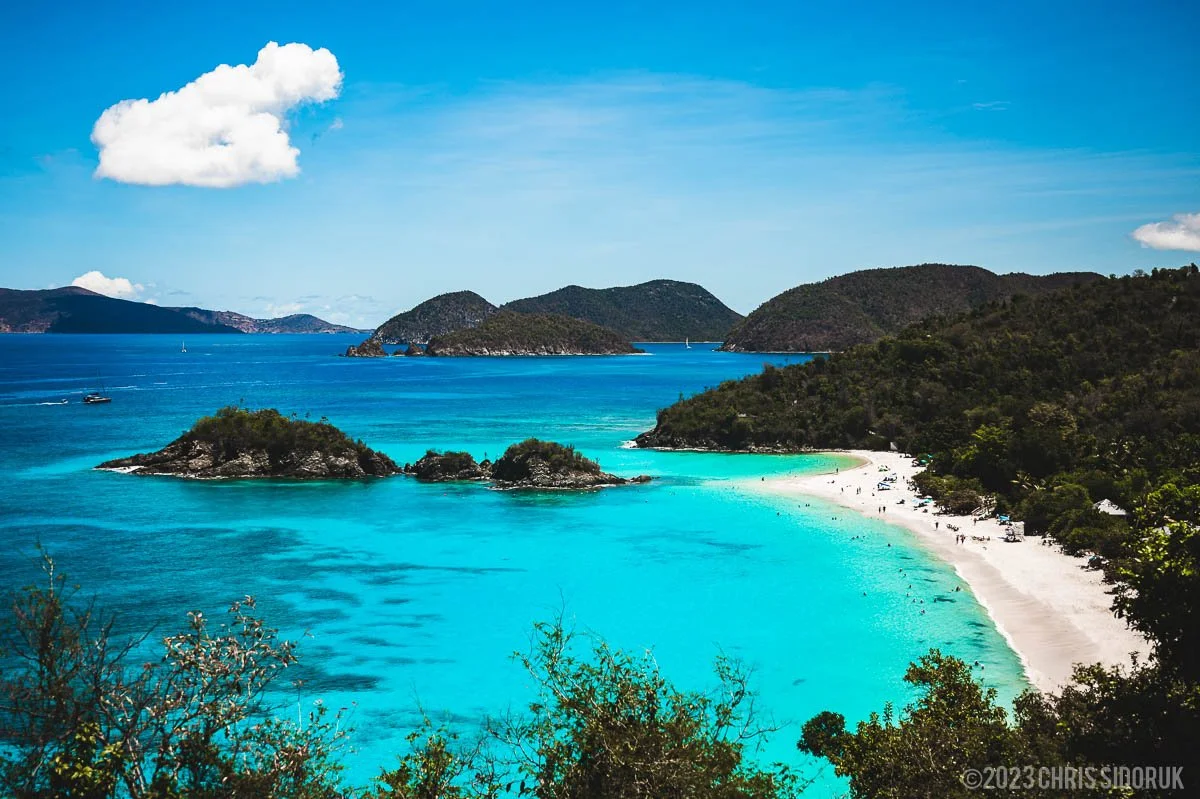
Trunk Bay overlook in St. John USVI inside Virgin Islands National Park with bright turquoise water and white sand beach
Last Updated: July 2026
Few Caribbean destinations offer the photographic variety found on St. John, U.S. Virgin Islands.
Although the island is famous for beaches like Trunk Bay and Maho Bay, the real appeal for photographers extends far beyond turquoise water and white sand. Steep tropical hills rise directly from the coastline, scenic roads reveal elevated overlooks around nearly every bend, and more than half the island is protected within Virgin Islands National Park.
That combination creates an unusual amount of photographic diversity in a relatively small area. Within a single day, you can photograph sunrise over calm Caribbean water, spend the afternoon exploring historic sugar mill ruins surrounded by tropical forest, and finish with a colorful sunset overlooking Cruz Bay or the North Shore.
This guide is based on my own experience photographing St. John. Rather than listing every attraction on the island, I'll focus on the locations, lighting conditions, and practical advice that matter most if your goal is returning home with stronger photographs.
Whether you're bringing a professional mirrorless camera or simply hoping to improve your vacation photography, St. John rewards photographers who understand how dramatically the island changes throughout the day.
Building a Caribbean Photography Kit
Photographing St. John presents unique challenges compared to many mainland destinations.
You'll encounter:
bright tropical sunlight
rapidly changing weather
salt spray along the shoreline
humid conditions
steep hiking trails
frequent transitions between beaches and forest
A lightweight, weather-resistant camera kit makes exploring the island significantly easier.
Helpful Guides
→ Best Cameras for Landscape Photography
→ Best Lenses for Landscape Photography
Why Photograph St. John?
Many Caribbean islands are beautiful.
Relatively few offer the combination of scenery that St. John provides.
Photographers can capture:
world-famous beaches
elevated panoramic overlooks
dense tropical forests
historic sugar plantation ruins
snorkeling and underwater wildlife
colorful sunsets
sailboats anchored in protected bays
winding coastal roads
dramatic cloud formations after passing showers
Unlike destinations where every beach begins to look similar after a few days, St. John constantly changes as you move around the island.
The North Shore offers broad panoramic vistas.
The interior becomes lush and heavily forested.
Historic ruins add architectural interest.
Cruz Bay provides a completely different atmosphere with boats, restaurants, waterfront scenes, and evening activity.
That variety makes St. John one of the most rewarding photography destinations in the Caribbean.
Why I Keep Returning
One thing that surprised me during my visits wasn't simply how beautiful the island is—it was how often the same location looked completely different only a few hours later.
Morning haze can soften distant islands.
Midday sunlight transforms the water into brilliant shades of turquoise.
Passing tropical showers create dramatic skies and occasional rainbows.
Golden hour adds texture to hillsides that appear relatively flat earlier in the day.
Instead of treating each viewpoint as a one-time stop, I found that revisiting locations under different conditions often produced entirely new photographs.
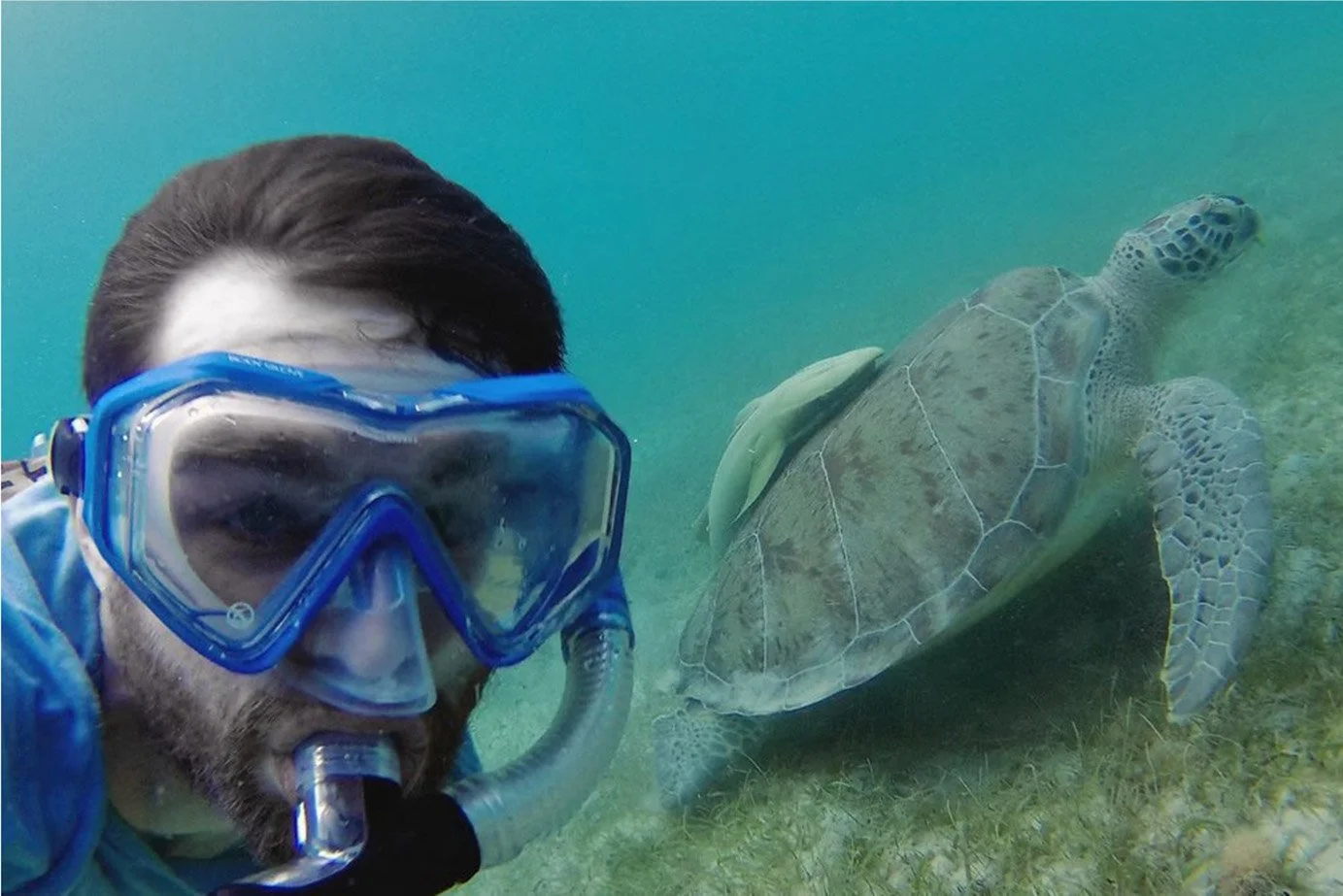
Snorkeling in St John USVI with a sea turtle swimming over seagrass in clear Caribbean water. ©2023 Harry Cooper (taken with an action camera)
Best Time to Visit St. John for Photography
The island photographs well year-round, but each season offers different advantages.
| Season | Photography Highlights |
|---|---|
| Winter (December–April) | Drier weather, comfortable temperatures, excellent visibility, busiest tourist season |
| Late Spring (May–June) | Fewer visitors, calm water, vibrant tropical vegetation |
| Summer (July–August) | Warm temperatures, occasional afternoon storms, lush scenery |
| Fall (September–November) | Quieter island, changing weather patterns, hurricane season considerations |
Winter (December–April)
Photography Highlights: Drier weather, comfortable temperatures, excellent visibility, busiest tourist season
Late Spring (May–June)
Photography Highlights: Fewer visitors, calm water, vibrant tropical vegetation
Summer (July–August)
Photography Highlights: Warm temperatures, occasional afternoon storms, lush scenery
Fall (September–November)
Photography Highlights: Quieter island, changing weather patterns, hurricane season considerations
For photographers, the best overall combination of weather and visibility is typically found between late winter and early summer, although beautiful images are possible during every season.
Best Time of Day
Light changes rapidly throughout the Caribbean.
Planning around those changes has a much bigger impact than changing camera equipment.
Sunrise
Excellent for:
Trunk Bay
Cinnamon Bay
Hawksnest Beach
Empty beaches
Calm reflections
Morning generally offers:
softer light
fewer visitors
lower contrast
calmer wind
Midday
Unlike many landscape locations, midday isn't always a bad time to photograph St. John.
In fact, this is when you'll often see:
the brightest turquoise water
maximum underwater visibility
vibrant tropical colors
excellent snorkeling conditions
The trade-off is much harsher shadows.
For beach photography, however, the brighter light often enhances the tropical feel of the island.
Golden Hour
Late afternoon is my favorite time to photograph elevated viewpoints.
The lower sun creates:
greater depth
stronger texture
layered hillsides
warm highlights across the landscape
This is an ideal time to photograph overlooks along North Shore Road and Cruz Bay.
Blue Hour
Don't pack up immediately after sunset.
The soft blue tones that follow often create excellent opportunities around:
Cruz Bay harbor
anchored sailboats
waterfront restaurants
calm Caribbean water
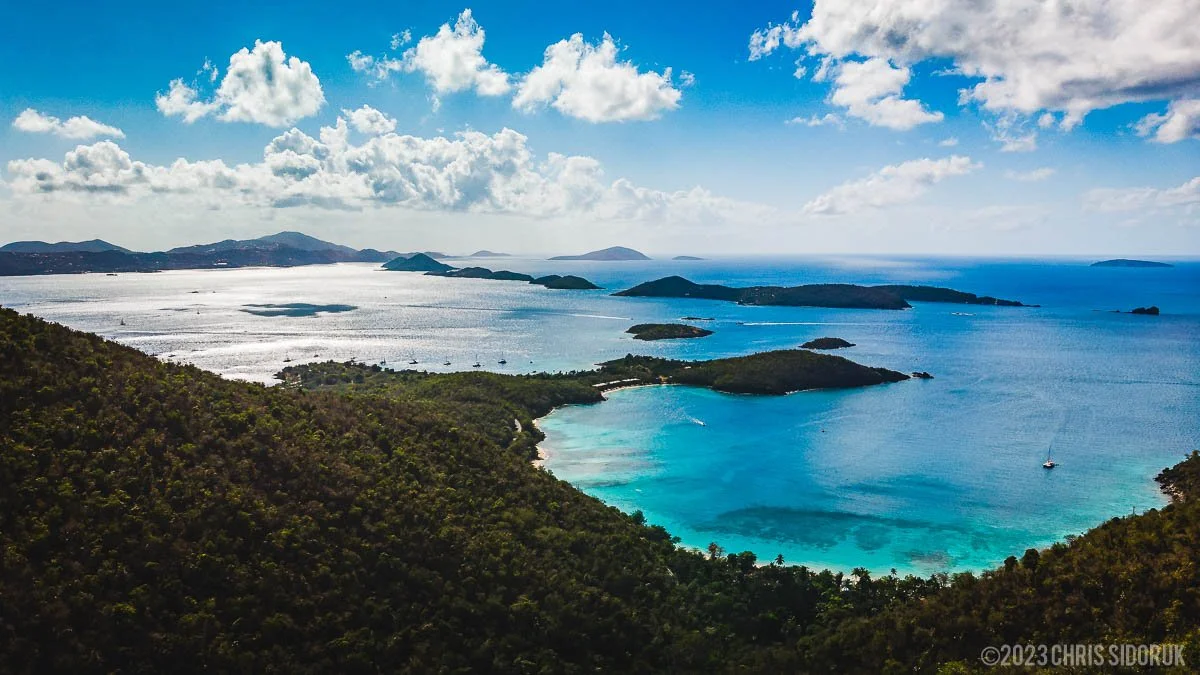
North shore overlook from the Windmill bar in St. John USVI, showing layered Caribbean islands and turquoise water at midday light
St. John Photography Conditions
One of the biggest misconceptions about St. John is that every day offers clear blue skies.
While sunny conditions certainly happen, tropical weather changes surprisingly quickly.
Understanding those changes will often improve your photographs more than buying another lens.
Tropical Sunlight
Bright Caribbean sunlight creates:
incredible water color
deep shadows
strong contrast
vivid tropical colors
During the middle of the day, exposing carefully becomes important because highlights can clip quickly.
Passing Showers
Brief rain showers are common.
Rather than ending your photography day, they often improve it.
After a shower you may find:
cleaner air
richer colors
dramatic clouds
rainbows
calmer light
Some of my favorite photographs from St. John came shortly after passing weather moved through.
Wind
Wind affects every beach differently.
Protected bays such as Maho Bay often remain relatively calm.
More exposed beaches can develop larger waves and stronger texture.
This influences:
reflections
long exposures
drone photography
snorkeling visibility
Humidity
Humidity is simply part of photographing the Caribbean.
Expect lenses to fog temporarily when moving between:
air-conditioned interiors
vehicles
outdoor tropical air
Allow your camera equipment time to acclimate before shooting.
Salt Spray
Salt water is one of the few environmental factors that deserves extra attention.
After photographing near breaking waves or riding boats, it's worth wiping down:
camera body
lenses
tripod legs
filters
A simple microfiber cloth can prevent salt buildup over longer trips.
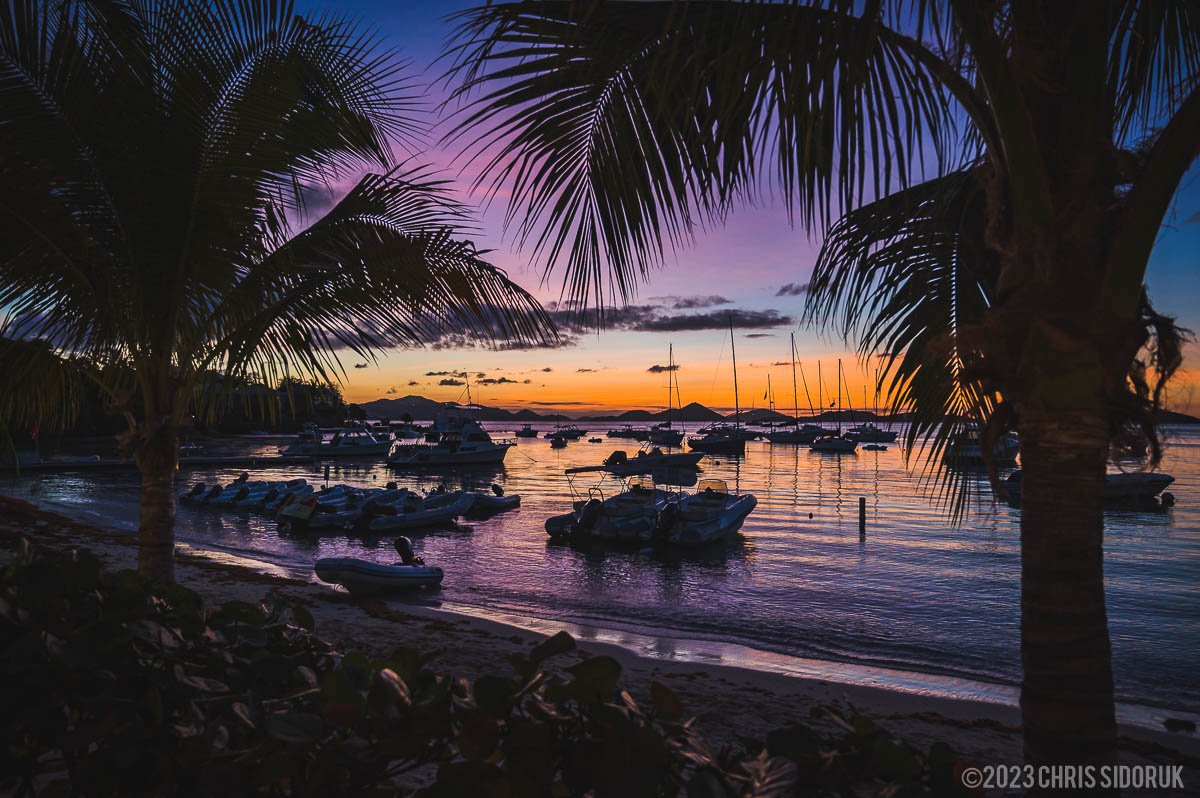
Palm trees framing a sunset harbor scene in Cruz Bay, St John USVI, with boats and colorful evening sky.
Best Photography Locations in St. John, USVI
One of the biggest strengths of St. John is how much photographic variety exists within such a compact island.
In less than an hour, you can move from photographing a world-famous white sand beach to hiking through tropical forest, exploring historic sugar mill ruins, or capturing panoramic views from high above the Caribbean Sea.
Rather than trying to visit every location in one day, I recommend choosing a few areas and revisiting them under different lighting conditions. The best photographs often come from patience rather than simply checking locations off a list.
Trunk Bay
If someone has seen a photograph of St. John, chances are it was taken at Trunk Bay.
The elevated overlook along North Shore Road is arguably the island's most recognizable viewpoint, offering a sweeping panorama of brilliant turquoise water, white sand, and the small islands just offshore. It's easy to understand why it's consistently featured in travel magazines and tourism campaigns.
Why Photograph Trunk Bay?
The appeal isn't just the beach itself—it's the combination of elevation, layered scenery, and changing light.
From the overlook, you can capture:
crystal-clear Caribbean water
white sand curving around the bay
lush tropical hillsides
offshore islands
sailboats anchored in calm water
Once you walk down to the beach, the perspective changes completely, shifting the focus toward shoreline textures, palm trees, and underwater photography.
Best Time to Photograph
Early Morning
Soft light
Fewer visitors
Calm water
Easier parking
Midday
Surprisingly, this is one location where midday light works exceptionally well.
The overhead tropical sun produces the vibrant turquoise water that has made Trunk Bay famous.
Although shadows become harsher, the water color often reaches its peak during this time.
Late Afternoon
The overlook gains additional depth as shadows begin to develop across the surrounding hills.
Recommended Lenses
14–24mm for the overlook
24–70mm for beach compositions
70–200mm for boats and distant islands
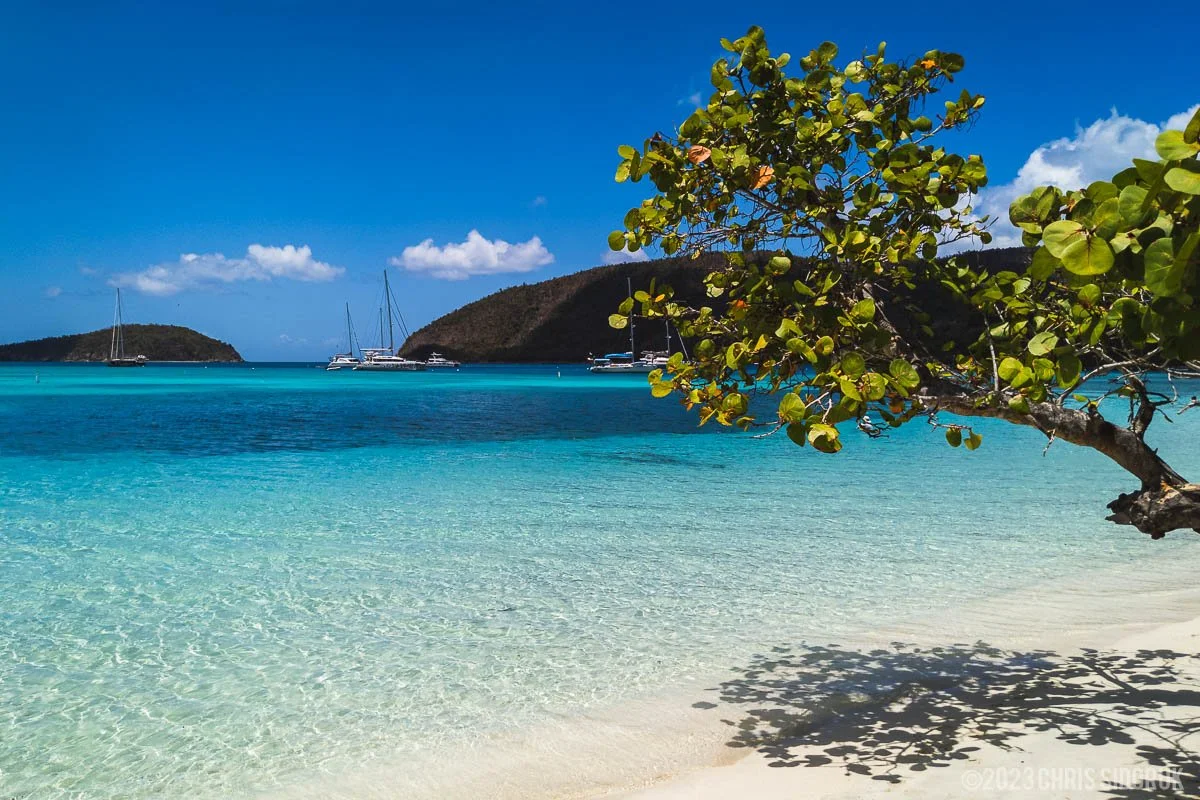
Maho Bay in St John USVI with crystal clear water, anchored sailboats, and tree framing the shoreline.
Maho Bay
Maho Bay offers a very different photographic experience from Trunk Bay.
Instead of dramatic overlooks, Maho is known for calm water, anchored sailboats, and excellent opportunities to photograph marine life.
Its protected location often creates mirror-like water conditions, making it one of the island's most peaceful places to photograph.
Why Photograph Maho Bay?
Maho is ideal for:
reflections
sailboats
tropical shoreline scenes
snorkeling photography
sea turtles
paddleboards and kayaks
It's also one of the best places on the island for underwater photography.
Best Time
Morning generally provides:
calmest water
fewer visitors
softer light
Midday offers excellent underwater visibility if you're snorkeling or using an action camera.
Recommended Lenses
16–35mm
24–70mm
Waterproof action camera
Polarizing filter
Cinnamon Bay
Cinnamon Bay feels more open than Trunk Bay while still retaining the same beautiful Caribbean color palette.
The longer shoreline gives photographers more flexibility to create compositions using curves in the beach, driftwood, vegetation, and incoming waves.
Unlike Trunk Bay, it's often easier to find quieter sections of beach, especially early in the morning.
Best Subjects
expansive beach scenes
shoreline curves
palms
camping area
sunrise light
wave patterns
Best Light
Morning remains the strongest option.
Later in the afternoon, the surrounding hills begin casting longer shadows across portions of the beach.
Recommended Lenses
14–24mm
24–120mm
Hawksnest Beach
Hawksnest Beach is frequently overlooked, which is exactly why photographers should consider it.
Its smaller size creates a more intimate atmosphere, making it easier to simplify compositions and avoid distractions.
Rock formations near portions of the shoreline also provide stronger foreground interest than many Caribbean beaches.
Why Visit?
quieter atmosphere
cleaner compositions
foreground rocks
calm water
snorkeling opportunities
Best Light
Morning through late afternoon.
Because of its orientation, the beach photographs well for much of the day.
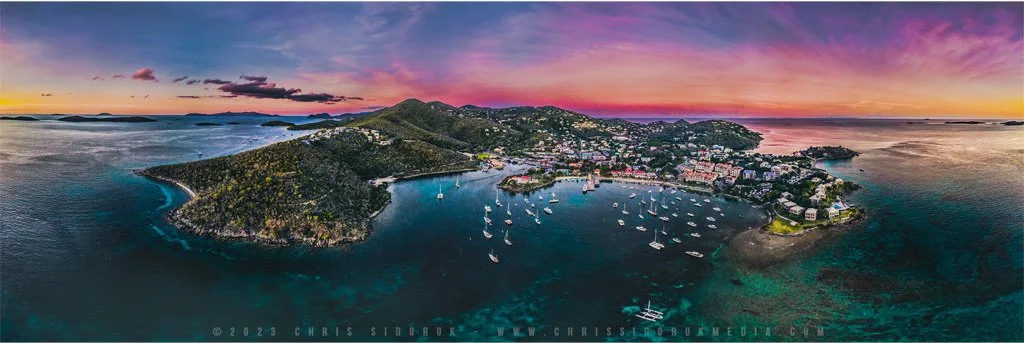
Cruz Bay St. John USVI harbor at sunset with boats, warm sky color, and Caribbean light reflection
Cruz Bay
Most visitors arrive through Cruz Bay before immediately heading toward the beaches.
That's understandable—but photographers shouldn't overlook it.
Cruz Bay offers a completely different side of St. John.
Instead of pristine beaches, you'll find:
sailboats
colorful waterfront buildings
restaurants
palm trees
harbor reflections
evening activity
Best Time
Sunset into blue hour.
The harbor becomes especially photogenic as lights begin reflecting across calm water.
Recommended Subjects
harbor scenes
boats
restaurants
palm silhouettes
waterfront architecture
Recommended Lens
24–70mm
A telephoto can also isolate boats and details across the harbor.
Annaberg Sugar Plantation
Annaberg combines landscape photography with history.
Rather than focusing on beaches, the ruins provide strong foreground subjects against the backdrop of the Caribbean Sea.
It's one of the best locations on the island for storytelling images that connect St. John's natural beauty with its cultural history.
Photograph
historic stone ruins
arches
sugar mill structures
tropical vegetation
elevated water views
Best Time
Morning or late afternoon.
Midday light can create harsh shadows inside the ruins.
Recommended Lens
24–70mm
70–200mm for architectural details.
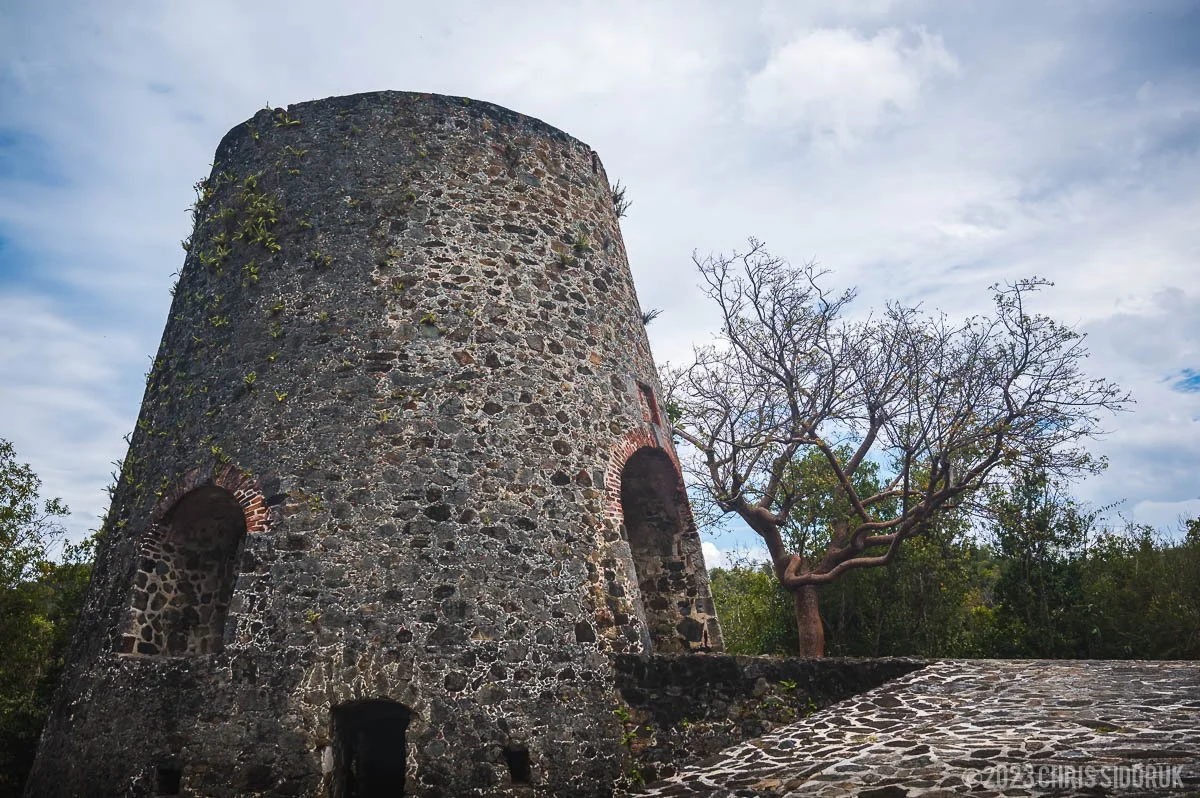
Catherineberg sugar mill ruins in St John USVI with historic stone structure and tropical surroundings.
Catherineberg Sugar Mill Ruins
Catherineberg feels quieter and more intimate than Annaberg.
Surrounded by lush vegetation, the stone windmill and remaining structures provide a unique contrast to the tropical landscape.
It's one of my favorite locations when looking for something different than beaches.
Best Subjects
stone architecture
tropical foliage
historical details
texture
layered backgrounds
Best Time
Overcast conditions actually work beautifully here.
Soft light preserves detail within the stonework while maintaining rich greens throughout the surrounding forest.
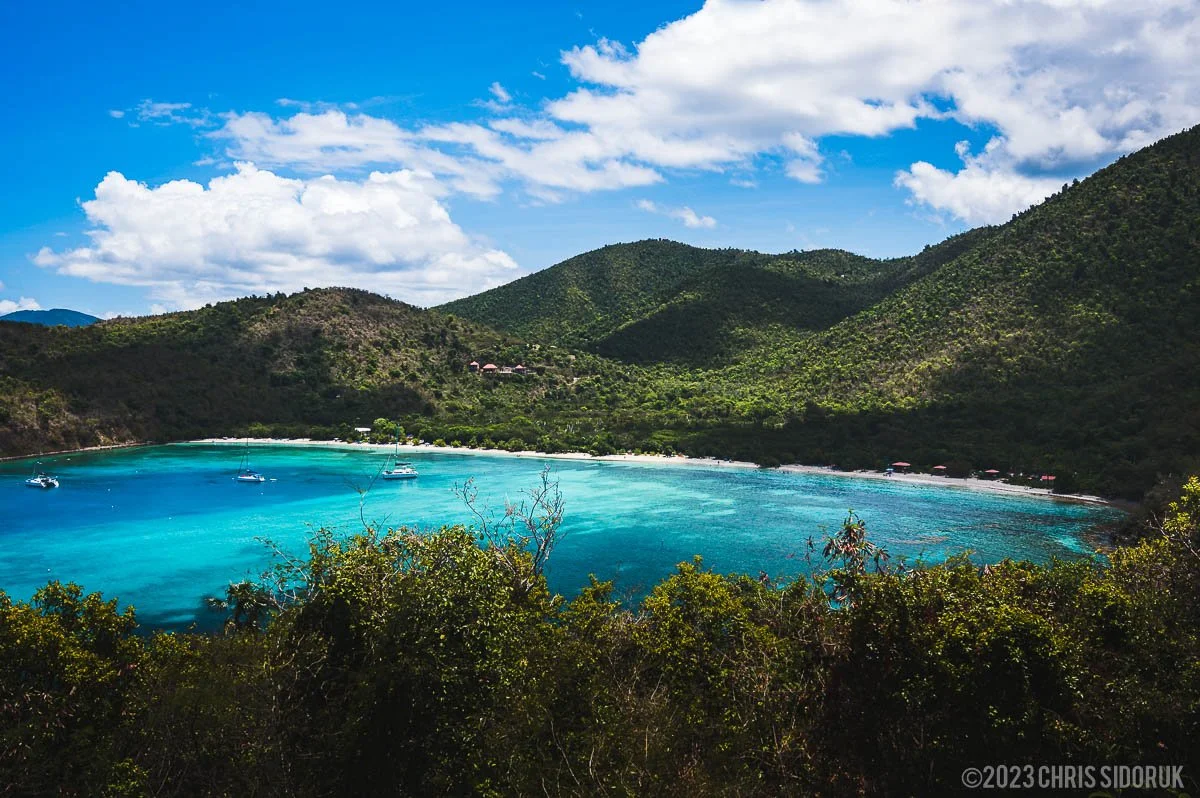
Maho Bay in St John USVI with calm turquoise water, anchored sailboats, and green hills surrounding the beach.
North Shore Road Overlooks
Some of my favorite photographs from St. John weren't taken at famous beaches.
They came from roadside pull-offs.
Driving North Shore Road reveals numerous overlooks where the island unfolds below you.
These viewpoints emphasize:
layered hills
winding roads
bays
distant islands
changing light
Many visitors stop briefly before continuing their drive.
Photographers should take their time.
Cloud movement constantly changes how sunlight moves across the landscape.
Best Time
Late afternoon.
Longer shadows create far more depth than midday light.
Recommended Lens
14–24mm
24–120mm
70–200mm
Each offers something different depending on the overlook.
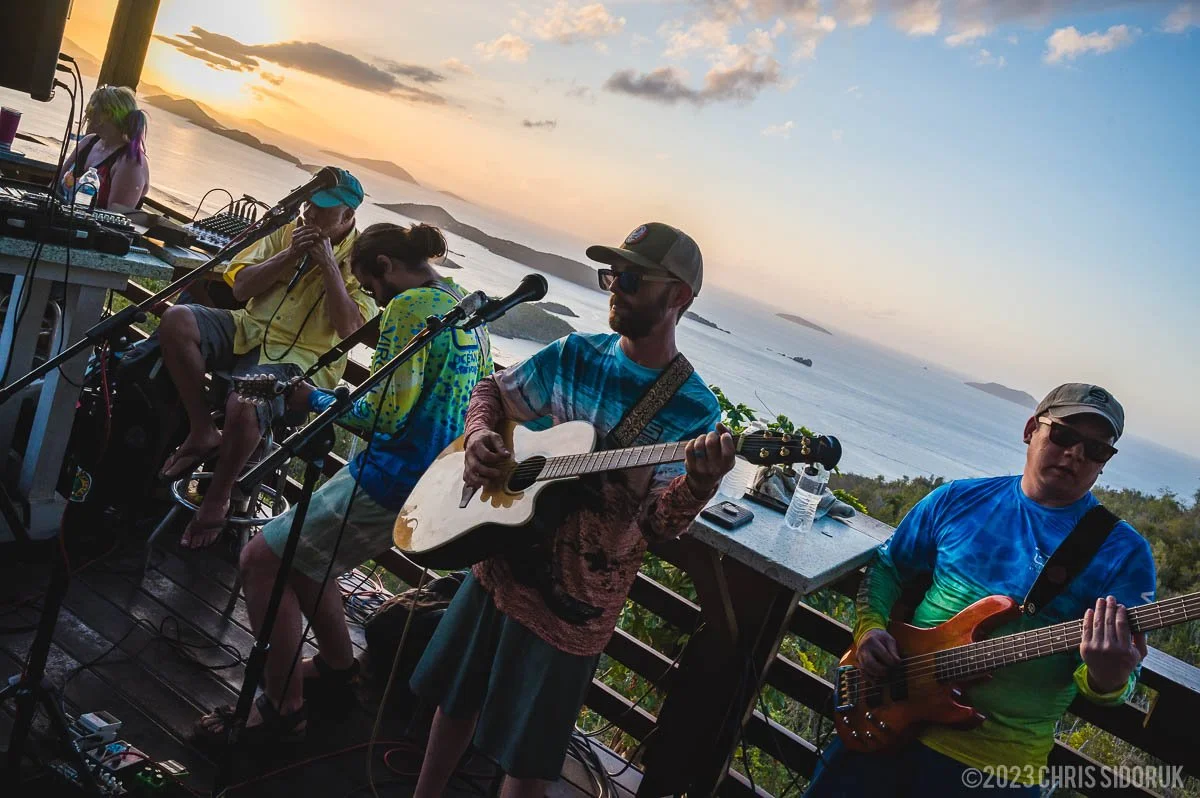
The Windmill Bar has some of the best views for sunsets on the island and almost daily live music.
Windmill Bar
The Windmill Bar is one of my favorite sunset locations on the island.
Its elevated position provides sweeping views across neighboring islands while often featuring live music that adds to the overall atmosphere.
It's one of the few places where you can photograph both the landscape and the experience.
Why Photograph Here?
panoramic sunsets
silhouettes
boats
island layers
live music
vibrant evening atmosphere
Best Time
Arrive at least an hour before sunset.
Stay through blue hour.
The changing sky often continues producing excellent color well after the sun disappears.
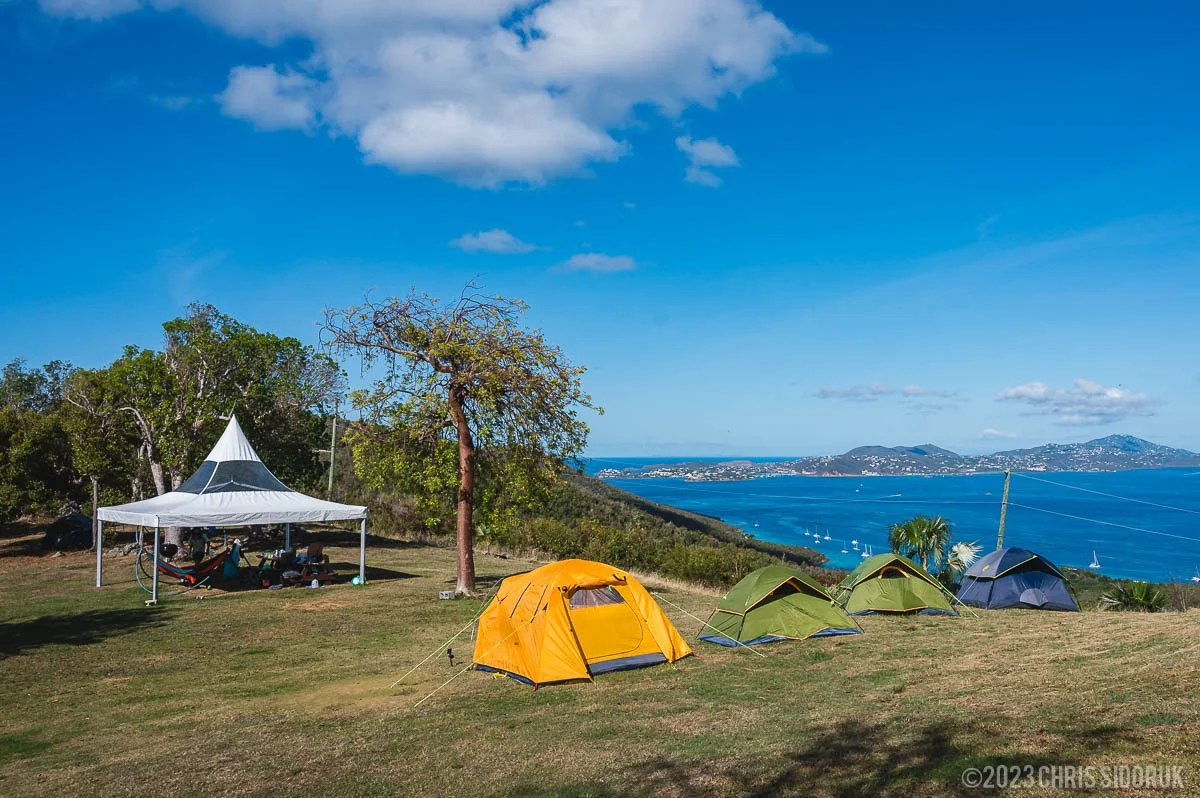
Campground at Neptune’s Lookout on St. John, USVI.
Neptune's Lookout
Neptune's Lookout offers one of the highest camping viewpoints on St. John.
Looking out from the tents toward the Caribbean creates an entirely different perspective from the beaches below.
If you're staying here overnight, sunrise and sunset are both worth photographing without ever leaving camp.
Best Subjects
panoramic island views
tents overlooking the ocean
sunrise
sunsets
stars
camping lifestyle photography
This is also one of the better locations for night sky photography thanks to its elevation and relatively dark surroundings.
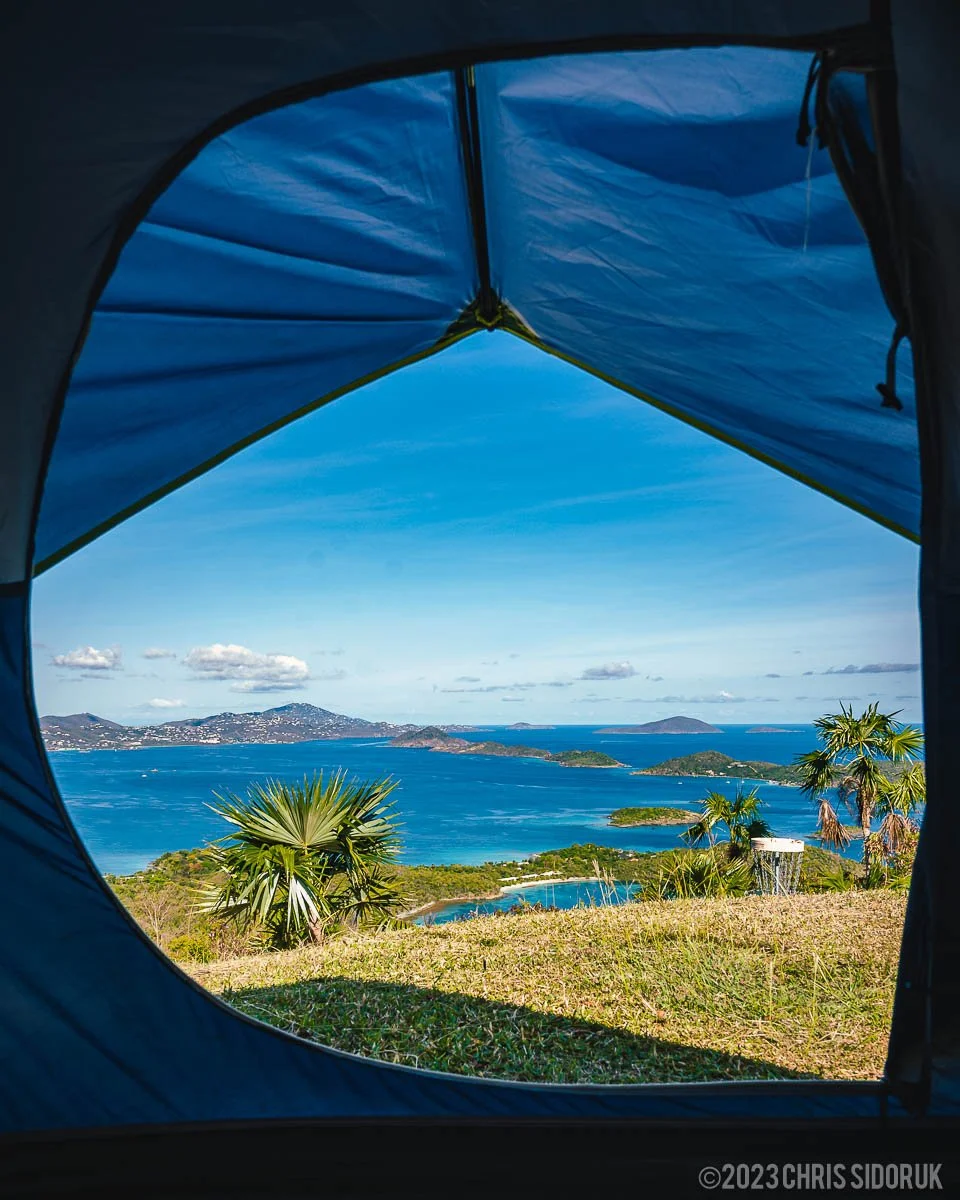
View from inside a tent at Neptune’s Lookout in St John USVI, overlooking ocean and surrounding islands under blue sky.
Photography Tips for Virgin Islands National Park
More than half of St. John is protected as part of Virgin Islands National Park, making it one of the most photographically diverse national park units in the Caribbean.
Instead of concentrating only on beaches, spend time exploring the park's interior.
You'll find:
tropical forests
hiking trails
historic plantation ruins
scenic overlooks
native vegetation
coastal panoramas
Some of my favorite images from St. John came from simply stopping along the road whenever changing light caught my attention.
The park rewards photographers who remain flexible.
Rather than chasing a single famous viewpoint, allow time to explore.
Some of the island's strongest compositions appear unexpectedly around a bend in the road or after a brief tropical rain shower.
Sunrise vs. Sunset Photography on St. John
One of the biggest mistakes first-time visitors make is assuming every beach looks its best at sunset. On St. John, the best light depends entirely on which side of the island you're photographing.
Sunrise Photography
Sunrise is often the best overall time to photograph St. John.
Advantages include:
Softer contrast and lower dynamic range
Calm water before afternoon trade winds develop
Fewer visitors on popular beaches
Cooler temperatures for hiking
Better opportunities for reflections
Locations that photograph particularly well at sunrise include:
Trunk Bay
Maho Bay
Cinnamon Bay
Hawksnest Beach
Many North Shore overlooks facing east
Morning haze is common, but it often creates beautiful atmospheric depth rather than hurting your images.
Sunset Photography
While many beaches face north, sunset still produces excellent photography throughout the island.
Instead of photographing the sun itself, sunset is often about the warm side light illuminating hillsides and vegetation.
Great sunset locations include:
Cruz Bay Harbor
The Windmill Bar
Elevated overlooks along North Shore Road
Neptune's Lookout
Western shoreline viewpoints
Even after the sun disappears, the Caribbean often produces vibrant pink, orange, and purple skies that reflect beautifully across calm water.
Midday Tropical Light (And Why It's Often Underrated)
Photography advice often says to avoid midday light.
In the Caribbean, that's only partially true.
Midday creates the strongest tropical water color you'll see all day.
The sun penetrates the shallow water directly, producing:
brilliant turquoise bays
vivid blues
crystal-clear snorkeling conditions
maximum underwater visibility
The tradeoff is increased contrast.
Tips for photographing midday successfully:
Use a circular polarizer carefully (avoid over-polarizing wide-angle skies)
Expose for highlights
Let shadows stay naturally dark
Include water as a dominant subject
Look for elevated viewpoints where the vibrant water becomes the composition
If your goal is showcasing St. John's famous Caribbean colors, midday is often exactly when you should be shooting.
Rain, Clouds & Dramatic Weather
Don't pack your camera away because clouds roll in.
Some of my favorite photographs from St. John happened immediately before or after passing tropical showers.
Clouds add:
depth
dramatic skies
texture
directional light
better dynamic range
Brief rain showers are common and usually pass quickly.
Immediately afterward you'll often find:
cleaner air
richer vegetation
calmer light
more interesting cloud formations
These changing conditions often create photographs with far more mood than perfectly clear blue skies.
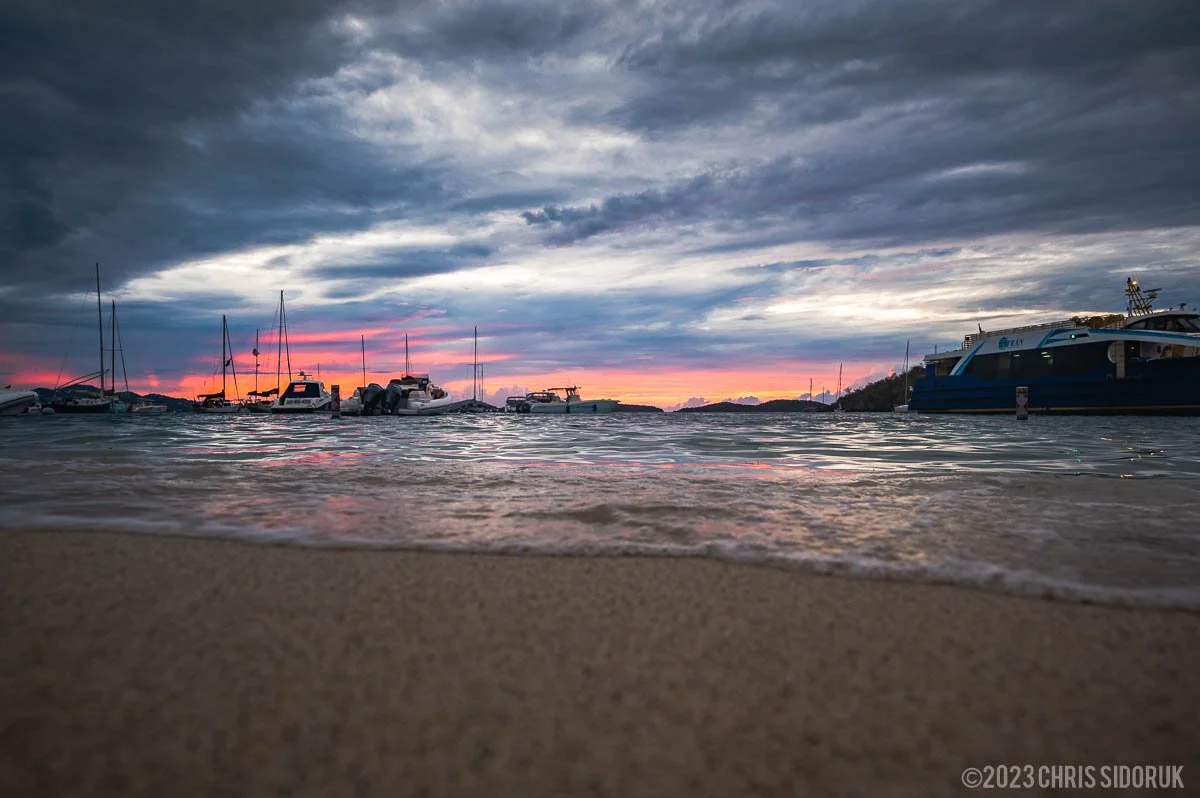
Sunset shoreline in St John USVI with boats anchored in calm water and dramatic evening sky.
Recommended Camera Gear
The island doesn't require enormous amounts of gear.
A lightweight kit usually produces the best experience.
Camera Bodies
Ideal choices include:
Nikon Z6 III
Nikon Z8
Canon EOS R6 Mark II
Sony a7 IV
Sony a7C II
Fujifilm X-T5
Weather sealing is valuable since salt spray and sudden rain showers are common.
Lenses
Ultra Wide (14-24mm)
Perfect for:
Trunk Bay overlook
beaches
dramatic skies
foreground compositions
Standard Zoom (24-70mm)
The most versatile lens on the island.
Excellent for:
hiking
overlooks
towns
general travel photography
If I could only bring one lens, this would probably be it.
Telephoto (70-200mm or 100-400mm)
Useful for:
layered islands
sailboats
wildlife
isolating distant hillsides
compressing coastal scenes
Many visitors never consider bringing a telephoto, but it can create some of the most unique compositions on St. John.
Drone Photography
St. John looks spectacular from the air.
However, most of the island lies within Virgin Islands National Park, where launching, landing, or operating drones is generally prohibited without authorization.
Before flying:
Verify current federal regulations.
Respect park boundaries.
Check FAA airspace restrictions.
Avoid flying near beaches with visitors or wildlife.
If you plan to capture aerial imagery, research the latest rules before your trip rather than assuming drone flights are allowed.
Polarizers & Filters
Circular Polarizer
Probably the single most useful filter for St. John.
Benefits include:
reducing glare
revealing underwater rocks
increasing water clarity
improving foliage saturation
Just avoid maximum polarization with ultra-wide lenses during midday, as uneven skies can appear.
Neutral Density Filters
Useful for:
silky water
moving clouds
long exposures
waterfalls after rain
Although St. John isn't known for waterfalls, ND filters can create beautiful long-exposure seascapes around rocky shorelines.
Graduated ND Filters
Less essential today thanks to modern camera dynamic range and exposure blending, but still helpful during particularly bright sunrises.
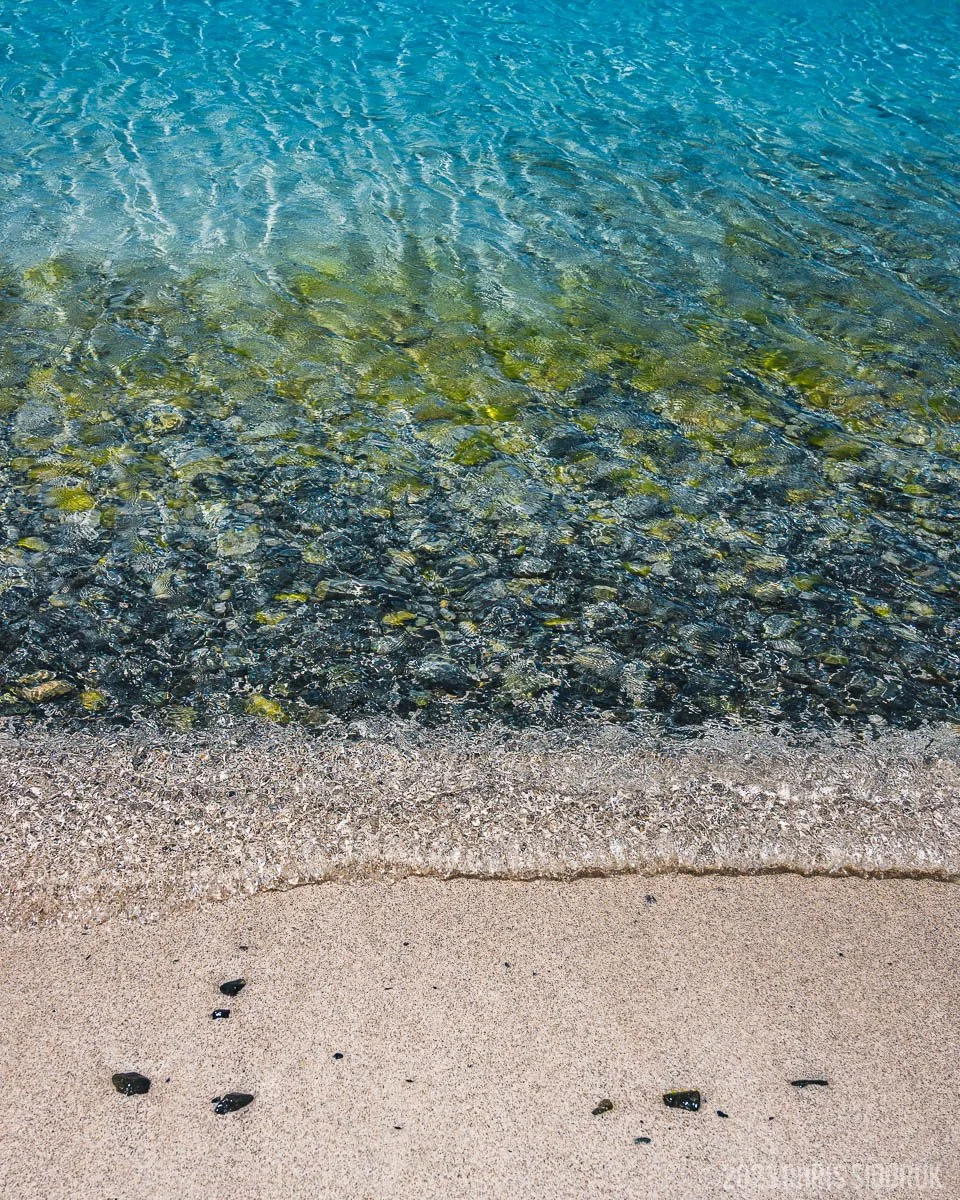
Clear Caribbean water meeting sandy shoreline in St John USVI with visible rocks beneath the surface.
One-Day St. John Photography Itinerary
If you only have one full day, this schedule maximizes both photography opportunities and changing light.
Sunrise
Trunk Bay overlook
Trunk Bay beach
Early Morning
Cinnamon Bay
Hawksnest Beach
Late Morning
Annaberg Sugar Plantation
Catherineberg Ruins
Midday
Maho Bay
snorkeling photography
tropical water images
Afternoon
North Shore Road scenic pull-offs
Virgin Islands National Park overlooks
Golden Hour
Windmill Bar
Neptune's Lookout
Cruz Bay harbor
This route lets you experience nearly every type of landscape the island offers in a single day.
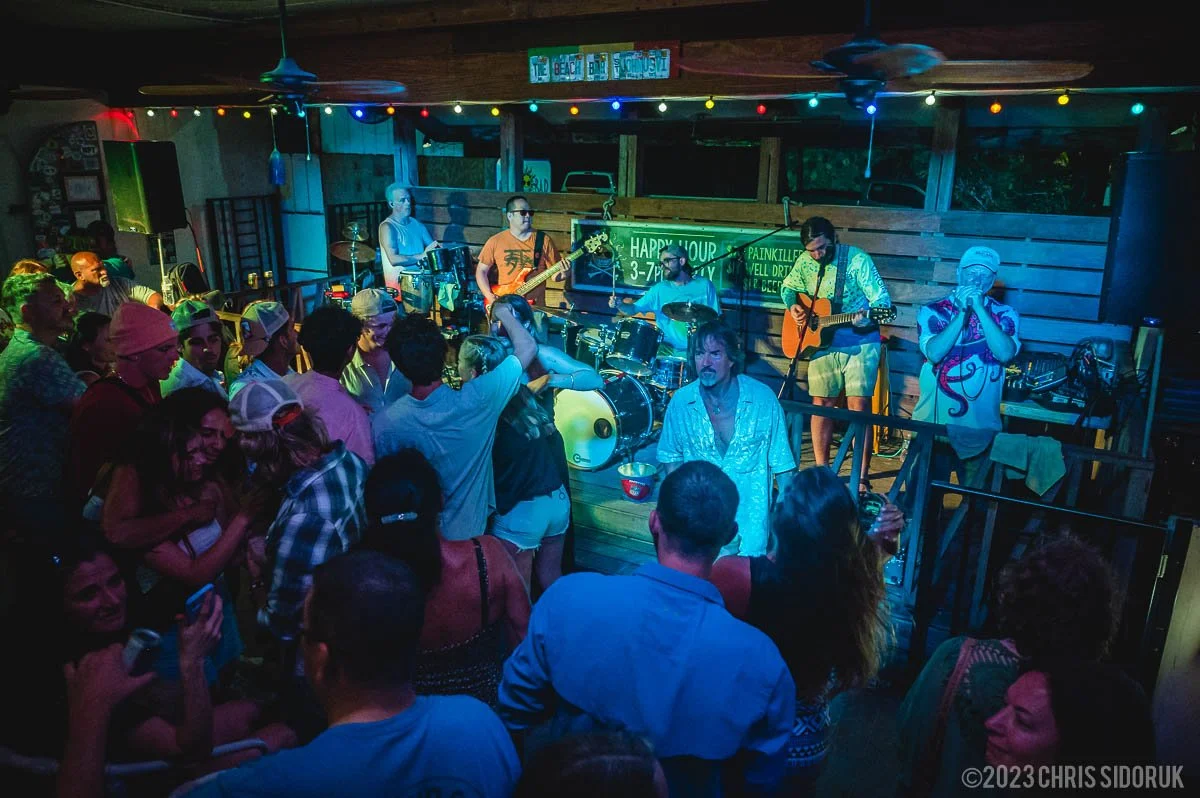
Nightlife scene at The Beach Bar in St John USVI with a live band performing to a crowded audience.
Final Thoughts
St. John is much more than a collection of beautiful beaches.
Its real photographic appeal comes from the variety packed into such a small island. Within minutes you can move from pristine white-sand beaches to historic sugar mill ruins, climb to panoramic overlooks above the Caribbean, hike through lush tropical forest, or photograph a colorful harbor at sunset. Every change in elevation and every shift in light offers a different perspective.
The island also rewards patience. Returning to the same location at sunrise, midday, and golden hour often produces entirely different images. Some of my favorite photographs from St. John came from revisiting familiar places rather than constantly searching for somewhere new.
If you're planning a photography trip to the U.S. Virgin Islands, St. John deserves several days—not just for sightseeing, but for waiting on the right light. Whether you're building a travel portfolio, creating fine art landscapes, or simply documenting an unforgettable vacation, it's one of the most rewarding tropical destinations I've photographed.
Frequently Asked Questions
What is the best month to photograph St. John?
December through April generally offers the driest weather, comfortable temperatures, and excellent visibility, although shoulder seasons can provide fewer crowds and lush tropical scenery.
What is the most photographed location on St. John?
Trunk Bay is easily the island's most iconic photography location thanks to its overlook, turquoise water, and white sand beach.
Is St. John good for landscape photography?
Absolutely.
Few Caribbean islands combine beaches, tropical forest, hiking trails, historic ruins, elevated viewpoints, and dramatic coastal scenery in such a compact area.
Can beginners photograph St. John successfully?
Yes.
Many of the island's best compositions are accessible from roads, beaches, and short walking trails.
What lens should I bring?
For most photographers:
14–30mm or 16–35mm ultra-wide
24–70mm standard zoom
Adding a telephoto expands your creative possibilities even further.
Is a drone worth bringing?
Only if you've confirmed where it can legally be flown.
Much of St. John is protected national park land with restrictions that prohibit recreational drone operations.
Do I need hiking boots?
Not necessarily.
Many locations require little walking.
However, if you plan to explore trails inside Virgin Islands National Park, sturdy hiking shoes are recommended.
==========
Photography by Chris Sidoruk, a Connecticut photographer specializing in coastal landscapes, concert photography, and visual storytelling throughout New England.
Unless otherwise noted, photographs shot using a Nikon Z6 with settings for landscape photography.
All photographs © Chris Sidoruk. Images are protected by copyright and may not be used, copied, modified, or redistributed without written permission.
=====
Continue Exploring
If you're planning additional photography adventures, these guides pair well with St. John:
