

Best Focal Length for Landscape Photography (Wide Angle vs Telephoto Guide)
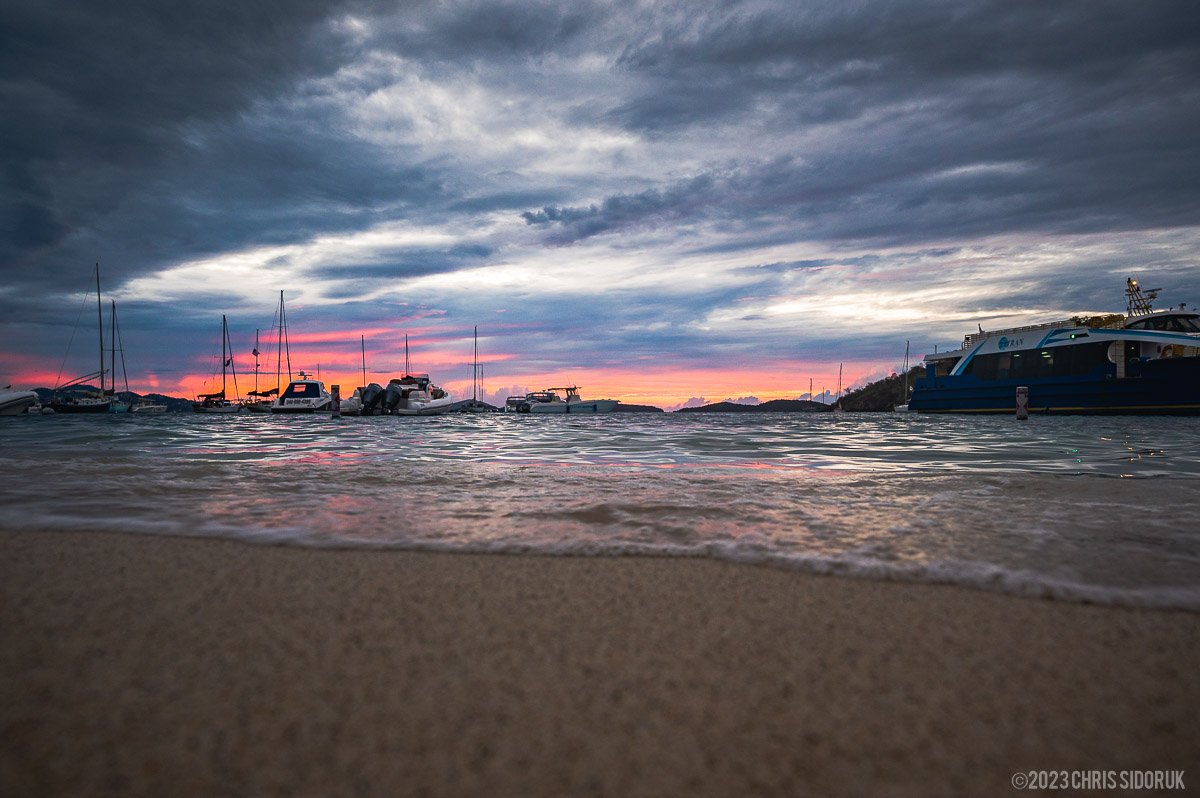
Sunset in Cruz Bay, St. John, USVI.
==========
Last Updated: August 2026
Quick Jump
- Why Focal Length Matters in Landscape Photography
- Landscape Photography Focal Length Comparison
- Full Frame vs Crop Sensor Focal Length Explained
- Wide-Angle Landscape Photography (14mm–24mm)
- Standard Landscape Focal Lengths (24mm–70mm)
- Telephoto Landscape Photography (70mm–200mm+)
- Choosing the Right Focal Length by Scene
- Do You Need Multiple Landscape Lenses?
- Common Focal Length Mistakes
- Final Thoughts
Why Focal Length Matters in Landscape Photography
Focal length is one of the most important creative decisions in landscape photography.
Many photographers assume landscape photography always means using the widest lens possible.
A huge mountain range.
A dramatic foreground.
A sweeping ultra-wide composition.
But some of the strongest landscape images are actually created with much longer focal lengths.
A telephoto lens can isolate a distant mountain peak, compress layers of a valley, or simplify a busy scene into a clean composition.
The truth is:
There is no single best focal length for landscape photography.
The right focal length depends on:
the scene in front of you
the subject you want to emphasize
the available light
your composition
the feeling you want the final image to create
A wide-angle lens makes a landscape feel expansive.
A telephoto lens makes a landscape feel intentional and focused.
Understanding how focal length changes your image will help you choose the right lens instead of automatically reaching for the widest option.
Landscape Photography Focal Length Comparison
| Focal Length (Full Frame) | Best For | How It Changes the Image |
|---|---|---|
| 14mm–20mm | Dramatic foregrounds, large scenes, tight spaces | Expands depth and exaggerates perspective |
| 20mm–35mm | General landscapes, travel, everyday shooting | Natural perspective with strong flexibility |
| 35mm–70mm | Balanced compositions, environmental landscapes | More natural and closer to human vision |
| 70mm–200mm | Mountains, distant subjects, layered scenes | Compresses distance and simplifies compositions |
| 200mm+ | Details, isolated landscape elements, distant subjects | Creates highly focused compositions |
14mm–20mm
Best For: Dramatic foregrounds, large scenes, tight spaces
How It Changes the Image: Expands depth and exaggerates perspective
20mm–35mm
Best For: General landscapes, travel, everyday shooting
How It Changes the Image: Natural perspective with strong flexibility
35mm–70mm
Best For: Balanced compositions, environmental landscapes
How It Changes the Image: More natural and closer to human vision
70mm–200mm
Best For: Mountains, distant subjects, layered scenes
How It Changes the Image: Compresses distance and simplifies compositions
200mm+
Best For: Details, isolated landscape elements, distant subjects
How It Changes the Image: Creates highly focused compositions
For most landscape photographers, the most useful range is:
16mm–35mm for wide landscapes
24mm–70mm for everyday versatility
70mm–200mm for compression and creative isolation
What Does Focal Length Mean in Landscape Photography?
Focal length refers to the optical distance between the lens and the camera sensor, measured in millimeters.
In practical terms, focal length determines:
how much of the scene your camera captures
how large objects appear relative to each other
how compressed or expanded the landscape feels
A shorter focal length gives you a wider field of view.
Examples:
14mm
16mm
20mm
24mm
These lenses capture more of the environment and are often used for dramatic landscape scenes.
A longer focal length narrows your view.
Examples:
70mm
100mm
200mm
These lenses allow you to isolate specific parts of a landscape and create simpler compositions.
How Focal Length Changes the Look of Your Landscape Photos
Focal length does more than decide how much fits into the frame.
It changes the entire visual feeling of your image.
Wide-Angle Lenses Create Depth
Wide-angle lenses are known for making landscapes feel larger and more immersive.
They emphasize:
foreground objects
leading lines
distance between near and far subjects
the scale of a scene
For example:
A rock, tree, or flower placed close to the camera can become a powerful foreground element that leads the viewer into the landscape.
This is why wide-angle lenses are popular for:
coastal photography
waterfalls
dramatic skies
mountain scenes with strong foregrounds
However, wide angles can also create problems.
If there is no interesting foreground:
the image may feel empty
the main subject may become too small
the scene can lose impact
A wider lens does not automatically create a better landscape photo.
The composition still matters.
Telephoto Lenses Compress Distance
Telephoto lenses create a completely different look.
Instead of showing everything, they allow you to focus on specific elements within the landscape.
They are excellent for:
mountain layers
distant peaks
isolated trees
patterns in nature
city landscapes
A 200mm lens can make multiple mountain ridges appear closer together, creating a layered effect that is impossible to achieve with a wide-angle lens.
This is called compression.
Telephoto landscape photography is one of the most overlooked techniques because many photographers assume landscapes require wide lenses.
In reality, longer focal lengths often create some of the most powerful and minimalist landscape images.
Full Frame vs Crop Sensor Focal Length Explained
Yes.
The actual focal length printed on the lens does not change, but the field of view does depending on your camera sensor size.
A 24mm lens on a full-frame camera and a 24mm lens on an APS-C camera will not capture the same amount of the scene.
Crop sensors show a smaller portion of the image, making the lens appear more zoomed in.
Full-Frame Equivalent Examples
Full-Frame Camera
A:
16mm lens looks like 16mm
24mm lens looks like 24mm
70mm lens looks like 70mm
APS-C Camera
Common crop factors:
Sony / Nikon / Fujifilm APS-C: approximately 1.5x
Canon APS-C: approximately 1.6x
Examples:
A 16mm lens:
Sony APS-C → approximately 24mm equivalent
Canon APS-C → approximately 26mm equivalent
A 24mm lens:
Sony APS-C → approximately 36mm equivalent
Canon APS-C → approximately 38mm equivalent
A 70mm lens:
Sony APS-C → approximately 105mm equivalent
Canon APS-C → approximately 112mm equivalent
Why This Matters for Landscape Photographers
A lens that feels extremely wide on full-frame may become a more general-purpose lens on a crop sensor camera.
For example:
A 16-35mm full-frame lens is a classic landscape choice.
On an APS-C camera, that same lens behaves more like:
approximately 24-52mm
which is still useful, but no longer ultra-wide.
Before buying a landscape lens, always consider:
your camera sensor size
the equivalent focal length
the type of landscapes you photograph most often
The Most Important Landscape Photography Lesson
The best landscape photographers are not defined by the widest lenses they own.
They understand how to choose the focal length that supports the composition.
A wide-angle lens says:
"Look at this entire world."
A telephoto lens says:
"Look at this specific moment within the world."
Both approaches are powerful.
The goal is not to capture the most.
The goal is to capture what matters.
Wide-Angle Landscape Photography (14mm–24mm)
Wide-angle lenses are the most commonly associated with landscape photography.
They allow you to capture:
large scenes
dramatic skies
expansive viewpoints
strong foreground elements
Popular landscape focal lengths include:
14mm
16mm
18mm
20mm
24mm
These lenses are especially useful when you want the viewer to feel like they are standing inside the scene.
What Wide-Angle Lenses Do Best
Create a Sense of Depth
One of the biggest advantages of wide-angle lenses is their ability to exaggerate distance.
A strong composition might include:
Foreground
rocks
flowers
waves
textures
pathways
Middle ground
trees
buildings
shoreline
terrain
Background
mountains
clouds
sunrise or sunset colors
The wide field of view connects these layers and creates a strong sense of depth.
Emphasize Foreground Elements
Wide-angle landscape photography works best when something interesting is close to the camera.
For example:
A lighthouse photographed at 16mm can include:
rocks in the foreground
ocean movement
the lighthouse in the middle distance
dramatic sky above
The foreground gives the viewer a reason to enter the image.
Without a strong foreground, ultra-wide compositions often become:
empty
flat
visually confusing
Great Uses for 14mm–24mm
Wide-angle lenses excel for:
Coastal Landscapes
Perfect for:
beaches
rocky shorelines
waves
cliffs
ocean sunsets
The wide perspective helps show the scale of the environment.
Waterfalls
Wide lenses allow you to include:
the waterfall
surrounding landscape
foreground rocks
flowing water
They are especially useful for long exposure photography.
👉 Related guide:
How to Shoot Long Exposure Landscape Photos
Dramatic Mountain Scenes
Wide lenses can create powerful mountain images when you have:
a strong foreground
interesting weather
leading lines
However, extremely distant mountains may appear smaller than expected because wide lenses reduce the apparent size of background subjects.
Common Wide-Angle Mistakes
Going Too Wide
Many photographers believe:
"More landscape = better landscape photo."
Not always.
A 14mm lens can capture an enormous scene, but that does not mean every element helps the composition.
Sometimes a tighter focal length creates a stronger image.
Weak Foreground
A wide-angle image without a foreground often lacks depth.
Ask:
"What is drawing the viewer into this image?"
If the answer is nothing, consider:
moving closer
changing position
using a longer focal length
Distorted Edges
Ultra-wide lenses can create:
stretched corners
leaning buildings
exaggerated perspective
This can be useful creatively, but it should be intentional.
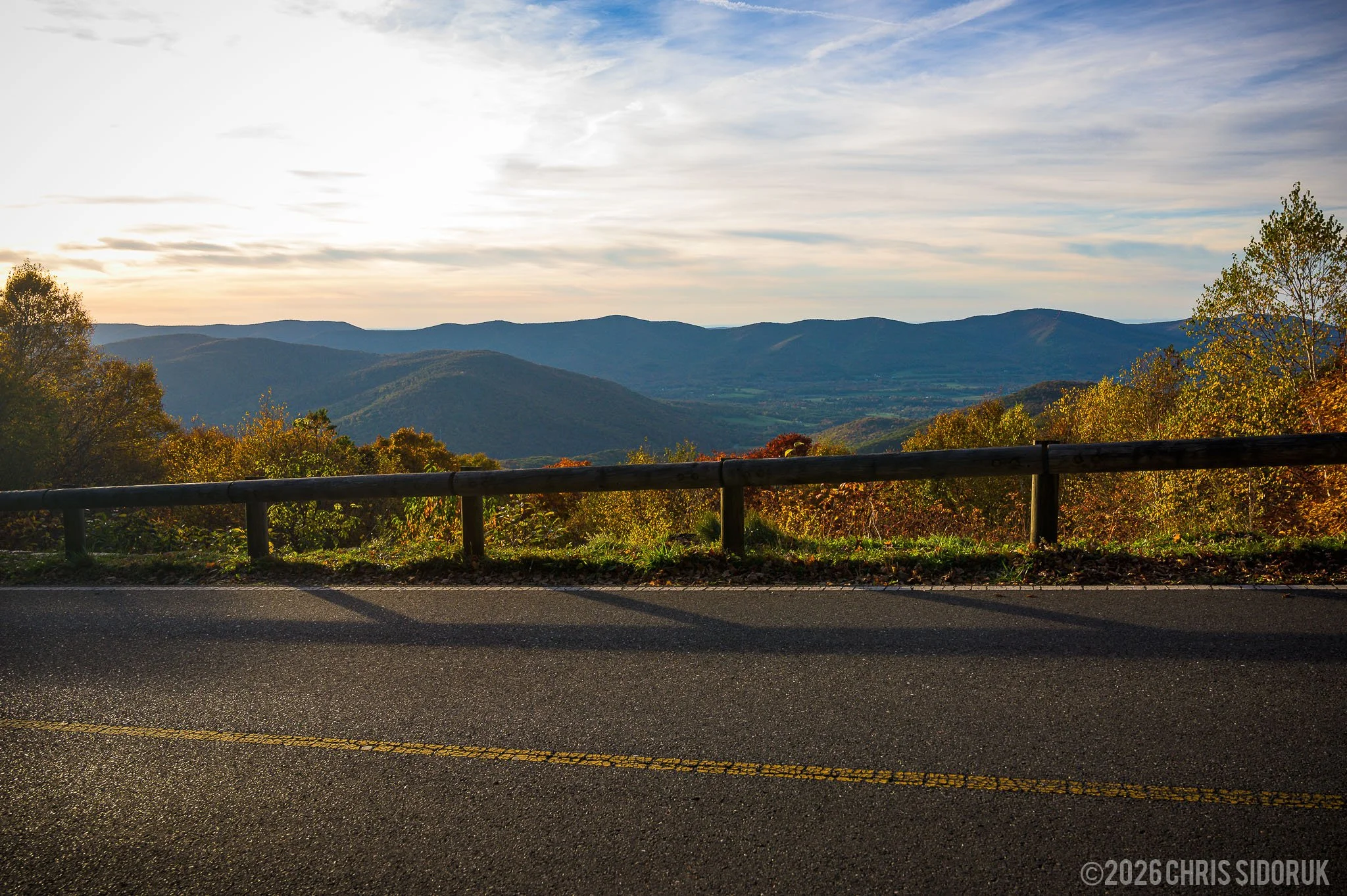
Wide-angle landscape showing foreground and background depth
Standard Landscape Focal Lengths (24mm–70mm)
The 24mm–70mm range is one of the most practical focal length ranges for landscape photography.
This range provides:
flexibility
natural perspective
easier composition
fewer distortion issues
For many photographers, this is the "walk-around" landscape range.
24mm–35mm: The Landscape Sweet Spot
Many photographers consider 24mm to 35mm the most versatile landscape range.
You get:
enough width for large scenes
enough reach to isolate subjects
natural-looking perspective
This range works extremely well for:
travel photography
national parks
city landscapes
environmental portraits
general outdoor photography
If you could only bring one lens, a:
24-70mm f/2.8
or
24-120mm f/4
would cover a huge percentage of landscape situations.
35mm–50mm: A More Natural Perspective
These focal lengths are often overlooked in landscape photography.
They provide a perspective closer to how humans naturally see a scene.
Advantages:
fewer distractions
cleaner compositions
realistic proportions
easier subject placement
They work especially well for:
forest scenes
mountain views
travel photography
environmental storytelling
A 50mm lens can force you to slow down and carefully choose what belongs in the frame.
50mm–70mm: When You Need More Control
The upper end of the standard range starts moving toward telephoto territory.
This range is useful when:
the entire scene is too cluttered
you want to remove distractions
you want stronger subject emphasis
It is often a great choice for:
mountain details
architectural landscapes
layered compositions
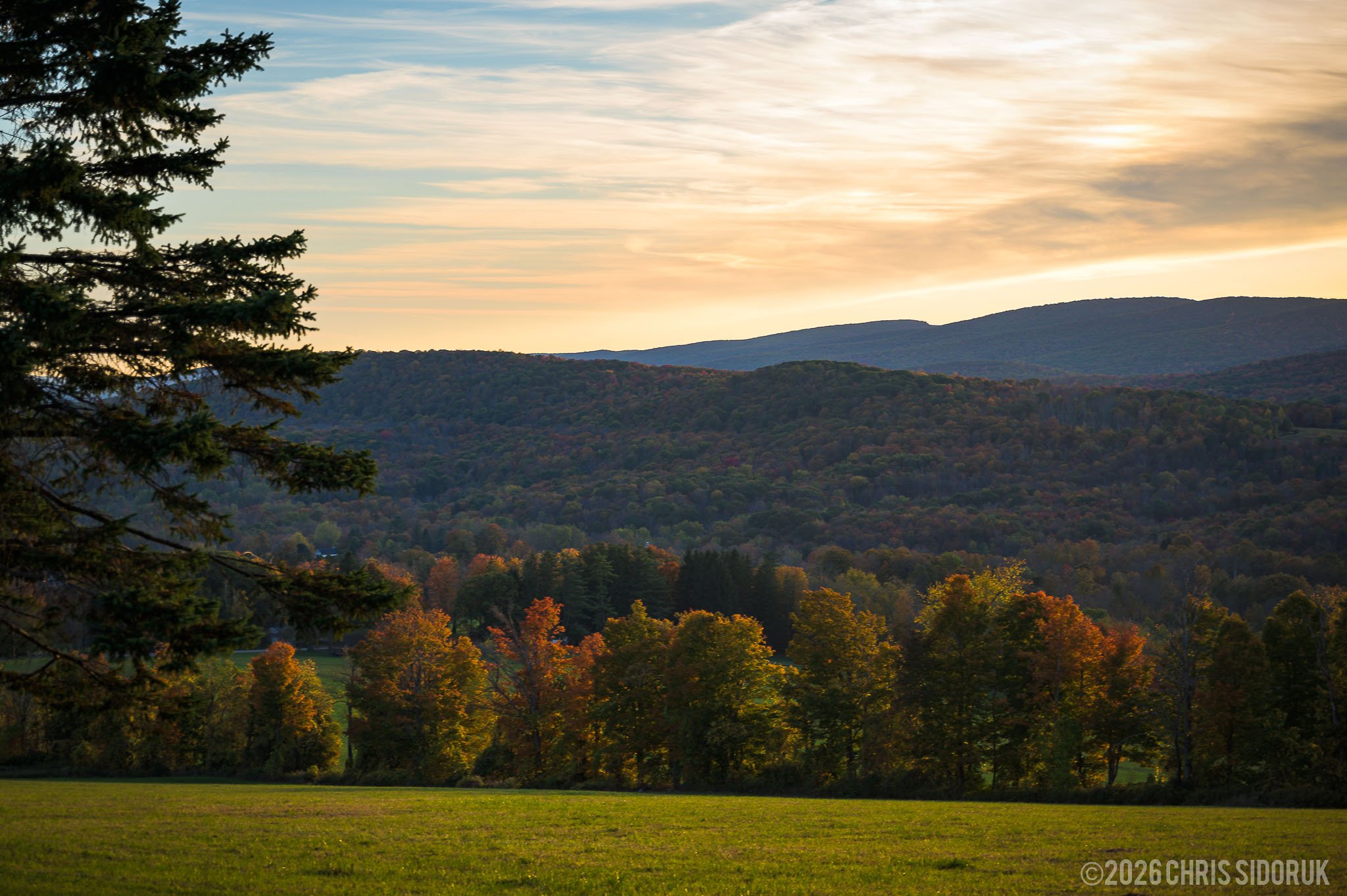
Standard wide focal length gives a more natural perspective
Telephoto Landscape Photography (70mm–200mm+)
Telephoto lenses are one of the most underused tools in landscape photography.
Many photographers automatically reach for a wide-angle lens.
But longer focal lengths can create some of the most compelling landscape images.
Common landscape telephoto ranges:
70-200mm
100-400mm
180-600mm
What Telephoto Lenses Do Best
Isolate Subjects
A telephoto lens lets you remove unnecessary elements and focus attention on what matters.
Examples:
Instead of photographing an entire mountain range, you can capture:
a single peak
a tree on a ridge
light hitting a distant slope
a small section of a landscape
This creates a cleaner, more intentional image.
Compress Distance
Compression is one of the defining characteristics of telephoto landscape photography.
When shooting with a longer lens:
distant objects appear closer together
layers become more prominent
the scene feels flatter and more graphic
This works beautifully for:
mountain ranges
foggy valleys
forests
layered hills
Telephoto Landscape Examples
Mountain Photography
A wide-angle lens may show the entire mountain.
A telephoto lens can show:
layers of ridges
snow patterns
light and shadow
atmospheric conditions
Sometimes the smaller view tells a stronger story.
Forest Photography
Forests can be difficult with wide lenses because everything competes for attention.
A telephoto lens helps simplify:
tree patterns
light beams
textures
repeating shapes
Sunrise and Sunset
Telephoto lenses are excellent when:
the sun is hitting distant mountains
clouds create patterns
light changes across the landscape
They allow you to capture details that would disappear in a wide composition.
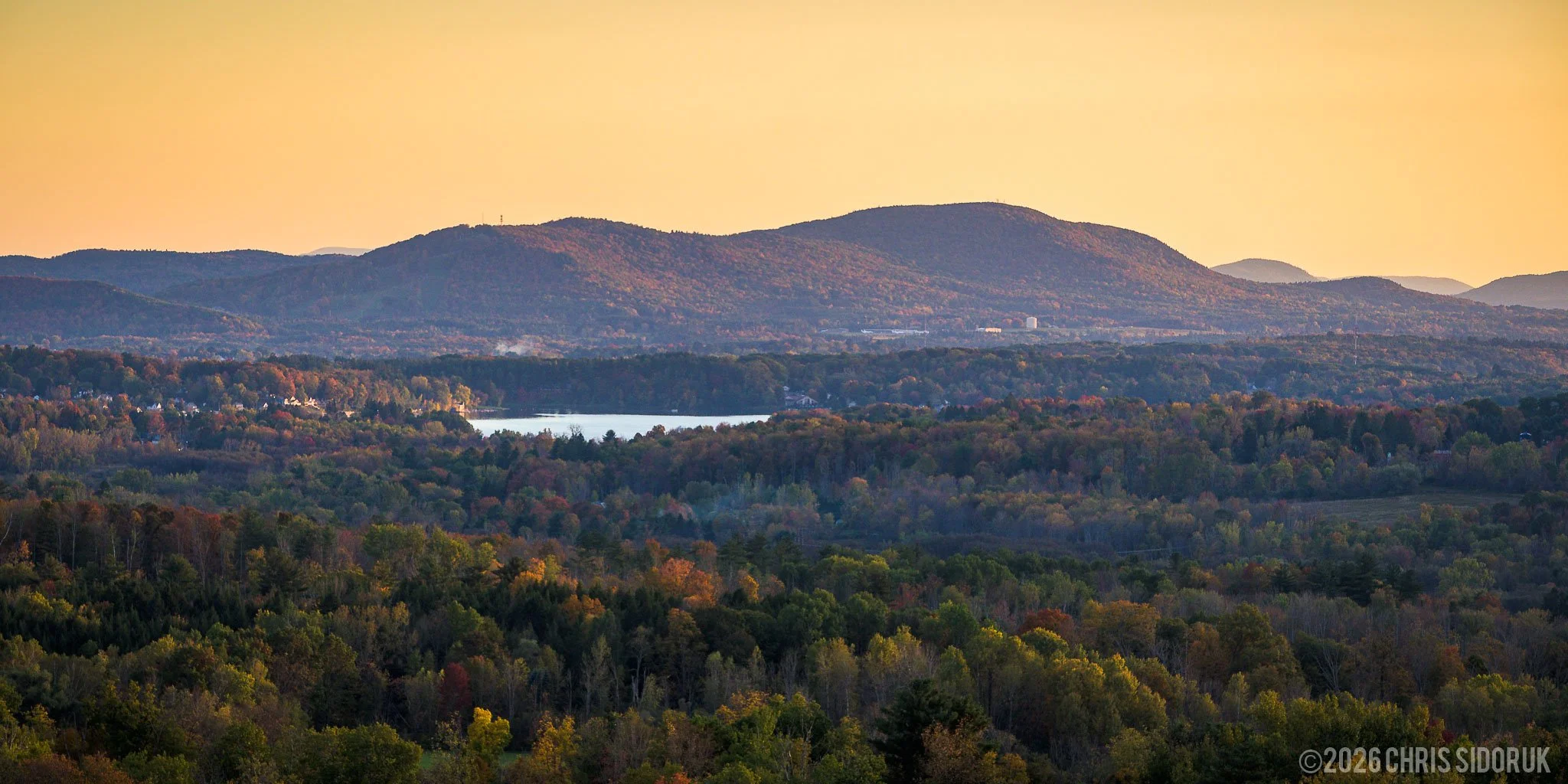
Telephoto lens compresses distance and isolates the subject
Choosing the Right Focal Length by Scene
The best focal length depends on what you are trying to emphasize.
Coastal Photography
Recommended:
14mm–35mm
Use wider lenses when you want:
waves
rocks
shoreline
dramatic skies
Consider:
70mm+
when you want:
lighthouse details
compressed waves
distant cliffs
Mountain Photography
Recommended:
24mm–200mm
Wide:
dramatic foreground
large environmental scenes
Telephoto:
mountain layers
isolated peaks
compression
Forest Photography
Recommended:
35mm–100mm
Forests are often visually busy.
A slightly longer focal length helps:
simplify the scene
remove distractions
emphasize patterns
Waterfall Photography
Recommended:
16mm–35mm
Wide lenses are useful for including:
foreground rocks
flowing water
surrounding environment
Longer lenses work for:
waterfall details
isolated sections
abstract compositions
Cityscape Photography
Recommended:
24mm–200mm
Wide:
architecture
skyline
urban environment
Telephoto:
compressed buildings
layered city scenes
details
A Simple Rule for Choosing Focal Length
Before changing lenses, ask:
What is the subject?
Large environment?
→ Go wider.
Specific detail?
→ Go longer.
Is there a strong foreground?
Yes?
→ Wide-angle can work well.
No?
→ Consider tightening the composition.
Is the scene cluttered?
Yes?
→ Telephoto may create a stronger image.
The Best Landscape Photographers Use Both
Wide-angle and telephoto lenses are not competitors.
They are creative tools.
Wide-angle asks:
"How can I show this entire place?"
Telephoto asks:
"What small part of this place tells the strongest story?"
Learning when to use each is what improves your landscape photography.
Do You Need Multiple Landscape Lenses?
One of the most common questions photographers ask is:
“Do I need multiple lenses for landscape photography?”
The answer depends on how you shoot.
You can create excellent landscape images with a single versatile lens. Many photographers start with one standard zoom and learn how to maximize composition, positioning, and light before expanding their kit.
However, having multiple focal lengths gives you more creative options.
A wider lens helps you capture:
dramatic foregrounds
expansive scenes
environmental landscapes
large architectural or coastal views
A telephoto lens helps you create:
tighter compositions
layered mountain scenes
isolated subjects
simplified images with fewer distractions
The goal is not owning every focal length.
The goal is having the right tools for the type of landscapes you photograph most often.
The Best Lens Setup for Landscape Photography
There is no perfect landscape photography kit, but some combinations provide excellent flexibility.
One-Lens Setup
For photographers who want to travel light:
24-70mm standard zoom
is one of the most practical choices.
It covers:
wide environmental landscapes
everyday scenes
details and tighter compositions
This range is especially useful for:
hiking
travel photography
national parks
city landscapes
A high-quality 24-70mm lens allows you to focus more on composition instead of constantly changing lenses.
Two-Lens Landscape Setup
For more flexibility, many landscape photographers use:
Wide-Angle Zoom
Examples:
14-24mm
16-35mm
17-35mm
Best for:
dramatic foregrounds
waterfalls
coastlines
night skies
large mountain scenes
Telephoto Zoom
Examples:
70-200mm
100-400mm
Best for:
distant mountains
wildlife mixed with landscapes
compressed scenes
abstract landscape details
This combination covers a huge range of landscape situations.
Professional Landscape Kit
Many experienced landscape photographers carry:
ultra-wide zoom
standard zoom
telephoto zoom
tripod
filters
This provides maximum creative flexibility.
However, more gear does not automatically create better photographs.
Strong composition matters more than carrying a larger camera bag.
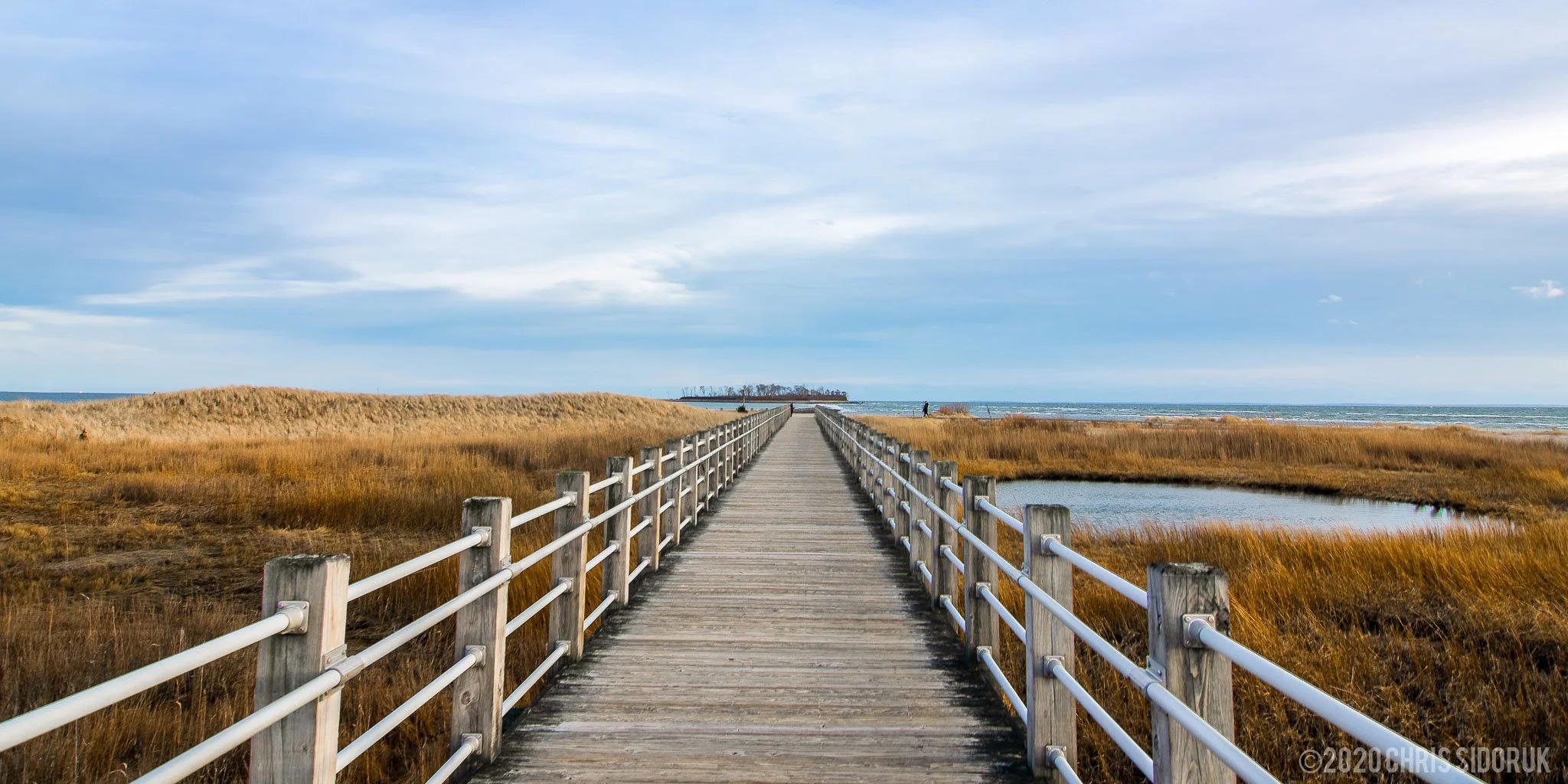
Ultra-wide focal length exaggerates foreground and depth
Recommended Landscape Photography Focal Lengths
A practical breakdown:
| Focal Length | Best Use |
|---|---|
| 14mm–20mm | Dramatic scenes, foreground emphasis, tight spaces |
| 20mm–35mm | General landscape photography, travel, environmental scenes |
| 35mm–70mm | Natural perspective, balanced compositions |
| 70mm–200mm | Mountains, layers, compression, isolated subjects |
| 200mm+ | Wildlife landscapes, distant details, abstract compositions |
14mm–20mm
Best Use: Dramatic scenes, foreground emphasis, tight spaces
20mm–35mm
Best Use: General landscape photography, travel, environmental scenes
35mm–70mm
Best Use: Natural perspective, balanced compositions
70mm–200mm
Best Use: Mountains, layers, compression, isolated subjects
200mm+
Best Use: Wildlife landscapes, distant details, abstract compositions
The best focal length is the one that helps you communicate the feeling of the scene.
Common Focal Length Mistakes
1. Always Shooting at the Widest Setting
Many photographers assume:
“More landscape in the frame = better landscape photo.”
But wider is not always better.
Ultra-wide lenses can create:
weak subjects
empty areas
distracting foregrounds
A wider frame only works when the composition supports it.
2. Ignoring Telephoto Lenses
A common mistake is leaving longer lenses at home.
Telephoto landscape photography can reveal compositions that are impossible with a wide lens.
Look for:
mountain layers
patterns in the landscape
distant subjects
compressed scenes
Some of the most powerful landscape images are created by removing information rather than adding more.
3. Using Focal Length Instead of Moving
A zoom lens is not a replacement for positioning.
Changing focal length does not create the same perspective change as physically moving your camera.
For stronger compositions:
walk closer
move farther away
change your height
explore different viewpoints
Your position and focal length work together.
4. Forgetting About Foreground
Wide-angle photography often depends on strong foreground elements.
Without a foreground:
images can feel flat
the viewer has no entry point
depth is reduced
Before shooting wide, ask:
“What pulls the viewer into this image?”
5. Choosing a Lens Before Finding the Composition
A better approach is:
Find the scene
Identify the subject
Decide what you want to emphasize
Choose the focal length
The lens should support the composition—not determine it.
My Landscape Photography Approach
When I arrive at a location, I rarely start by choosing a focal length.
I start by asking:
What is the strongest story this scene is telling?
Then I decide how to capture it.
Step 1: Look for the Main Subject
First identify:
mountain peak
coastline
waterfall
tree line
architectural element
light pattern
Without a clear subject, focal length becomes less important.
Step 2: Evaluate the Scene Depth
Ask:
Does the scene have:
a strong foreground?
interesting middle ground?
distant background?
If yes, a wider lens may work well.
If the scene is layered but distant, a telephoto may create a stronger image.
Step 3: Try Multiple Focal Lengths
One of the benefits of zoom lenses is experimenting.
A single scene can become completely different at:
16mm
35mm
70mm
200mm
Do not assume your first composition is the strongest one.
Step 4: Let Light Decide
The same location can require different focal lengths depending on conditions.
Examples:
Fog:
→ telephoto often works better by simplifying the scene
Golden hour:
→ wide lenses can emphasize foreground and depth
Dramatic clouds:
→ wider compositions can show scale
Flat light:
→ telephoto can isolate stronger details
Final Thoughts
The best focal length for landscape photography is not a single number.
It is the focal length that helps you communicate the scene.
A wide-angle lens can create:
depth
drama
scale
A standard zoom can provide:
flexibility
natural perspective
travel convenience
A telephoto lens can create:
compression
simplicity
powerful compositions
The biggest improvement usually comes from understanding how focal length changes your image—not simply buying a wider lens.
A strong landscape photographer learns to see possibilities at every focal length.
Frequently Asked Questions
What focal length is best for landscape photography?
Most landscape photographers use focal lengths between 14mm and 70mm, but telephoto lenses from 70mm–200mm and beyond can create some of the strongest landscape images.
Is 16mm too wide for landscape photography?
No. A 16mm lens is excellent for dramatic landscapes, foreground-heavy compositions, waterfalls, coastlines, and large scenes. However, it requires stronger composition because empty areas become more noticeable.
Is 24mm enough for landscape photography?
Yes. A 24mm lens is one of the most versatile landscape focal lengths. It provides a wide perspective without the extreme distortion of ultra-wide lenses.
Is a 70-200mm lens good for landscape photography?
Absolutely. A 70-200mm lens is one of the most useful landscape lenses because it allows you to isolate details, compress mountain layers, and simplify busy scenes.
Should landscape photographers use prime lenses or zoom lenses?
Both can work well.
Zoom lenses are popular because they provide flexibility when composing in the field.
Prime lenses can offer:
wider apertures
lower weight
excellent optical quality
For most landscape photographers, a high-quality zoom lens provides the most practical solution.
Does crop sensor change landscape focal length?
Yes. Crop sensors create a narrower field of view compared with full-frame cameras.
For example:
16mm on APS-C behaves approximately like 24mm full-frame
200mm on APS-C behaves approximately like 300mm full-frame
Crop sensors can actually be useful for wildlife and distant landscape details because they provide extra reach.
What lens should I buy first for landscape photography?
For most photographers, a versatile zoom lens is the best first choice.
Popular options include:
16-35mm wide-angle zoom
24-70mm standard zoom
24-120mm travel zoom
The best choice depends on your camera system and shooting style.
==========
All photographs © Chris Sidoruk. Images are protected by copyright and may not be used, copied, modified, or redistributed without written permission.
Continue Your Landscape Photography Education
Explore more guides:
