

Best ND Filters for Long Exposure Photography (2026 Guide)
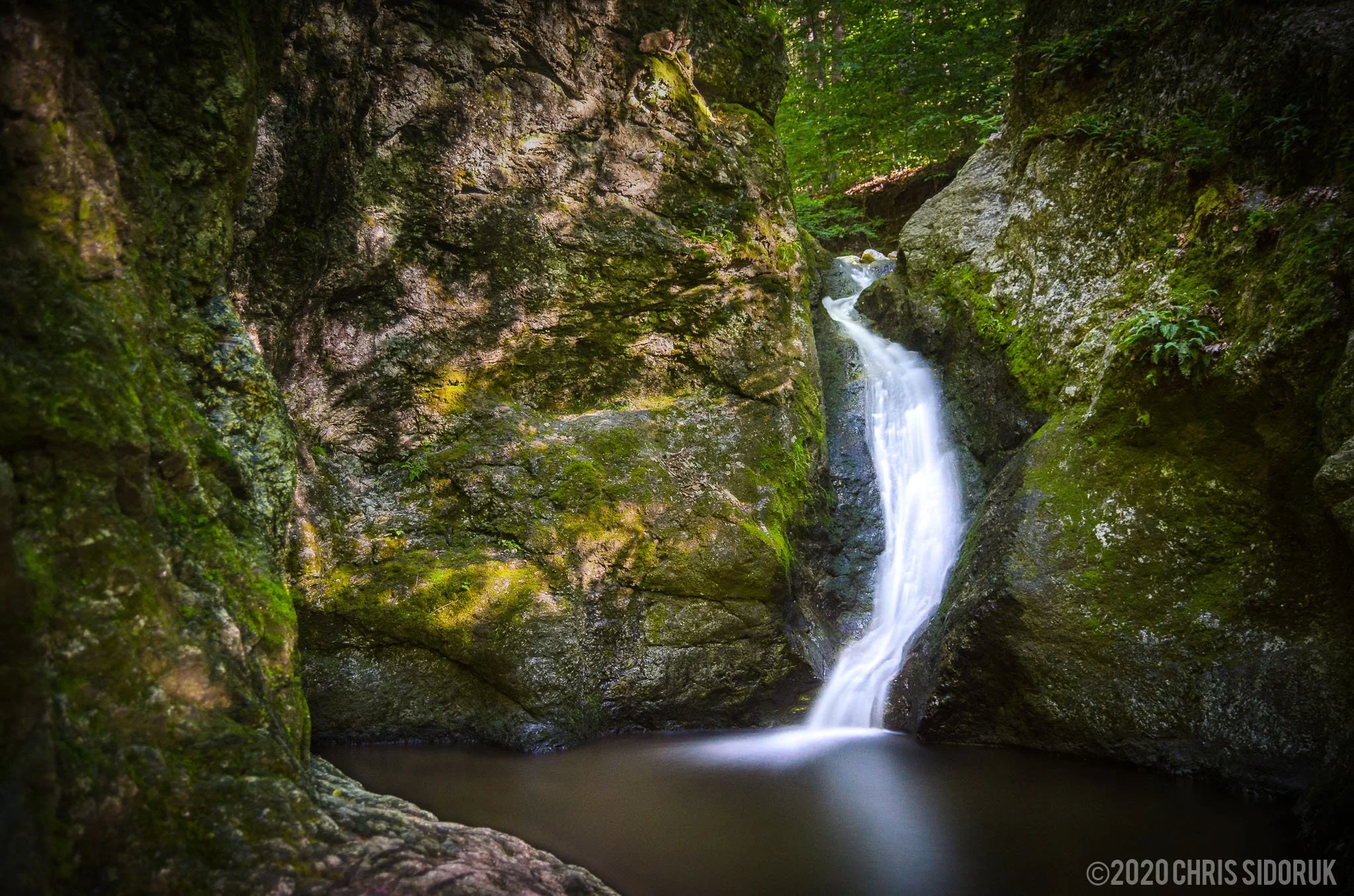
long exposure waterfall ND filter example | 18mm f/3.5 30.0 sec iso100
*Some links in this guide are affiliate links. If you purchase through them, it helps support my work at no extra cost to you.
==========
Neutral density (ND) filters are one of the most valuable accessories a landscape photographer can own.
Without one, bright daylight often forces you into fast shutter speeds that freeze moving water, clouds, and waves. An ND filter reduces the amount of light entering the lens, allowing you to use much slower shutter speeds without overexposing your image.
Whether you're photographing silky waterfalls, dramatic ocean scenes, flowing rivers, or streaking clouds over mountain landscapes, the right ND filter opens creative possibilities that simply aren't possible without one.
In this guide, you'll learn:
how ND filters work
which filter strength to buy first
the differences between fixed, variable, and graduated ND filters
which filters offer the best optical quality
how to avoid common mistakes
which ND filters are worth buying in 2026
If you're just getting started with long exposures, this guide will help you choose the right filter the first time.
What Is an ND Filter?
A neutral density (ND) filter is a darkened piece of optical glass that reduces the amount of light reaching your camera sensor without changing color.
Think of it as sunglasses for your camera.
By reducing incoming light, an ND filter allows you to use:
slower shutter speeds
wider apertures
lower ISO settings
even when shooting in bright daylight.
Unlike colored filters, a quality ND filter is designed to reduce light evenly across the visible spectrum while preserving accurate color and contrast.
Why Landscape Photographers Use ND Filters
Long exposures are one of the defining techniques of landscape photography.
An ND filter makes those exposures possible by allowing the shutter to remain open much longer.
Common uses include:
creating silky waterfalls
smoothing ocean waves
capturing flowing rivers
adding movement to clouds
removing people from busy scenes
photographing cityscapes after sunset
balancing bright daylight exposures
Without an ND filter, most of these effects simply can't be achieved during the day.
For a complete walkthrough of shooting techniques, see:
→ Long Exposure Landscape Photography Guide
Benefits of Using an ND Filter
A quality ND filter allows you to:
Create smooth, flowing water
Blur moving clouds
Capture longer shutter speeds in daylight
Shoot waterfalls without overexposure
Keep ISO low for maximum image quality
Use wider apertures in bright conditions
Produce cleaner, more artistic landscape photographs
While ND filters are most closely associated with landscape photography, they're also widely used for architecture, cityscapes, seascapes, and video production.
Types of ND Filters
Not every neutral density filter serves the same purpose.
Understanding the different styles makes choosing the right one much easier.
Fixed ND Filters
A fixed ND filter blocks a predetermined amount of light.
Examples include:
3-stop
6-stop
10-stop
15-stop
Advantages:
highest optical quality
minimal color cast
excellent sharpness
consistent exposure
For serious landscape photography, fixed ND filters remain the preferred option.
Variable ND Filters
Variable ND filters allow you to rotate the filter to change its strength.
Advantages:
extremely convenient
one filter replaces several
ideal for video
quick exposure adjustments
Disadvantages:
can introduce color shifts
reduced image quality at stronger settings
some develop the "X-pattern" at maximum density
Variable ND filters are excellent for filmmaking but generally aren't the first choice for long-exposure landscape photography.
Graduated ND Filters
Graduated ND (GND) filters are dark on one half and clear on the other.
They're used when the sky is much brighter than the foreground.
Typical uses include:
sunrise
sunset
mountain landscapes
coastal scenes
Rather than slowing shutter speed dramatically, graduated filters help balance exposure across the frame.
Square Filter Systems
Instead of threading directly onto the lens, square filter systems use a holder attached to an adapter ring.
Popular systems include:
NiSi
Lee Filters
Kase
Breakthrough Photography
Advantages include:
stacking multiple filters
using one filter across multiple lenses
adjusting graduated filters precisely
easier landscape workflow
Although more expensive initially, square systems are popular among dedicated landscape photographers.
ND Filter Strength Guide
One of the biggest questions photographers ask is:
"Which ND filter should I buy first?"
The answer depends on the type of long exposures you want to create.
| ND Filter | Stops | Best For |
|---|---|---|
| ND8 | 3 Stops | Streams, small waterfalls, overcast conditions |
| ND64 | 6 Stops | Waterfalls, rivers, sunrise, sunset |
| ND1000 | 10 Stops | Bright daylight long exposures |
| ND32000 | 15 Stops | Extremely long daytime exposures |
ND8
Stops: 3 Stops
Best For: Streams, small waterfalls, overcast conditions
ND64
Stops: 6 Stops
Best For: Waterfalls, rivers, sunrise, sunset
ND1000
Stops: 10 Stops
Best For: Bright daylight long exposures
ND32000
Stops: 15 Stops
Best For: Extremely long daytime exposures
3-Stop ND Filters
A 3-stop filter is useful when you want subtle movement.
Ideal for:
flowing streams
gentle waterfalls
handheld video
slightly slower shutter speeds
6-Stop ND Filters
A 6-stop filter provides excellent flexibility.
It's especially useful for:
waterfalls
rivers
sunrise
sunset
cloudy conditions
Many photographers consider a 6-stop filter the most versatile option.
10-Stop ND Filters
For most landscape photographers, a 10-stop ND filter is the single best investment.
It allows you to create:
silky waterfalls
glass-like lakes
smooth ocean waves
dramatic cloud streaks
long daytime exposures lasting several minutes
If you're only buying one ND filter, this is the one I recommend.
Which ND Filter Should You Buy First?
If you're new to long exposure photography:
Buy a quality 10-stop (ND1000) filter.
It offers:
maximum creative flexibility
works in bright daylight
creates the most dramatic effects
remains useful even as your skills improve
Later, you can add a 6-stop filter for sunrise, sunset, and lower-light conditions.
Best ND Filters for Long Exposure Photography (2026)
After comparing optical quality, durability, color accuracy, and overall value, these are my top recommendations.
Best Overall
Breakthrough Photography X4 ND
Excellent optical quality, outstanding color accuracy, weather-resistant construction, and one of the best-performing filters available.
Best Color Accuracy
Outstanding neutral color reproduction with excellent sharpness and minimal color cast.
Best Premium Classic
Legendary German build quality with excellent coatings and dependable long-term performance.
Best Budget Option
A strong choice for photographers getting started without spending premium prices.
Best Value Alternative
Excellent balance between price, optical performance, and availability.
ND Filter Comparison Table
| Filter | Best For | Color Accuracy | Build Quality | Value |
|---|---|---|---|---|
| Breakthrough Photography X4 | Best Overall | ★★★★★ | ★★★★★ | ★★★★☆ |
| NiSi True Color | Landscapes | ★★★★★ | ★★★★★ | ★★★★☆ |
| B+W ND | Professional Use | ★★★★★ | ★★★★★ | ★★★★☆ |
| Hoya ProND | Best Value | ★★★★☆ | ★★★★☆ | ★★★★★ |
| K&F Concept | Budget Buyers | ★★★☆☆ | ★★★★☆ | ★★★★★ |
Breakthrough Photography X4
Best For: Best Overall
Color Accuracy: ★★★★★
Build Quality: ★★★★★
Value: ★★★★☆
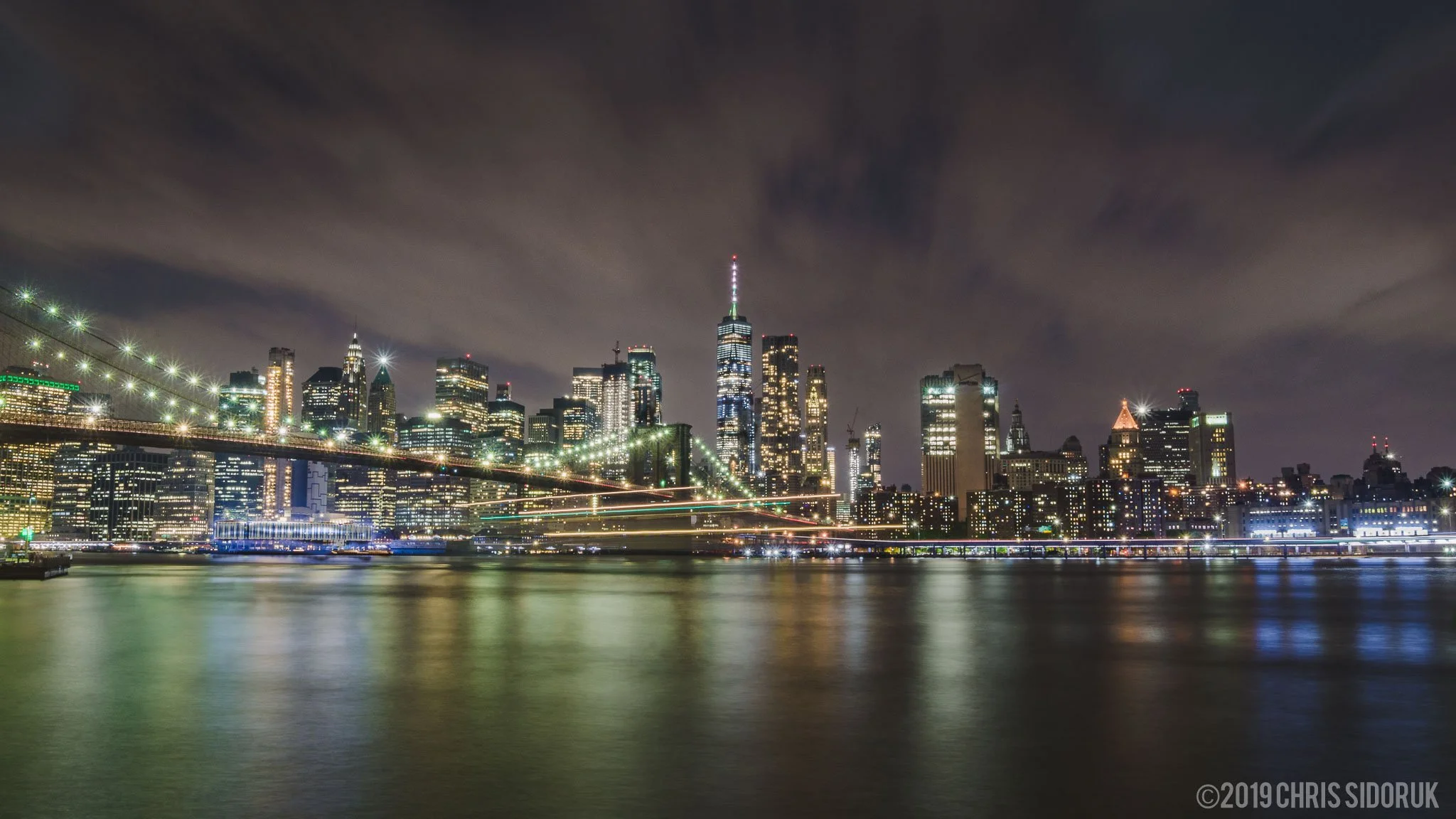
New York City Skyline long exposure with ND filter | 18mm f/22 61 sec iso100
Detailed ND Filter Reviews
Choosing the right ND filter is not just about how much light it blocks.
A good ND filter should:
maintain sharpness
preserve accurate colors
minimize reflections
handle bright sunlight
hold up over years of use
Cheap filters can technically reduce light, but they often introduce problems like color shifts, reduced contrast, softness, and uneven exposure.
For landscape photography, optical quality matters because long exposures often involve detailed scenes where every bit of clarity counts.
Breakthrough Photography X4 ND Filter (Best Overall)
Breakthrough Photography's X4 ND filters are among the strongest choices for photographers who want professional-level results without moving into more expensive filter systems.
Why It Stands Out
excellent color neutrality
premium optical glass
durable construction
strong coatings
excellent sharpness
The biggest advantage is consistency.
A quality ND filter should disappear from the image, and the X4 series does exactly that.
You get the creative effect of a long exposure without spending time correcting heavy color shifts in post-processing.
Best For
landscape photographers
waterfalls
ocean photography
professional print work
photographers who want a filter they can keep for years
Potential Drawback
The price is higher than entry-level filters.
However, because filters often last longer than camera bodies, investing in quality glass can make sense.
Pricing and availability:
NiSi True Color ND Filters (Best for Landscape Photography)
NiSi has become one of the most respected names in landscape photography filters.
The True Color series focuses on solving one of the biggest complaints with ND filters:
color accuracy.
Why It Stands Out
very neutral color reproduction
excellent optical performance
strong coating technology
popular among landscape photographers
For photographers shooting sunrise, sunset, and high-detail landscapes, accurate colors are extremely important.
A strong ND filter should not turn a natural sunset into an unwanted blue or magenta image.
Best For
landscape photographers
travel photographers
long exposure specialists
photographers who prioritize color accuracy
Potential Drawback
Premium pricing compared with budget filters.
Pricing and availability:
B+W ND Filters (Best Professional Classic)
B+W has been a trusted name in photographic filters for decades.
Their ND filters are known for:
excellent glass quality
reliable coatings
professional durability
They are especially popular among photographers who want a simple, dependable filter without unnecessary features.
Best For
professional photographers
landscape shooters
photographers already using B+W filters
Potential Drawback
Premium pricing and fewer beginner-friendly options.
Pricing and availability:
Hoya ProND Series (Best Value)
Hoya offers a strong balance between performance and price.
While not always positioned as the most premium option, the ProND series delivers excellent results for many photographers.
Why It Stands Out
good optical quality
reliable coatings
affordable compared with premium brands
Best For
enthusiasts
photographers upgrading from beginner filters
landscape photographers who want quality without premium pricing
Pricing and availability:
K&F Concept ND Filters (Best Budget Option)
K&F Concept has become popular because it provides affordable access to filter systems without requiring a large investment.
Why It Stands Out
affordable pricing
wide availability
good beginner performance
Best For
photographers learning long exposures
beginners building their first landscape kit
occasional use
Where It Falls Short
Compared with premium filters:
color accuracy may not be as consistent
coatings may be less advanced
stronger densities may show more limitations
For casual shooting, though, they can be a practical starting point.
Pricing and availability:
PolarPro QuartzLine ND Filters (Premium Alternative)
PolarPro is well known among creators who shoot both photography and video.
The QuartzLine series focuses on:
premium glass
durable construction
strong coatings
hybrid photo/video workflows
Best For
hybrid shooters
photographers who also shoot video
creators using mirrorless cameras
Potential Drawback
Like other premium filters, the cost is higher.
Pricing and availability:
👉 Check prices on Amazon
👉 View on Adorama
Screw-In vs Square ND Filter Systems
One of the biggest decisions photographers face is choosing between traditional screw-in filters and square filter systems.
Both can produce excellent results.
The better choice depends on your shooting style.
Screw-In ND Filters
Screw-in filters attach directly to the front of your lens.
Advantages
simple setup
compact
affordable
easy to carry
excellent for beginners
Disadvantages
each lens may require a different size
harder to stack multiple filters
graduated filters are less flexible
For many photographers, screw-in filters are the best place to start.
Square Filter Systems
Square systems use a holder and adapter ring.
Popular systems include:
NiSi
Lee Filters
Kase
Breakthrough Photography
Advantages
one filter system works across multiple lenses
easier graduated filter adjustments
better for advanced landscape workflows
easier filter stacking
Disadvantages
higher initial cost
larger setup
more accessories to carry
Which System Should You Choose?
Choose screw-in filters if you:
are getting started
primarily use one or two lenses
want the simplest setup
Choose a square system if you:
shoot landscapes regularly
use multiple lenses
want maximum control
plan to expand your filter collection
Variable ND vs Fixed ND Filters
Variable ND filters are popular because they offer convenience.
Instead of carrying multiple filters, you can rotate one filter to change the strength.
However, convenience comes with tradeoffs.
Variable ND Advantages
quick adjustments
fewer filters to carry
useful for video
excellent for run-and-gun shooting
Variable ND Disadvantages
At stronger settings, some variable ND filters can introduce:
uneven darkening
color shifts
reduced image quality
the "X-pattern" effect
For serious landscape photography, fixed ND filters usually provide better results.
Fixed ND Recommendation
For landscape photography:
fixed ND filters are still the best choice.
A simple setup:
ND64 (6-stop)
ND1000 (10-stop)
will cover most situations.
Filter Size Guide
Before buying an ND filter, check your lens filter diameter.
Common sizes include:
67mm
72mm
77mm
82mm
The filter size is usually printed on the front of your lens.
Example:
A lens marked:
24-70mm f/2.8 — 82mm
requires an 82mm filter.
Step-Up Rings
A useful money-saving strategy:
Buy one larger filter and use step-up rings.
Example:
Instead of buying:
67mm ND filter
72mm ND filter
77mm ND filter
you can buy one premium 82mm filter and adapt it to smaller lenses.
This is especially helpful for photographers with multiple lenses.
Best ND Filter for Different Types of Photography
Best ND Filter for Waterfalls
Recommended:
ND64 (6-stop) or ND1000 (10-stop)
Waterfalls often look best with exposures between:
1/2 second
several seconds
A 6-stop filter is often enough in softer light.
A 10-stop filter gives more flexibility in bright conditions.
Best ND Filter for Ocean Photography
Recommended:
ND1000 (10-stop)
Ocean waves benefit from longer exposures that create:
smooth water texture
misty movement
simplified compositions
Best ND Filter for Cloud Movement
Recommended:
ND1000 (10-stop)
Longer exposures allow clouds to stretch across the frame and add direction to the image.
Best ND Filter for Sunrise and Sunset
Recommended:
ND64 (6-stop)
During golden hour, there is usually less available light.
A 10-stop filter may be too strong unless you are intentionally creating very long exposures.
Best ND Filter for Cityscapes
Recommended:
ND1000 (10-stop)
Great for:
removing moving people
smoothing traffic
creating dramatic architectural images
My Recommended Starter Setup
For most landscape photographers:
First Filter:
10-stop ND1000
Best creative flexibility.
Second Filter:
6-stop ND64
Better for:
waterfalls
sunrise
sunset
lower-light conditions
Optional:
Polarizer
A circular polarizer is not a replacement for an ND filter, but it can complement one by reducing reflections and improving contrast.
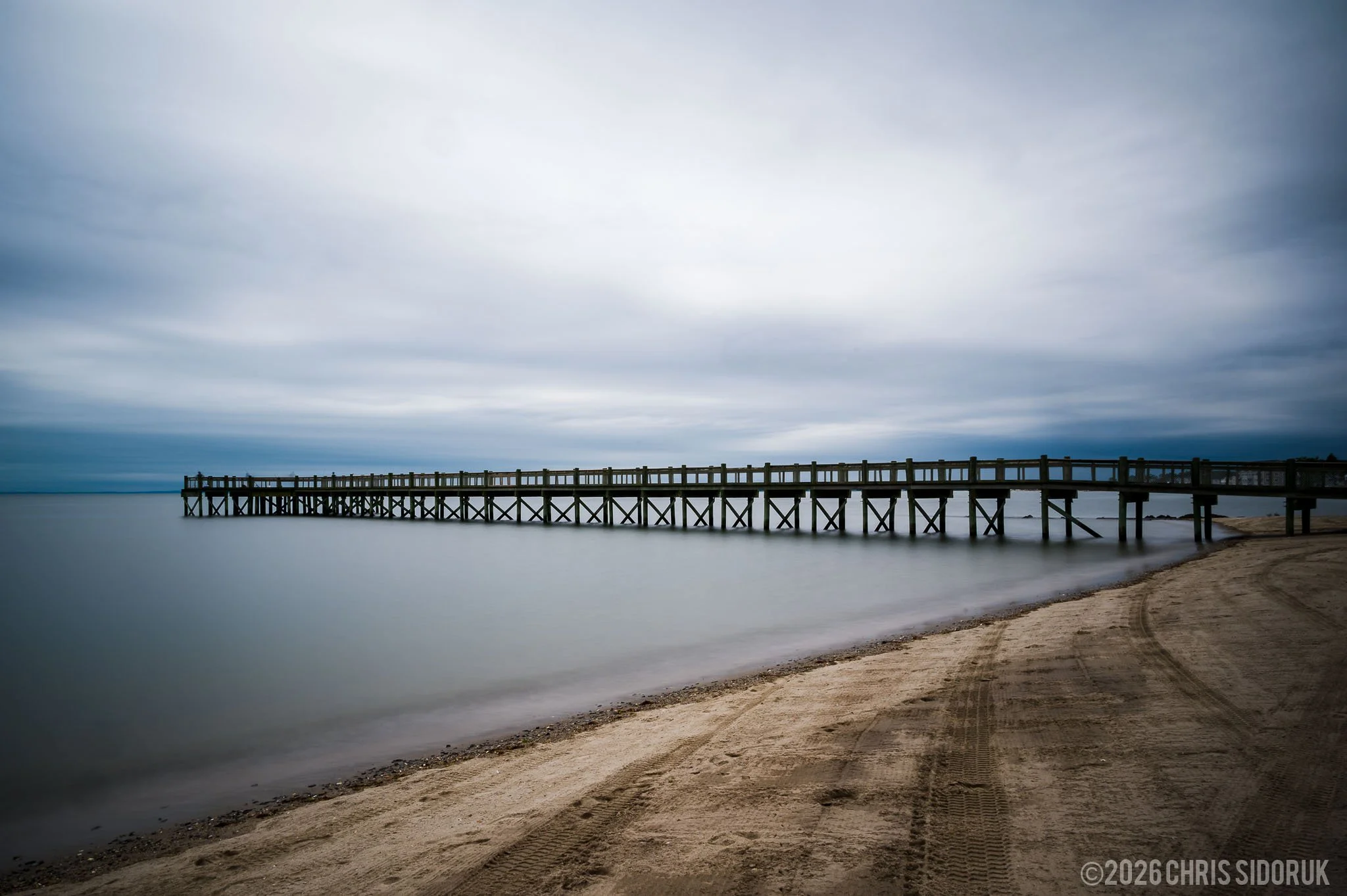
Fishing Pier at Walnut Beach, Milford, CT. | 24mm f/22 25.0 sec iso50
Real-World Long Exposure Workflow With ND Filters
A good ND filter helps create the image, but the process matters just as much.
Long exposures require more planning than normal handheld photography because once you reduce light by several stops, small mistakes become much more obvious.
A reliable workflow looks like this:
1. Compose Your Image First
Before attaching the ND filter:
choose your composition
set your focal length
adjust your tripod position
check your horizon
remove distractions
A dark ND filter makes it much harder to see through the viewfinder, especially with stronger filters like ND1000.
2. Focus Before Attaching the Filter
This is one of the most important steps.
With a strong ND filter attached, autofocus may struggle because the camera receives significantly less light.
The easiest workflow:
compose your shot
autofocus normally
switch to manual focus
attach the ND filter
take the long exposure
This prevents the camera from hunting or changing focus during the exposure.
3. Meter Your Exposure Without the Filter
Take a normal exposure reading first.
Example:
Without an ND filter:
ISO 100
f/11
1/30 second
Then calculate the longer shutter speed after adding the ND filter.
4. Attach the ND Filter
Once focus and composition are set:
attach the filter
verify settings
adjust shutter speed
capture the image
For 10-stop filters, exposure times can quickly move from fractions of a second into many seconds or even minutes.
5. Review and Adjust
Long exposures often require experimentation.
Check:
highlights
motion blur
histogram
sharpness
unwanted reflections
The first shot is usually a starting point.
ND Filter Exposure Calculations
ND filters work by reducing light in measured stops.
Each stop cuts the amount of light entering the camera in half.
For example:
A 3-stop ND filter reduces light by 8 times.
A 10-stop ND filter reduces light by 1,024 times.
Common ND Exposure Examples
Starting exposure:
1/125 second
With ND8 (3 stops):
→ 1/15 second
With ND64 (6 stops):
→ 1/2 second
With ND1000 (10 stops):
→ 8 seconds
10-Stop ND Filter Quick Chart
| Without Filter | ND1000 Exposure |
|---|---|
| 1/250 sec | 4 seconds |
| 1/125 sec | 8 seconds |
| 1/60 sec | 15 seconds |
| 1/30 sec | 30 seconds |
| 1 second | ~17 minutes |
1/250 sec
ND1000 Exposure: 4 seconds
1/125 sec
ND1000 Exposure: 8 seconds
1/60 sec
ND1000 Exposure: 15 seconds
1/30 sec
ND1000 Exposure: 30 seconds
1 second
ND1000 Exposure: ~17 minutes
A 10-stop filter can completely change the look of a scene.
Shooting Long Exposures in Different Conditions
Bright Midday Sun
Best choice:
ND1000 (10-stop)
Allows:
several-second exposures
smoother water
moving clouds
creative motion effects
Overcast Weather
Best choice:
ND64 (6-stop)
Cloudy conditions already reduce available light, so a 10-stop filter may create excessively long exposures.
Golden Hour
Best choice:
ND64 or ND1000 depending on the effect
For subtle motion:
ND64
For dramatic cloud movement:
ND1000
Do Expensive ND Filters Actually Matter?
This is one of the biggest questions photographers ask.
The answer:
Yes, but not always.
A premium ND filter does not magically create better compositions.
It does provide:
better color accuracy
better sharpness
fewer reflections
more consistent results
For photographers who occasionally shoot long exposures, a budget filter may be fine.
For photographers who regularly create landscape images for prints, licensing, or professional work, investing in quality filters makes more sense.
Your filter is part of your optical system.
Common ND Filter Mistakes
Using a Cheap Filter on Expensive Glass
A high-end lens paired with a poor-quality filter can reduce image quality.
Common issues:
softness
color shifts
reduced contrast
Choosing the Wrong ND Strength
Too weak:
exposure is still too fast
little motion effect
Too strong:
unnecessary long exposures
difficult focusing
more workflow complexity
Forgetting to Cover the Viewfinder
During long exposures, especially on DSLR cameras, light can enter through the viewfinder and affect exposure.
This is more common in:
bright sunlight
very long exposures
Mirrorless cameras generally avoid this issue because the electronic viewfinder blocks external light.
Leaving Image Stabilization On
When using a tripod, some cameras and lenses may perform better with stabilization disabled.
Check your camera system.
Not Using a Tripod
A long exposure requires stability.
A good setup includes:
sturdy tripod
remote shutter release or timer
stable surface
Not Checking the Histogram
Long exposures can still clip highlights.
Always review:
bright areas
reflections
sky detail
Cleaning and Maintaining ND Filters
A quality ND filter can last for years if properly maintained.
Best practices:
store filters in protective cases
avoid touching the glass
remove dust before wiping
use microfiber cloths
replace damaged filters
Small scratches may not always be visible, but coatings can be affected over time.
Are ND Filters Useful for Video?
Yes.
ND filters are extremely important for video because they allow you to maintain proper shutter speed while controlling exposure.
For example:
Shooting 24fps video:
Recommended shutter speed:
approximately 1/50 second
In bright daylight, the image may be overexposed.
An ND filter allows you to keep:
cinematic motion blur
proper exposure
wider apertures
This is why professional filmmakers use ND filters constantly.
Final Recommendations
If you only buy one ND filter:
Best Single Filter Choice
10-stop ND1000
Why:
works in bright conditions
creates dramatic long exposures
provides the most creative flexibility
Best Two-Filter Landscape Setup
For most photographers:
ND64 (6-stop)
For:
waterfalls
sunrise
sunset
moderate motion blur
ND1000 (10-stop)
For:
daylight long exposures
oceans
clouds
cityscapes
Best Overall Brands
Best Premium Choice
Best balance of:
optical quality
durability
color accuracy
Best Landscape Specialist
Excellent for:
serious landscape work
color-critical images
Best Professional Classic
Reliable and proven.
Best Budget Choice
Good entry point for beginners.
Final Thoughts
ND filters are one of the rare photography accessories that can genuinely change the type of images you create.
A better camera will not automatically create:
silky waterfalls
moving clouds
smooth ocean textures
dramatic cityscapes
An ND filter gives you control over time itself.
For landscape photographers, a quality ND filter is not just another accessory.
It is a creative tool.
Frequently Asked Questions
What ND filter should I buy first?
A 10-stop ND1000 filter is usually the best first purchase because it provides the widest range of creative long exposure possibilities.
Is a 6-stop or 10-stop ND filter better?
Neither is universally better.
A 6-stop filter is more practical for waterfalls, sunrise, and lower-light conditions.
A 10-stop filter is better for dramatic daylight long exposures.
Can I stack ND filters?
Yes, but stacking multiple filters can introduce:
vignetting
reflections
reduced image quality
A stronger single filter is usually preferable.
Do ND filters reduce image quality?
High-quality ND filters have minimal impact.
Lower-quality filters may introduce:
color cast
softness
reduced contrast
What ND filter is best for waterfalls?
A 6-stop or 10-stop ND filter works well depending on lighting conditions and the desired motion effect.
Do I need a polarizer and ND filter?
They serve different purposes.
A polarizer reduces reflections and improves contrast.
An ND filter reduces light and controls shutter speed.
Many landscape photographers use both.
Can I use an ND filter on a mirrorless camera?
Yes.
ND filters work with DSLR and mirrorless cameras.
They are especially useful with modern mirrorless systems because many cameras are also used for hybrid photo and video workflows.
==========
All photographs © Chris Sidoruk. Images are protected by copyright and may not be used, copied, modified, or redistributed without written permission.
Landscape Photography Hub:
Camera Guides
→ Best Cameras for Landscape Photography
Lens Guides
→ Best Lenses for Landscape Photography
Accessory Guides
→ Tripods
Technique Guides
→ Long Exposure Photography
→ Sunrise Photography
→ Golden Hour Photography
Location Guides
→ Mount Greylock
→ Silver Sands State Park
→ Nubble Lighthouse
