

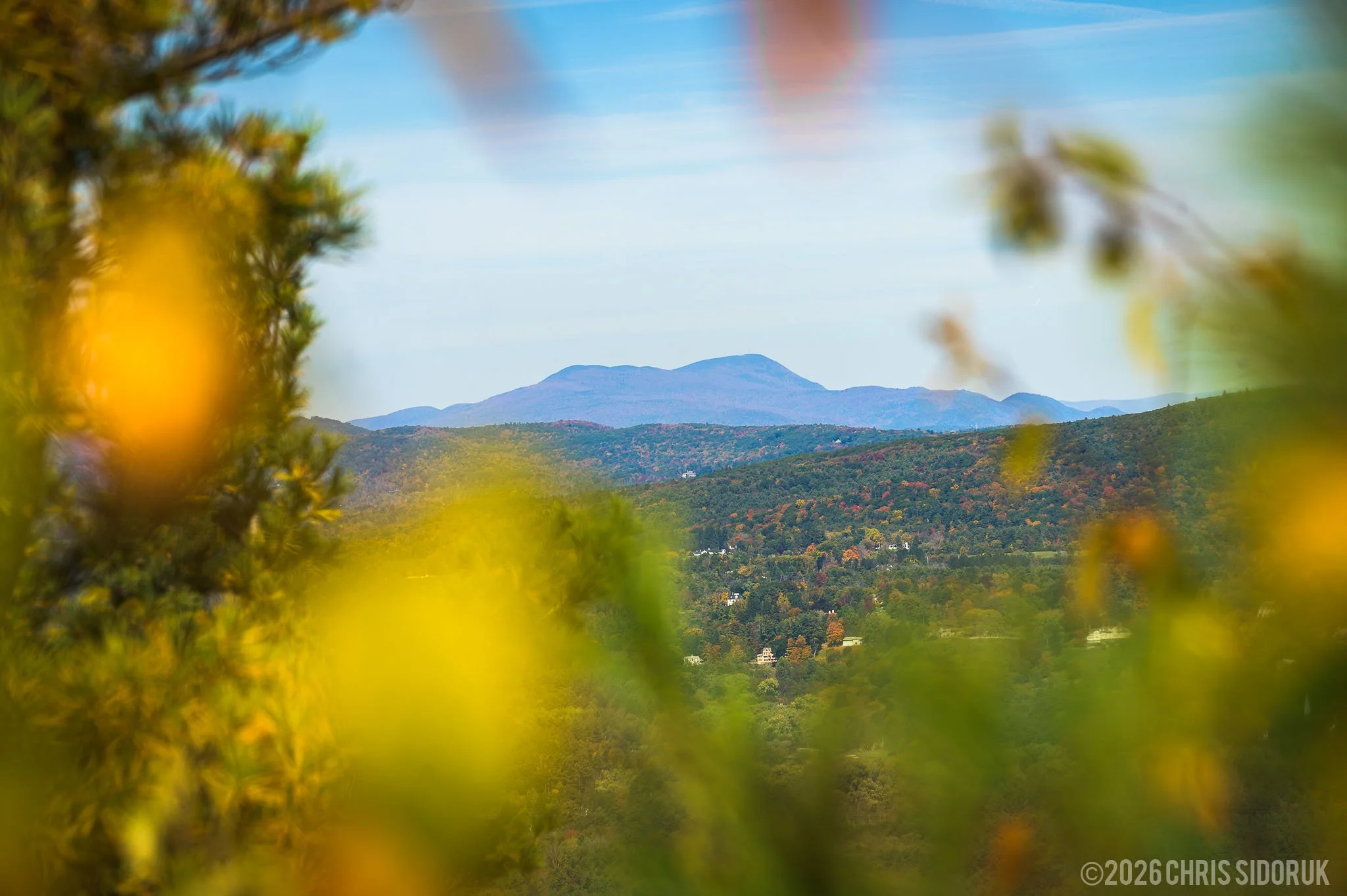
Mount Greylock viewed from Monument Mountain. | © 2026 Chris Sidoruk [License this image]
==========
Last Update: October 29, 2026
Images Published: August 9, 2026, Photographed: October 2024
At 3,489 feet (1,063 meters), Mount Greylock is the highest point in Massachusetts and one of the most recognizable landmarks in the Berkshires. Its summit views and surrounding hardwood forests make it a compelling subject for autumn landscape photography.
This collection documents fall foliage around Mount Greylock during the first week of October 2024. At the time, autumn color had developed across portions of the higher terrain, while lower slopes and valleys still retained patches of green.
The result was a varied landscape of yellow and orange hardwood forests, remaining summer foliage, and layered Berkshire ridgelines. Rather than a uniformly colored canopy, the photographs capture different stages of the seasonal transition across the mountain and surrounding countryside.
This article is a photographic record of conditions observed in October 2024, not a current foliage report or a prediction of peak dates for future years.
For year-round viewpoints, access information, and additional photography opportunities, see the complete Mount Greylock photography guide.
Fall Foliage Snapshot
| Category | Details |
|---|---|
| Location | Berkshire County, Massachusetts |
| Elevation | 3,489 ft (1,063 m) |
| Date Photographed | First Week of October 2024 |
| Fall Color | Near Peak Transition |
| Best Subjects | Summit views, layered ridgelines, autumn forests |
| Conditions | Mixed yellows, oranges and remaining greens |
| Photography Style | Landscape, telephoto compression, scenic overlooks |
Location
Berkshire County, Massachusetts
Elevation
3,489 ft (1,063 m)
Date Photographed
First Week of October 2024
Fall Color
Near Peak
Best Subjects
Summit views, layered ridgelines, autumn forests
Conditions
Mixed yellows, oranges and remaining greens
Photography Style
Landscape, telephoto compression, scenic overlooks
Mount Greylock in Early October
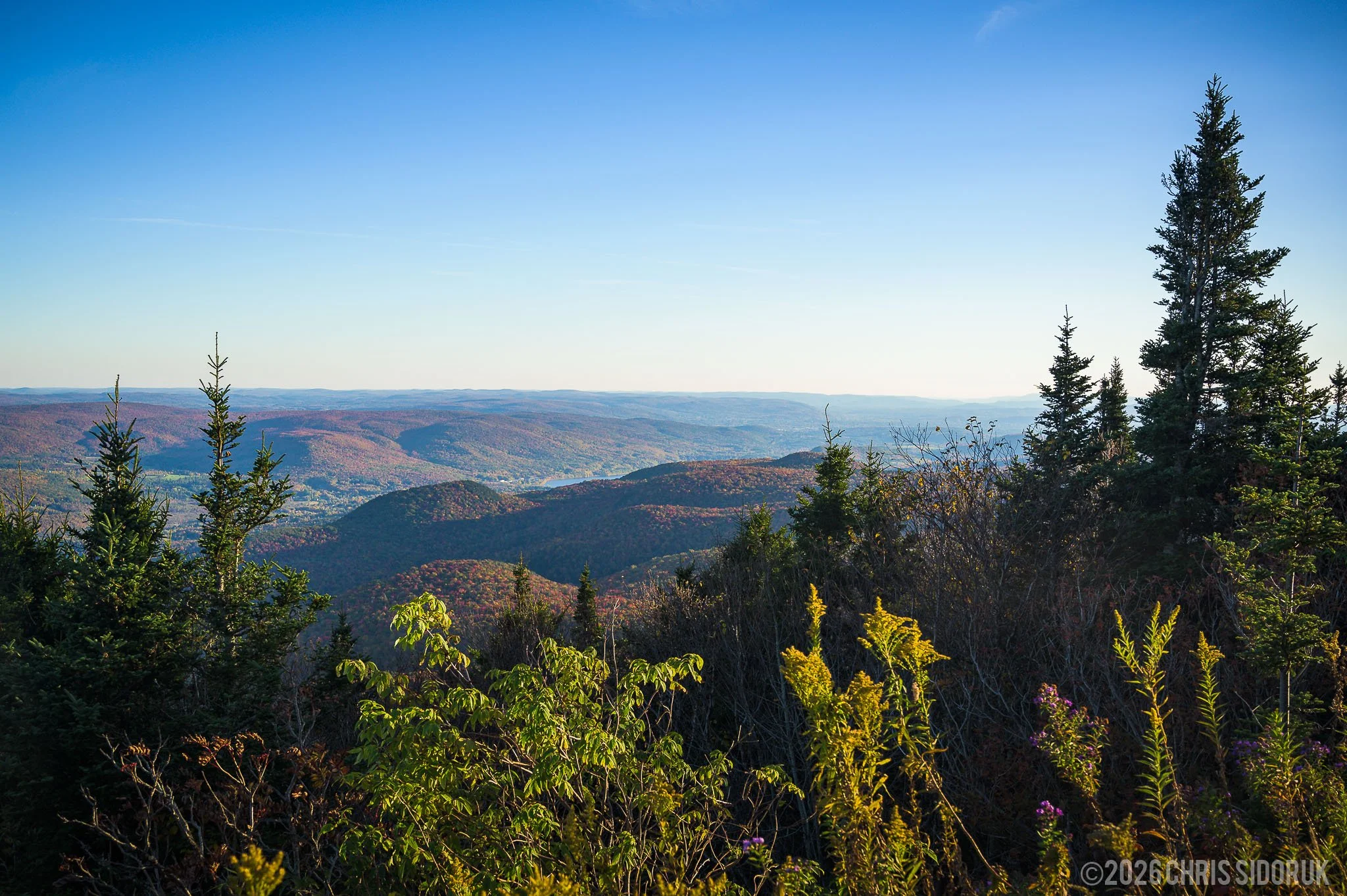
Rolling hills and valleys in the Berkshires viewed from the summit of Mount Greylock. | © 2026 Chris Sidoruk [License this image]
Fall color develops unevenly across Mount Greylock and the surrounding Berkshires. Elevation, exposure, and local weather conditions all influence when individual areas begin to change, allowing several stages of autumn color to appear within the same view.
During the first week of October 2024, yellows and oranges were prominent across portions of the landscape, while lower areas still contained patches of green. The contrast between these colors gave the hills a layered appearance, with individual ridgelines and forests remaining visually distinct.
For landscape photography, this mixture created opportunities to emphasize depth and contrast. Remaining green foliage separated areas of autumn color, while the rolling terrain revealed how the season was progressing across the region.
The photographs preserve one stage of the 2024 foliage season, before subsequent weather and leaf drop changed the appearance of the landscape.
| Area | Conditions observed in early October 2024 | Higher Elevations | More advanced autumn color in some areas |
|---|---|
| Mid Elevations | Prominent yellows and oranges |
| Lower slopes and valleys | Patches of green foliage remained |
These observations describe the conditions visible in this collection, not a general forecast for every year.
Summit Views and Layered Ridgelines
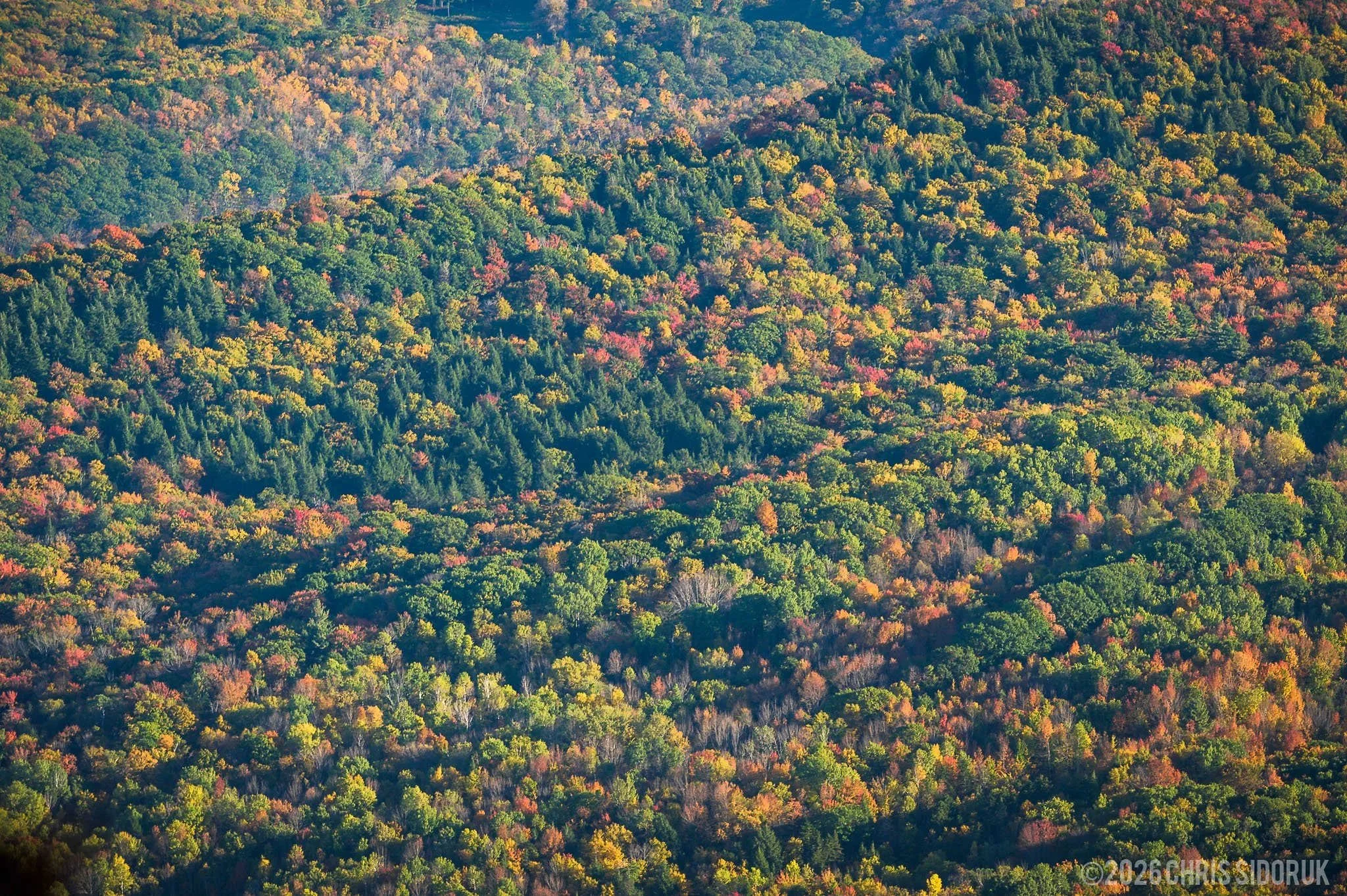
A close up view of the Berkshires’ rolling hills in early October. | © 2026 Chris Sidoruk [License this image]
From elevated viewpoints around Mount Greylock, the Berkshire hills stretch outward in long, rolling layers. These views reveal the scale of western Massachusetts and show how forests, valleys, and distant ridgelines change throughout the autumn season.
In early October 2024, the differences between elevations were particularly noticeable. Brighter hardwood foliage contrasted with darker evergreen areas and lower terrain where green leaves remained.
The low angle of the autumn sun also influenced the appearance of the landscape. Directional light and longer shadows helped reveal the contours of the hills, while atmospheric haze softened distant ridgelines.
Although haze reduces contrast in faraway subjects, it can also help communicate depth by separating successive layers of terrain. The gradual loss of detail toward the horizon emphasizes the distance between nearer hills and the farthest ridges.
These views demonstrate the value of combining wide landscape compositions with tighter telephoto photographs. Repeating ridgelines, gradual color transitions, and the structure of the terrain provide visual interest beyond the foliage itself.
Fall Color Across Different Elevations
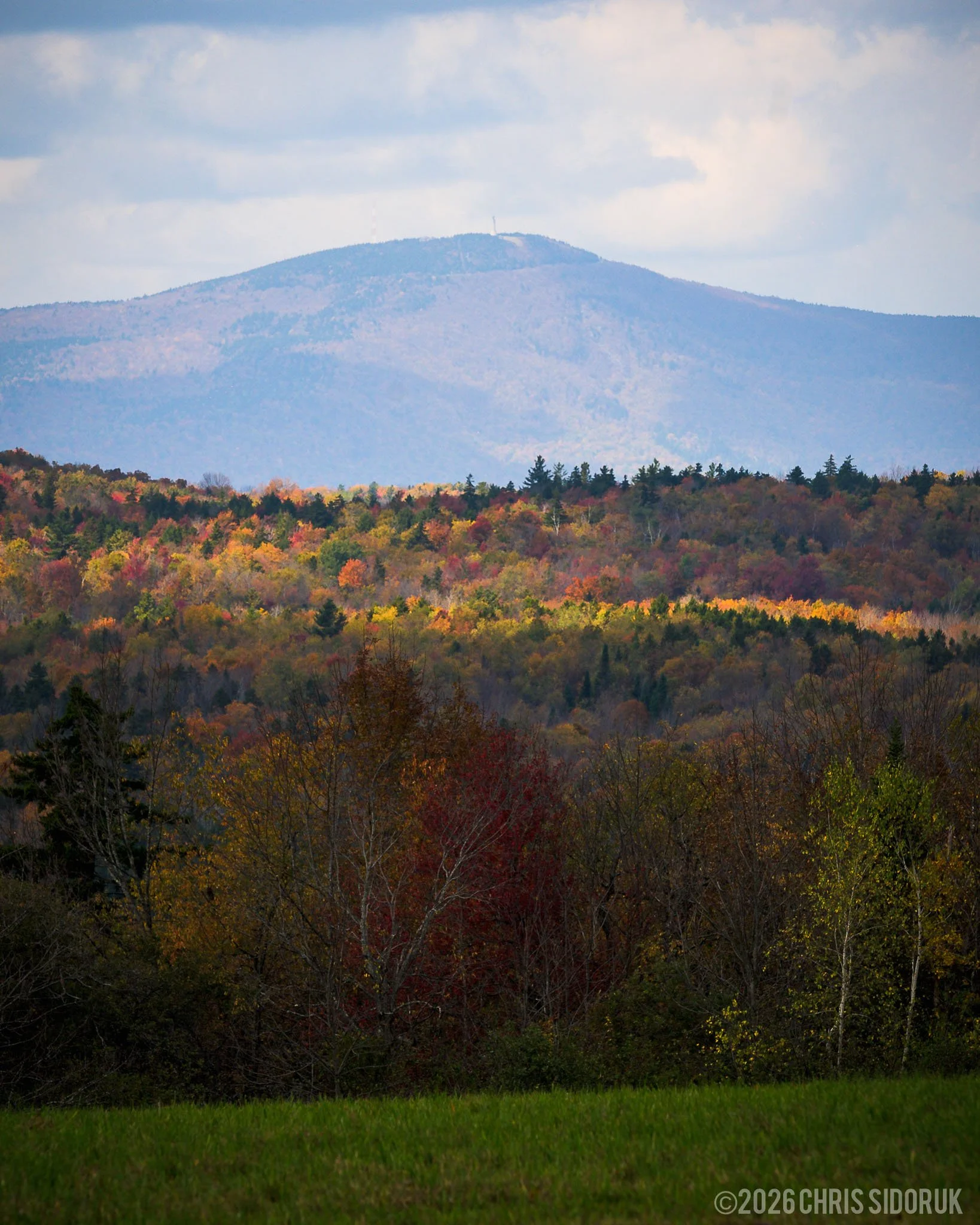
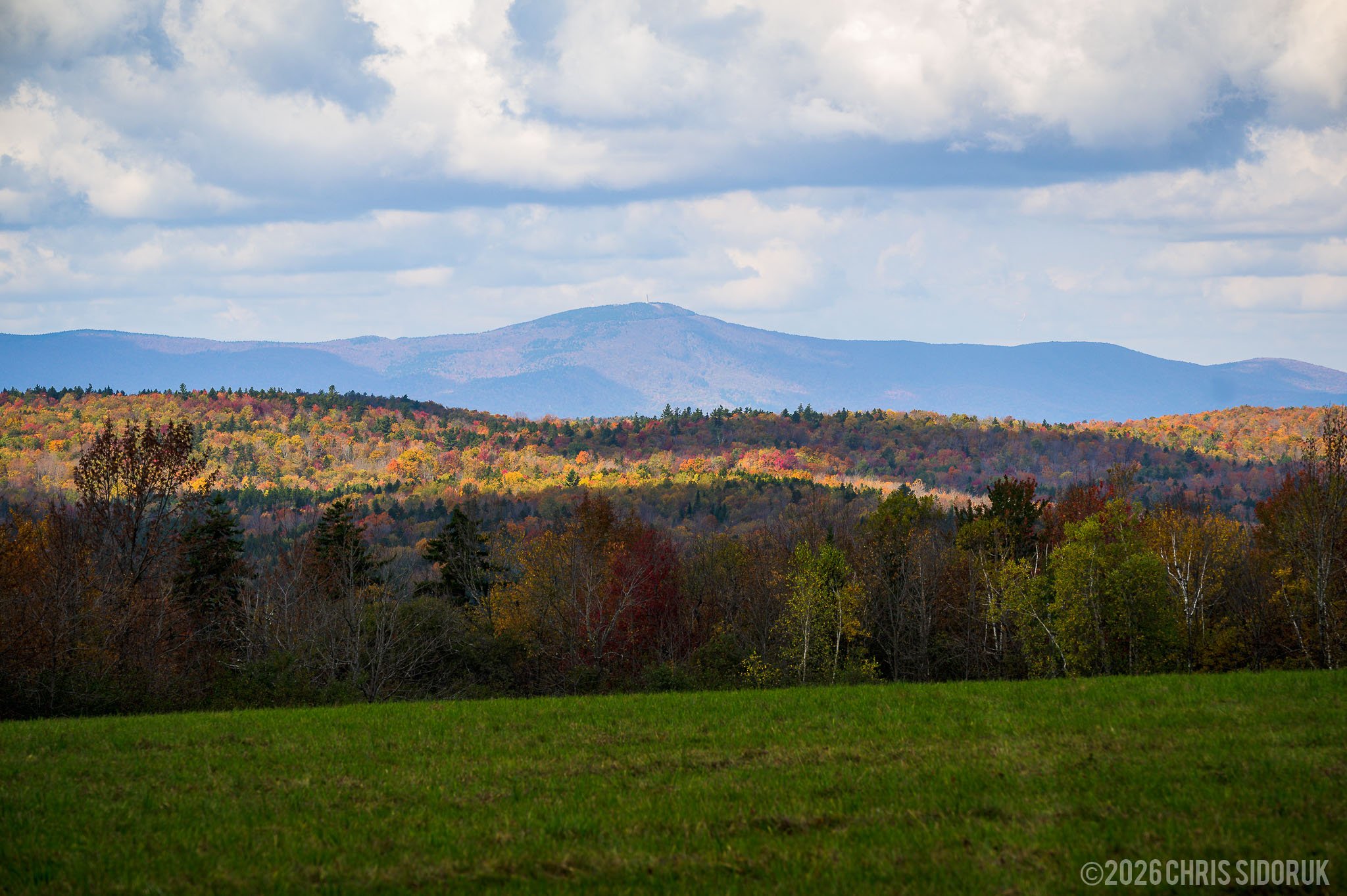
Mount Greylock rising above layered hills and grassy meadows in the Berkshires. | © 2026 Chris Sidoruk [License this image]
Not all the photographs in this collection were made from the summit. Views from surrounding terrain and lower elevations show Mount Greylock as part of a broader landscape of forests, meadows, and distant hills.
From these perspectives, the mountain becomes a recognizable landmark within a series of overlapping ridgelines rather than dominating the entire frame.
During the first week of October 2024, different stages of fall foliage created distinct bands of color. Some areas displayed strong yellows and oranges, while other slopes and valleys retained more green foliage.
The contrast between golden hardwood forests, darker evergreen stands, and remaining green leaves helped separate the layers of terrain. Foreground trees also provided opportunities to frame Mount Greylock against the surrounding hills, connecting nearby foliage with the distant mountain.
For photographers, these compositions offer an alternative to traditional summit views. Including foreground vegetation, meadows, or additional ridgelines can establish scale and create a stronger sense of place.
The changing color across different elevations is an important part of the visual character of the Berkshires. It also explains why photographs made on the same day can show noticeably different stages of autumn, depending on the viewpoint.
Photography Tips for Mount Greylock in Fall
Photographing Mount Greylock during autumn involves balancing light, atmospheric conditions, focal length, and the scale of the surrounding landscape. These techniques can help you capture both expansive summit views and the smaller patterns within the Berkshire hills.
Use a Telephoto Lens to Emphasize Ridgelines
Wide-angle lenses are useful for expansive summit views, but longer focal lengths can be especially effective for photographing the Berkshires' repeating ridgelines.
A telephoto lens narrows the field of view, making distant hills appear more prominent and allowing you to emphasize the patterns of the terrain. Look for overlapping ridges, isolated patches of autumn color, and contrasting bands of forest.
These details can create strong compositions without requiring a single dominant foreground subject.
Work With Atmospheric Haze
Haze is common in distant landscape views and can reduce contrast between foreground and background elements. Rather than treating it solely as a problem, consider how it separates successive ridgelines and contributes to a sense of distance.
Pay attention to how tones become softer toward the horizon. This natural progression can help communicate the scale of the Berkshire landscape.
If your goal is to capture fine detail in distant foliage, clearer conditions may be preferable. Softer atmospheric conditions, however, can be effective when you want to emphasize layers and mood.
Pay Attention to the Direction of Light
The lower sun angle in autumn can produce longer shadows and more directional light across the landscape. Depending on the viewpoint and weather, this can reveal the shape of the hills and bring out differences in foliage color.
Warmer light may enhance yellow and orange tones, while softer illumination can help preserve detail across a range of colors.
Rather than relying on a single time of day, observe how the light changes across the ridgelines. The most effective conditions depend on the direction of the view, the position of the sun, and the amount of cloud cover.
Photograph More Than the Summit
Mount Greylock is an obvious subject, but the surrounding hills, valleys, and forests can be just as compelling.
Try compositions that place the mountain within the broader landscape rather than isolating it in every frame. Foreground trees, grassy meadows, and overlapping ridgelines can establish scale and connect the mountain to its surroundings.
Combining wide views with tighter compositions creates a more complete visual record. Wide images establish the setting, while telephoto photographs reveal patterns and color transitions that might otherwise go unnoticed.
Treat Foliage Timing as a Variable
The timing of peak foliage changes from year to year and can vary considerably between higher elevations and lower valleys. Temperature, rainfall, wind, and other weather conditions influence how quickly leaves change and how long they remain on the trees.
The first week of October 2024 offered a mixture of yellow, orange, and green foliage in the areas photographed for this collection. A future visit at the same time of year could look quite different.
Use these images as a reference for the appearance of the landscape during one particular season, rather than as a prediction of when peak color will occur again.
Documentary Summary
The first week of October 2024 captured a varied stage of fall foliage across Mount Greylock and the surrounding Berkshires. Strong yellow and orange tones appeared across portions of the landscape, while remaining green foliage showed that the seasonal transition was still uneven.
From summit overlooks to surrounding ridgelines, Mount Greylock served as both a primary subject and a reference point within the broader landscape of western Massachusetts. Differences in elevation revealed distinct bands of seasonal color, creating depth and contrast across the hills and valleys.
These photographs preserve a brief moment when autumn color, foliage texture, and the underlying structure of the landscape were visible together. Because foliage changes from year to year, the collection is best understood as a photographic record of early October 2024 rather than a guide to predicting peak color.
Additional Images
The additional photographs in this collection show more views of Mount Greylock and the surrounding Berkshire County landscape, including rolling hills, tree silhouettes, sunset light, autumn foliage, and Mount Greylock Road.
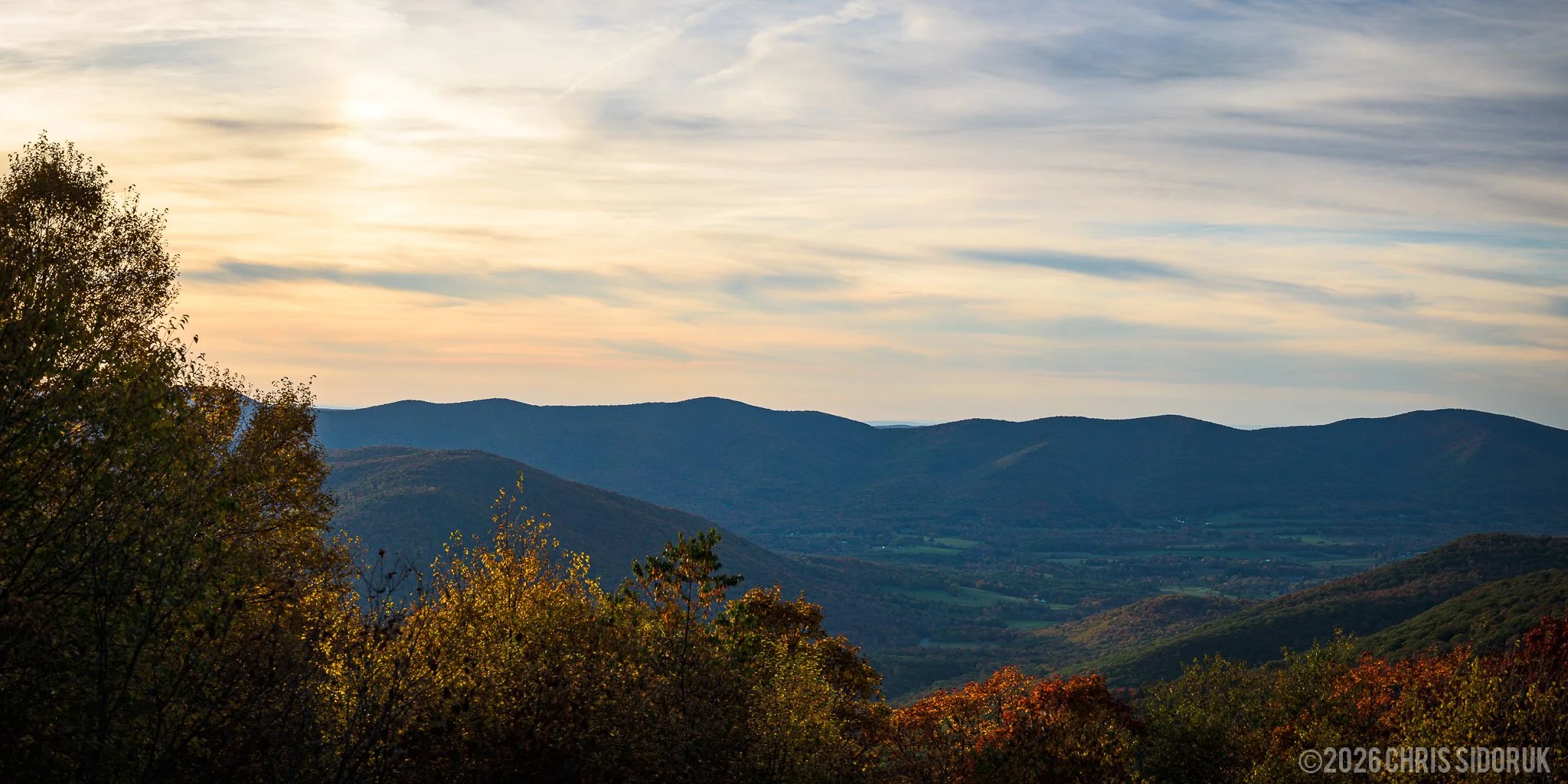
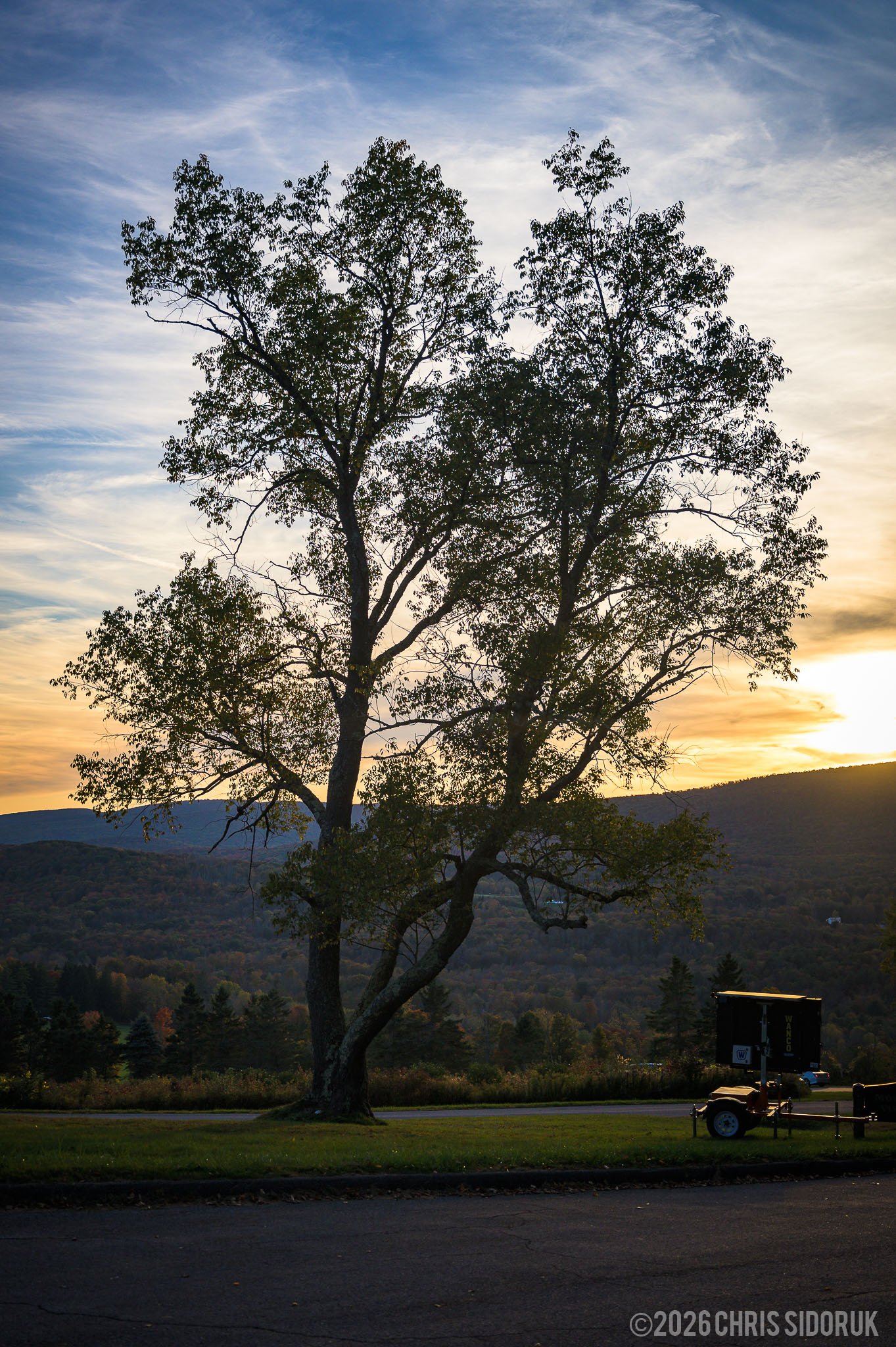
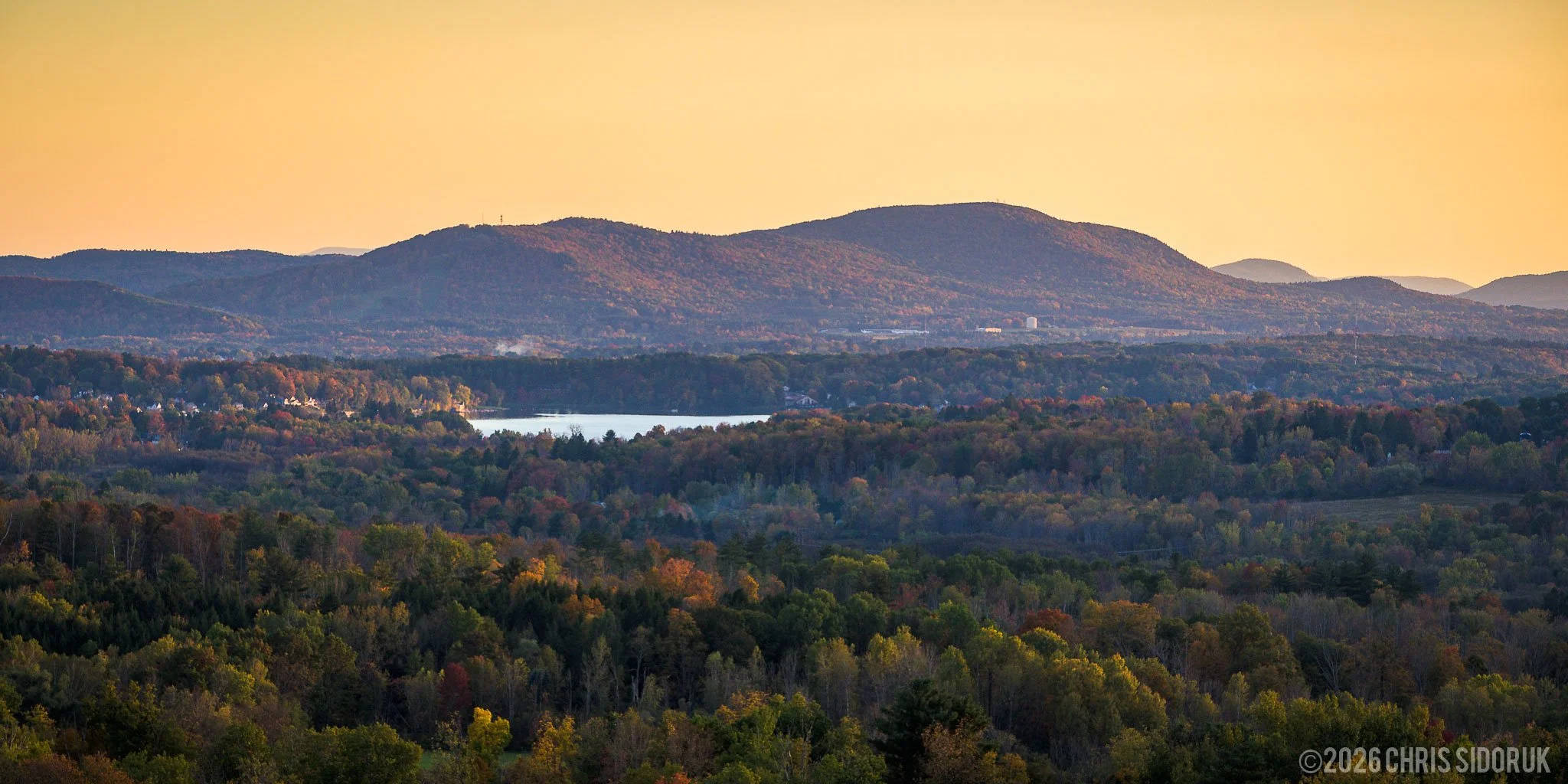
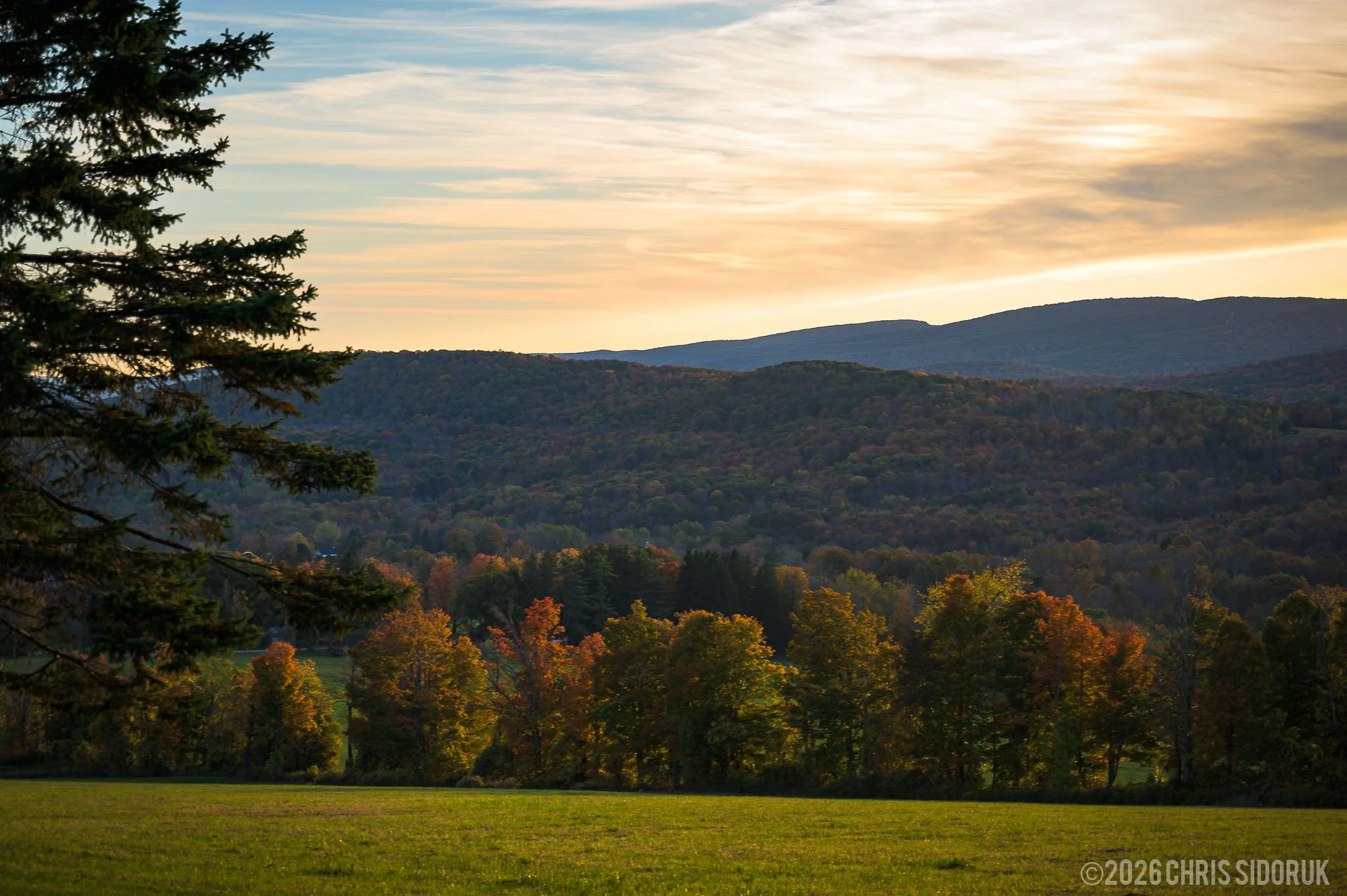
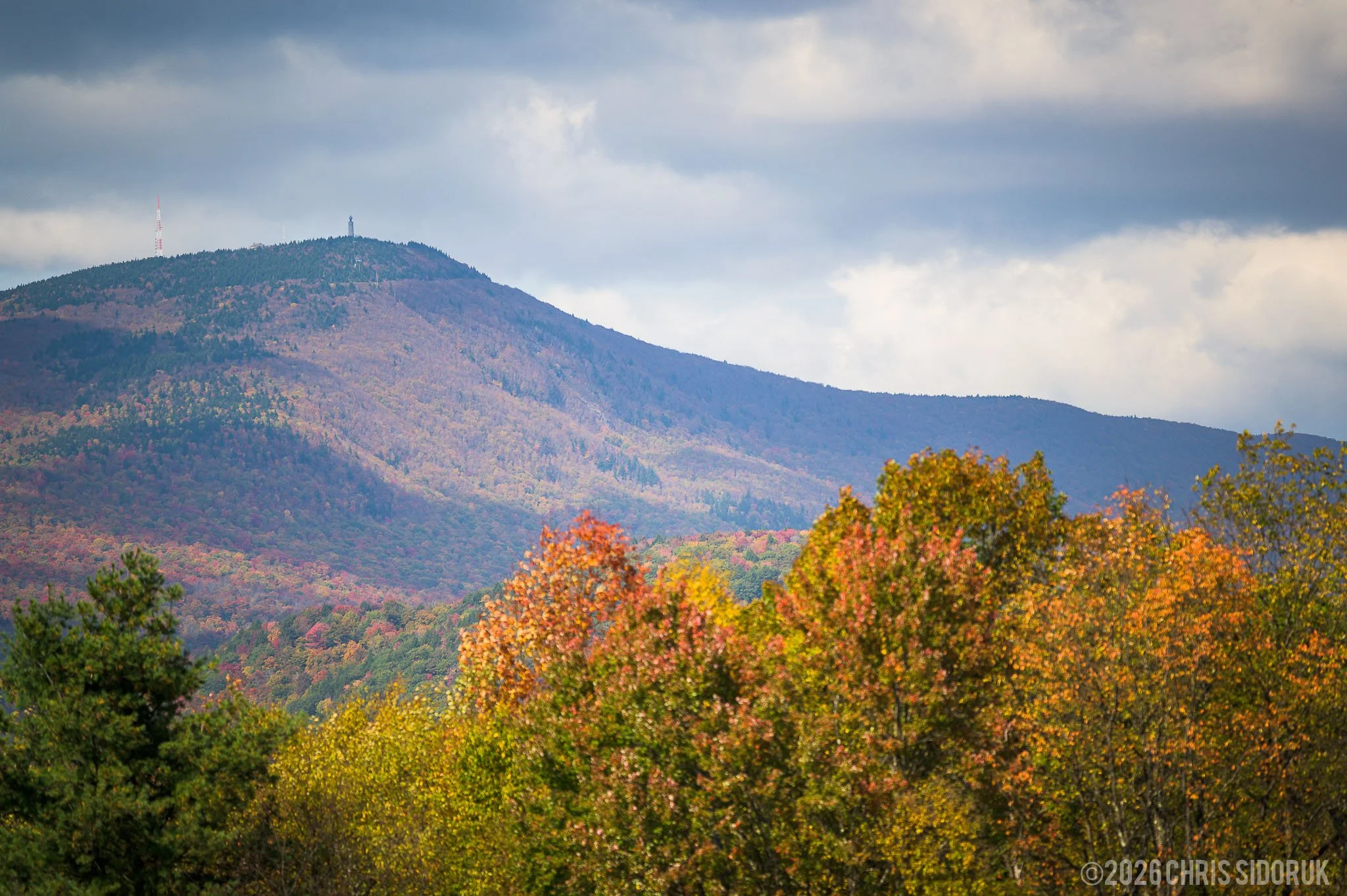
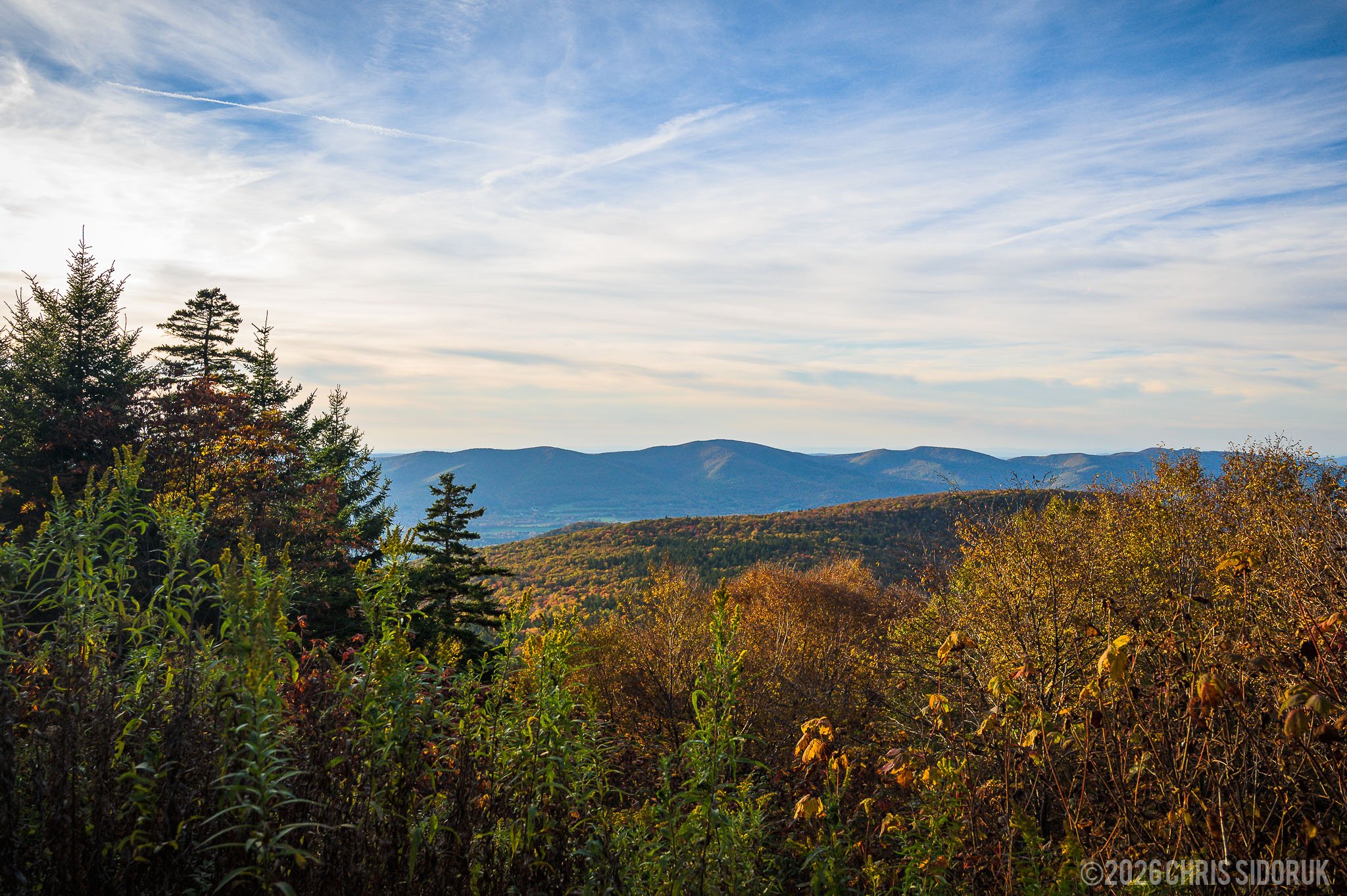
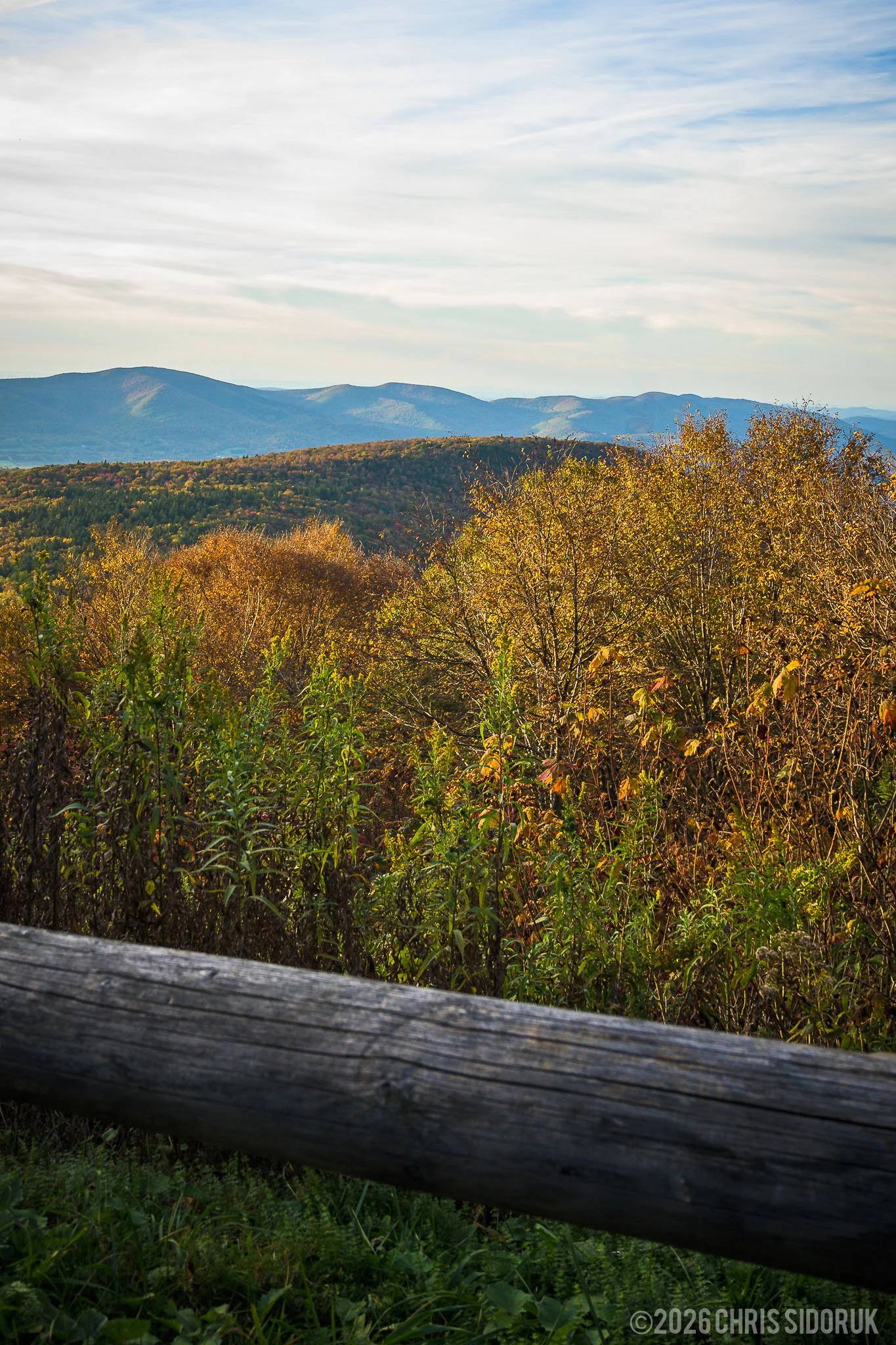
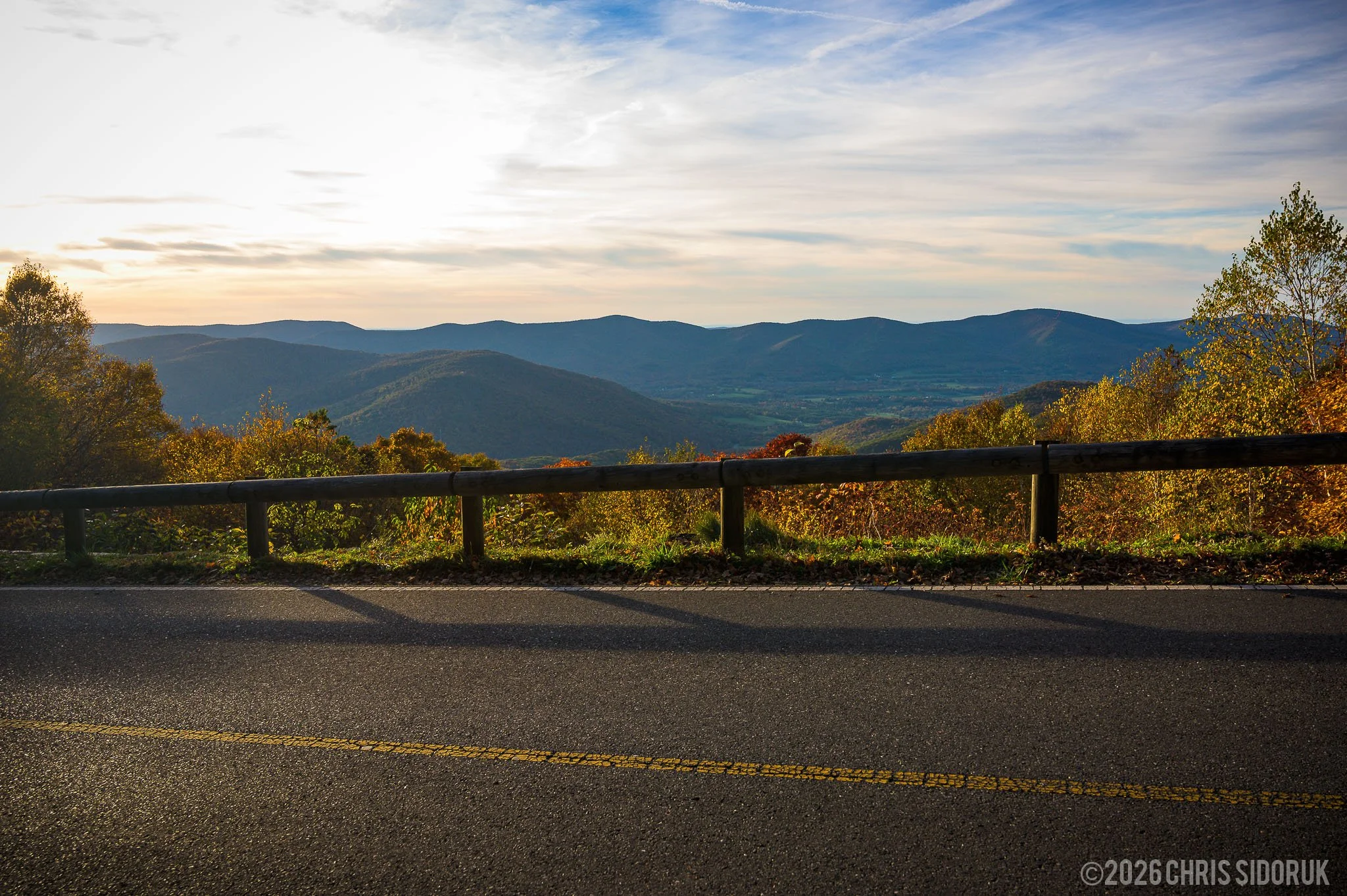
© 2026 Chris Sidoruk [License an image]
Photographed in Berkshire County, Massachusetts, during the first week of October 2024.
Photographed with a Nikon Z6 using settings for landscape photography.
All photographs © Chris Sidoruk. Images are protected by copyright and may not be used, copied, modified, or redistributed without written permission.
==========
Frequently Asked Questions
When is peak fall foliage at Mount Greylock?
Peak foliage timing varies from year to year, and conditions can differ between higher elevations and lower slopes. Early to mid-October can be a useful period to investigate for autumn color, but it should not be treated as a guaranteed peak window. Check current regional foliage reports before planning a trip.
Is Mount Greylock worth visiting in early October?
Early October can offer a varied mix of autumn colors across Mount Greylock and the Berkshires. Depending on the year, brighter foliage at higher elevations may appear alongside greener areas lower down. This collection documents those conditions during the first week of October 2024.
What lens is best for Mount Greylock photography?
Wide-angle lenses work well for expansive summit views, while telephoto lenses are useful for emphasizing distant Berkshire ridgelines and layered forests. A standard zoom offers flexibility if you want to switch between broad landscape scenes and tighter compositions.
Is sunrise or sunset better for photographing Mount Greylock?
Both can work well. Sunrise may provide softer light and atmospheric conditions, while sunset can produce warm illumination across the hills. The best time depends on the direction of your viewpoint, the weather, and the composition you want to create.
Can beginners photograph Mount Greylock?
Yes. Mount Greylock offers landscape photography opportunities for different experience levels. Some viewpoints can be reached by road when access is open, while other locations require walking or hiking. Check current road access, seasonal closures, and trail conditions before visiting.
==========