

Sony A7 IV Review (Real-World Photography Performance)
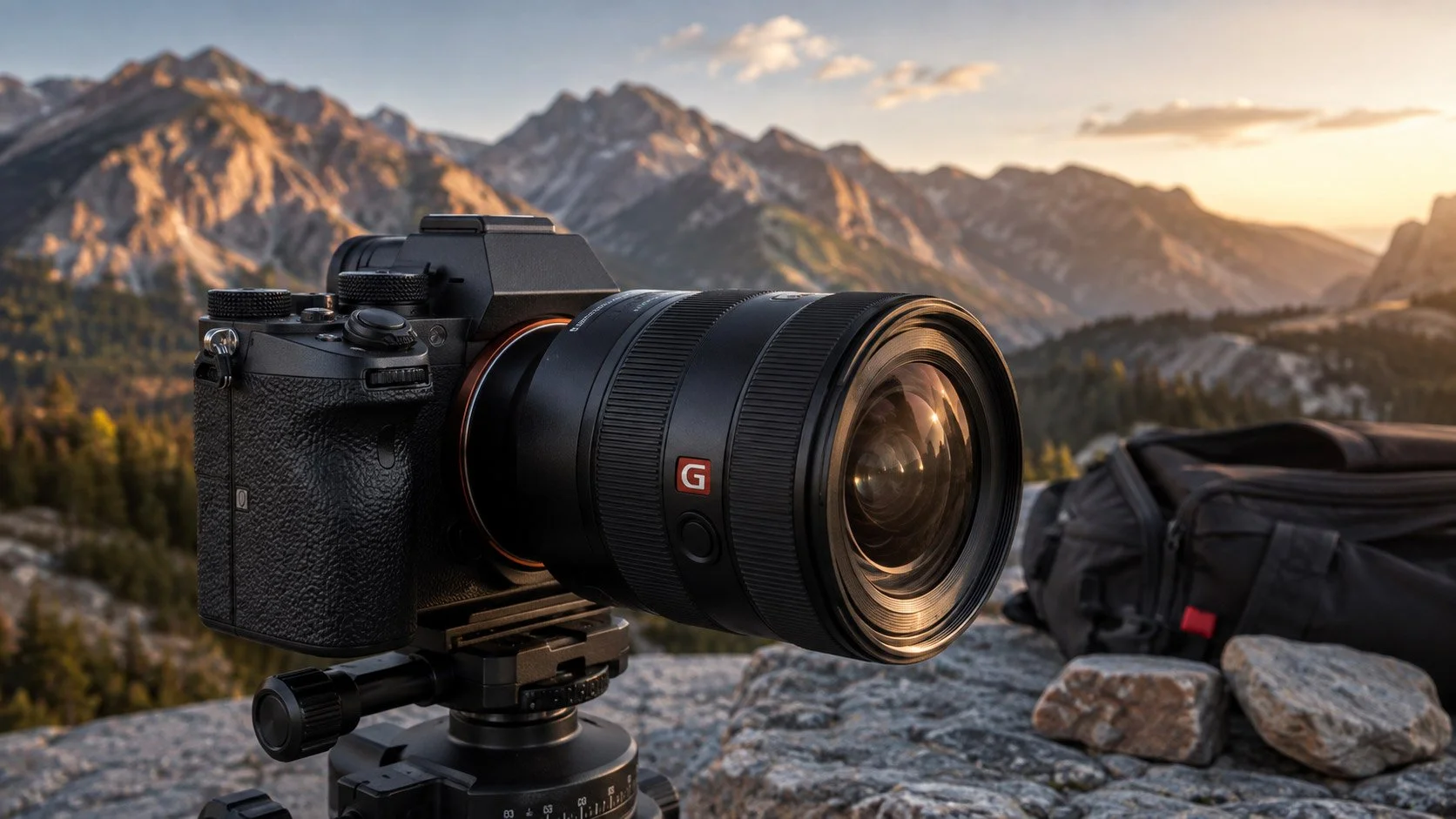
*Some links in this article are affiliate links. If you purchase through them, it helps support my work at no extra cost to you.
==========
Last Updated: August 2026
The Sony A7 IV remains one of the most popular full-frame mirrorless cameras available.
Released as the successor to the highly successful Sony A7 III, it was designed to improve nearly every area that photographers cared about:
higher resolution
improved autofocus
better video capabilities
stronger hybrid performance
Rather than targeting one specific type of photographer, the A7 IV was built as an all-around camera for creators who need excellent image quality across different situations.
For photographers who shoot:
portraits
landscapes
events
concerts
travel
commercial work
video content
the Sony A7 IV offers one of the most balanced full-frame packages available.
But with newer cameras like the Nikon Z6 III, Canon EOS R6 Mark II, and Sony’s own newer models competing for attention, the question is:
Is the Sony A7 IV still worth buying in 2026?
The answer depends on what you photograph.
Sony A7 IV Overview
The Sony A7 IV is a full-frame hybrid mirrorless camera featuring:
33MP full-frame sensor
advanced autofocus system
excellent dynamic range
4K video capabilities
strong battery life
extensive lens selection
It sits in the middle of Sony’s lineup:
below higher-resolution models like the Sony A7R series
below flagship cameras like the Sony A1 series
above entry-level full-frame options
Its biggest strength is balance.
The A7 IV does not specialize in only one area.
Instead, it delivers a combination of:
image quality
speed
autofocus
video features
portability
that works well for a wide range of photographers.
Who Is the Sony A7 IV For?
The Sony A7 IV is best suited for photographers who want one camera that can handle multiple genres.
It is especially strong for:
Hybrid Photographers
Photographers who shoot both photos and video will appreciate:
high-quality still images
strong video features
reliable autofocus
professional controls
Event and Concert Photographers
The A7 IV performs well in challenging environments because of:
excellent autofocus
strong high ISO performance
compact full-frame design
It is capable of handling:
concerts
weddings
events
live performances
Landscape Photographers
The 33MP sensor provides enough resolution for:
detailed landscapes
large prints
cropping flexibility
Combined with Sony’s extensive lens lineup, it is a capable landscape system.
Content Creators
The A7 IV’s video features make it attractive for creators who need:
interviews
behind-the-scenes content
YouTube production
social media video
Sony A7 IV Image Quality
Image quality is where the A7 IV continues to stand out.
The camera uses a:
33MP full-frame back-illuminated Exmor R CMOS sensor
This provides an excellent balance between:
resolution
file size
low-light performance
Compared with lower-resolution 24MP cameras, the A7 IV provides additional detail without creating excessively large files.
Resolution and Detail
The 33MP sensor gives photographers flexibility for:
cropping compositions
printing large images
capturing fine landscape details
For landscape photography, this extra resolution is useful when photographing:
mountain scenes
distant details
complex textures
architectural subjects
It is not the highest-resolution camera available, but it hits a practical middle ground.
Dynamic Range Performance
Dynamic range has always been one of Sony’s strengths.
The A7 IV performs extremely well in scenes with:
bright skies
deep shadows
strong contrast
This makes it especially useful for:
sunrise photography
sunset landscapes
outdoor portraits
travel photography
Photographers who shoot RAW files will appreciate the flexibility when recovering:
shadow detail
highlight information
difficult exposures
Color and RAW Files
Sony’s color science has improved significantly compared with earlier generations.
The A7 IV produces:
accurate colors
natural skin tones
flexible RAW files
For photographers who edit their images, the files provide plenty of adjustment flexibility.
Sony A7 IV Autofocus Performance
Autofocus is one of the biggest improvements compared with the previous Sony A7 III.
The A7 IV uses Sony’s advanced autofocus system with:
759 phase-detection AF points
real-time tracking
human eye autofocus
animal eye autofocus
bird eye autofocus
In real-world shooting, the autofocus system is one of the camera’s strongest features.
It is fast, reliable, and especially useful when subjects are moving unpredictably.
Real-Time Tracking
Sony’s tracking system is one of the best in the industry.
The camera can maintain focus on subjects during:
movement across the frame
changing distances
unpredictable motion
This is especially helpful for:
events
concerts
wildlife
portraits
video
Instead of constantly adjusting focus manually, photographers can focus more on timing and composition.
Eye Autofocus
Eye AF remains one of Sony’s biggest advantages.
For portraits and events, the ability to consistently lock onto a subject’s eye is extremely valuable.
It helps with:
candid moments
moving subjects
shallow depth-of-field images
At wide apertures like:
f/1.4
f/1.8
f/2.8
accurate autofocus becomes even more important.
Sony A7 IV Low-Light Performance
Low-light performance is one of the most important factors for many photographers.
The Sony A7 IV performs very well in challenging lighting thanks to:
full-frame sensor
strong noise control
excellent autofocus sensitivity
It is a capable camera for:
concerts
weddings
indoor events
nighttime photography
High ISO Performance
The A7 IV has a native ISO range of:
100–51200
and performs well throughout typical shooting ranges.
Real-world usable settings often include:
ISO 1600
ISO 3200
ISO 6400
depending on exposure and lighting conditions.
Modern editing software also makes high ISO noise easier to manage than ever.
For many photographers, a slightly noisy sharp image is far better than a clean but blurry image.
Sony A7 IV for Concert Photography
The Sony A7 IV is a strong option for concert photographers.
Concert photography requires a camera that can handle:
low light
fast movement
unpredictable lighting
difficult autofocus situations
The A7 IV performs well in all of these areas.
Strengths for Concert Photography
Excellent Autofocus
Live performances change quickly.
The A7 IV’s tracking system helps capture:
musicians moving across stage
changing positions
expressive moments
Strong High ISO Performance
Many concerts require shooting at:
ISO 3200
ISO 6400
sometimes higher
The full-frame sensor provides enough flexibility to work in difficult venues.
33MP Resolution
The extra resolution provides flexibility for:
cropping
tighter compositions
selecting the strongest moments
This is especially useful when shooting from restricted positions.
Limitations for Concert Photography
The A7 IV is not a dedicated sports camera.
Limitations include:
slower burst speed compared with stacked-sensor flagship models
rolling shutter concerns during very fast movement
smaller buffer compared with professional action bodies
For most concert photography, however, these limitations are minor.
👉 Related guide:
Sony A7 IV for Landscape Photography
The A7 IV is also an excellent landscape photography camera.
Its combination of:
33MP resolution
excellent dynamic range
full-frame image quality
Sony lens availability
makes it a versatile landscape system.
Strengths for Landscapes
The A7 IV performs especially well for:
sunrise and sunset photography
travel landscapes
coastal scenes
mountain photography
The RAW files provide plenty of flexibility when recovering:
shadows
highlights
contrast
Lens Selection Advantage
One of Sony’s biggest advantages is the size of the E-mount ecosystem.
Photographers have access to:
Sony lenses
Sigma lenses
Tamron lenses
third-party options
This makes it easier to build a system at different price points.
Limitations for Landscape Photography
The A7 IV is not the highest-resolution landscape camera.
Photographers focused exclusively on:
giant fine art prints
maximum resolution
extreme cropping
may prefer higher-resolution options.
However, for most landscape photographers, 33MP is more than enough.
👉 Related guide:
Sony A7 IV Video Performance
The A7 IV is one of Sony’s strongest hybrid cameras because it does not treat video as an afterthought.
Video features include:
4K recording
10-bit 4:2:2 color
S-Cinetone
advanced autofocus
improved heat management compared with older models
This makes it useful for creators who want both photography and video capabilities.
Video Strengths
The A7 IV is excellent for:
YouTube content
interviews
behind-the-scenes footage
commercial video
social media content
The autofocus system carries over extremely well into video.
For solo creators, this is a major advantage.
Video Limitations
The camera does have some limitations.
These include:
4K 60p crop
not designed as a cinema camera
rolling shutter limitations during fast movement
For most photographers moving into video, these are manageable compromises.
Related: → Best Video Settings for Hybrid Cameras
Real-World Shooting Experience
Specs are important, but the biggest question is:
How does the Sony A7 IV feel when actually using it?
The answer is that it feels like a camera designed for photographers who do a little bit of everything.
Handling
The A7 IV improves on previous Sony ergonomics with:
better grip
improved menu system
dedicated controls
customizable buttons
It feels more professional than the A7 III while remaining compact.
Electronic Viewfinder
The EVF provides:
accurate exposure preview
clear viewing
useful information display
For landscape and event photographers, this helps with composing in changing conditions.
Battery Life
Battery life is strong thanks to Sony’s NP-FZ100 battery.
In real-world use, it comfortably handles:
full photo sessions
events
travel shooting
Carrying an extra battery is still recommended for long shoots.
Memory Cards and Workflow
The A7 IV uses:
CFexpress Type A
SD cards
This gives photographers flexibility depending on their needs and budget.
For most photography:
high-quality SD cards are sufficient.
For heavy video workflows:
CFexpress provides additional performance.
Sony A7 IV Limitations
The Sony A7 IV is an extremely capable camera, but it is not perfect.
Understanding where it falls short is important before buying.
Lower Burst Performance Than Action-Focused Cameras
The A7 IV can shoot up to:
10 frames per second
which is enough for:
events
portraits
general action
However, photographers who specialize in:
sports
wildlife
fast action
may prefer cameras with:
stacked sensors
faster readout speeds
larger buffers
4K 60p Crop
While the A7 IV offers excellent video quality, 4K 60p uses a crop.
This can affect:
wide-angle shooting
handheld video
run-and-gun setups
For many creators, this is not a major issue, but it is worth knowing.
No Built-In Focus Stacking or Advanced Landscape Features
Landscape photographers who rely on advanced computational features may find some newer cameras offer additional tools.
The A7 IV is primarily a traditional photography-focused camera.
Its strength is image quality, not computational photography.
Menu Complexity
Sony cameras have improved significantly, but the menu system can still feel overwhelming for new users.
The camera offers a huge amount of customization, which is powerful but requires setup time.
Sony A7 IV Pros and Cons Summary
Strengths
• Excellent 33MP full-frame sensor
• Outstanding autofocus system
• Reliable eye tracking
• Strong low-light performance
• Excellent RAW files
• Great hybrid photo/video capabilities
• Large lens ecosystem
• Strong battery life
• Professional build quality
• Dual card slots
Limitations
• Not the fastest camera for action photography
• 4K 60p video crop
• More expensive than some entry-level full-frame options
• Menu system can feel complicated
• Not the highest-resolution option for large-format landscape work
Sony A7 IV vs Competitors
The Sony A7 IV sits in one of the most competitive areas of the camera market.
Several cameras offer similar combinations of:
resolution
autofocus
hybrid performance
price
Sony A7 IV vs Canon EOS R6 Mark II
The Canon EOS R6 Mark II is one of the A7 IV’s closest competitors.
Sony A7 IV Advantages
Higher resolution (33MP vs 24MP)
Larger third-party lens ecosystem
Stronger cropping flexibility
Excellent autofocus tracking
Canon EOS R6 Mark II Advantages
Faster burst performance
Excellent ergonomics
Strong video performance
Excellent high ISO results
Best Choice:
Choose the Sony A7 IV if you want:
more resolution
landscape flexibility
a larger lens ecosystem
Choose the Canon R6 Mark II if you prioritize:
speed
events
action photography
Sony A7 IV vs Nikon Z6 III
The Nikon Z6 III is a newer competitor aimed at hybrid photographers.
Sony A7 IV Advantages
More affordable in many markets
Larger established lens ecosystem
Proven reliability
Excellent image quality
Nikon Z6 III Advantages
Newer technology
faster performance
improved autofocus
stronger video features
Best Choice:
Choose the Sony A7 IV if you want:
a proven all-around camera
excellent value
access to Sony’s mature system
Choose the Nikon Z6 III if you want:
newer technology
faster performance
a more modern body
Sony A7 IV vs Sony A7 III
Many photographers upgrading from the A7 III are asking:
Is the A7 IV worth the upgrade?
In most cases, yes.
The A7 IV improves on the A7 III with:
higher resolution
better autofocus
improved ergonomics
better video capabilities
improved menus
stronger hybrid performance
The A7 III remains a great camera, especially at lower prices, but the A7 IV is a more complete modern system.
Who Should Buy the Sony A7 IV?
The Sony A7 IV is an excellent choice for photographers who want one camera that can handle almost everything.
Best For:
Hybrid Photographers
Those who shoot:
photography
video
interviews
behind-the-scenes content
will appreciate its versatility.
Event and Concert Photographers
The combination of:
autofocus
low-light performance
resolution
makes it a strong event camera.
Landscape Photographers
The 33MP sensor, dynamic range, and lens options make it a capable landscape system.
Travel Photographers
The camera provides full-frame quality without becoming excessively large.
Who Should Consider Something Else?
The A7 IV may not be the best choice if you need:
Maximum Speed
Sports and wildlife photographers may prefer faster flagship models.
Maximum Resolution
Photographers creating extremely large prints may prefer higher-resolution cameras.
A Smaller Beginner Camera
If you are just starting, less expensive APS-C cameras may provide a better entry point.
Is the Sony A7 IV Still Worth Buying in 2026?
Yes.
Even with newer cameras available, the Sony A7 IV remains one of the most balanced full-frame mirrorless cameras available.
Its biggest advantage is that it does not force you into one style of photography.
It can handle:
landscapes
concerts
portraits
travel
video creation
commercial work
For many photographers, that versatility matters more than having the absolute newest specifications.
Final Recommendation
The Sony A7 IV is one of the safest full-frame mirrorless camera purchases for photographers who want long-term flexibility.
Its combination of:
excellent image quality
dependable autofocus
strong low-light performance
professional features
huge lens selection
makes it a camera that can grow with you.
It is not the fastest camera available.
It is not the highest-resolution camera available.
But it may be one of the best-balanced cameras available.
For photographers who want one body capable of handling multiple genres, the Sony A7 IV remains an excellent choice.
Frequently Asked Questions
Is the Sony A7 IV good for photography?
Yes. The Sony A7 IV is an excellent photography camera with a 33MP full-frame sensor, strong dynamic range, reliable autofocus, and excellent RAW image quality.
Is the Sony A7 IV good for concert photography?
Yes. The A7 IV performs well for concerts thanks to its autofocus system, high ISO performance, and full-frame sensor. It handles challenging low-light environments effectively.
Is the Sony A7 IV good for landscape photography?
Yes. The 33MP sensor provides excellent detail, while Sony’s lens selection gives landscape photographers many options. It is a strong choice for travel and outdoor photography.
Is the Sony A7 IV better than the Sony A7 III?
For most photographers, yes. The A7 IV offers improvements in resolution, autofocus, video features, ergonomics, and overall performance.
What lens should I use with the Sony A7 IV?
Popular options include:
Sony FE 24-70mm f/2.8 GM II for an all-around professional zoom
Sony FE 16-35mm lenses for landscapes
Sony FE 70-200mm lenses for events and compressed landscapes
The best lens depends on your style of photography.
Does the Sony A7 IV have good autofocus?
Yes. Sony’s real-time tracking and eye autofocus are among the strongest autofocus systems available, making it useful for moving subjects and hybrid shooting.
Is the Sony A7 IV good in low light?
Yes. The full-frame sensor performs very well at higher ISO settings, making it a strong choice for concerts, events, and nighttime photography.
==========
