

Best Nubble Lighthouse Photo Spots | York Maine

Nubble Lighthouse of Cape Neddick in York, Maine. ©2020 Chris Sidoruk
==========
Cape Neddick Light, better known as Nubble Lighthouse, is one of the most photographed coastal landmarks in Maine.
Located in York, Maine, the lighthouse sits offshore on a small rocky island surrounded by the Atlantic Ocean. Its isolated position, classic New England architecture, and constantly changing coastal conditions make it one of the strongest lighthouse photography locations in the Northeast.
Unlike many coastal landmarks, Nubble Lighthouse offers photographers a simple but powerful composition:
a historic lighthouse
dramatic ocean surroundings
changing weather conditions
multiple perspectives from a single accessible viewpoint
For photographers, the challenge is not finding the lighthouse—it is finding the best way to photograph it.
This guide focuses on the best Nubble Lighthouse photo spots, viewpoints, compositions, and techniques for capturing this iconic Maine coastline location.
For complete trip planning information, history, parking, and visiting details, see:
Best Nubble Lighthouse Photo Spots
The best photography opportunities for Nubble Lighthouse are located around Sohier Park in York, Maine.
Because the lighthouse sits offshore, photographers do not move around the structure itself. Instead, the goal is finding different viewpoints, foreground elements, and compositions from the surrounding shoreline.
The strongest photo opportunities include:
1. Main Sohier Park Overlook
The primary viewing area at Sohier Park provides the classic Nubble Lighthouse composition.
This viewpoint works well for:
sunrise photography
sunset photography
storm conditions
wide coastal landscapes
The elevated rocky shoreline creates a natural foreground while keeping the lighthouse separated against the ocean.
This is the iconic image most visitors recognize.
2. Rocky Shoreline Perspectives
Moving along the shoreline at Sohier Park creates subtle but important changes in composition.
Small position adjustments can change:
foreground rock placement
wave patterns
lighthouse alignment
horizon balance
These variations help avoid creating the same image captured by thousands of visitors.
Look for:
leading lines created by rocks
waves wrapping around foreground elements
reflections during calmer conditions
3. Telephoto Compression Views
While wide-angle images are common, telephoto lenses can create some of the most interesting Nubble Lighthouse photographs.
Longer focal lengths allow photographers to:
isolate the lighthouse
compress ocean waves
emphasize storm conditions
simplify compositions
A 70–200mm lens is especially useful when atmospheric conditions create layers between the lighthouse and ocean.
Sohier Park Viewpoint
Sohier Park is the primary location for photographing Nubble Lighthouse.
The park provides:
direct views of the lighthouse
open coastal access
multiple shooting positions
year-round photography opportunities
Because the lighthouse is not accessible to the public, every photograph is created from viewpoints on the mainland.
This separation is part of what makes Nubble Lighthouse visually unique.
The offshore location creates:
strong subject isolation
clean compositions
a sense of scale between lighthouse and ocean
Finding the Best Position at Sohier Park
Many photographers stop at the first available viewpoint, but exploring slightly can create stronger images.
Consider:
Move Along the Rocks
Different angles can change:
how much coastline appears
where waves enter the frame
how the lighthouse balances with the sky
Use Foreground Elements
Foreground rocks help add depth by creating layers:
Foreground:
rocks
waves
shoreline textures
Middle:
ocean movement
Background:
Nubble Lighthouse
sky
Adjust Your Height
Shooting lower can emphasize:
waves
rocks
ocean movement
Shooting higher can create:
cleaner separation
more minimalist compositions
Nubble Lighthouse Composition Ideas
Nubble Lighthouse is a location where composition matters more than simply finding the subject.
Because photographers are working from the mainland, the challenge is creating variety from a fixed viewpoint. The strongest images usually come from changing your perspective, lens choice, and relationship between the lighthouse and surrounding environment.
Wide-Angle Coastal Landscapes
Wide-angle lenses are ideal for showing the relationship between Nubble Lighthouse and the Atlantic coastline.
Typical focal lengths:
14mm–24mm
16mm–35mm
17mm–40mm
These compositions work well when you want to include:
dramatic skies
crashing waves
foreground rocks
the scale of the coastline
Wide compositions are especially effective during:
sunrise
storm conditions
dramatic cloud formations
A common mistake is placing the lighthouse too small in the frame.
Instead, use foreground elements to guide the viewer toward the lighthouse while maintaining the feeling of the surrounding ocean environment.
Lighthouse-Centered Compositions
A more traditional approach is placing Nubble Lighthouse as the primary subject.
These images emphasize:
the lighthouse structure
the rocky island
the relationship between land and sea
This works especially well when:
the sky is clean
the ocean is calm
the lighthouse has strong separation from the background
Try experimenting with:
centered compositions
rule-of-thirds placement
balanced negative space
The simplicity of the scene allows small compositional changes to make a large difference.
Telephoto Compression
Telephoto lenses create some of the most unique Nubble Lighthouse images.
Recommended focal lengths:
70–200mm
100–400mm
Longer lenses help:
bring the lighthouse closer visually
compress waves and rocks
isolate details
emphasize changing weather
Telephoto photography is especially effective when:
fog partially obscures the lighthouse
waves are large
storm clouds create layers
atmospheric conditions add depth
A compressed image can make the lighthouse feel much closer and more dramatic.
Long Exposure Ocean Photography
Nubble Lighthouse is also an excellent location for long exposure coastal photography.
Using a tripod and neutral density filter allows photographers to capture:
smoother waves
softer ocean movement
atmospheric water textures
Common settings:
Starting point:
ISO 100
f/8–f/11
5–30 second exposure
Adjust based on:
available light
wave movement
desired water effect
Long exposures work particularly well during:
cloudy mornings
sunset
blue hour
Include the Environment, Not Just the Lighthouse
One of the biggest mistakes at Nubble Lighthouse is treating it only as a lighthouse photograph.
The strongest images often include the surrounding environment:
Atlantic waves
coastal rocks
dramatic skies
seasonal weather
The lighthouse is the anchor of the composition, but the ocean creates the atmosphere.
Best Times to Photograph Nubble Lighthouse
Nubble Lighthouse can be photographed throughout the year, but different times of day create completely different results.
The best time depends on the type of image you want to create.
Sunrise Photography at Nubble Lighthouse
Sunrise is one of the best times to photograph Nubble Lighthouse.
Advantages:
fewer visitors
softer light
calmer conditions
more peaceful atmosphere
Morning light can create:
pastel skies
subtle reflections
softer contrast
Sunrise is especially effective during:
summer mornings
fall coastal conditions
calm ocean periods
Because the lighthouse faces the Atlantic, early morning light can create beautiful separation between the structure and surrounding landscape.
Sunset Photography at Nubble Lighthouse
Sunset is another popular time for photographers.
Advantages:
warmer colors
dramatic skies
stronger contrast
golden light on the coastline
Sunset conditions work especially well when clouds are present.
Cloud formations can add:
texture
color variation
depth
However, sunset is also the busiest time of day, especially during summer and peak tourist seasons.
Arriving early is recommended if you want a preferred shooting position.
Blue Hour Photography
Blue hour is often overlooked but can produce some of the most atmospheric images.
During blue hour:
the sky takes on deeper tones
the lighthouse begins to glow
surrounding light becomes softer
This is a great time for:
tripod photography
long exposures
balanced sky and ocean tones
Seasonal Photography Opportunities
Spring
Spring provides:
fewer crowds
changing weather
dramatic coastal atmosphere
Fog and cloudy conditions can create minimalist lighthouse images.
Summer
Summer offers:
long daylight hours
easier access
warmer conditions
The main challenge is larger crowds.
Early morning is usually the best option.
Fall
Fall is one of the strongest seasons for Maine coastal photography.
Advantages:
changing weather
dramatic skies
fewer summer crowds
The contrast between autumn conditions and the Atlantic coastline can create unique images.
Winter
Winter can produce some of the most dramatic Nubble Lighthouse photographs.
Potential conditions:
crashing waves
snow
ice
powerful storms
Winter photography requires preparation, but difficult conditions often create the most memorable images.
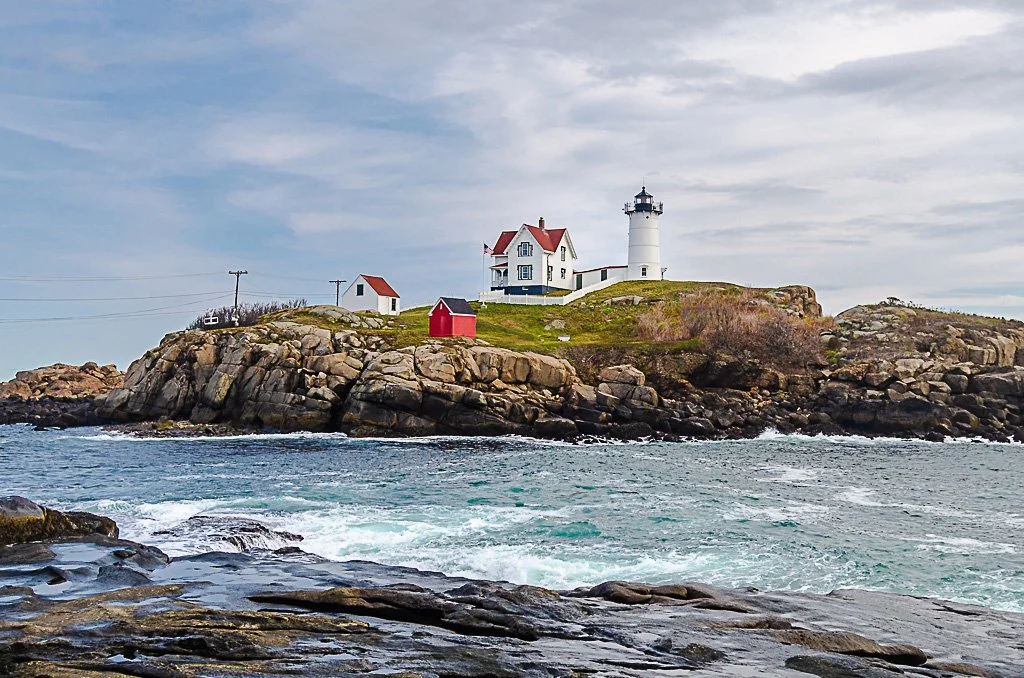
Nubble Light at Cape Neddick in York, Maine. ©2020 Chris Sidoruk
Weather and Ocean Conditions at Nubble Lighthouse
The Atlantic Ocean is one of the biggest factors influencing Nubble Lighthouse photography.
The same viewpoint can produce completely different images depending on weather conditions.
Fog Conditions
Fog is one of the most desirable conditions for Nubble Lighthouse photography.
Fog creates:
separation from distractions
softer contrast
minimalist compositions
a more mysterious atmosphere
During fog, the lighthouse can appear isolated from the surrounding environment.
These conditions are especially effective with:
telephoto lenses
monochrome edits
simple compositions
Storm Conditions
Storms can create some of the most dramatic images.
Strong weather can produce:
powerful waves
textured skies
dark atmospheric tones
Storm photography requires extra caution because:
rocks become slippery
wind increases
salt spray can affect equipment
Always prioritize safety when photographing near the ocean.
Calm Ocean Conditions
Calm conditions create a completely different style.
Benefits include:
smoother water textures
cleaner reflections
minimalist scenes
These conditions pair well with:
sunrise photography
long exposures
symmetrical compositions
Overcast Conditions
Overcast skies are often underrated.
Soft cloud cover creates:
even lighting
reduced contrast
detailed textures
This is particularly useful when photographing:
lighthouse architecture
shoreline details
ocean movement
Best Camera Gear for Nubble Lighthouse Photography
Nubble Lighthouse does not require specialized equipment, but the right gear can make it easier to capture different perspectives and changing coastal conditions.
Because the location offers everything from wide ocean landscapes to detailed lighthouse compositions, a flexible setup is ideal.
The most useful gear includes:
a camera with good dynamic range
wide-angle and telephoto lenses
a sturdy tripod
neutral density filters
weather protection
Wide-Angle Lenses (Coastal Landscapes)
Wide-angle lenses are the most common choice for photographing Nubble Lighthouse.
Recommended focal lengths:
14mm–24mm
16mm–35mm
17mm–40mm
These lenses are best for:
including the Atlantic coastline
capturing dramatic skies
showing waves and foreground rocks
creating a sense of scale
A wide-angle composition works especially well during sunrise, storms, and dramatic cloud conditions.
Popular lens options include:
Sony 16–35mm f/2.8 GM II
Canon RF 15–35mm f/2.8 L IS
Nikon Z 14–24mm f/2.8 S
Sigma 14–24mm f/2.8 DG DN Art
Telephoto Lenses (Compressed Lighthouse Views)
A telephoto lens provides a completely different perspective.
Recommended focal lengths:
70–200mm
100–400mm
Telephoto lenses are useful for:
bringing the lighthouse closer
isolating details
compressing waves and rocks
photographing through changing weather
They are especially effective when:
fog surrounds the lighthouse
waves are large
clouds create layered backgrounds
A long lens can transform the same viewpoint into a completely different image.
Mid-Range Zoom Lenses (Most Versatile Option)
For photographers traveling through Maine, a mid-range zoom is often the most practical option.
Examples:
24–70mm
24–105mm
24–120mm
These lenses allow you to quickly adjust between:
wider environmental scenes
lighthouse-focused compositions
nearby coastal details
For a single travel lens, this range offers the best balance of flexibility and convenience.
What Camera Features Matter for Nubble Lighthouse Photography?
You do not need the newest or most expensive camera to photograph Nubble Lighthouse successfully.
The most important features are:
Dynamic Range
Coastal scenes often contain:
bright skies
reflective water
dark rocks
A camera with strong dynamic range helps preserve detail throughout the image.
Weather Sealing
Maine’s coastline can change quickly.
Weather sealing helps protect against:
ocean spray
light rain
fog moisture
changing temperatures
A weather-resistant camera body is especially valuable when photographing near the Atlantic.
High Resolution Sensors
Higher resolution can help with:
large prints
cropping distant details
fine lighthouse textures
However, resolution is less important than composition and lighting.
Reliable Autofocus and Manual Focus
While landscape photography often uses manual focus, reliable autofocus can help when:
photographing changing conditions
capturing waves
switching between subjects
Essential Accessories for Nubble Lighthouse Photography
A few accessories can significantly improve results.
Tripod
A tripod is one of the most valuable tools for coastal landscape photography.
It helps with:
long exposures
sunrise and sunset photography
low-light conditions
precise compositions
Look for:
sturdy construction
resistance to wind
easy adjustments near uneven rocks
Neutral Density Filters
ND filters allow photographers to control exposure during bright conditions.
They are useful for:
smoothing ocean waves
creating longer exposures
maintaining wider apertures
Common strengths:
3-stop ND filter
6-stop ND filter
10-stop ND filter
A 6-stop ND filter is a versatile choice for many coastal scenes.
Polarizing Filter
A circular polarizer can help:
reduce reflections on water
deepen blue skies
improve contrast
However, polarization effects vary depending on the direction of the sun and should be used carefully.
Camera Bag and Weather Protection
Coastal locations require preparation.
Useful items:
weather-resistant camera bag
microfiber cloths
rain cover
extra batteries
lens cloth for salt spray
Ocean spray can appear unexpectedly, especially during windy conditions.
More Photography Locations Near Nubble Lighthouse
Nubble Lighthouse is one of many scenic photography locations along the southern Maine coast.
If you are exploring the area, several nearby locations provide additional coastal perspectives.
Long Sands Beach
Long Sands Beach offers:
open ocean views
sunrise compositions
wave photography
beach landscapes
The wide shoreline creates opportunities for minimalist coastal images.
Short Sands Beach
Located near downtown York, Short Sands Beach provides:
coastal scenery
pier views
nearby shops and architecture
It is a convenient location to combine photography with exploring the town.
York Harbor
York Harbor offers a quieter coastal environment with:
boats
rocky shoreline
harbor views
maritime scenes
This location provides a different perspective from the open Atlantic setting at Nubble Lighthouse.
Ogunquit and Marginal Way
A short drive away, Ogunquit offers dramatic coastal scenery.
Photography opportunities include:
cliffside ocean views
rocky shoreline
walking paths
changing Atlantic conditions
Marginal Way is especially effective for photographers looking for broader New England coastal compositions.
Planning Your Nubble Lighthouse Photography Visit
A successful Nubble Lighthouse photography trip depends on more than arriving with a camera.
The strongest images usually come from planning around:
tides
weather
sunrise or sunset timing
seasonal conditions
Arrive Early
Sohier Park is accessible, but popular.
Arriving early helps with:
finding parking
choosing compositions
setting up before changing light
This is especially important during:
summer weekends
holidays
sunset hours
Check Weather Before Visiting
Coastal weather changes quickly.
Before heading out, check:
cloud coverage
wind speed
visibility
precipitation
Some of the most dramatic images happen when conditions are less predictable.
Allow Time to Explore Different Angles
Even though Nubble Lighthouse is viewed from a single primary location, small changes in position can create different compositions.
Take time to explore:
shoreline viewpoints
rock formations
elevated areas
different focal lengths
The lighthouse may remain the same, but the surrounding scene changes constantly.
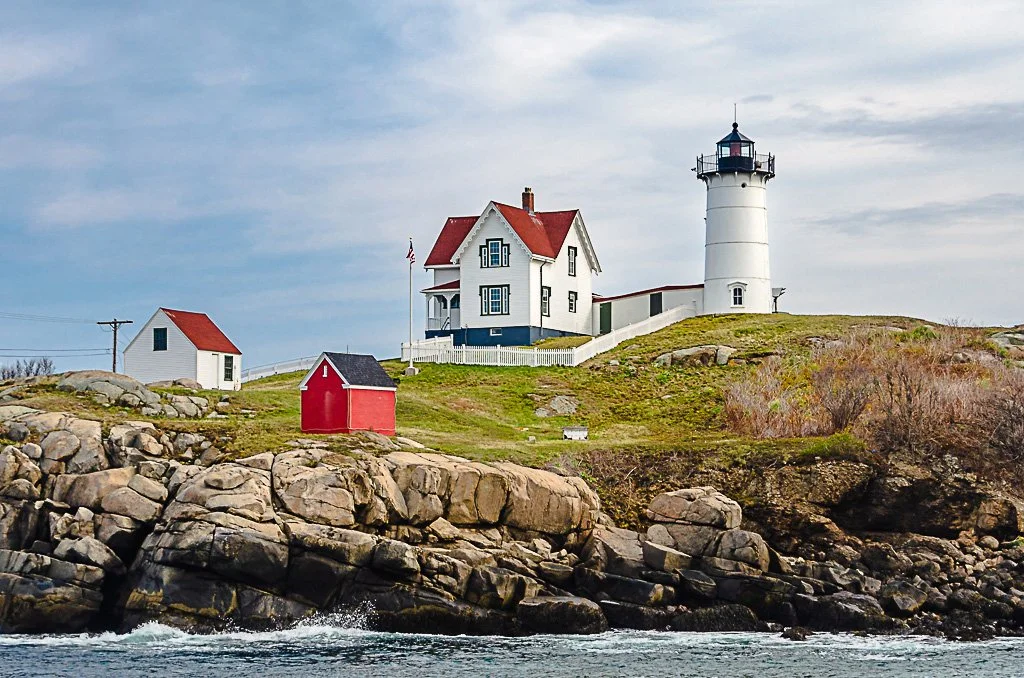
Closeup of Nubble Light in York, Maine. ©2020 Chris Sidoruk | View Nubble Light House Print
Photography Tips for Capturing Nubble Lighthouse
Nubble Lighthouse is a straightforward subject, but creating a memorable image requires attention to composition, timing, and changing coastal conditions.
Because the lighthouse has been photographed countless times, the goal is not simply to capture the landmark—it is to capture the atmosphere surrounding it.
Look for Foreground Elements
The lighthouse itself is the main subject, but foreground elements create depth and help separate your image from typical snapshots.
Look for:
waves crashing against rocks
tide pools reflecting the sky
shoreline textures
seaweed and coastal vegetation
leading lines created by rocks and water
A strong foreground helps guide the viewer through the image and creates a stronger sense of place.
Use Changing Ocean Conditions
The Atlantic Ocean constantly changes the appearance of Nubble Lighthouse.
Different conditions create completely different images:
Calm Water
Calm conditions can create:
smooth reflections
minimalist compositions
softer coastal scenes
These conditions work especially well around sunrise.
Wind and Waves
Stormier conditions create:
movement
dramatic wave patterns
stronger contrast
more dynamic compositions
Large waves hitting the rocks can add scale and energy to the photograph.
Fog
Fog is one of the most unique conditions for photographing Nubble Lighthouse.
It can:
simplify the composition
isolate the lighthouse
create a timeless atmosphere
reduce distractions
Fog often produces some of the most memorable lighthouse images.
Composition Ideas That Work at Nubble Lighthouse
Since the viewing area is limited, small compositional adjustments can have a major impact.
Include the Entire Coastal Scene
Wide compositions can show:
the lighthouse
rocky shoreline
ocean horizon
surrounding atmosphere
These images work well for storytelling and large landscape prints.
Isolate the Lighthouse
A tighter composition using a telephoto lens can emphasize:
lighthouse architecture
waves surrounding the island
changing weather
This approach works especially well during fog or dramatic skies.
Use Leading Lines
Natural lines can guide attention toward the lighthouse.
Examples:
shoreline curves
rock formations
wave patterns
horizon lines
Leading lines create stronger visual flow within the image.
Photograph Different Seasons
Nubble Lighthouse changes dramatically throughout the year.
Each season offers unique opportunities.
Best Seasons for Nubble Lighthouse Photography
There is no single best season to photograph Nubble Lighthouse. Each season creates a different mood.
Spring Photography
Spring offers:
fewer crowds than summer
changing weather patterns
fresh coastal colors
Storm systems can create dramatic skies and powerful ocean conditions.
Summer Photography
Summer provides:
comfortable temperatures
longer daylight hours
easier travel conditions
However, expect:
larger crowds
busier parking areas
stronger midday sunlight
Early morning is usually the best option during peak summer months.
Fall Photography
Fall is one of the best times to visit coastal Maine.
Advantages include:
comfortable temperatures
lower crowds after summer
dramatic sunsets
clearer atmospheric conditions
Fall storms can also create powerful ocean photography opportunities.
Winter Photography
Winter creates some of the most dramatic scenes.
Possible conditions include:
snow-covered rocks
icy shoreline textures
powerful waves
minimal crowds
Winter photography requires extra preparation due to:
cold temperatures
wind
slippery surfaces
Final Thoughts
Cape Neddick Light, better known as Nubble Lighthouse, remains one of Maine’s most iconic coastal photography locations because of its combination of simplicity, accessibility, and constantly changing conditions.
The lighthouse itself may remain unchanged, but the surrounding environment creates endless variations. Ocean movement, weather, seasonal changes, and shifting light allow photographers to capture completely different interpretations of the same landmark.
From peaceful sunrise scenes to dramatic Atlantic storms, Nubble Lighthouse offers opportunities for photographers of all experience levels.
The strongest images often come from patience—waiting for the right combination of light, atmosphere, and composition rather than simply arriving and taking a snapshot.
Whether you are visiting York, Maine for the first time or returning to photograph the coastline again, Nubble Lighthouse remains a location worth experiencing through photography.
Nubble Lighthouse Photography FAQs
Where is the best place to photograph Nubble Lighthouse?
The primary photography location is Sohier Park in York, Maine. The park provides the classic unobstructed view of Cape Neddick Light from the mainland.
Can you walk to Nubble Lighthouse?
No. Nubble Lighthouse sits on a small island and is not accessible to visitors. Photography is done from the mainland viewpoint at Sohier Park.
What lens is best for photographing Nubble Lighthouse?
A wide-angle lens is ideal for including the coastline and ocean, while a telephoto lens is useful for isolating the lighthouse and compressing waves or background details.
A 24–70mm or 24–120mm lens is a versatile choice for most visitors.
What time of day is best for Nubble Lighthouse photography?
Sunrise and sunset are typically the best times because the light is softer and more directional.
Sunrise often provides:
fewer crowds
calmer conditions
softer colors
Sunset often provides:
warmer light
dramatic skies
stronger contrast
Is Nubble Lighthouse good for beginners?
Yes. Nubble Lighthouse is one of the most accessible coastal photography locations in Maine.
Beginners can create strong images with:
a basic camera
a kit lens
careful composition
good lighting conditions
Do you need a tripod for Nubble Lighthouse?
A tripod is helpful but not required.
It is especially useful for:
sunrise photography
sunset photography
long exposures
low-light conditions
What camera settings work best for Nubble Lighthouse?
General landscape photography settings include:
Aperture: f/8–f/11
ISO: 100–200
Shutter speed: adjusted for available light
Focus: single-point autofocus or manual focus
For long exposures, use a tripod and ND filter.
==========
Photography by Chris Sidoruk, a Connecticut photographer specializing in coastal landscapes, concert photography, and visual storytelling throughout New England.
Shot using a DJI Mavic Air and Nikon D7000 with settings for landscape photography.
All photographs © Chris Sidoruk. Images are protected by copyright and may not be used, copied, modified, or redistributed without written permission.
Explore more photography resources:
