

How to Become a Concert Photographer (Real-World Beginner Guide)
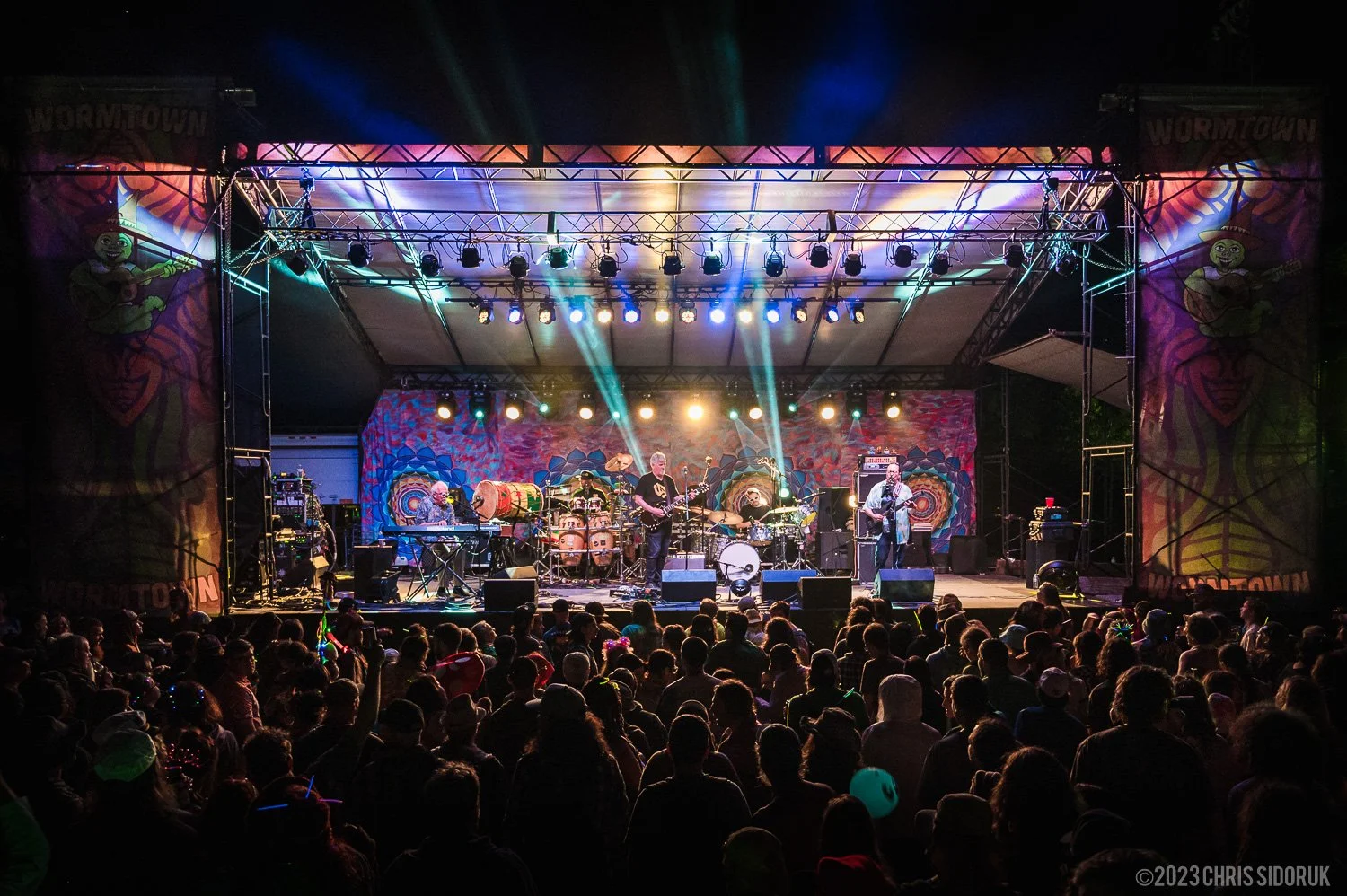
Max Creek in Greenfield, Massachusetts. ©2023 Chris Sidoruk
Last updated: August 2026
Quick Jump
- Is Concert Photography Right for You?
- The Reality of Becoming a Concert Photographer
- Step 1: Learn Your Camera
- Step 2: Build a Basic Concert Photography Kit
- Step 3: Shoot Your First Concert
- Step 4: Master Camera Settings
- Step 5: Improve Your Composition
- Step 6: Build a Portfolio
- Step 7: Get Photo Passes and Build Relationships
- Common Beginner Mistakes & Final Thoughts
- Frequently Asked Questions
Is Concert Photography Right for You?
Concert photography is one of the most exciting—and one of the most challenging—genres of photography.
You're working in constantly changing light, performers rarely stand still, and many venues only allow photographers to shoot during the first three songs. Every show is different, which means you're constantly adapting.
The reward is documenting moments that can never be recreated.
If you enjoy live music, thrive under pressure, and don't mind learning through trial and error, concert photography can be incredibly rewarding.
It can also lead to opportunities photographing:
local bands
national touring artists
music festivals
theaters
clubs
corporate concerts
promotional sessions
The path looks different for everyone, but most successful concert photographers follow the same progression.
The Reality of Becoming a Concert Photographer
Many beginners assume they need expensive cameras or industry connections before they can get started.
In reality, neither is usually the biggest obstacle.
What matters most is building experience.
Most photographers progress through these stages:
Learn the Fundamentals
Before worrying about photo passes or major artists, become comfortable using your camera in manual mode and understanding exposure.
Photograph Local Shows
Small venues and local bands provide some of the best opportunities to learn.
The lighting is often challenging, but you'll gain valuable experience without the pressure of covering a major event.
Build a Portfolio
As you improve, start collecting your strongest images into a portfolio that reflects your style and consistency.
A handful of excellent photographs will make a stronger impression than hundreds of average ones.
Grow Your Network
Relationships become increasingly important as your portfolio grows.
Artists, venue owners, promoters, and publications are much more likely to work with photographers who are reliable, professional, and easy to communicate with.
The photographers who stay consistent are usually the ones who continue getting opportunities.

Outdoor daytime concert photography
Step 1: Learn Your Camera Before Shooting Concerts
One of the biggest mistakes new photographers make is attending a concert before they're comfortable using their camera.
Concert lighting changes too quickly to stop and search through menus.
Before your first show, practice changing these settings without looking at your camera:
aperture
shutter speed
ISO
autofocus mode
drive mode
exposure compensation (if using a semi-automatic mode)
The faster you can adjust your settings, the more moments you'll capture.
You should also become comfortable shooting in Manual mode or Aperture Priority mode, depending on your experience level.
If you're still learning exposure, spend time practicing outdoors or in dim indoor lighting before photographing a live performance.
Step 2: Build a Basic Concert Photography Kit
One of the biggest misconceptions about concert photography is that you need thousands of dollars of equipment before you can start.
You don't.
A simple, reliable kit is enough to learn the fundamentals.
A good beginner setup includes:
a camera with solid low-light performance
one fast lens (f/1.8 or f/2.8 if possible)
at least one spare battery
reliable memory cards
That's enough to photograph many local shows successfully.
As you gain experience, upgrades become more about improving reliability and flexibility than simply taking better photos.
Camera vs Lens (Don't Ignore This)
If you're deciding where to spend your budget, prioritize the lens.
A fast lens lets more light reach your camera's sensor, allowing you to use faster shutter speeds and lower ISO settings in dark venues. In many situations, pairing a modest camera body with a quality f/1.8 lens will produce better results than using an expensive camera with a slow kit lens.
If you can only afford to upgrade one piece of gear, the lens is often the better investment.
Related guides:
Step 3: Shoot Your First Concert
Your first concert shouldn't be a sold-out arena show.
Instead, look for opportunities where you can learn without unnecessary pressure.
Good places to start include:
local bars
coffee shops
community events
open mic nights
small music venues
local festivals
These environments often allow more freedom to move around while giving you valuable experience with live performers.
Your goal isn't to create award-winning images.
Your goal is to learn.
Pay attention to:
how performers move across the stage
where the best lighting appears
how often expressions change
when musicians interact with each other
how different lenses affect your compositions
Every concert teaches something new.
One of the fastest ways to improve is simply photographing more live performances.
If you're preparing for your very first show, read:
Step 4: Master Your Camera Settings
Once you've photographed a few shows, you'll quickly realize that concert photography is largely about balancing three things:
available light
subject movement
image quality
There isn't one perfect setting that works for every venue, but there are reliable starting points that work in most situations.
A good baseline is:
Aperture: f/1.8–f/2.8
Shutter Speed: 1/160–1/320
ISO: 1600–6400 (or higher if needed)
Focus Mode: Continuous AF (AF-C / AI Servo)
From there, adjust based on the venue, performer, and lighting.
Don't Be Afraid of Higher ISO
One mistake nearly every beginner makes is trying to keep ISO as low as possible.
In concert photography, that's usually the wrong approach.
A sharp photo with some visible noise is almost always better than a blurry image captured at ISO 400.
Modern cameras handle high ISO performance remarkably well, especially when shooting in RAW.
Learn to Read the Lighting
Concert lighting changes constantly.
A singer may step from bright white spotlights into deep blue shadows within seconds.
Rather than chasing perfect exposure, learn to anticipate lighting changes and make small adjustments as you shoot.
Understanding your camera settings will improve your photography far more than buying a newer camera body.
For a complete breakdown, see:
Step 5: Improve Your Composition
Sharp photos are important.
Interesting photos are memorable.
Many beginners focus entirely on camera settings while overlooking composition.
Once your exposure becomes consistent, start paying closer attention to what makes an image visually compelling.
Look for:
emotional performer expressions
interaction between band members
dramatic stage lighting
audience reactions
clean backgrounds
leading lines created by instruments, microphones, or stage lights
Don't photograph every performer the same way.
Mix your gallery with:
close-up portraits
wide stage scenes
vertical compositions
horizontal compositions
crowd interaction
behind-the-scenes moments when possible
The goal is to tell the story of the performance, not simply document who was on stage.
Learn more in:
Step 6: Build a Portfolio
A strong portfolio opens more doors than expensive equipment.
When artists, venues, or publications consider working with a photographer, they usually want one thing:
Can this photographer consistently produce quality work?
Your portfolio should answer that question immediately.
Quality Over Quantity
You don't need hundreds of images.
Twenty excellent photographs are more impressive than two hundred average ones.
Choose images that demonstrate variety, including:
singers
guitarists
drummers
crowd interaction
wide stage images
dramatic lighting
intimate moments
different venues
Show that you can photograph an entire performance—not just one type of shot.
Keep Your Portfolio Updated
As your work improves, replace older images.
Your portfolio should always represent your current skill level.
Many photographers make the mistake of keeping early work online long after they've outgrown it.
Your portfolio is often your first impression.
Make it count.
Step 7: Getting Concert Photo Passes
One of the biggest questions beginners ask is:
"How do I actually get into concerts?"
The answer is usually much simpler than people expect.
Start Small
Many local venues don't require official photo credentials.
Ask local bands if you can photograph a performance.
Smaller artists are often happy to receive quality images for social media or promotional use.
These early opportunities help you:
gain experience
build a portfolio
learn venue etiquette
develop relationships
As Your Portfolio Grows
Once you've photographed several shows, you can begin reaching out to:
venue managers
band managers
promoters
publicists
local publications
Keep your message short and professional.
Include:
a brief introduction
a link to your portfolio
examples of your work
why you'd like to photograph the show
Avoid sending large image attachments.
A clean portfolio website usually makes a much stronger impression.
Understand the Three-Song Rule
Many larger concerts only allow photographers to shoot during the first three songs.
This means you need to work quickly.
Before the lights even come up, you should already know:
your camera settings
which lens you're using
where you'll start shooting
Preparation becomes just as important as photography itself.
Step 8: Build Relationships
Photography skills get you noticed.
Professionalism gets you invited back.
Some of the best opportunities in concert photography come from long-term relationships rather than cold emails.
Treat everyone professionally:
artists
venue staff
security
promoters
other photographers
Deliver photos when you say you will.
Communicate clearly.
Respect venue rules.
Don't make yourself the center of attention during a performance.
People remember photographers who are easy to work with.
Over time, that reputation becomes one of your greatest assets.
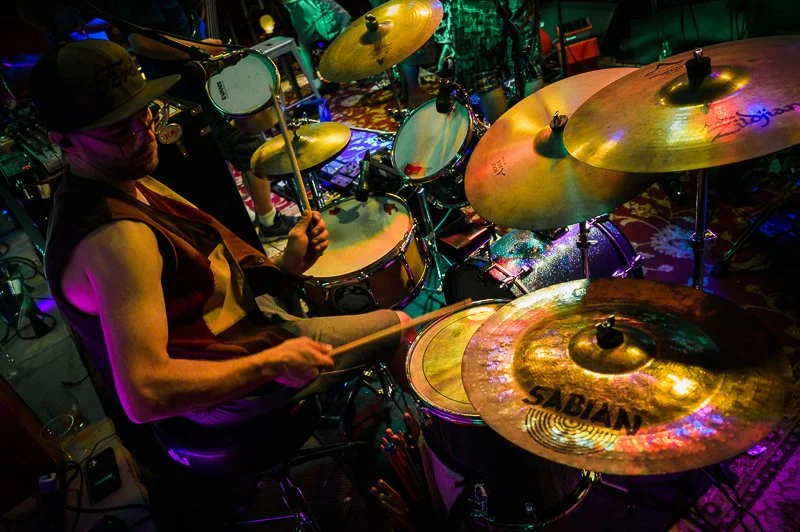
Drummer in action concert photography
Can You Make Money as a Concert Photographer?
Many photographers eventually hope to turn concert photography into a source of income.
While it's possible, it's important to have realistic expectations.
Very few photographers make a full-time living exclusively photographing concerts.
Instead, many combine concert photography with services such as:
band promotional photography
festivals
events
commercial photography
portraits
licensing images
editorial assignments
Concert photography often becomes part of a broader photography business rather than the entire business itself.
The good news is that the skills you develop photographing live music—working quickly, handling difficult lighting, and anticipating moments—translate well into many other photography genres.
Common Mistakes New Concert Photographers Make
Every concert photographer makes mistakes in the beginning. The goal isn't to avoid them completely—it's to learn from them and improve with every show.
Here are some of the most common pitfalls.
Buying Expensive Gear Too Early
It's easy to believe that a better camera will instantly produce better photos.
In reality, understanding exposure, timing, composition, and stage lighting will have a much greater impact on your images than upgrading to the newest camera body.
Invest in your skills first. Upgrade your gear when your current equipment is genuinely limiting your work.
Using Shutter Speeds That Are Too Slow
Concert performers rarely stand still.
If your shutter speed is too slow, motion blur becomes unavoidable.
When in doubt, increase your shutter speed and raise your ISO if necessary. A sharp image with a little noise is usually preferable to a blurry one.
Ignoring the Light
Concert lighting changes constantly.
Instead of fighting it, learn to anticipate it.
Watch how performers move through the stage lights and wait for moments when the lighting complements your composition.
Sometimes the best shot comes from waiting a few extra seconds rather than firing continuously.
Overshooting Everything
Burst mode is useful, but holding the shutter down for an entire song usually creates hundreds of nearly identical images.
Instead, watch the performance and anticipate moments:
a guitarist jumping
eye contact with the audience
dramatic lighting
emotional expressions
interaction between band members
Thoughtful timing produces stronger photographs and makes editing much easier afterward.
Neglecting Your Portfolio
Many beginners keep every photo they've ever taken online.
A stronger approach is to continually refine your portfolio.
Remove older work as your skills improve and showcase only the images that best represent your current abilities.
Forgetting That You're Part of the Show
Photographers should never distract from the performance.
Respect venue rules.
Avoid blocking audience members.
Be courteous to security, staff, and other photographers.
Professionalism often leads to repeat opportunities.
Continue Learning
No photographer masters concert photography after a handful of shows.
Every performance presents new challenges.
As your experience grows, continue improving the areas that have the biggest impact on your images.
Learn how to dial in exposure for difficult lighting:
Best Camera Settings for Concert Photography
Improve your framing and storytelling:
Concert Photography Composition Guide
Learn to work confidently in challenging venues:
Concert Photography Low Light Tips
Explore recommended cameras and lenses as your skills grow:
Best Cameras for Concert Photography
Best Lenses for Concert Photography
Final Thoughts
Becoming a concert photographer isn't about getting lucky or owning the most expensive equipment.
It's about building experience one show at a time.
Every performance teaches something new—how performers move, how lighting changes, how to anticipate moments, and how to tell the story of a live event through your images.
Start with the gear you have.
Photograph local shows whenever you can.
Study your mistakes, refine your editing, and continue building a portfolio that reflects your best work.
Over time, those small improvements add up.
Many successful concert photographers began exactly the same way: shooting local bands, learning through experience, and consistently showing up.
If you stay patient, keep practicing, and continue improving your craft, you'll be well on your way to building a rewarding career in concert photography.
Frequently Asked Questions
Do you need professional camera gear to become a concert photographer?
No.
Many photographers begin with entry-level or mid-range cameras paired with a fast lens. Learning how to work with available light and developing strong timing will usually improve your results more than buying expensive equipment.
How do you get your first concert photography job?
Start by photographing local bands, community events, and smaller venues.
As you build a portfolio, reach out professionally to artists, venue managers, promoters, or local publications. Consistency and reliability often lead to additional opportunities.
How do you get a concert photo pass?
Many photographers earn their first credentials by working with local artists or media outlets.
As your portfolio grows, you can begin requesting credentials directly from publicists, promoters, or venue representatives for larger shows.
What camera settings should beginners use?
A good starting point is:
Wide aperture (around f/1.8–f/2.8)
Shutter speed between 1/160 and 1/320 second
ISO adjusted as needed for the lighting
Continuous autofocus
RAW image capture
Adjust these settings based on the venue and performer movement.
Can you become a concert photographer without a media outlet?
Yes.
Many photographers build successful portfolios independently by working directly with local bands, venues, and promoters before ever shooting for a publication.
Can concert photography become a full-time career?
It can, but many photographers combine concert photography with other services such as event photography, portraits, commercial work, licensing, or promotional photography.
Diversifying your services often creates a more sustainable photography business.
What's the biggest mistake beginners make?
Many beginners focus on buying expensive gear instead of improving their technique.
Learning exposure, composition, timing, and stage lighting will usually produce much greater improvements than purchasing a new camera body.
==========
All photographs © Chris Sidoruk. Images are protected by copyright and may not be used, copied, modified, or redistributed without written permission.
Explore More Concert Photography Guides
Continue building your skills with these in-depth resources:
Explore full concert galleries across different artists, venues, and lighting conditions.
