

Music Festival Photography Guide (2026: Gear, Settings & Tips)

Northlands Music Fest in Swanzey, New Hampshire. | photo- ©2024 Chris Sidoruk
==========
Quick Jump
- What Makes Music Festival Photography Different
- Planning Your Festival Coverage
- Best Camera Gear for Music Festivals
- Lens Choices for Festival Photography
- Shooting in Changing Light Conditions
- Composition Tips for Crowded Festival Environments
- Stage Photography vs Crowd Photography
- Timing, Burst Mode & Capturing Moments
- Photo Pit Rules & Festival Etiquette
- Editing Workflow for Festival Coverage
- How to Get Music Festival Photography Access
- Developing a Festival Photography Workflow
- Frequently Asked Questions
Music Festival Photography Is About More Than the Performance
Music festival photography looks simple from the outside.
A photographer stands near the stage, captures the artists, and delivers a gallery of exciting images.
In reality, festival photography is one of the most demanding forms of live event photography.
Unlike a traditional concert, a festival requires you to document an entire experience:
multiple performers
changing weather
unpredictable lighting
large crowds
different stages
behind-the-scenes moments
the overall atmosphere of the event
You are not just photographing a performance.
You are documenting the story of the festival itself.
The strongest festival photographers understand that the goal is not simply creating impressive stage photos.
The goal is creating a visual record that shows:
what the artists delivered
how the crowd experienced it
what made the event unique
what it felt like to actually be there
Quick Comparison: Best Festival Photography Approaches
| Photographer Type | Recommended Setup | Why It Works |
|---|---|---|
| Beginner Festival Photographer | APS-C mirrorless + fast prime lens | Affordable, lightweight, easier to learn with |
| Concert Photographer Expanding Into Festivals | Full-frame mirrorless + 24-70mm + 70-200mm | Covers stage, crowd, and changing distances |
| Professional Festival Coverage | Dual camera bodies + fast zooms + backups | Faster lens changes and reliability |
| Landscape/Event Storytelling Photographer | Wide zoom + standard zoom + drone | Captures venue scale and atmosphere |
| Low-Light Night Festival Shooter | Full-frame body + f/1.8 primes | Better performance after sunset |
Beginner Festival Photographer
Recommended Setup: APS-C mirrorless + fast prime lens
Why It Works: Affordable, lightweight, easier to learn with
Concert Photographer Expanding Into Festivals
Recommended Setup: Full-frame mirrorless + 24-70mm + 70-200mm
Why It Works: Covers stage, crowd, and changing distances
Professional Festival Coverage
Recommended Setup: Dual camera bodies + fast zooms + backups
Why It Works: Faster lens changes and reliability
Landscape/Event Storytelling Photographer
Recommended Setup: Wide zoom + standard zoom + drone
Why It Works: Captures venue scale and atmosphere
Low-Light Night Festival Shooter
Recommended Setup: Full-frame body + f/1.8 primes
Why It Works: Better performance after sunset
What Makes Music Festival Photography Different?
Music festival photography combines many challenges that do not exist in traditional concert environments.
A photographer covering a single venue performance usually works with:
one stage
predictable access
controlled environments
shorter coverage windows
Festival photographers often deal with:
multiple stages happening simultaneously
long shooting days
changing weather
walking long distances
constantly changing lighting
limited time with each performer
The challenge is not only capturing technically strong images.
The challenge is deciding what matters most in the story you are telling.
Festival Photography Requires a Different Mindset
One of the biggest mistakes photographers make when covering festivals is trying to capture everything.
That is impossible.
A successful festival gallery is not a complete record of every song.
It is a collection of moments that represent the entire experience.
Before arriving, decide what type of story you want to tell.
Your coverage may focus on:
Artist-Focused Coverage
The goal is capturing memorable performance moments.
Look for:
emotional expressions
movement
interaction between musicians
dramatic lighting
peak performance moments
This approach works well for:
band promotion
editorial coverage
artist portfolios
Crowd-Focused Coverage
The audience is part of the performance.
Look for:
fans singing along
dancing
emotional reactions
crowd energy
unique personalities
These images often create the strongest sense of place because they show the impact of the music.
Environmental Storytelling
Festival photography is about more than people.
The location itself becomes part of the story.
Capture:
stages and production
festival grounds
lighting installations
vendors
decorations
wide crowd scenes
unique details
These images establish where the story happened.
Balanced Festival Coverage
For most professional festival galleries, the strongest approach combines all three.
A complete festival story usually includes:
Establishing Images
Showing:
venue scale
crowds
stages
environment
Performance Images
Showing:
artists
emotions
movement
lighting
Experience Images
Showing:
fans
interactions
details
atmosphere
The combination creates a gallery that feels like an experience instead of just a collection of concert photos.
The Biggest Difference: You Are Photographing an Entire Event
Concert photography often asks:
"What was the best moment on stage?"
Festival photography asks:
"What did this entire experience feel like?"
That difference changes how you shoot.
A great festival photographer is constantly looking for:
moments between songs
crowd reactions
unexpected interactions
environmental details
transitions between performances
Some of the strongest festival images happen away from the main stage.
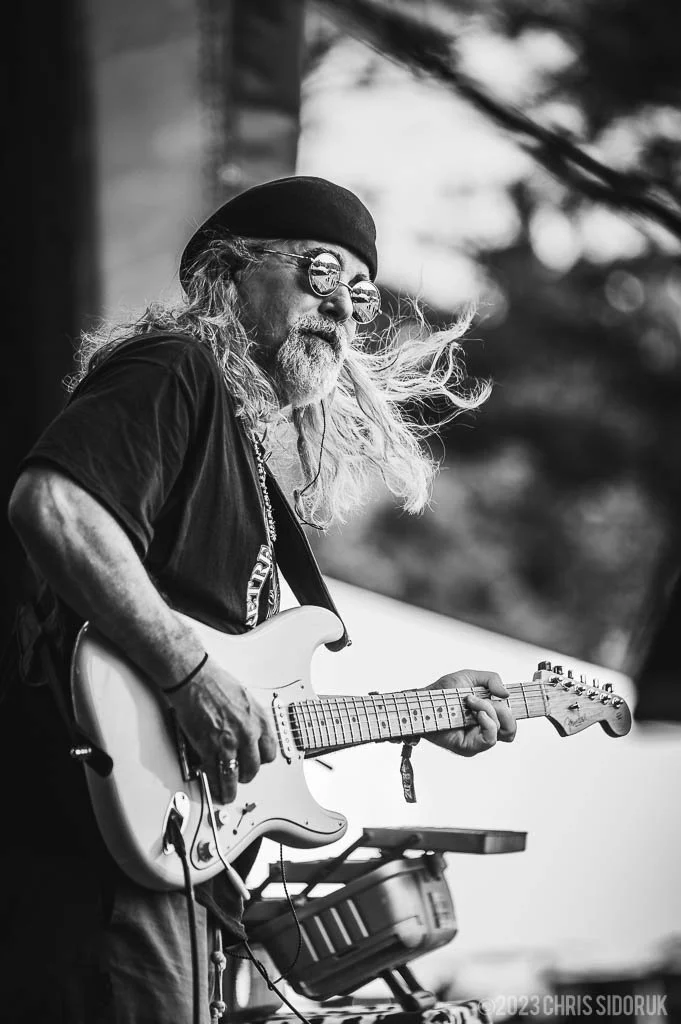
Creamery Station at Adirondack Independence Music Festival. | photo- ©2023 Chris Sidoruk
Start With a Coverage Plan Before You Arrive
Large festivals can become overwhelming quickly.
Multiple stages, overlapping performances, and changing conditions can make it easy to miss important moments.
Before shooting, create a simple plan.
Consider:
Which Artists Matter Most?
Prioritize:
headliners
artists you have assignments for
performers with strong visual energy
Which Moments Cannot Be Recreated?
Examples:
opening songs
special collaborations
unique stage productions
sunset performances
final sets
These moments deserve planning.
Leave Room for Unexpected Moments
Some of the best festival photographs happen when you are not following a schedule.
Be ready for:
crowd interactions
artists moving through unexpected areas
interesting lighting
candid moments
A plan helps you stay organized.
Flexibility creates memorable images.
Music Festival Photography Is About Anticipation
The biggest difference between beginner and experienced festival photographers is often not equipment.
It is anticipation.
Experienced photographers begin recognizing:
when a musician is about to move
when lighting will peak
when the crowd will react
when a moment is developing
Instead of reacting after something happens, they are already prepared.
That ability comes from experience, observation, and understanding live performance.
Festival Gear & Camera Setup (What Actually Matters)
Music festivals are one of the hardest environments for photography equipment because they combine nearly every challenge at once:
unpredictable lighting
long shooting days
fast-moving performers
multiple stages
crowds and limited movement
changing weather conditions
The best festival setup is not necessarily the most expensive one.
It is the one that allows you to keep shooting comfortably for 8–12 hours without slowing down.
A reliable festival kit should prioritize:
autofocus performance
low-light capability
versatility
portability
battery life
durability
The biggest mistake photographers make is building a setup optimized for a single perfect shot instead of an entire festival day.
A festival photographer needs gear that works consistently from the first band of the afternoon to the final headliner at night.
Music Festival Photography Gear Checklist
| Gear | Recommended | Why It Matters |
|---|---|---|
| Camera Body | Modern mirrorless camera | Better autofocus, low-light performance, lighter weight |
| Main Lens | 24-70mm or similar zoom | Covers most stage situations |
| Telephoto Lens | 70-200mm or 100-400mm | Reach for distant stages |
| Fast Prime | 35mm, 50mm, or 85mm f/1.8 | Low-light and creative shots |
| Batteries | 3+ batteries | Festival days are long |
| Memory Cards | Multiple high-capacity cards | Prevents running out during sets |
| Camera Bag | Comfortable weather-resistant bag | Carrying gear all day matters |
| Rain Protection | Covers + dry bags | Outdoor festivals change quickly |
| Ear Protection | Professional earplugs | Protect hearing during long days |
Camera Body
Recommended: Modern mirrorless camera
Why It Matters: Better autofocus, low-light performance, lighter weight
Main Lens
Recommended: 24-70mm or similar zoom
Why It Matters: Covers most stage situations
Telephoto Lens
Recommended: 70-200mm or 100-400mm
Why It Matters: Reach for distant stages
Fast Prime
Recommended: 35mm, 50mm, or 85mm f/1.8
Why It Matters: Low-light and creative shots
Batteries
Recommended: 3+ batteries
Why It Matters: Festival days are long
Memory Cards
Recommended: Multiple high-capacity cards
Why It Matters: Prevents running out during sets
Camera Bag
Recommended: Comfortable weather-resistant bag
Why It Matters: Carrying gear all day matters
Rain Protection
Recommended: Covers + dry bags
Why It Matters: Outdoor festivals change quickly
Ear Protection
Recommended: Professional earplugs
Why It Matters: Protect hearing during long days
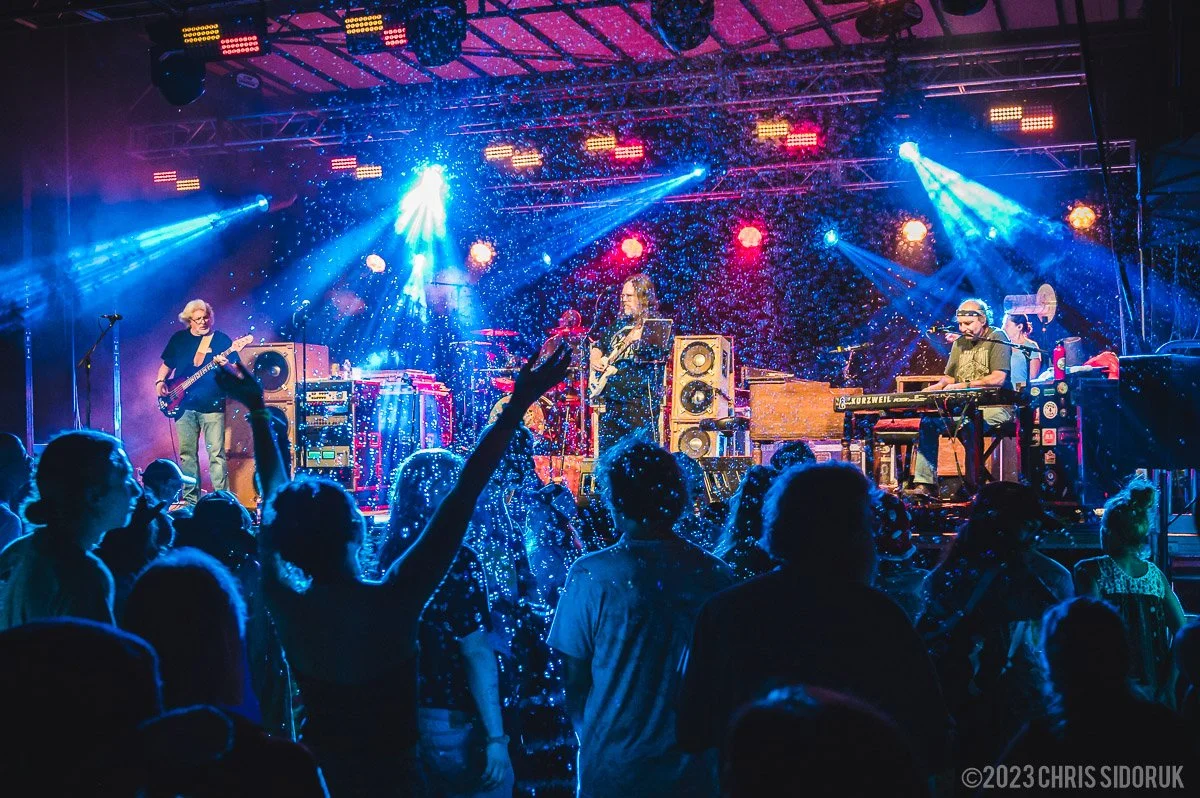
Dark Star Orchestra performing at Bear’s Picnic in Pennsylvania. | photo- ©2023 Chris Sidoruk
Best Cameras for Music Festival Photography
Modern mirrorless cameras are the preferred choice for most festival photographers because they provide the best combination of:
fast autofocus
excellent high ISO performance
lightweight bodies
electronic viewfinders
advanced subject tracking
A good festival camera should handle:
changing stage lighting
moving performers
backlit situations
fast action
thousands of images in a single day
What Matters Most in a Festival Camera
Autofocus Performance
Festival performers rarely stay still.
Musicians move across stages, lighting changes constantly, and you often have only seconds to capture important moments.
A strong autofocus system helps with:
tracking performers during movement
maintaining focus in low light
quickly switching between subjects
capturing unpredictable moments
Modern subject detection systems have become extremely useful, especially for photographers covering multiple artists across several stages.
Low-Light Performance
Festival photography often transitions from bright afternoon sunlight into difficult nighttime conditions.
A camera with strong high ISO performance gives you more flexibility when:
stage lighting is dark
performers move quickly
you need faster shutter speeds
you are shooting without ideal angles
Full-frame cameras still provide an advantage here, but modern APS-C cameras can produce excellent results when paired with fast lenses.
Resolution vs Speed
More megapixels are not always better for festival work.
High-resolution cameras provide:
more cropping flexibility
larger print capability
additional detail
However, they also create:
larger files
slower workflows
more storage requirements
For festival photography, a balanced camera with excellent autofocus and high ISO performance is often more valuable than maximum resolution.
Recommended Festival Cameras
Best Overall: Nikon Z9
For photographers who regularly cover major festivals, the Nikon Z9 represents one of the most complete professional tools available.
Strengths:
exceptional autofocus tracking
outstanding low-light performance
no mechanical shutter limitations
excellent battery life
professional durability
The Z9 is especially valuable when covering:
multiple performers
fast-moving stage action
long festival days
professional assignments
The downside is size and cost.
For photographers who only occasionally shoot festivals, it may be more camera than they need.
Best Professional Value: Sony A7 IV
The Sony A7 IV offers one of the strongest combinations of:
image quality
autofocus
portability
price
Strengths:
excellent autofocus system
strong low-light performance
33MP resolution
extensive lens selection
It is a great choice for photographers who want one camera that can handle:
concerts
festivals
portraits
commercial work
video
Best Canon Option: Canon EOS R6 Mark II
The Canon EOS R6 Mark II is extremely well suited for live music photography.
Strengths:
excellent autofocus
outstanding high ISO performance
fast burst shooting
lightweight professional body
Its 24MP sensor is more than enough for editorial, online publication, and most client delivery.
For festival photographers who value speed and reliability over extreme resolution, it is a very strong option.
Best Budget Festival Camera Options
Photographers starting out do not need a flagship body.
Strong budget options include:
Canon EOS R8
Sony A7 III (used)
Nikon Z5
Canon EOS R50 with a fast lens
A strong lens on a budget camera will often produce better results than an expensive body paired with a slow lens.
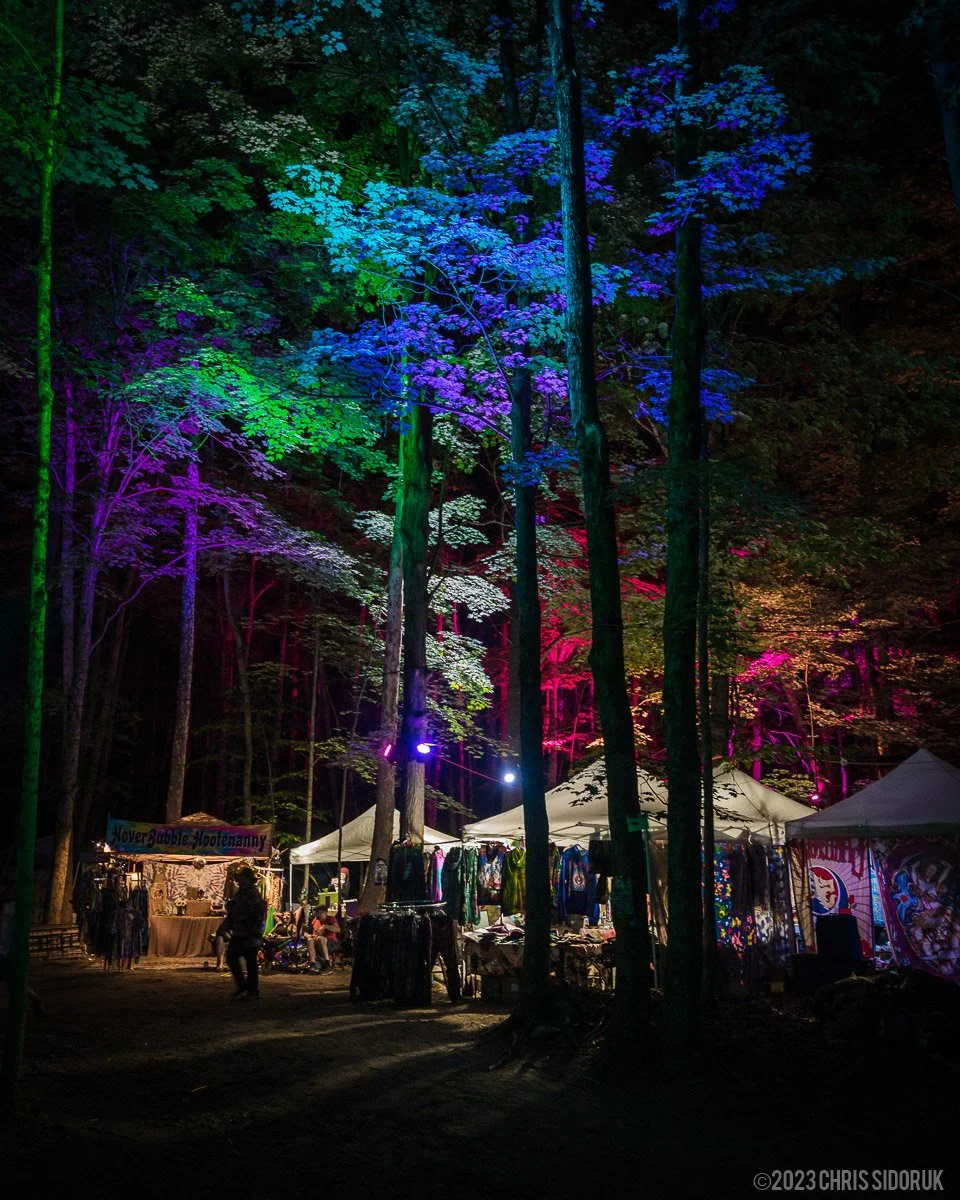
Trees lit up at Strange Creek Music Festival | photo- ©2023 Chris Sidoruk
Lenses for Music Festival Photography
Lens choice often matters more than the camera body.
Festival environments require flexibility because you may go from:
photographing a singer close to the stage
capturing an entire crowd scene
shooting a performer across a large field
working in near darkness
A versatile lens setup usually includes:
standard zoom
telephoto zoom
fast prime
wide-angle option
The Festival Workhorse Lens
24-70mm f/2.8 Zoom
A 24-70mm f/2.8 is one of the most useful festival lenses ever created.
It covers:
environmental stage shots
band interactions
crowd photos
portraits
backstage moments
The flexibility is invaluable when you cannot physically move closer.
Why photographers love it:
constant f/2.8 aperture
fast focusing
excellent image quality
replaces multiple primes
For many photographers, this is the lens that stays on the camera most of the day.
Telephoto Lens for Festival Stages
70-200mm f/2.8
The 70-200mm f/2.8 is the classic concert and festival telephoto lens.
It allows you to:
isolate performers
compress stage backgrounds
photograph from farther away
capture emotional close-ups
It becomes especially important when:
photo pits are crowded
stages are large
photographers cannot move freely
For large festivals, this lens is often essential.
Fast Prime Lenses for Night Sets
35mm f/1.8
A 35mm prime is excellent for:
environmental storytelling
crowd interaction
small stages
low-light situations
The wider perspective helps show the relationship between performer and audience.
50mm f/1.8
The 50mm f/1.8 is one of the best budget upgrades available.
Advantages:
inexpensive
extremely sharp
excellent low-light ability
beautiful background separation
It is a great first festival lens.
85mm f/1.8
The 85mm f/1.8 is ideal when you want:
performer portraits
emotional close-ups
subject isolation
It provides a more compressed look without the cost and weight of a professional zoom.
Wide-Angle Lenses for Festival Storytelling
Festival photography is not only about performers.
Some of the strongest images show:
massive crowds
stage production
landscapes
festival atmosphere
unique environments
A wide-angle lens helps tell the complete story.
Useful ranges:
14–24mm
16–35mm
20mm primes
Best Festival Photography Lens Choices
| Lens Type | Best Use | Advantages | Limitations |
|---|---|---|---|
| 24-70mm f/2.8 | Main festival lens | Covers most situations | Expensive |
| 70-200mm f/2.8 | Large stages | Reach + compression | Heavy |
| 35mm f/1.8 | Crowd + environmental shots | Small, fast, creative | Less reach |
| 50mm f/1.8 | Low-light performances | Affordable, sharp | Fixed focal length |
| 85mm f/1.8 | Performer portraits | Great separation | Harder in tight spaces |
| 14-24mm / 16-35mm | Crowd + venue scale | Shows atmosphere | Less subject isolation |
24-70mm f/2.8
Best Use: Main festival lens
Advantages: Covers most situations
Limitations: Expensive
70-200mm f/2.8
Best Use: Large stages
Advantages: Reach + compression
Limitations: Heavy
35mm f/1.8
Best Use: Crowd + environmental shots
Advantages: Small, fast, creative
Limitations: Less reach
50mm f/1.8
Best Use: Low-light performances
Advantages: Affordable, sharp
Limitations: Fixed focal length
85mm f/1.8
Best Use: Performer portraits
Advantages: Great separation
Limitations: Harder in tight spaces
14-24mm / 16-35mm
Best Use: Crowd + venue scale
Advantages: Shows atmosphere
Limitations: Less subject isolation
More about lenses:
Shooting Music Festivals in Changing Light & Low Light
Lighting is one of the biggest challenges in music festival photography.
Unlike controlled concert environments, festivals often force you to photograph through an entire day of changing conditions:
harsh midday sunlight
inconsistent shade
golden hour transitions
colorful stage lighting
dark nighttime performances
mixed artificial and natural light
The photographers who succeed are not the ones who have perfect lighting.
They are the ones who adapt quickly.
Festival photography rewards preparation, anticipation, and understanding how your camera reacts when conditions change.
Understanding Festival Lighting Conditions
A typical festival day may include several completely different lighting environments.
You might start with:
Afternoon sets
bright sunlight
high contrast
deep shadows
reflective stage equipment
Then transition into:
Golden hour performances
warm directional light
dramatic backlighting
longer shadows
more flattering conditions
Finally ending with:
Night sets
extreme contrast
colored LEDs
spotlights
haze and smoke
rapidly changing exposure
Each situation requires a different approach.
Midday Festival Photography
Bright afternoon performances can actually be more difficult than nighttime shows.
The problem is not lack of light.
The problem is too much of it.
Common challenges:
harsh shadows on faces
blown highlights
strong contrast
performers wearing dark clothing against bright backgrounds
Tips for Shooting in Harsh Sunlight
Watch Your Exposure
Bright sunlight can trick your camera's meter.
Pay attention to:
faces in direct sunlight
white clothing
reflective instruments
bright stage backgrounds
Protecting highlights is often more important than trying to brighten shadows later.
RAW files give you flexibility, but completely blown highlights cannot always be recovered.
Use Faster Shutter Speeds
Strong sunlight gives you the advantage of faster shutter speeds.
This allows you to freeze:
jumps
fast movements
guitar swings
drummer action
Typical daytime settings may allow:
1/1000s or faster shutter speeds
lower ISO
narrower apertures when needed
Look for Better Light
Do not always photograph where the light is strongest.
Look for:
performers entering shadows
side lighting
backlighting
moments when clouds soften the scene
Sometimes the best festival photos happen in the less obvious lighting situations.
Golden Hour Festival Photography
Golden hour is often one of the most rewarding times to photograph outdoor festivals.
The combination of:
warm sunlight
active performers
crowds gathering
changing atmosphere
creates some of the strongest storytelling opportunities.
Look for:
silhouettes
sun flares
performers surrounded by warm light
wide crowd scenes
environmental portraits
Using Backlight Creatively
Backlighting can create powerful images.
Instead of fighting the bright background, use it.
Backlighting can create:
glowing edges around performers
silhouettes
dramatic atmosphere
separation from the background
The key is exposing for the subject rather than letting the camera decide automatically.
Night Festival Photography
Night sets are where equipment and technique matter most.
Challenges include:
limited available light
fast performer movement
unpredictable lighting colors
high ISO requirements
This is where understanding your gear becomes critical.
Night Festival Camera Settings
There is no single perfect setting, but a strong starting point is:
Shutter Speed
For moving performers:
1/250s–1/500s
This helps freeze:
movement
facial expressions
instrument action
For slower moments:
1/125s–1/250s
may work depending on the performer.
Aperture
Use your lens wide open whenever necessary.
Common choices:
f/1.4
f/1.8
f/2
f/2.8
A wider aperture allows:
more light
lower ISO
faster shutter speeds
This is why fast lenses are so valuable for festival photography.
ISO
Do not be afraid of higher ISO.
Modern cameras are extremely capable.
A properly exposed ISO 6400 image will usually look better than an underexposed ISO 1600 image that needs heavy editing.
The goal is:
capture the moment first, clean it up later.
Autofocus Tips for Low-Light Festivals
Low light is where autofocus systems are tested.
To improve consistency:
Use Continuous Autofocus
For moving performers:
AF-C (Nikon/Sony)
Servo AF (Canon)
is usually the better choice.
The camera can continue adjusting focus as subjects move.
Use Subject Detection When Helpful
Modern cameras can track:
faces
eyes
people
This can be extremely useful when performers are moving unpredictably.
However, do not rely on it completely.
You still need:
good positioning
anticipation
timing
Avoid Hunting Situations
Autofocus struggles with:
very dark scenes
heavy smoke
flashing lights
low contrast subjects
If your camera struggles:
switch focus points
find contrast on the performer
pre-focus when possible
Dealing With Colored Stage Lighting
Festival lighting is often designed for atmosphere, not photography.
You may encounter:
red-only lighting
blue washes
intense green LEDs
rapidly changing colors
These conditions can create difficult files.
Red Lighting Problems
Red stage lighting is one of the hardest situations.
It can cause:
lost skin detail
blown highlights
difficult color correction
Solutions:
protect highlights
shoot RAW
avoid overexposing bright areas
adjust white balance during editing
Don't Always Correct the Color
A common mistake is trying to make every image look "natural."
Stage lighting is part of the experience.
A purple or blue image may accurately represent the atmosphere of the performance.
The goal is not removing the environment.
The goal is preserving the feeling.
Weather and Outdoor Festival Conditions
Outdoor festivals introduce another variable:
weather.
Professional festival photographers prepare for:
rain
dust
heat
humidity
cold temperatures
Rain Photography Tips
Rain can create some of the most memorable festival images.
Look for:
reflections
umbrellas
wet stage surfaces
dramatic skies
emotional crowd moments
Protect your gear with:
rain covers
waterproof bags
microfiber cloths
sealed camera bodies when available
Heat and Dust Considerations
Summer festivals can be hard on both photographers and equipment.
Be prepared for:
overheating
dusty environments
sweaty hands
changing batteries
Helpful habits:
keep gear covered when not shooting
avoid unnecessary lens changes
clean equipment afterward
carry extra water and supplies
The Importance of Shooting RAW
Festival lighting is unpredictable.
RAW files provide:
more highlight recovery
better shadow adjustment
improved color correction
flexibility with mixed lighting
JPEG files can work, but RAW gives you significantly more control when conditions are difficult.
Exposure Strategy: Protect Highlights
One of the most important festival photography lessons:
Do not chase brightness. Protect information.
Stage lights can create extremely bright areas.
If those highlights are destroyed, no editing can bring them back.
A slightly darker RAW file is often much easier to recover than a clipped image.
Using Two Camera Bodies
For serious festival coverage, two bodies can dramatically improve workflow.
A common setup:
Camera 1
24-70mm f/2.8
Camera 2
70-200mm f/2.8
Benefits:
faster lens changes
fewer missed moments
less dust exposure
different perspectives instantly available
For long festival days, this setup can also reduce physical strain because you are not constantly swapping equipment.
Staying Creative When Conditions Are Difficult
The best festival photos are often created when conditions are imperfect.
Examples:
harsh sunlight creates dramatic shadows
rain creates atmosphere
darkness creates mood
crowds create layers
changing lights create emotion
Instead of asking:
"How do I fix this lighting?"
Ask:
"How can this lighting become part of the story?"
Final Festival Lighting Checklist
Before each set, quickly evaluate:
✅ Where is the strongest light coming from?
✅ Is the performer moving quickly or slowly?
✅ Do I need a faster shutter speed?
✅ Can I use the environment in the frame?
✅ Are highlights at risk?
✅ Is my ISO choice helping me capture the moment?
The goal is not perfect exposure.
The goal is capturing meaningful moments in constantly changing conditions.
Essential Festival Photography Accessories
The camera and lenses are only part of the equation.
A professional festival kit also needs supporting equipment.
Extra Batteries
Never arrive at a festival with only one battery.
A full day may require:
3–5 batteries for mirrorless cameras
more if shooting video
Cold temperatures, heavy autofocus use, and electronic viewfinders can drain batteries quickly.
Memory Cards
Festival photography creates massive amounts of data.
Recommended:
multiple high-capacity cards
fast write speeds
reliable brands
A safer workflow:
rotate cards throughout the day
avoid putting every image on one card
back up files after the event
Camera Bag
The best festival bag is not necessarily the largest.
Look for:
comfortable all-day carry
quick lens access
weather protection
security in crowds
enough room without unnecessary weight
A lightweight setup becomes more valuable every hour you are standing.
Camera Straps
A comfortable strap can make a huge difference.
Popular options:
sling straps
dual-camera harness systems
padded shoulder straps
Many festival photographers carry two bodies to avoid constant lens changes.
Example:
Camera 1:
24-70mm f/2.8
Camera 2:
70-200mm f/2.8
This setup allows instant switching between storytelling and performer isolation.
Weather Protection
Outdoor festivals mean unpredictable conditions.
Pack:
rain cover
microfiber cloths
waterproof bag protection
lens cloths
small towel
Protecting your equipment is much easier than recovering from water damage.
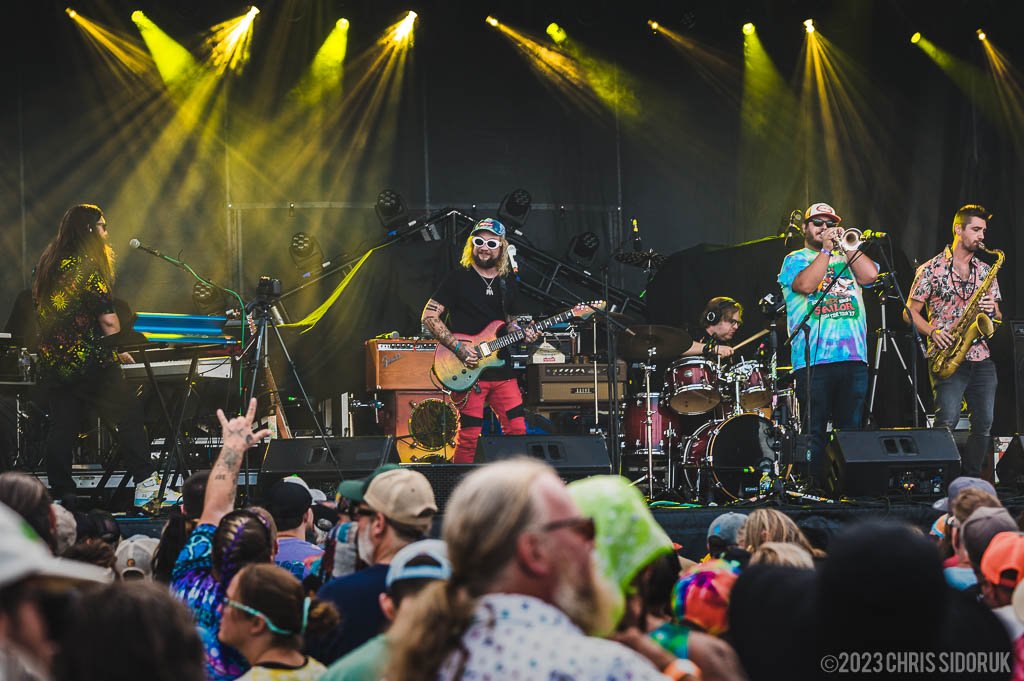
Mihali (Live Band) at Adirondack Independence Music Festival | photo- ©2023 Chris Sidoruk
Building a Real-World Festival Photography Kit
The best setup depends on your experience level and shooting goals.
Beginner Festival Setup ($1,500–$2,500)
Camera:
Canon EOS R50
Sony a6100/a6400
Used full-frame body
Lenses:
50mm f/1.8
18-50mm f/2.8 zoom
Accessories:
extra batteries
memory cards
comfortable camera bag
Best for:
local bands
small festivals
learning live music photography
Serious Enthusiast Setup ($3,000–$5,000)
Camera:
Sony A7 IV
Canon EOS R6 Mark II
Nikon Z6 III
Lenses:
24-70mm f/2.8
70-200mm f/2.8
50mm f/1.8 backup
Accessories:
multiple batteries
rugged SSD backup
professional bag
Best for:
regular festival coverage
editorial work
growing portfolios
Professional Festival Setup ($6,000+)
Camera bodies:
Nikon Z9
Canon EOS R5 Mark II / R6 Mark II
Sony A1 / A9 series
Lenses:
24-70mm f/2.8
70-200mm f/2.8
fast primes
wide-angle zoom
Additional gear:
dual camera harness
multiple card backups
weather protection
professional storage workflow
Best for:
major festivals
publications
commercial assignments
touring coverage
The Most Important Festival Gear Rule
The best festival setup is the one you can carry comfortably all day.
A lighter kit that you actually use will outperform a massive setup that leaves you exhausted.
Festival photography rewards:
preparation
mobility
reliability
fast decisions
The gear should disappear so you can focus on the moments happening in front of you.
Composition in Chaotic Festival Environments
Music festivals are visually overwhelming.
There are:
thousands of people moving at once
colorful stage lights
large production elements
multiple subjects competing for attention
constantly changing backgrounds
The challenge is not finding something to photograph.
The challenge is creating an image where the viewer immediately understands what matters.
Strong festival photography is about creating order inside chaos.
The best images usually combine:
a clear subject
intentional framing
emotional timing
environmental context
A technically sharp photo of a performer standing on stage is not always memorable.
A strong festival photograph tells the viewer:
Where are we?
What does this moment feel like?
Why does this performance matter?
Finding Strong Compositions at Festivals
Unlike controlled portrait sessions, festivals rarely give you perfect conditions.
You often have:
limited movement
blocked sightlines
unpredictable lighting
other photographers nearby
crowds moving through your frame
Instead of waiting for a perfect scene, learn to recognize opportunities quickly.
Use the Environment as Part of the Story
One of the biggest differences between basic concert photos and strong festival photography is environmental storytelling.
A concert photo often focuses on:
artist
instrument
lighting
A festival photo should often include:
stage design
crowd energy
location
atmosphere
scale
The environment tells the viewer that this was not just a performance.
It was an experience.
Look for:
large crowd reactions
stage structures
flags and decorations
unique festival locations
sunset backgrounds
interesting lighting elements
A wide image showing thousands of people watching a performance can sometimes communicate more than a close-up of the performer.
Layering: Creating Depth in Festival Photos
Festival environments naturally provide opportunities for layered compositions.
Instead of photographing only the subject, look for three levels:
Foreground
Examples:
crowd silhouettes
raised hands
people dancing
festival decorations
Middle Ground
Examples:
performers
musicians
stage action
Background
Examples:
lighting rigs
screens
landscapes
production elements
These layers create depth and make the viewer feel like they are standing inside the moment.
Crowd as a Storytelling Element
The crowd is often the missing piece in festival photography.
Many photographers focus entirely on the stage, but the audience shows the impact of the music.
Look for:
people singing along
emotional reactions
dancing
friends experiencing the moment together
hands in the air
silhouettes against stage lighting
A performer photo shows what happened.
A crowd photo shows why it mattered.
Using Different Focal Lengths for Different Stories
Festival storytelling requires variety.
Shooting an entire day with one lens often creates a repetitive gallery.
A stronger approach is to intentionally capture different perspectives.
Wide-Angle Images: Establish the World
Wide shots answer:
"Where is this happening?"
Useful for:
opening festival coverage
crowd scenes
stage production
environmental portraits
Examples:
artist performing with a massive crowd behind them
sunset over the festival grounds
audience watching from a distance
Common focal lengths:
14mm
16mm
20mm
24mm
Medium Shots: Connect Viewer and Subject
Medium focal lengths create a balance between performer and environment.
Useful for:
musicians interacting on stage
singer and crowd connection
band members together
Common focal lengths:
35mm
50mm
70mm
Tight Shots: Capture Emotion
Telephoto images help isolate moments.
Look for:
facial expressions
hands playing instruments
emotional reactions
dramatic lighting
Common focal lengths:
85mm
135mm
200mm
A strong festival gallery usually contains all three perspectives.
Shooting Through the Chaos
Festival environments are full of distractions.
You cannot always remove them.
Instead, learn to use them.
Watch Your Edges
Many otherwise strong festival images fail because of distractions near the frame edges.
Before pressing the shutter, check:
microphone stands
speaker stacks
random people entering the frame
bright distracting lights
equipment cases
Small distractions become much more noticeable when reviewing images later.
Use Light Intentionally
Festival lighting can be unpredictable, but it can also create some of the strongest images.
Look for:
backlighting
silhouettes
colored stage washes
spotlights hitting performers
beams through smoke or haze
Instead of fighting difficult lighting, learn how to use it.
Some of the most memorable festival images happen because the lighting was imperfect.
Capturing Stage vs Crowd Storytelling
A complete festival gallery needs both.
A common mistake is delivering 50 photos of performers and almost nothing about the event itself.
Professional festival coverage usually tells a larger story.
Stage Photography
Stage images focus on the performance itself.
Important moments include:
emotional expressions
musicians interacting
dramatic gestures
instrument movement
lighting peaks
crowd engagement from the stage
The goal is not simply documenting who played.
The goal is showing what the performance felt like.
Crowd Photography
Crowd images show the cultural side of the festival.
Look for:
strangers connecting through music
friends celebrating together
dancing
emotional reactions
unique characters
The audience often provides the most authentic storytelling moments because people are not performing for the camera.
The Importance of Anticipation
The best festival photographers are not just reacting.
They are predicting.
Great moments usually have a buildup:
singer moving toward the microphone
guitarist preparing for a solo
drummer raising a stick
performer approaching the crowd
lighting changing before a chorus
Learning to anticipate these moments separates experienced photographers from people simply holding down the shutter.
Stage vs Crowd Festival Photography
| Approach | What You Capture | Goal |
|---|---|---|
| Stage Photography | Performers, lighting, expressions, movement | Show the performance |
| Crowd Photography | Fans, emotions, reactions, atmosphere | Show the experience |
| Environmental Photography | Stages, grounds, landscapes, details | Show the scale |
| Behind-The-Scenes | Artists, staff, preparation | Show the story behind the event |
Stage Photography
What You Capture: Performers, lighting, expressions, movement
Goal: Show the performance
Crowd Photography
What You Capture: Fans, emotions, reactions, atmosphere
Goal: Show the experience
Environmental Photography
What You Capture: Stages, grounds, landscapes, details
Goal: Show the scale
Behind-The-Scenes
What You Capture: Artists, staff, preparation
Goal: Show the story behind the event
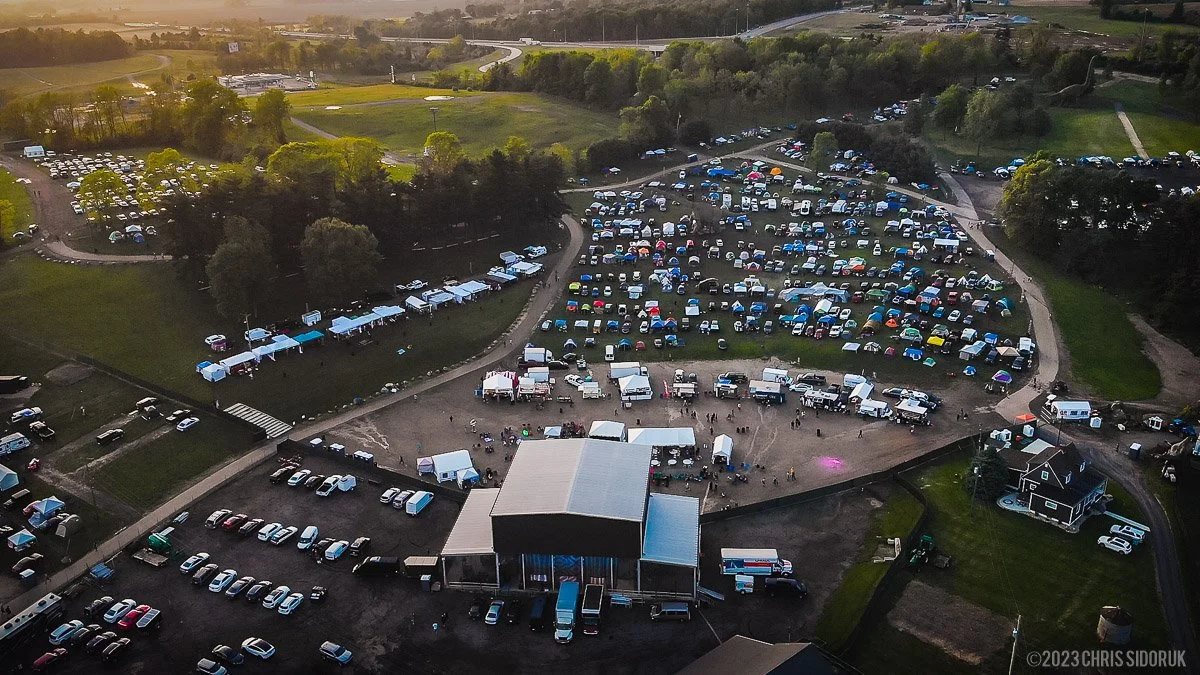
Aerial view of Hookahville 56 at Legend Valley in Thornville, Ohio. | photo- ©2023 Chris Sidoruk
Timing vs Burst Mode
Modern cameras can shoot incredibly fast.
But more frames do not automatically create better images.
Burst mode is useful, but it should support your timing—not replace it.
When Burst Mode Helps
Use burst shooting for:
jumps
fast movement
unpredictable gestures
crowd reactions
moments you cannot predict
Examples:
performer jumping from the stage
drummer hitting a major transition
artist throwing an instrument pick
When Timing Matters More
For many festival moments, anticipation is better.
A single well-timed frame often beats:
hundreds of nearly identical images
more time spent sorting files
accidental compositions
A useful approach:
Predict → Position → Wait → Capture
Instead of:
Spray → Hope → Sort Later
Photo Pit Etiquette and Professional Festival Behavior
Festival photography is not only about creating images.
It is also about being someone organizers, artists, and other photographers want to work with again.
Your behavior affects future opportunities.
Respect Access Rules
Every festival has different expectations.
Follow:
photo pit time limits
restricted areas
security instructions
artist restrictions
media rules
Breaking rules can affect not only you, but future photographers trying to gain access.
Move With Purpose
The photo pit can become crowded quickly.
Good etiquette:
avoid blocking other photographers
move efficiently
do not camp in one spot
be aware of your surroundings
avoid unnecessary movement during emotional moments
Professional photographers make space for others.
Respect the Audience Experience
Remember:
You are documenting an event people paid to experience.
Avoid:
holding gear above people's heads unnecessarily
blocking views
pushing through crowds aggressively
using flash when inappropriate
The best photographers become invisible.
Editing Workflow for Large Festival Galleries
Festival photography creates a unique editing challenge.
A single day can produce:
hundreds of images
thousands of RAW files
multiple performers
changing lighting conditions
Without a workflow, editing becomes overwhelming.
Step 1: First Cull — Remove the Obvious Rejects
Start by removing:
missed focus
duplicates
accidental frames
closed eyes
poor compositions
Do not overthink this stage.
The goal is reducing volume.
Step 2: Second Cull — Select the Story
Now evaluate images based on:
emotion
lighting
composition
uniqueness
storytelling value
Ask:
"Does this image add something different?"
A gallery with 20 great photos is stronger than one with 100 repetitive images.
Step 3: Build Visual Variety
A strong festival set usually includes:
Establishing shots
Where the viewer understands the location.
Performance images
The artists and musicians.
Crowd moments
The emotional impact.
Details
Small moments that complete the story.
Examples:
backstage details
festival signs
instruments
decorations
attendees
Step 4: Maintain a Consistent Editing Style
Festival lighting can create difficult color situations.
Avoid:
extreme saturation
inconsistent white balance
overly crushed shadows
excessive noise reduction
The goal is not making every image look identical.
The goal is making the entire gallery feel connected.
Delivering Festival Coverage Like a Professional
The final selection should feel like a story.
A strong sequence often follows this structure:
Arrival / environment
Festival atmosphere
Artist performances
Crowd energy
Emotional peak moments
Closing images
The viewer should feel like they experienced the event.
That is the difference between documenting a festival and telling the story of one.
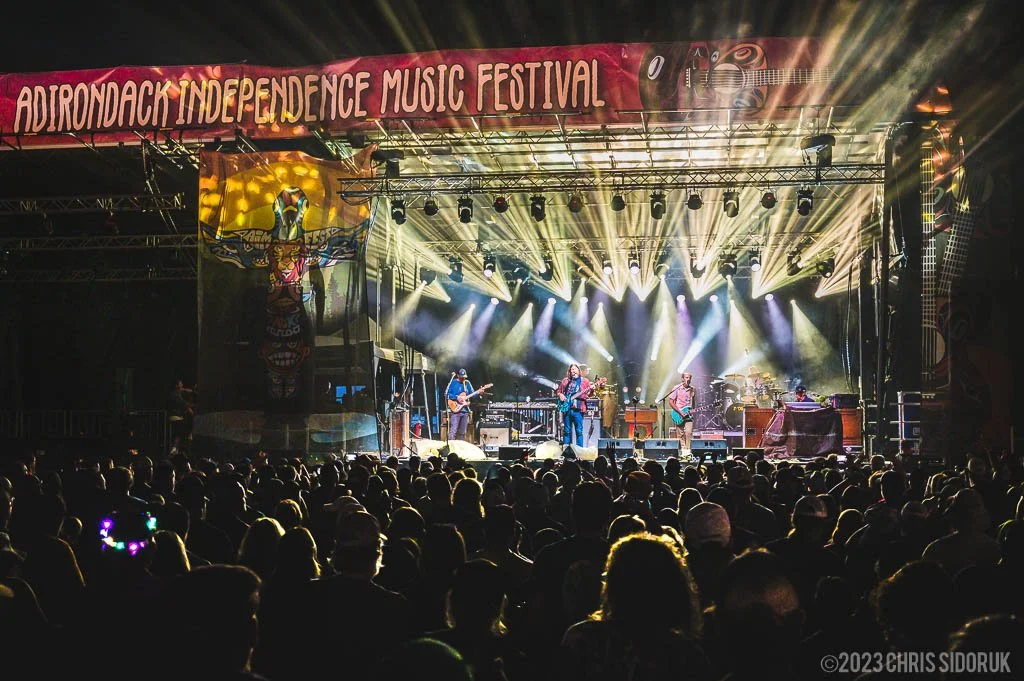
Adirondack Independence Music Festival in Lake George, NY| photo- ©2023 Chris Sidoruk
How to Get Music Festival Photography Access
Getting access to photograph a music festival is often more complicated than simply showing up with a camera.
Unlike small local concerts, festivals usually have:
media policies
application deadlines
limited photographer credentials
artist restrictions
designated shooting areas
The quality of your images matters, but so does your professionalism, portfolio, and ability to show that you understand event coverage.
Access is earned through trust.
Types of Festival Photography Access
There are several common ways photographers gain festival access.
Press / Media Credentials
Many festivals provide media passes for:
photographers
publications
music websites
local media outlets
Typically, organizers want to see:
previous event coverage
portfolio examples
publication affiliation
audience reach or editorial purpose
A strong portfolio showing similar events can make a major difference.
Artist or Management Access
Sometimes access comes through the performers rather than the festival.
Artists may need:
promotional images
tour coverage
social media content
press photos
Building relationships with bands can eventually lead to larger festival opportunities.
Festival Media Applications
Many larger festivals open applications months before the event.
Requirements may include:
website portfolio
examples of previous concert photography
social media links
publication information
assignment details
Apply early.
Popular festivals often receive far more requests than available photo credentials.
Working With Publications
A common path into festival photography is partnering with:
music blogs
local publications
entertainment websites
regional magazines
Publications can provide:
official media credentials
assignments
exposure
networking opportunities
Even smaller outlets can be valuable early in your career because they help build a track record.
Building a Festival Photography Portfolio
Festival organizers are not just looking for technically sharp images.
They want photographers who can tell the story of an event.
A strong festival portfolio should include:
Artist Coverage
Show that you can capture:
emotion
movement
energy
stage presence
Crowd Storytelling
Include images showing:
audience reactions
atmosphere
connection between fans and performers
Environmental Images
Demonstrate that you can capture:
festival scale
locations
stages
production elements
Variety
A festival gallery should not look like:
50 photos of singers holding microphones.
Show that you understand event storytelling.
Common Festival Photography Mistakes
Many photographers struggle at festivals not because of camera settings, but because of approach.
Avoid these mistakes.
Trying to Photograph Everything
A festival may have:
multiple stages
dozens of artists
thousands of attendees
activities happening constantly
You cannot capture everything.
Instead, create a plan.
Ask:
What story am I telling?
Are you focused on:
headliners?
emerging artists?
crowd experience?
behind-the-scenes moments?
the overall festival atmosphere?
Intentional coverage produces stronger results.
Carrying Too Much Gear
More equipment does not automatically create better photos.
A heavy bag can become a disadvantage after several hours.
Extra gear can lead to:
fatigue
slower movement
missed moments
less creativity
Bring what supports your shooting style.
Ignoring the Crowd
A festival is not just a stage performance.
The audience creates the energy.
Some of the strongest images may happen away from the performers.
Look for:
fans singing along
emotional reactions
friendships
unique characters
spontaneous moments
Overshooting Without a Plan
Thousands of images do not guarantee a strong gallery.
Overshooting creates:
longer editing sessions
repetitive galleries
decision fatigue
Focus on capturing meaningful moments.
Forgetting the Story
A festival gallery should feel like an experience.
A strong collection answers:
Where was this?
Who was there?
What did it feel like?
Why was it memorable?
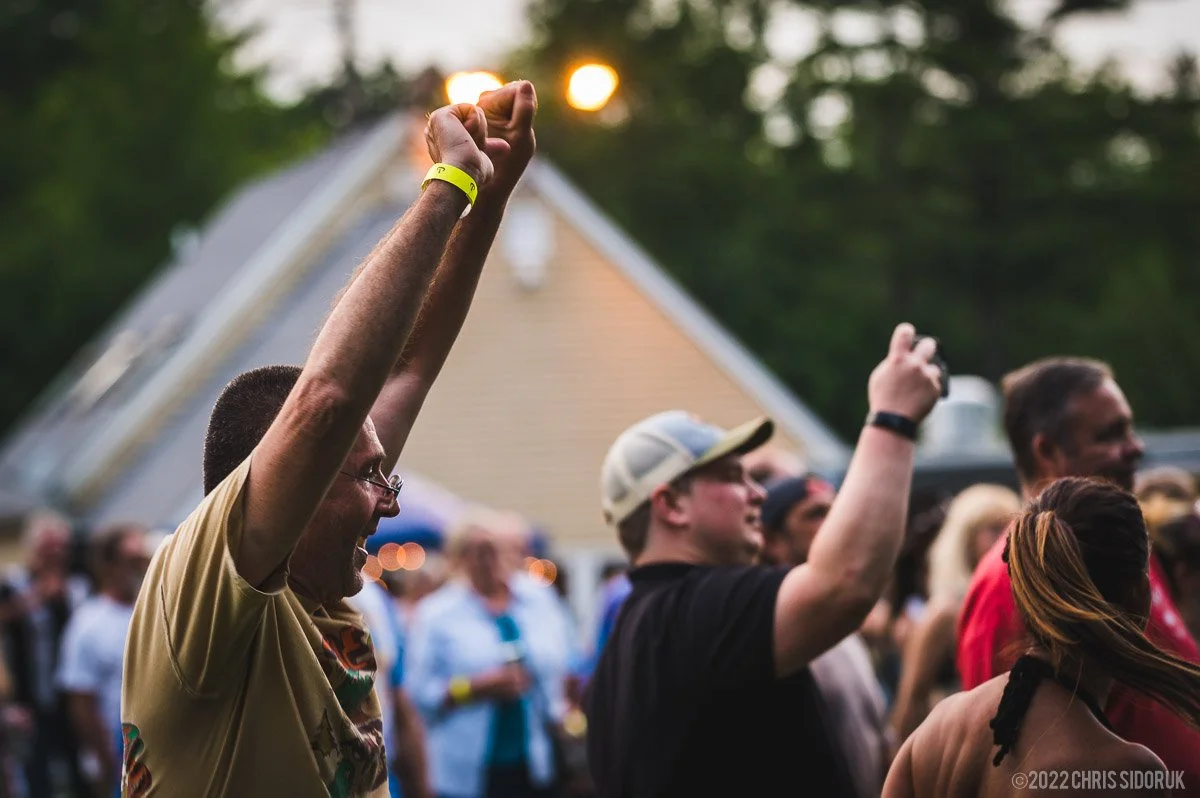
Concert goer enjoying the pure bliss of a Max Creek performance. | photo- ©2022 Chris Sidoruk
Developing a Festival Photography Workflow
Professional festival coverage requires organization.
A good workflow begins before the event.
Before the Festival
Prepare:
Research the Schedule
Know:
artist lineup
stage locations
set times
expected lighting conditions
Planning helps you avoid missing important moments.
Scout the Location
If possible, understand:
stage positions
crowd flow
shooting restrictions
sunset direction
access points
Knowing the environment saves time during the event.
Prepare Equipment
Before leaving:
charge batteries
format memory cards
clean lenses
check weather conditions
pack backups
Avoid solving preventable problems during the event.
During the Festival
A simple coverage approach:
Capture Establishing Images
Early in the day:
festival grounds
stages
attendees arriving
environmental details
These images establish the story.
Photograph Performances
Focus on:
emotion
interaction
movement
lighting moments
Avoid repeating the same frame.
Capture Between-Set Moments
Some of the most authentic festival images happen between performances.
Look for:
fans walking between stages
conversations
vendors
artists backstage
unexpected moments
After the Festival
Your workflow continues after the final performance.
Backup Immediately
Do not wait.
A professional workflow starts with protecting the files.
Recommended:
copy images to primary storage
create a second backup
organize by event/date
A single memory card is not a storage strategy.
Cull With Story in Mind
Do not simply choose the sharpest photos.
Choose images that represent:
emotion
variety
atmosphere
memorable moments
Deliver a Complete Story
A strong festival gallery usually includes:
Opening
The environment and anticipation.
Middle
Performances and crowd energy.
Peak
The biggest emotional moments.
Closing
The feeling after the event.
Think like a storyteller, not just a photographer.
Monetizing Music Festival Photography
Festival photography can lead to several opportunities beyond simply shooting the event.
Editorial Licensing
Images may be licensed for:
publications
event recaps
promotional articles
artist features
Artist Promotion
Bands may need:
social media images
website photos
tour content
promotional material
Festival Marketing
Organizers often need:
social media content
advertisements
future event promotion
sponsor materials
Prints and Personal Work
Festival photography can also become:
fine art prints
portfolio pieces
personal projects
The strongest images often have value beyond the original assignment.
Final Festival Photography Checklist
Before heading into a festival, make sure you have:
Gear
✅ Camera body you trust
✅ Fast lenses
✅ Extra batteries
✅ Multiple memory cards
✅ Comfortable bag
✅ Weather protection
Shooting Strategy
✅ Know the schedule
✅ Understand access rules
✅ Plan your story
✅ Capture stage + crowd
✅ Look for unique moments
Professional Habits
✅ Respect other photographers
✅ Follow festival rules
✅ Protect the audience experience
✅ Backup files immediately
✅ Deliver a consistent story
Final Thoughts
Music festival photography is a combination of technical skill, preparation, and storytelling.
The camera is only one part of the process.
The photographers who consistently create strong festival coverage understand how to:
anticipate moments
adapt to changing conditions
work professionally around others
capture both performers and audiences
create a complete visual story
The best festival images are not always the biggest moments.
Sometimes they are the quiet ones:
A fan experiencing a favorite song.
A performer reacting to the crowd.
A sunset over thousands of people.
A small moment that explains the entire event.
That is what turns festival photography from simple documentation into storytelling.
Frequently Asked Questions About Music Festival Photography
What is music festival photography?
Music festival photography is the process of documenting live performances, audience experiences, and the overall atmosphere of a festival event.
Unlike traditional concert photography, festival photography focuses on the complete story of the event, including:
performers on stage
crowd reactions
festival environments
behind-the-scenes moments
interactions between artists and fans
unique details that capture the identity of the festival
A strong festival photographer is not just documenting who performed. They are creating a visual record of what the event felt like.
What camera settings are best for music festival photography?
The best camera settings for music festival photography depend on lighting conditions, performer movement, and your equipment.
A common starting point for live performances:
Manual Exposure:
Shutter speed: 1/250s–1/500s
Aperture: f/1.8–f/2.8
ISO: 800–6400+ depending on lighting
For daytime festival sets:
use lower ISO
faster shutter speeds
watch highlights in harsh sunlight
For nighttime performances:
prioritize shutter speed and aperture
allow ISO to increase when necessary
expose for the performer rather than the brightest stage lights
The goal is not always the cleanest possible image. The goal is capturing sharp, emotional moments in difficult lighting.
What is the best shutter speed for festival photography?
For most music festival photography, a shutter speed between 1/250s and 1/500s is a good starting point.
This range helps freeze:
singer movement
guitar playing
drummer motion
jumping performers
crowd reactions
Faster shutter speeds may be needed for high-energy performances, while slower speeds can work for slower moments or creative motion blur.
A common mistake is using a shutter speed that is too slow because the scene looks bright enough. Brightness does not matter if the subject is moving and the image is blurry.
What aperture should I use for music festival photography?
Most festival photographers use wide apertures because lighting conditions change quickly.
Common choices include:
f/1.4
f/1.8
f/2
f/2.8
A wider aperture helps by:
allowing more light into the camera
keeping ISO lower
creating subject separation
improving low-light performance
Fast lenses are especially valuable for evening and nighttime festival sets.
Do I need a full-frame camera for music festival photography?
No.
A full-frame camera can provide advantages such as:
better high ISO performance
improved autofocus in difficult conditions
more control over depth of field
However, modern APS-C cameras are also capable of producing excellent festival images.
A camera like a Canon EOS R50, Sony a6400, or similar APS-C body paired with a fast lens can perform very well, especially for:
smaller festivals
local bands
daytime performances
photographers learning the craft
In many cases, investing in a better lens will improve results more than upgrading the camera body.
What lenses are best for music festival photography?
The best festival lens setup usually covers multiple shooting situations.
A professional kit often includes:
24-70mm f/2.8
Best all-around festival lens.
Useful for:
stage coverage
environmental portraits
crowd shots
band interactions
70-200mm f/2.8
Best for larger stages.
Useful for:
performer close-ups
distant stages
isolating subjects
35mm or 50mm f/1.8 prime
Best budget low-light option.
Useful for:
nighttime performances
smaller stages
crowd storytelling
The best lens depends on the size of the festival and your access position.
Can you photograph a music festival without a photo pass?
It depends on the festival.
Some smaller festivals allow attendees to bring cameras, while larger festivals often restrict professional equipment without credentials.
Before attending, check:
festival photography rules
prohibited equipment lists
camera policies
media application deadlines
Even when photography is allowed, professional-looking gear may not guarantee access to restricted areas like photo pits or backstage areas.
How do photographers get music festival photo passes?
Most festival photographers gain access through one of these routes:
Media Credentials
Working with:
publications
music websites
local media outlets
Artist Access
Photographing for:
bands
management teams
publicists
Direct Festival Applications
Many festivals accept photographer applications before the event.
A strong application usually includes:
concert photography portfolio
previous event coverage
website
professional contact information
Building relationships is often more valuable than simply having expensive equipment.
How many cameras should I bring to a music festival?
For casual festival photography, one camera body is completely fine.
For professional coverage, many photographers prefer two bodies.
A common setup:
Camera body one:
24-70mm f/2.8
Camera body two:
70-200mm f/2.8
Advantages:
fewer lens changes
faster reaction time
less chance of missing moments
easier coverage during long days
The downside is additional weight.
How many photos should you take at a music festival?
There is no perfect number.
A full festival day can easily produce:
hundreds of images for smaller events
thousands of images for major festivals
However, the goal is not simply creating more files.
Professional festival coverage focuses on selecting images that provide:
variety
emotion
storytelling
different perspectives
A gallery of 50 powerful images is often stronger than 500 repetitive ones.
How do you photograph concerts and festivals in low light?
Low-light festival photography depends on balancing three factors:
Aperture
Use your lens wide open to gather as much light as possible.
Shutter Speed
Keep the shutter fast enough to freeze movement.
ISO
Increase ISO when necessary rather than sacrificing sharpness.
Modern cameras handle high ISO much better than older systems.
A properly exposed ISO 6400 image will usually look better than an underexposed image captured at ISO 1600.
Should I shoot RAW or JPEG for music festivals?
RAW is strongly recommended for festival photography.
Festival lighting is unpredictable, and RAW files provide more flexibility for:
correcting white balance
recovering highlights
adjusting shadows
managing difficult stage colors
This is especially important when dealing with:
red stage lighting
mixed LED colors
backlighting
changing outdoor conditions
How do I edit music festival photos?
A good festival editing workflow focuses on storytelling.
Start by:
Removing duplicates and missed-focus images
Selecting images based on:
emotion
timing
composition
uniqueness
Creating variety:
wide environmental images
performer close-ups
crowd moments
behind-the-scenes details
Maintaining a consistent editing style
The goal is creating a complete visual story rather than delivering every technically acceptable image.
What makes a great music festival photograph?
A great festival photograph combines several elements:
Timing
Capturing the exact emotional peak.
Light
Using stage lighting, sunlight, or atmosphere creatively.
Composition
Creating clarity despite a chaotic environment.
Storytelling
Showing not only what happened, but what it felt like.
The strongest festival images make viewers feel the energy of the event even if they were not there.
Is music festival photography harder than concert photography?
In many ways, yes.
Concert photography usually involves:
one stage
controlled access
predictable lighting
shorter coverage periods
Festival photography adds:
multiple stages
outdoor conditions
changing weather
long shooting days
larger environments
more storytelling responsibility
However, festivals also provide more opportunities for creative images because there are more moments happening beyond the stage.
What gear should I bring to a music festival?
A practical festival photography kit includes:
Camera Equipment
reliable camera body
versatile zoom lens
fast prime lens
telephoto lens if needed
Accessories
extra batteries
multiple memory cards
comfortable camera bag
rain protection
lens cloths
portable storage or backup solution
The best setup is the one you can comfortably carry all day.
Can you make money as a music festival photographer?
Yes, but income usually comes from more than simply photographing the event.
Potential opportunities include:
licensing images
working with festivals
photographing artists
creating promotional content
editorial assignments
selling prints
Building relationships and creating consistent professional work are often more important than a single festival credential.
What is the biggest mistake beginner festival photographers make?
The biggest mistake is focusing only on the performers.
A festival is a complete experience.
Beginners often overlook:
crowd reactions
environmental shots
atmosphere
storytelling moments
The best festival photographers understand that the audience, location, and emotion are just as important as the person on stage.
==========
All photographs © Chris Sidoruk. Images are protected by copyright and may not be used, copied, modified, or redistributed without written permission.
Explore More Concert & Festival Photography Guides:
