

Concert Photography Composition: Framing, Timing & Storytelling
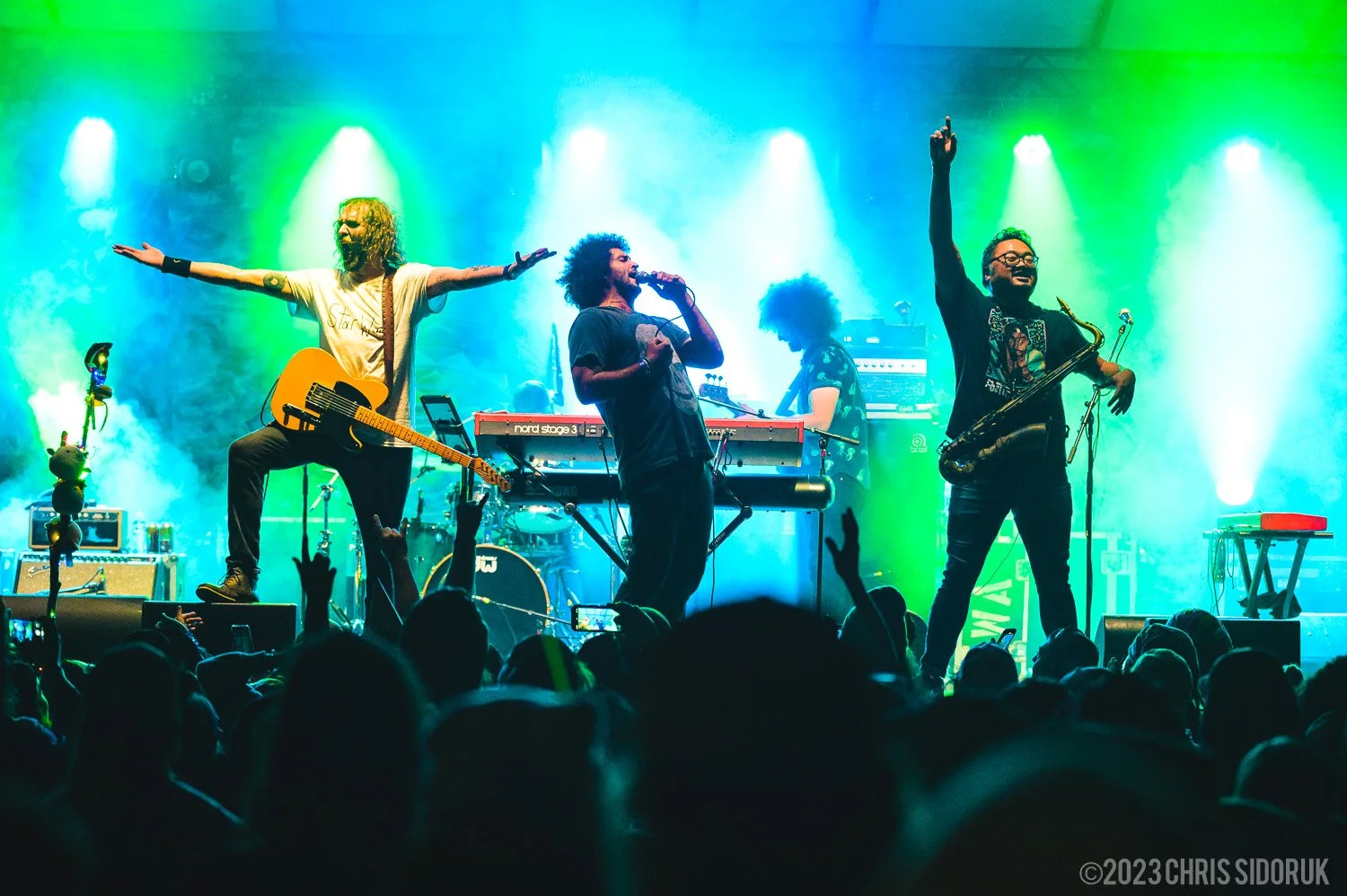
concert photography composition example live music
==========
Last Updated: August 2026
Quick Jump
- Why Concert Photography Composition Is Different
- The Three Elements of Every Strong Concert Photo
- Anticipate the Moment Instead of Reacting
- Composition Starts Before You Raise the Camera
- Framing in Chaotic Environments
- Working Around Stage Obstacles
- Subject Isolation
- Using Light as a Composition Tool
- Foreground and Layering: Creating Depth
- Common Composition Mistakes
- Frequently Asked Questions
Concert photography is one of the few types of photography where you have almost no control over what's happening in front of your camera.
You can't ask the singer to step into better light.
You can't move microphone stands out of the frame.
You can't pause the performance while you find a cleaner angle.
Instead, you're constantly making split-second decisions as lighting changes, musicians move unpredictably, and the crowd reacts around you.
That's what makes composition so important.
While camera settings help you capture a technically sharp image, composition is what transforms it into a photograph people actually remember.
This guide covers the techniques I rely on when photographing concerts—from intimate bar shows and clubs to outdoor festivals and larger venues. Rather than focusing on rigid photography "rules," we'll look at how to build stronger images by anticipating moments, using available light, and learning to work with the chaos instead of fighting it.
Why Concert Photography Composition Is Different
Landscape photographers often spend minutes—or even hours—waiting for the perfect light.
Portrait photographers can direct their subjects.
Sports photographers usually know where the action is heading.
Concert photographers don't have those luxuries.
Every performance is unpredictable.
Lighting changes every few seconds.
Performers constantly move across the stage.
Smoke machines, LED walls, microphones, instruments, and other photographers all compete for space in your frame.
Because of this, concert photography becomes a game of observation rather than control.
Instead of asking yourself:
"How do I build the perfect composition?"
Start asking:
"How do I recognize a great composition before it disappears?"
That small shift in thinking makes a huge difference.
The photographers who consistently create strong concert images aren't necessarily reacting faster—they're anticipating better.
The Three Elements of Every Strong Concert Photo
Every memorable concert photograph usually contains three things:
1. A Clear Subject
The viewer should instantly know what they're supposed to look at.
Whether it's the lead singer, guitarist, drummer, or an emotional crowd interaction, your subject should immediately stand out.
If someone's eyes wander around the frame trying to figure out what the photograph is about, the composition probably needs simplifying.
2. Good Light
Concert lighting isn't always beautiful—but it's always important.
A single spotlight can isolate a performer.
Backlighting can create dramatic silhouettes.
Colored LEDs can establish mood.
Learning to recognize good light—and waiting for it—is often more important than changing your camera settings.
3. A Story
The strongest concert photographs do more than show what happened.
They communicate what it felt like to be there.
Sometimes that's explosive energy.
Sometimes it's quiet emotion.
Sometimes it's the interaction between performers.
Sometimes it's the crowd singing every lyric back to the band.
Ask yourself:
"If someone had never attended this show, would this photograph help them understand the experience?"
If the answer is yes, you're probably on the right track.
Anticipate the Moment Instead of Reacting
One of the biggest differences between beginners and experienced concert photographers isn't camera gear.
It's anticipation.
Beginners tend to photograph what just happened.
Experienced photographers learn to recognize what is about to happen.
Watch performers closely.
You'll begin noticing patterns.
For example:
A guitarist steps toward center stage before a solo.
A singer grabs the microphone stand before belting out the chorus.
The drummer raises both sticks before a dramatic crash.
Band members move toward each other before interacting.
These moments rarely happen without warning.
If you're already framed and focused before the action peaks, your chances of capturing the decisive moment increase dramatically.
Instead of chasing moments, start predicting them.
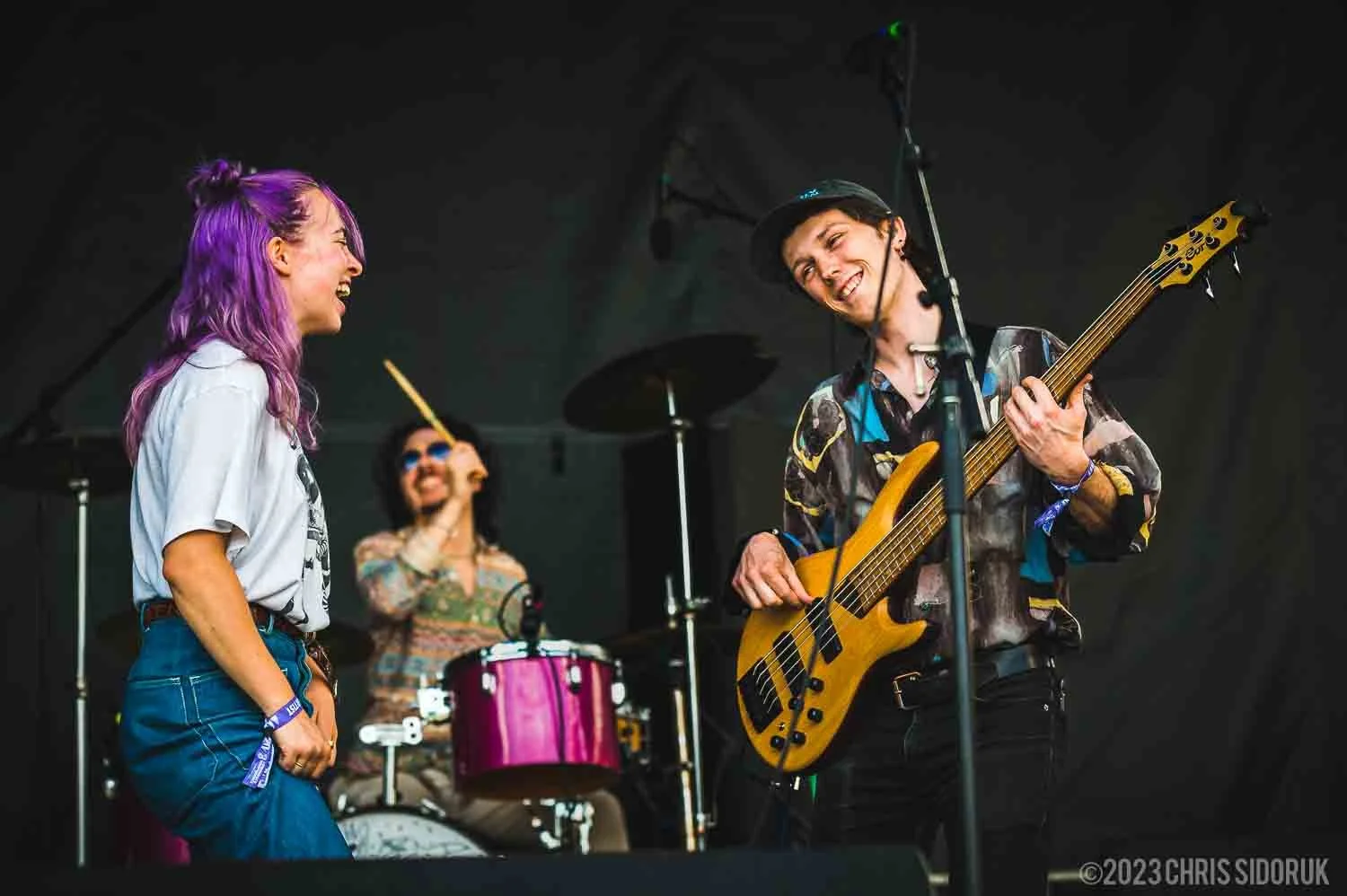
concert photography capturing peak moment
Composition Starts Before You Raise the Camera
One habit that's helped me more than almost anything else is learning to evaluate a scene before bringing the camera to my eye.
When you first look toward the stage, don't immediately start shooting.
Take a second to scan the scene.
Ask yourself:
Where is the cleanest light?
Which performer is most active?
What's happening in the background?
Is someone about to walk into the frame?
Is there a cleaner angle a few feet away?
That quick assessment often saves dozens of unusable images.
Good composition usually begins before you ever press the shutter.
Framing in Chaotic Environments
Concert stages are busy places.
You'll constantly deal with:
microphone stands
speakers
cables
lighting trusses
amplifiers
other musicians
photographers
audience members
Trying to eliminate every distraction is usually impossible.
Instead, simplify what you can.
Look for angles where your subject stands apart from the background.
Move slightly left or right if a microphone is crossing someone's face.
Take a small step forward if another performer is distracting from your main subject.
Sometimes changing your position by only a few feet completely transforms the photograph.
One of the best habits you can develop is asking yourself:
"What's the first thing my eye sees?"
If the answer isn't your subject, adjust your framing.
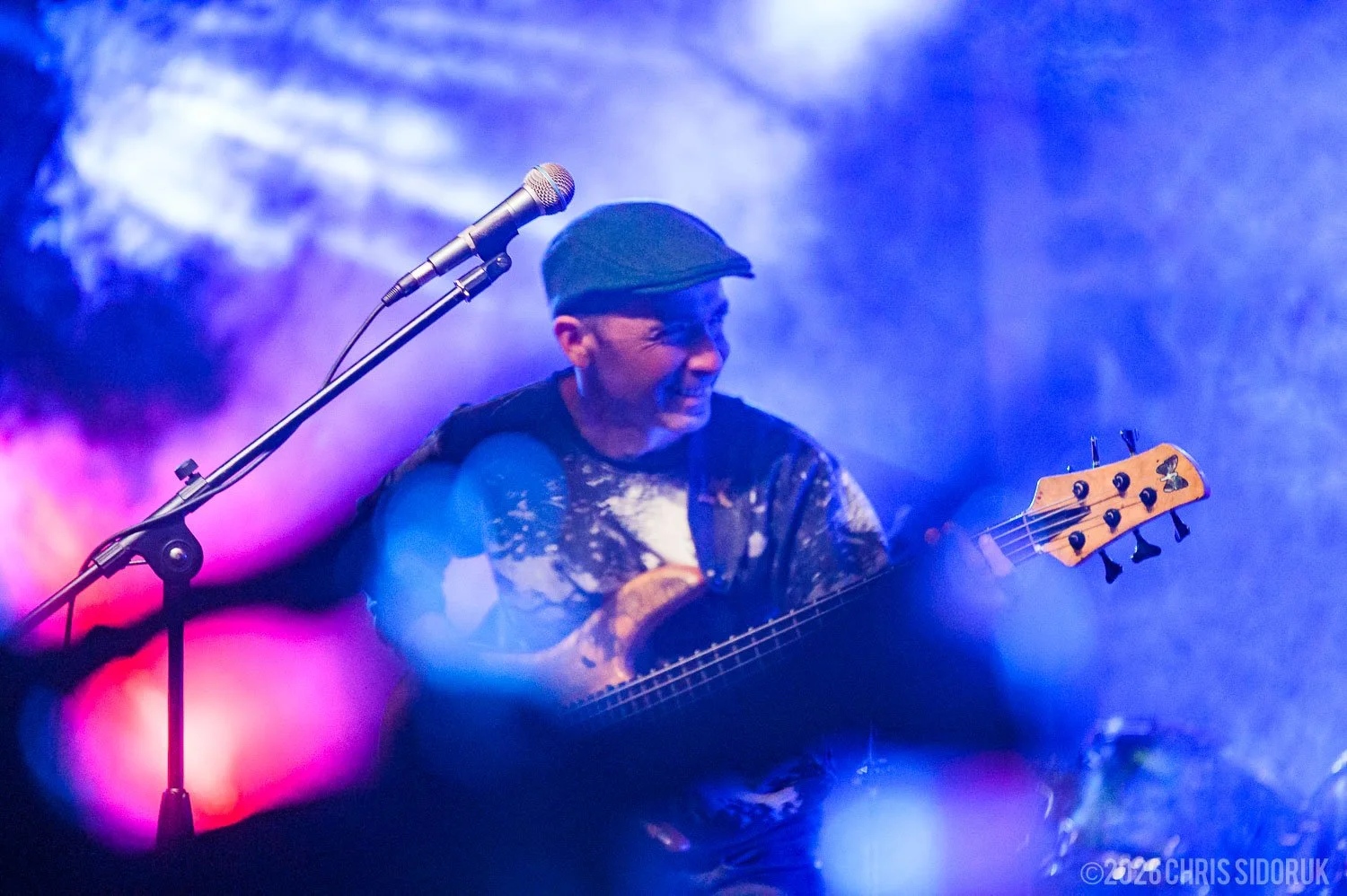
concert photography framing through stage elements
Working Around Stage Obstacles
Every concert photographer eventually learns that obstacles are simply part of the job.
Microphone stands seem to appear exactly where you don't want them.
Stage monitors block lower compositions.
Other musicians drift into your frame.
Rather than becoming frustrated, learn to work around them.
Some techniques include:
Waiting for performers to lean away from microphone stands
Shooting between stage equipment instead of over it
Using a wider aperture to soften distracting foreground elements
Repositioning yourself whenever possible instead of hoping the scene changes
Ironically, some of my favorite concert photographs include stage equipment because it helps tell the story of the performance.
Not every obstacle needs to disappear.
Sometimes it provides context.
The key is making sure those elements support the image instead of competing with your subject.
Subject Isolation: Making Your Performer Stand Out
One of the biggest challenges in concert photography is that the environment is naturally distracting.
A stage can contain:
multiple musicians
colorful lighting
microphone stands
instruments
LED screens
cables
equipment
Your job as the photographer is to simplify that chaos and guide the viewer's eye.
This is where subject isolation becomes one of the most important composition skills in live music photography.
Subject isolation doesn't always mean a completely blurred background.
It means making the viewer immediately understand what matters most in the frame.
You can create isolation through several techniques:
Use Depth of Field
A wide aperture such as:
f/1.4
f/1.8
f/2.8
can separate performers from busy backgrounds.
This is especially useful in small venues where backgrounds are often cluttered with equipment, walls, and distractions.
A shallow depth of field helps create separation while keeping attention on the performer.
Use Light Separation
Sometimes the background is sharp, but the lighting creates separation.
A performer standing in a spotlight against a darker stage naturally becomes the focus.
Look for:
strong contrast
backlighting
isolated spotlights
darker backgrounds
The light itself can become your compositional tool.
Use Positioning
Sometimes the easiest way to improve a composition is not changing camera settings—it is changing where you stand.
A small movement can:
remove distractions
create cleaner backgrounds
improve the relationship between performers and stage elements
Before changing lenses, try changing your position.
👉 See lens options:
Best Lenses for Concert Photography
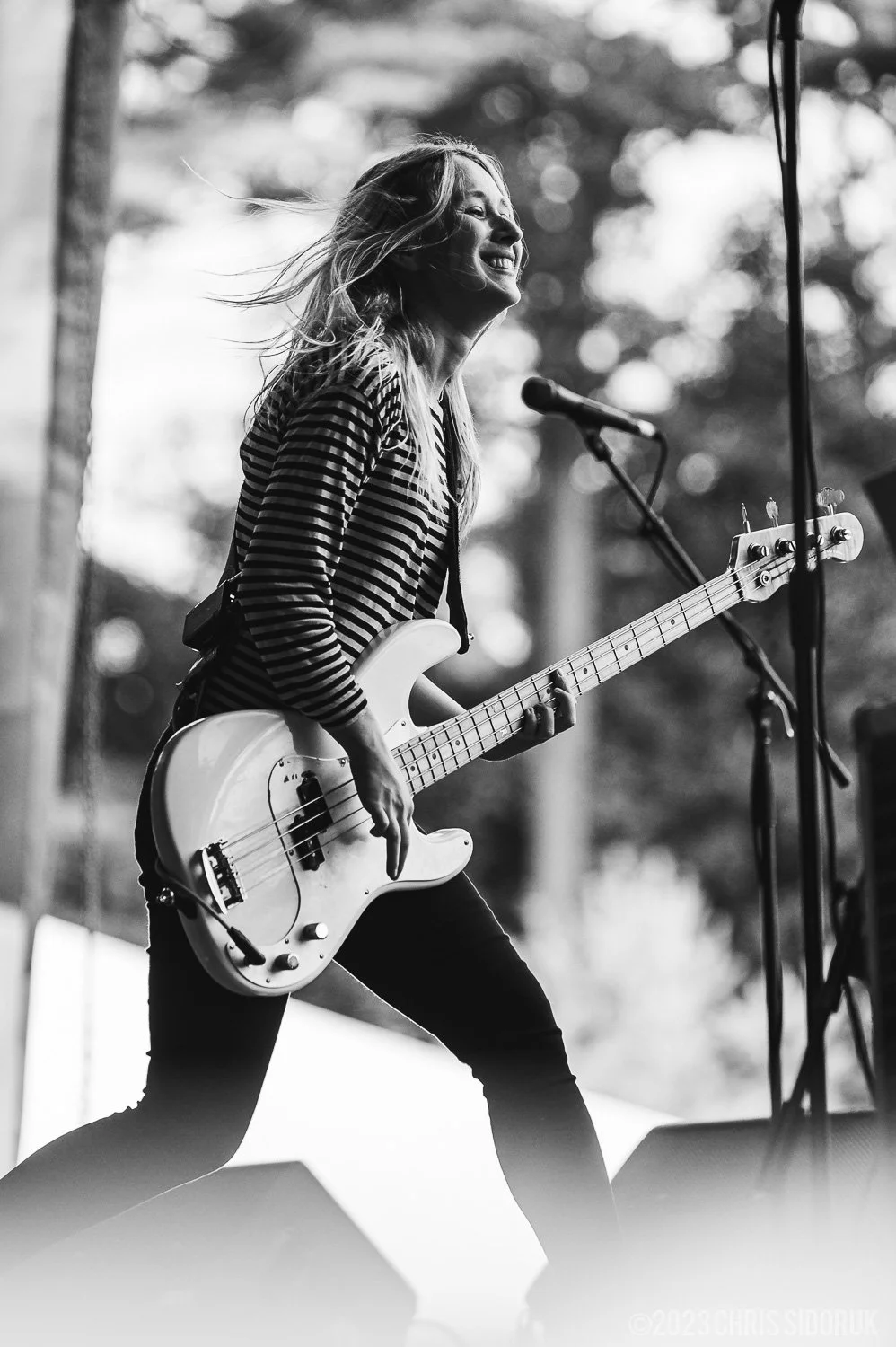
concert photography shallow depth of field subject isolation
Using Stage Light as a Composition Tool
Concert lighting can be unpredictable, but that unpredictability is also what makes live music photography exciting.
Many photographers treat lighting as something they have to overcome.
Experienced concert photographers learn to use it.
Stage lighting can help create:
depth
emotion
separation
atmosphere
Instead of asking:
"Is the lighting good?"
Ask:
"How can I use this lighting?"
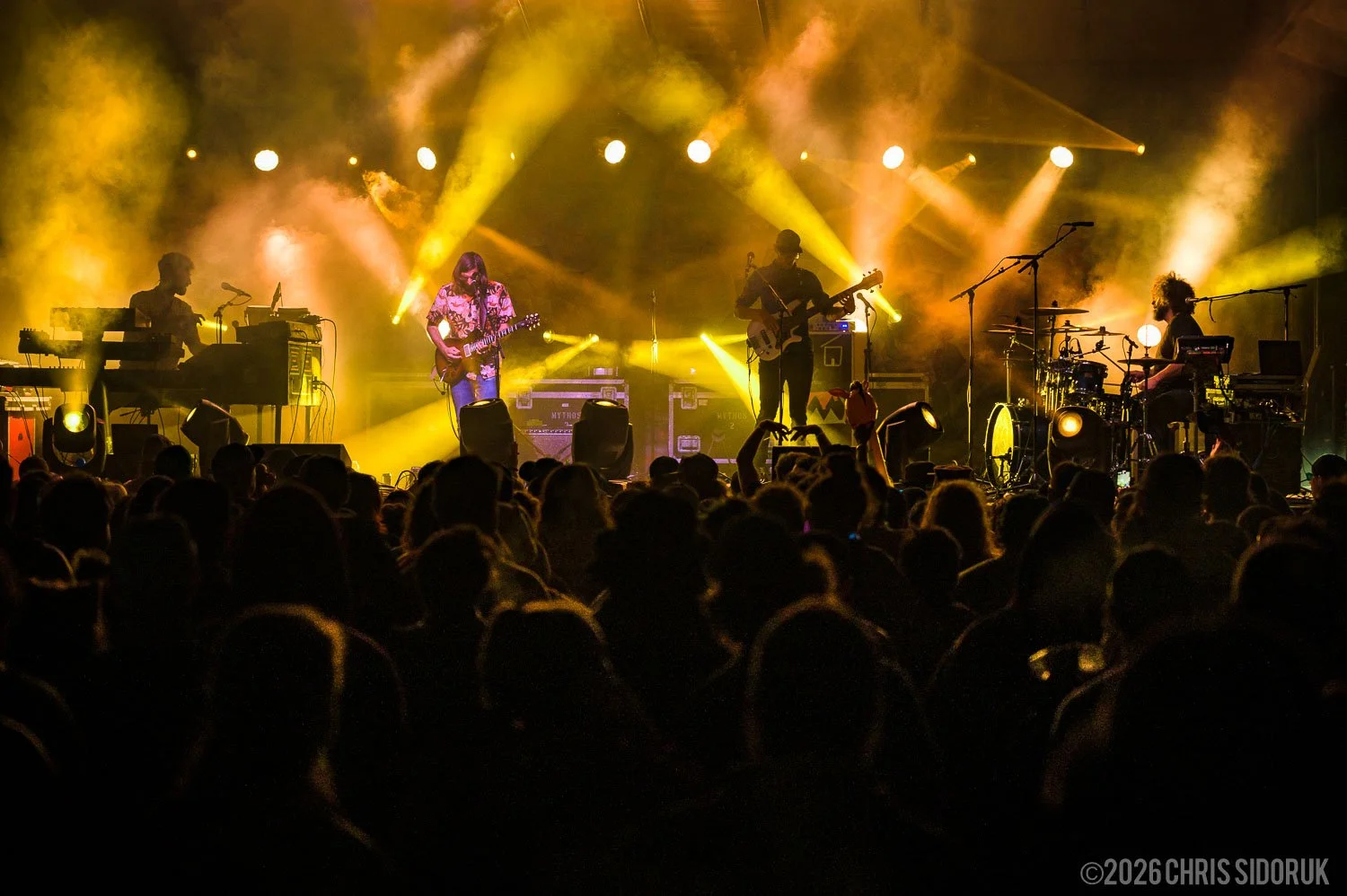
Spotlights
A spotlight can instantly create a strong composition.
When a performer enters a beam of light, the background often becomes less important.
Wait for those moments.
A simple frame with:
a performer
directional light
a dark background
can often be stronger than a technically perfect image with flat lighting.
Backlighting
Backlighting is common at concerts and can create dramatic images.
Instead of fighting blown-out highlights, use them intentionally.
Backlight can create:
silhouettes
glowing edges around performers
dramatic atmosphere
The goal is not always perfect exposure.
The goal is capturing the feeling of the performance.
Color as Emotion
Concert lighting is often heavily colored.
Blue, red, purple, and green lights can completely change the mood of an image.
Rather than correcting every color shift during editing, think about how the color supports the story.
A dark red stage may communicate intensity.
A soft blue wash may create a calmer mood.
The lighting is part of the performance.
👉 Dial this in here:
Concert Photography Low Light Tips
concert stage lighting composition spotlight subject
Foreground and Layering: Creating Depth
Many beginning concert photographers focus only on the performer.
But strong images often include multiple layers.
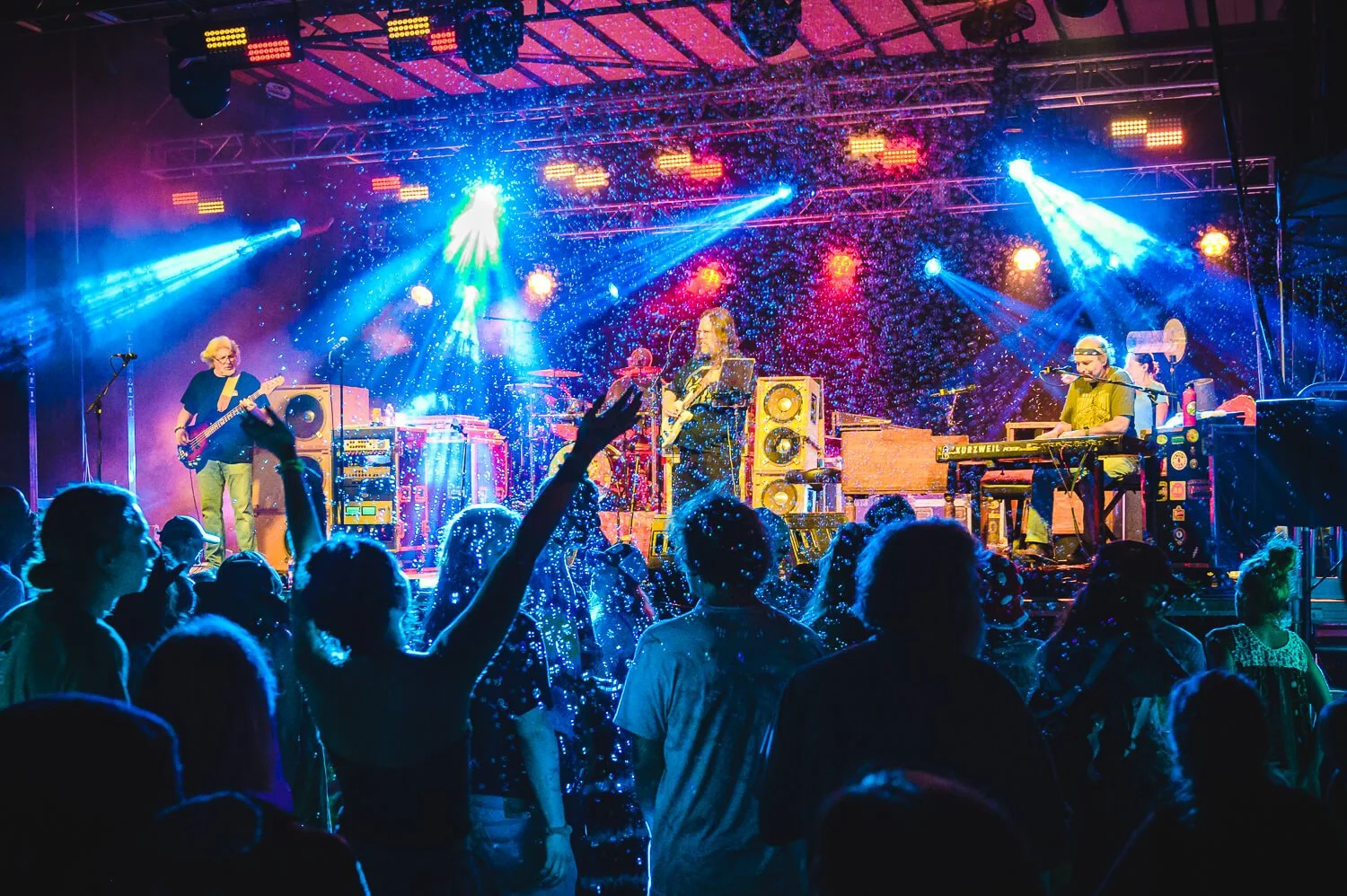
Adding foreground elements creates depth and makes the viewer feel like they are inside the performance.
Try shooting through:
audience hands
instruments
microphones
stage equipment
other performers
These elements can add context and make the image feel more immersive.
A completely clean image isn't always the goal.
Sometimes a little obstruction helps tell the story.
For example:
A guitarist partially framed by another musician's instrument can communicate the energy of a band interacting on stage.
A singer framed through raised audience hands can communicate the connection between performer and crowd.
Think beyond simply photographing the subject.
Photograph the environment around the subject.
concert photography shooting through crowd foreground
Using Leading Lines in Concert Photography
Leading lines guide the viewer's eye through an image.
While they are commonly discussed in landscape photography, they are extremely useful in concert photography as well.
Look for natural lines created by:
microphone stands
guitar necks
stage edges
lighting structures
speaker stacks
beams of light
These elements can direct attention toward the performer.
For example:
A microphone stand can lead the viewer toward a singer.
A guitar neck can guide the eye toward a musician's expression.
Stage lighting can create invisible lines that pull attention toward the subject.
The key is using these elements intentionally.
Using Negative Space for More Powerful Images
Concert photography often encourages photographers to fill every part of the frame.
But sometimes empty space creates a stronger image.
Negative space can emphasize:
isolation
emotion
scale
movement
Examples:
A lone performer surrounded by darkness can feel dramatic.
A singer positioned against a large LED screen can emphasize the size of the production.
A musician placed on one side of the frame can create tension and energy.
Don't assume every image needs the performer centered.
Sometimes giving the subject room to breathe makes the photograph more powerful.
Capturing Emotion, Not Just Performance
A technically sharp image of someone playing an instrument is not automatically a great concert photograph.
The strongest images usually capture something human.
Look for:
facial expressions
interaction between band members
moments of intensity
connection with the audience
quiet moments between songs
A guitarist looking down during an emotional solo can sometimes be more powerful than a dramatic jump or movement shot.
A singer closing their eyes during a vocal moment can tell a stronger story than a simple stage portrait.
The goal is not just documenting what happened.
It is capturing what it felt like.
Timing Peak Action
Composition and timing are connected.
A good frame at the wrong moment can become an average image.
A great moment with poor framing can also fail.
The best concert photographs usually combine both.
Look for peak moments:
a singer hitting a powerful note
a drummer raising sticks before impact
a guitarist jumping
performers interacting
crowd reactions
These moments often happen quickly.
This is why anticipation matters so much.
Instead of holding the shutter button and hoping, watch the performance and predict where the action is heading.
Burst shooting can help, but timing is still the skill that creates memorable images.
👉 Settings matter here:
Best Camera Settings for Concert Photography
How Lens Choice Changes Composition
Your lens does more than change how close you are.
It changes the entire feeling of the image.
Different focal lengths create different compositions.
Wide-Angle Lenses (14–35mm)
Wide lenses are useful for:
showing the entire stage
including crowd interaction
creating environmental images
They help tell the story of the venue and atmosphere.
Standard Zooms (24–70mm)
A 24–70mm lens is one of the most versatile concert photography choices.
It allows you to capture:
full-body performer shots
medium compositions
interactions between musicians
It is often the ideal "workhorse" lens.
Telephoto Lenses (70–200mm and Beyond)
Telephoto lenses help isolate performers from a distance.
They are useful for:
large venues
photo pits with limited movement
compressed stage backgrounds
emotional close-ups
The lens you choose affects how you tell the story.
Small Venues vs Festivals: Composition Changes
Concert composition changes dramatically depending on the environment.
The techniques that work in a small club may not work at a large festival.
Small Venues
Small venues often provide:
closer access
more intimate moments
stronger performer-crowd connection
But they also create challenges:
cluttered backgrounds
limited movement
inconsistent lighting
In smaller spaces, focus on:
emotional moments
tight compositions
isolating performers
using available light creatively
Festivals and Larger Shows
Large festivals provide more visual opportunities:
bigger stages
dramatic lighting
larger crowds
more separation
Here, consider including:
wide environmental shots
crowd scale
stage production
dramatic lighting effects
The best festival images often show not only the performer, but the size and energy of the event.
Common Concert Photography Composition Mistakes
Even experienced photographers make composition mistakes during live performances.
Concerts move quickly, and the pressure of changing light and unpredictable movement can cause photographers to rely on instinct rather than intentional decision-making.
Understanding common mistakes can help you avoid them.
1. Always Centering the Performer
Centering your subject is not always wrong, but doing it for every image can make your gallery feel repetitive.
Try experimenting with:
off-center compositions
negative space
environmental framing
wider perspectives
A performer placed intentionally within the frame often creates a stronger image than a simple centered portrait.
2. Ignoring the Background
A strong performer expression can still be weakened by a distracting background.
Before pressing the shutter, quickly check:
Is there a bright object behind the performer?
Is a microphone stand crossing their face?
Is another musician creating visual clutter?
Is there a cleaner angle available?
You cannot always control the stage, but you can control what you include in the frame.
3. Shooting Everything at the Same Distance
A common beginner mistake is creating an entire gallery from one perspective.
If every image is:
the same focal length
the same angle
the same distance
the final collection can feel flat.
Build variety.
Include:
wide shots showing the venue
medium shots showing interaction
close-ups showing emotion
detail shots showing instruments and atmosphere
A strong concert gallery tells the complete story of the performance.
4. Chasing Action Instead of Waiting for It
Fast movement can make photographers feel like they need to constantly shoot.
But sometimes the best composition comes from waiting.
Watch the performer.
Learn their movement.
Look for patterns.
The moment you anticipate often produces a stronger image than the moment you simply react to.
5. Over-Editing Weak Compositions
Editing can improve an image, but it cannot completely fix a weak composition.
Cropping can help slightly.
Color correction can improve mood.
Noise reduction can improve technical quality.
But the strongest images usually start with:
good timing
strong framing
intentional positioning
The goal is to capture a strong photograph first, then enhance it during editing.
My Personal Concert Photography Composition Workflow
When photographing a concert, I don't approach every frame the same way.
Instead, I typically work through a simple process.
Step 1: Find the Story
Before worrying about technical settings, I look for what is visually interesting.
What is happening?
Who is creating the strongest moment?
Where is the emotion?
The photograph should have a reason to exist beyond simply showing someone on stage.
Step 2: Find the Cleanest Angle
Once I identify the moment, I look for the best position.
Small adjustments can make a huge difference.
I look for:
cleaner backgrounds
better lighting
stronger separation
more interesting perspectives
Sometimes the difference between an average image and a great image is simply moving a few feet.
Step 3: Choose the Right Lens
The lens determines how I tell the story.
A wide lens may show:
the crowd
stage atmosphere
venue environment
A telephoto lens may focus on:
emotion
expressions
isolated moments
The right lens depends on what story I want the image to tell.
Step 4: Wait for the Moment
Once everything is aligned:
composition
light
subject position
I wait.
The strongest concert photographs often happen in fractions of a second.
The goal is not to photograph everything.
The goal is to recognize when everything comes together.
How Composition Works With Camera Settings
Composition and camera settings are closely connected.
Your settings affect what types of compositions are possible.
For example:
A wide aperture allows you to isolate performers from distracting backgrounds.
A faster shutter speed allows you to freeze movement during energetic performances.
A higher ISO allows you to maintain the shutter speed needed for sharp images.
Your technical choices support your creative decisions.
For concert photography, a typical starting point might be:
Aperture: f/1.8–f/2.8
Shutter speed: 1/160–1/320 or faster
ISO: 1600–6400+
However, settings should support the composition—not replace it.
A perfectly exposed image with no story is still a weak photograph.
How Composition Works With Editing
Editing is an important part of concert photography, but it should enhance your composition rather than create it.
A strong editing workflow can help:
emphasize the subject
improve contrast
control distracting colors
maintain consistency across a gallery
Some composition-related edits include:
Cropping
Cropping can help strengthen an image by:
removing distractions
improving balance
emphasizing the subject
However, try not to rely on heavy cropping.
Getting the composition closer in-camera usually produces better image quality.
Adjusting Exposure and Contrast
Concert lighting often creates challenging exposure situations.
Editing can help bring attention back to the performer by:
lowering distracting highlights
opening shadows
increasing subject separation
Managing Color
Concert lighting often includes extreme colors.
A strong edit preserves the feeling of the performance while keeping skin tones and important details natural.
The goal is not removing the lighting.
The goal is controlling it.
Final Thoughts
Concert photography composition is not about following a perfect set of rules.
It is about learning how to see.
The strongest live music photographs usually come from photographers who understand:
where the moment is developing
how light changes the scene
how positioning affects the frame
when to wait and when to react
You cannot control a concert.
But you can control how you respond to it.
The more shows you photograph, the more instinctive composition becomes.
Eventually, you stop thinking about every decision.
You begin seeing moments before they happen.
That is when concert photography becomes less about taking pictures and more about telling the story of the performance.
Frequently Asked Questions
What is the most important composition skill in concert photography?
The most important skill is learning to anticipate moments.
Great concert photographs usually happen because the photographer recognizes where the action is heading and is already prepared when the peak moment arrives.
Should concert photos always follow traditional composition rules?
No.
Traditional composition concepts like the rule of thirds, leading lines, and balance are useful foundations, but concert photography often benefits from breaking those rules.
Energy and emotion are often more important than perfect symmetry.
How do I avoid cluttered concert photos?
The best ways to reduce clutter are:
change your position
use a wider aperture
simplify your framing
wait for cleaner moments
You cannot remove every distraction, but you can control how much attention those distractions receive.
What lens is best for concert photography composition?
A versatile zoom such as a 24–70mm f/2.8 is one of the best all-around options because it allows you to quickly change perspectives.
Wide-angle lenses are useful for atmosphere, while telephoto lenses are excellent for isolating performers.
How do I capture emotional concert photos?
Look beyond movement.
Watch for:
facial expressions
interactions between musicians
crowd reactions
quiet moments between songs
Emotion often creates the most memorable images.
Should I use burst mode for concert photography?
Burst mode can help capture fast-moving moments, but it should not replace timing.
The strongest images usually come from anticipating the right moment rather than shooting hundreds of frames and hoping one works.
How does composition change in small venues?
Small venues often require tighter compositions because space is limited.
Focus on:
emotional moments
subject isolation
creative angles
using the environment as part of the story
Small venues are often where photographers develop the strongest compositional instincts.
How does composition change at large festivals?
Large festivals allow more environmental storytelling.
Look for:
crowd scale
stage lighting
production elements
performer interaction with the audience
At larger shows, the story is often bigger than the performer alone.
==========
All photographs © Chris Sidoruk. Images are protected by copyright and may not be used, copied, modified, or redistributed without written permission.
Related Resources
Continue improving your concert photography skills:
