

Back Button Focus for Concert Photography (2026 Guide)

Creamery Station performing at the Windmill Bar - St. John, USVI. ©2023 Chris Sidoruk
Last Updated: July 2026
Quick Jump
- What Is Back Button Focus?
- Why Back Button Focus Helps Concert Photographers
- Real Concert Shooting Workflow
- Tracking Moving Performers & Low Light Shooting
- Back Button Focus Setup by Camera Brand
- Improving Autofocus Accuracy
- Back Button Focus vs Shutter Autofocus
- Building a Concert Photography Autofocus Setup
- Frequently Asked Questions
Fast-moving performers.
Constantly changing lighting.
Smoke, lasers, LED walls, and musicians crossing in front of one another.
Concert photography pushes autofocus systems harder than almost any other photography genre.
While modern mirrorless cameras have incredible autofocus performance, how you control autofocus is just as important as the autofocus system itself.
That's where back button focus (BBF) comes in.
Instead of allowing the shutter button to control both focusing and taking the picture, back button focus separates those two functions. This gives you more control over exactly when your camera focuses—and when it doesn't.
For many concert photographers, this simple change makes tracking performers, recomposing images, and shooting in difficult lighting feel much more natural.
In this guide you'll learn:
what back button focus actually does
why many concert photographers use it
how to set it up
when it works best
when it doesn't
how to combine it with modern autofocus tracking
practical workflows from real live music situations
What Is Back Button Focus?
Back button focus simply moves autofocus away from the shutter button.
Normally:
Half press shutter → autofocus
Full press shutter → take photo
With back button focus:
Rear AF-ON button → autofocus
Shutter button → take photo
Instead of the shutter controlling both actions, each function gets its own button.
This separation gives you much greater control over how autofocus behaves.
Standard Autofocus
Traditional focusing combines everything into one button.
Advantages:
simple
familiar
works well for everyday photography
Disadvantages:
camera refocuses every time you half-press
harder to lock focus
recomposing can become frustrating
Back Button Focus
Back button focus separates the process.
Advantages:
lock focus instantly
stop autofocus whenever you choose
track only when needed
easier recomposing
better consistency in difficult lighting
Many sports, wildlife, and concert photographers eventually adopt this workflow because it offers more control in fast-paced environments.
Why It Helps for Concert Photography
Concert photography presents several autofocus challenges simultaneously.
You're often photographing:
musicians constantly moving
changing stage lights
haze and smoke
audience members crossing your frame
microphones blocking faces
dramatic spotlights
Every time autofocus hunts unexpectedly, you risk missing the decisive moment.
Back button focus helps reduce those interruptions by allowing you—not the shutter button—to decide when autofocus should engage.
Focus Once, Shoot Many Frames
One of the biggest advantages is the ability to lock focus.
For example:
A guitarist pauses under a spotlight.
You focus once.
Release AF-ON.
Now every frame uses that same focus distance until you decide otherwise.
Your camera won't unexpectedly refocus on:
microphone stands
audience hands
bright lights
smoke
Track Only When You Need To
Continuous autofocus becomes much easier to manage.
Simply:
hold AF-ON while tracking
release AF-ON when movement stops
continue shooting
The result feels smoother than constantly fighting shutter-button autofocus.
Easier Recomposing
Many concert compositions involve placing performers off-center.
Instead of:
focus
recompose
camera refocuses
You simply:
focus
release AF-ON
recompose
shoot
Nothing changes unless you tell it to.
AF-S vs AF-C vs Back Button Focus
One common misconception is that back button focus replaces autofocus modes.
It doesn't.
Instead, it works alongside them.
| Autofocus Mode | Best For | Works Well with BBF? |
|---|---|---|
| AF-S / One Shot | Stationary performers | Yes |
| AF-C / AI Servo | Moving performers | Excellent |
| Auto AF | Camera decides | Usually not recommended |
AF-S / One Shot
Best For: Stationary performers
Works Well with BBF? Yes
AF-C / AI Servo
Best For: Moving performers
Works Well with BBF? Excellent
Auto AF
Best For: Camera decides
Works Well with BBF? Usually not recommended
For most concert photography:
AF-C (Continuous AF)
Subject Tracking (if reliable)
Back Button Focus
is an excellent combination.
AF-S (Single Autofocus)
Ideal when photographing:
singer at microphone
acoustic performers
seated musicians
speeches
Focus once.
Release AF-ON.
Shoot multiple frames.
AF-C (Continuous Autofocus)
Ideal for:
jumping performers
guitarists moving across stage
drummers
crowd surfing
energetic rock bands
Hold AF-ON while tracking.
Release when movement stops.
How to Set Up Back Button Focus
Nearly every modern interchangeable-lens camera supports back button focus.
The exact menu varies by manufacturer, but the process is similar.
Nikon
Typically:
Custom Settings Menu
AF Activation
AF-ON Only
Disable shutter-button AF
Canon
Usually found under:
Custom Functions
Button Customization
Assign AF to AF-ON
Sony
Typically:
Custom Key Settings
Assign AF-ON
Disable AF with shutter
Fujifilm
Generally:
Button/Dial Settings
AF-ON Assignment
Shutter AF Off
Practice Before Using It at a Concert
This is extremely important.
Back button focus feels strange for the first few hours.
Most photographers need:
one practice session
one casual shoot
one concert
before it becomes second nature.
Once it clicks, many never return to shutter-button autofocus.
Real Concert Shooting Workflow With Back Button Focus
The biggest advantage of back button focus is not the button itself.
It is the way it changes your workflow.
Instead of constantly letting the camera decide when to focus, you become more intentional:
See the moment → control focus → capture the frame
A practical concert workflow looks like this:
Anticipate where the performer will move
Place your autofocus point on the subject
Hold AF-ON to acquire focus
Track movement if needed
Release AF-ON when you want to lock focus
Capture the moment with the shutter button
This separation allows you to react faster because your camera is not constantly trying to make decisions for you.
Example: Singer at a Microphone
Imagine a vocalist standing at center stage.
The lighting changes every few seconds.
With traditional autofocus:
half press shutter
camera focuses
singer moves slightly
camera refocuses
bright stage light grabs attention
focus misses the face
With back button focus:
press AF-ON on the singer's eye
release when focus is confirmed
wait for expression or gesture
capture the moment
You decide when autofocus happens.
Example: Guitarist Moving Across Stage
For an energetic performer:
switch to AF-C
hold AF-ON
track movement
fire bursts during peak moments
Back button focus allows you to maintain tracking without worrying that releasing the shutter will interrupt your autofocus behavior.
Tracking Moving Performers With Back Button Focus
Concerts are unpredictable.
A musician may:
step forward into a spotlight
turn away suddenly
jump
move behind another performer
disappear into darkness
Continuous autofocus combined with back button focus gives you the flexibility to react.
Use AF-C for Movement
For most live music:
AF-C + Back Button Focus
is the preferred combination.
You can:
hold AF-ON while the performer moves
adjust composition
follow movement across the stage
release when you want to hold focus
This is similar to how many sports photographers approach moving subjects.
Don't Always Track Everything
A common mistake is assuming continuous autofocus should always be active.
Sometimes tracking hurts more than it helps.
Your camera may lock onto:
microphones
guitar necks
drum hardware
stage lights
hands in front of faces
Sometimes the best choice is:
focus → release → wait
The goal is not maximum autofocus activity.
The goal is maximum control.
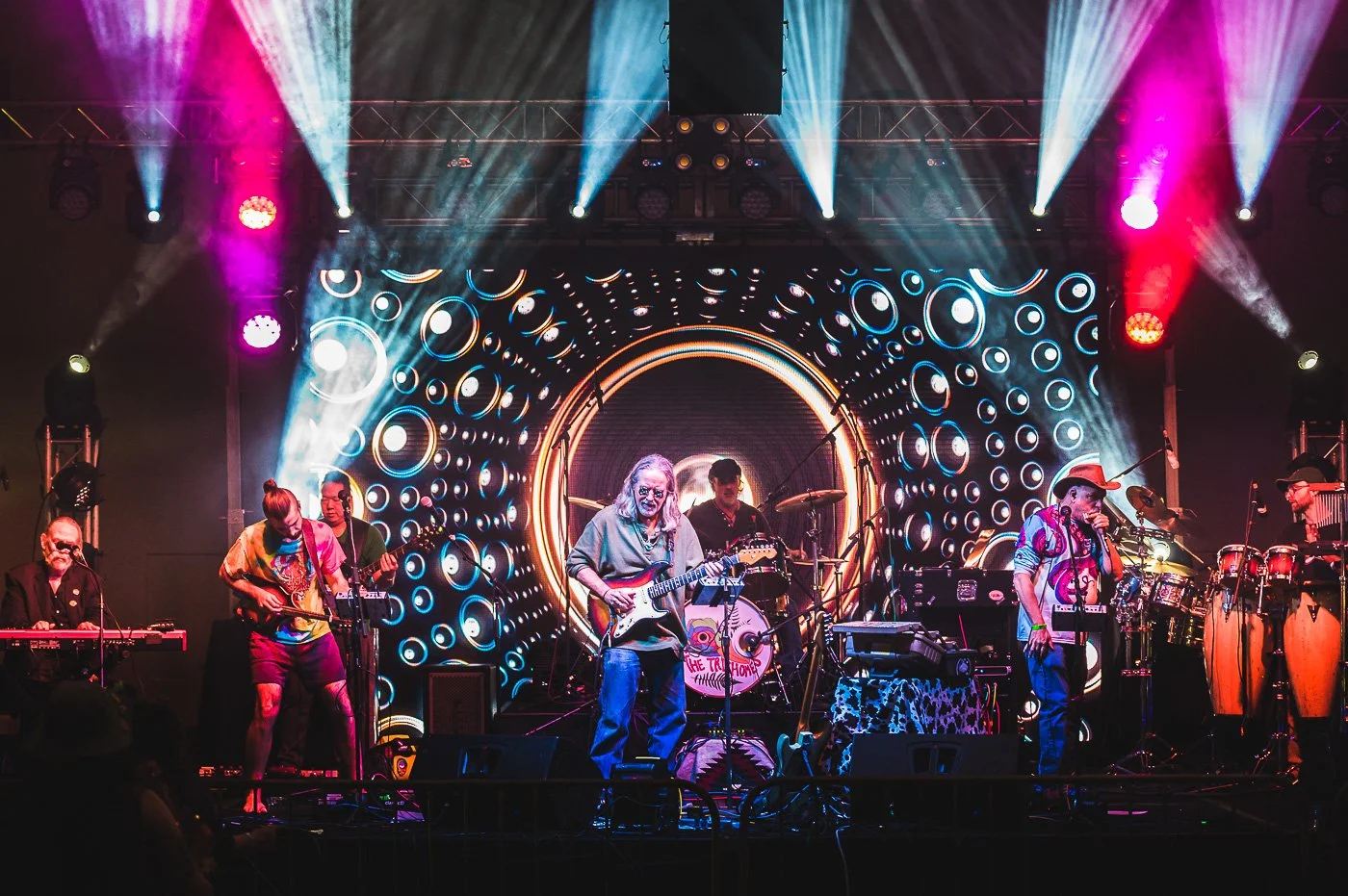
Creamery Station at Winter Wake Up Music Festival
Back Button Focus in Low Light Concert Situations
Low-light venues are where many photographers notice the biggest benefit.
Small clubs and theaters often create challenging autofocus conditions:
dark backgrounds
colored LEDs
haze
backlighting
fast movement
Back button focus does not make autofocus stronger.
It does something more useful:
It lets you control when autofocus is working.
Prevent Unwanted Refocusing
One of the biggest frustrations in dark venues is pressing the shutter and having the camera suddenly search.
For example:
A performer pauses in perfect light.
You frame the shot.
You press the shutter.
The camera sees a bright LED behind them and starts hunting.
The moment is gone.
With back button focus:
acquire focus first
release AF-ON
capture without triggering autofocus again
Combine With Good Low-Light Settings
Back button focus works best when combined with:
fast lenses (f/1.4–f/2.8)
appropriate shutter speeds
usable ISO settings
reliable autofocus points
See also:
Eye AF & Subject Detection With Back Button Focus
Modern mirrorless cameras have changed concert photography significantly.
Many cameras now offer:
eye detection
face detection
subject tracking
animal/person recognition
Back button focus works well with these features.
When Eye AF Helps
Eye AF can be excellent for:
singers
solo performers
acoustic shows
front-facing portraits
It allows you to focus less on selecting exact autofocus points and more on timing and composition.
When Eye AF Struggles
Concert environments are difficult.
Eye AF may struggle with:
dark lighting
sunglasses
microphones covering faces
heavy smoke
extreme colored lighting
performers turning away
In these situations, traditional AF-C tracking or manually selecting focus points may work better.
A Practical Approach
Many photographers use a hybrid approach:
Portrait moment:
Eye AF + AF-C + Back Button Focus
Fast movement:
AF-C tracking + Back Button Focus
Difficult lighting:
Single focus point + Back Button Focus
The best option depends on the situation.
Burst Shooting Strategy With Back Button Focus
Burst mode and back button focus work extremely well together.
The key is using bursts strategically.
You do not want to spray hundreds of images hoping one works.
Instead:
Track the performer
Wait for peak action
Hold AF-ON
Capture a short burst
Review the strongest frame
Good Times to Use Burst Mode
Burst shooting helps capture:
jumps
drum hits
guitar solos
emotional expressions
crowd interactions
dramatic lighting moments
Avoid Overshooting
Too many photographers rely on machine-gun shooting.
This creates:
unnecessary storage usage
longer culling sessions
more duplicate images
Timing still matters.
The goal is not more photos.
The goal is better photos.
When to Lock Focus vs Continuously Track
Knowing when not to autofocus is just as important as knowing when to use it.
Lock Focus When:
Use focus lock for:
performers staying in one location
predictable movements
keyboard players
drummers
vocalists at a microphone
Example:
A singer consistently stands at the same microphone.
Focus once.
Wait for expression.
Capture.
Continuously Track When:
Use tracking for:
energetic frontmen
guitarists moving across stage
dancers
festival performers
musicians interacting
Example:
A guitarist moving from one side of the stage to another.
Hold AF-ON.
Track continuously.
The Best Concert Photographers Switch Approaches
The mistake is thinking one method works everywhere.
Professional photographers constantly adjust:
AF mode
tracking
focus points
composition
shooting position
based on the moment.

Creamery Station at Wormtown Music Festival.
Back Button Focus by Venue Type
Different venues create different autofocus challenges.
Small Clubs
Examples:
local bars
small music rooms
intimate venues
Challenges:
extremely dark backgrounds
limited movement space
harsh colored LEDs
Recommended approach:
AF-C
single point or small tracking area
back button focus
fast prime lenses
Small clubs often reward precision more than aggressive tracking.
Theaters and Performing Arts Venues
Examples:
seated theaters
stage productions
larger indoor venues
Advantages:
more predictable lighting
stronger subject separation
Recommended approach:
Eye AF when available
AF-C for movement
focus lock for predictable performers
These environments are often excellent for controlled autofocus techniques.
Outdoor Festivals
Examples:
music festivals
outdoor stages
large events
Challenges:
performers moving farther away
changing sunlight
large stages
Recommended approach:
AF-C
subject tracking
telephoto lenses
back button focus for quick switching
Outdoor festivals often benefit the most from continuous tracking.
Back Button Focus Setup by Camera Brand
While the concept of back button focus is the same across cameras, the setup process varies by manufacturer.
Most modern mirrorless and DSLR cameras support some form of autofocus button customization.
Below are general setups for the major camera systems used by concert photographers.
Nikon Back Button Focus Setup
Nikon cameras are popular among many concert photographers because of their strong autofocus systems and customization options.
Common Nikon setup:
Open the Custom Settings Menu
Go to Controls
Assign the AF-ON button
Set autofocus activation to AF-ON only
Disable autofocus from the shutter button
Typical workflow:
AF-ON → autofocus
shutter button → capture only
Recommended Nikon settings for concerts:
AF-C autofocus mode
Dynamic Area AF or 3D Tracking (depending on model)
Back button focus assigned to AF-ON
Subject detection enabled when reliable
For cameras like the Nikon Z9, Z8, Z6/Z7 series, and professional DSLRs, BBF works especially well because of their advanced autofocus customization.
Canon Back Button Focus Setup
Canon cameras have supported back button focus for many years.
Typical Canon setup:
Open Custom Controls
Select shutter button settings
Remove autofocus activation from shutter button
Assign AF-ON button to autofocus
Common Canon workflow:
AF-ON → focus/tracking
shutter button → take photo
Recommended concert settings:
Servo AF
Eye Detection AF when useful
Subject tracking for moving performers
Custom AF areas depending on venue
Canon's Dual Pixel autofocus systems work especially well with BBF because tracking performance is often very reliable.
Sony Back Button Focus Setup
Sony mirrorless cameras offer extensive autofocus customization.
Typical Sony setup:
Open Custom Key/Dial Settings
Assign AF-ON button
Disable shutter autofocus
Enable AF-C mode
Recommended Sony concert setup:
AF-C
Real-time Tracking when appropriate
Eye AF for portraits
Flexible Spot for difficult lighting
Sony shooters often combine:
AF-C + Eye AF + Back Button Focus
for a very effective live performance workflow.
Fujifilm Back Button Focus Setup
Fujifilm cameras also allow autofocus separation.
Typical setup:
Enter Button/Dial Settings
Assign AF-ON function
Disable shutter autofocus
Use AF-C for moving performers
Recommended settings:
AF-C
Zone AF
Face/Eye Detection when reliable
Custom autofocus buttons
Fujifilm cameras can perform very well for concert photography, especially with fast prime lenses and careful autofocus configuration.
Common Back Button Focus Mistakes
Back button focus is powerful, but many photographers struggle because they change the setting without changing their workflow.
Here are the most common mistakes.
1. Switching Too Quickly Without Practice
The biggest mistake is enabling BBF immediately before an important event.
At first, it feels unnatural.
Your muscle memory expects:
half press → focus
Suddenly:
back button → focus
Give yourself time to adapt.
Practice with:
everyday photography
pets
sports
street photography
before relying on it professionally.
2. Forgetting Which Button Does What
During a dark concert, confusion happens quickly.
You don't want to think:
"Wait, did I disable autofocus?"
Build the habit before using it in challenging situations.
3. Using the Wrong Autofocus Mode
Back button focus does not replace understanding autofocus modes.
For example:
BBF + AF-S:
good for stationary performers
BBF + AF-C:
better for moving musicians
The technique works best when paired with the right AF mode.
4. Expecting It to Fix Poor Autofocus Performance
Back button focus improves control.
It does not:
make a lens sharper
create more light
fix poor camera settings
replace good technique
If your camera struggles because the venue is extremely dark, BBF alone will not solve the problem.
5. Holding AF-ON Constantly
Some photographers treat AF-ON like a permanent autofocus trigger.
That removes one of its biggest benefits.
Sometimes the best move is:
focus → release → wait
The control comes from choosing when autofocus happens.
Improving Autofocus Accuracy for Concert Photography
Back button focus works best when combined with a complete autofocus strategy.
Use the Right Autofocus Area
Different situations require different approaches.
Single Point AF
Best for:
singers at microphones
predictable positions
low-light situations
Zone AF
Best for:
performers moving across stage
larger subjects
festivals
Subject Tracking
Best for:
fast movement
modern mirrorless cameras
outdoor stages
Use the Right Lens
Autofocus performance is heavily affected by your lens.
Fast lenses help because they:
allow more light
provide brighter autofocus conditions
maintain faster shutter speeds
Examples:
35mm f/1.8
50mm f/1.8
85mm f/1.8
70-200mm f/2.8
See:
→ Best Lenses for Concert Photography
Keep Your Shutter Speed High Enough
Many "focus problems" are actually motion blur.
A sharp focus point does not help if the performer moved during exposure.
For concerts, many photographers start around:
1/200 sec
1/320 sec
faster for energetic performers
See:
Back Button Focus vs Shutter Autofocus
Both methods can work.
The better option depends on your shooting style.
| Feature | Back Button Focus | Shutter Autofocus |
|---|---|---|
| Control | Excellent | Simple |
| Learning Curve | Higher | Lower |
| Focus Lock | Easier | More difficult |
| Moving Subjects | Excellent | Good |
| Recomposing | Easier | More difficult |
| Casual Photography | Good | Excellent |
| Professional Workflow | Very popular | Still common |
Control
Back Button Focus: Excellent
Shutter Autofocus: Simple
Learning Curve
Back Button Focus: Higher
Shutter Autofocus: Lower
Focus Lock
Back Button Focus: Easier
Shutter Autofocus: More difficult
Moving Subjects
Back Button Focus: Excellent
Shutter Autofocus: Good
Recomposing
Back Button Focus: Easier
Shutter Autofocus: More difficult
Casual Photography
Back Button Focus: Good
Shutter Autofocus: Excellent
Professional Workflow
Back Button Focus: Very popular
Shutter Autofocus: Still common
When Back Button Focus Is Better
BBF is especially useful for:
concert photography
sports
wildlife
weddings
events
Any situation where timing and autofocus control matter.
When Shutter Autofocus Is Fine
Traditional autofocus works perfectly well for:
casual photography
travel
family photos
simple portraits
There is no requirement to use BBF.
Building a Concert Photography Autofocus Setup
A reliable autofocus system is more than one camera setting.
A strong concert setup usually includes:
Camera Settings
Recommended starting point:
AF-C autofocus
Back Button Focus enabled
RAW capture
continuous shooting mode
appropriate AF area for situation
Lens Selection
Ideal concert lenses:
Wide:
24mm–35mm
General:
50mm
Portrait:
85mm
Telephoto:
70-200mm
Practice Your Timing
The best autofocus system cannot predict emotion.
You still need to anticipate:
facial expressions
lighting changes
musician movement
peak moments
Autofocus helps you capture the moment.
It does not create the moment.
Final Recommendations
Back button focus is one of those photography techniques that seems unnecessary—until it becomes part of your workflow.
For concert photography, the benefits are real:
more control over autofocus
easier tracking
fewer accidental refocuses
smoother shooting in unpredictable environments
It is especially valuable if you regularly photograph:
live music
festivals
low-light venues
fast-moving performers
My recommended starting setup:
AF-C + Back Button Focus + appropriate tracking mode
Practice until it becomes automatic.
Once you stop thinking about the button and start focusing on the moment, BBF becomes a powerful advantage.
Frequently Asked Questions
Is back button focus better for concert photography?
For many concert photographers, yes. It provides more control over when autofocus activates, which is useful when performers move quickly and lighting changes constantly.
Does back button focus improve autofocus?
No. It does not make autofocus faster or more accurate. It improves how you control your camera's existing autofocus system.
Should I use AF-C or AF-S with back button focus?
For most concerts, AF-C is the better starting point because performers are constantly moving. AF-S can work well for stationary musicians.
Do professional photographers use back button focus?
Many professional photographers use it, especially in sports, wildlife, weddings, and concert photography. However, some professionals still prefer traditional shutter autofocus.
Can I use Eye AF with back button focus?
Yes. Many modern mirrorless cameras allow Eye AF and subject tracking to work with BBF.
How long does it take to learn back button focus?
Most photographers need several practice sessions before it feels natural. The adjustment period is usually worth it if you shoot fast-moving subjects.
Is back button focus useful for video?
It can be, depending on the camera and workflow, but it is primarily used for still photography.
==========
All images © Chris Sidoruk. No use, copying, or redistribution without license.
