


Creamery Station at Arch Street Tavern. Shot with the Nikon Z6. Photo- ©2023, Chris Sidoruk.
*Some links in this guide are affiliate links. If you purchase through them, it helps support my work at no extra cost to you.
==========
Last Update: October 28, 2026
Quick Jump
- What Matters Most for Concert Photography
- 2026 Buyer's Snapshot
- Best Overall: Nikon Z6 III
- Best Professional Flagship: Nikon Z9
- Best for Resolution and Cropping: Nikon Z8
- Best Budget Full-Frame Camera: Nikon Z5 II
- Best Used Camera Value: Nikon Z6 II
- Best APS-C Camera: Nikon Z50 II
- Nikon Z6 III vs. Z8 vs. Z9
- Best Nikon Lenses for Concert Photography
- Which Nikon Camera Should You Buy?
- Frequently Asked Questions
Nikon cameras are a strong choice for concert photographers who need reliable autofocus, good high-ISO image quality, and fast performance in challenging lighting. Nikon’s Z-mount mirrorless lineup includes options for nearly every level of live music photography, from small club shows to large festivals and professional tours.
This guide covers the best Nikon cameras for concert photography in 2026, including professional flagship bodies, versatile midrange models, and more affordable full-frame and APS-C options.
For a broader comparison across brands, see my complete guide to the Best Cameras for Concert Photography, which compares Nikon, Sony, Canon, and other options.
What Matters Most for Concert Photography
Concert photography puts several demands on a camera. Performers move quickly, stage lighting changes constantly, and photographers often have to work with high ISO settings to maintain a fast shutter speed.
Here are the features worth prioritizing when choosing a Nikon camera for live music.
Autofocus reliability
Fast autofocus and dependable subject tracking help keep moving performers sharp. Eye detection can also be useful when a singer moves across the stage or turns toward the audience.
Low-light image quality
Full-frame cameras generally offer an advantage in very dark venues, particularly when paired with fast lenses. However, sensor design, exposure settings, lens aperture, and the amount of cropping you do all affect the final image.
Burst shooting and responsiveness
A fast burst rate can help capture a decisive moment, such as a guitarist jumping, a drummer striking a cymbal, or a singer leaning into the microphone. Autofocus performance and timing matter just as much as the headline frames-per-second number.
Dynamic range and RAW flexibility
Concert lighting often combines bright spotlights with deep shadows. A camera that preserves highlight detail and produces flexible RAW files gives you more room to adjust exposure and color in post-processing.
Lens selection
A camera body is only part of the system. Fast primes and constant-aperture f/2.8 zooms are particularly useful in dark venues. Consider the cost and availability of lenses before committing to a camera system.
2026 Buyer’s Snapshot: Choosing the Right Nikon Camera
| Your Needs | Recommended Camera | Why It Stands Out |
|---|---|---|
| Best overall for most concert photographers | Nikon Z6 III | Excellent balance of autofocus, speed, low-light capability, and price |
| Professional tours and demanding assignments | Nikon Z9 | Flagship performance, rugged integrated-grip body, and long battery life |
| High resolution and heavy cropping | Nikon Z8 | 45.7MP sensor and advanced autofocus in a smaller body than the Z9 |
| Affordable full-frame photography | Nikon Z5 II | Modern autofocus and strong image quality at a lower price tier |
| Best value on the used market | Nikon Z6 II | Full-frame performance at a potentially attractive secondhand price |
| Compact APS-C setup | Nikon Z50 II | Small body with modern subject detection and fast shooting features |
Best Overall for Most Concert Photographers
Why it stands out: Excellent balance of autofocus, speed, low-light capability, and price.
Professional Tours and Demanding Assignments
Why it stands out: Flagship performance, rugged integrated-grip body, and long battery life.
High Resolution and Heavy Cropping
Why it stands out: 45.7MP sensor and advanced autofocus in a smaller body than the Z9.
Affordable Full-Frame Photography
Why it stands out: Modern autofocus and strong image quality at a lower price tier.
Best Value on the Used Market
Why it stands out: Full-frame performance at a potentially attractive secondhand price.
Compact APS-C Setup
Why it stands out: Small body with modern subject detection and fast shooting features.
For most photographers who regularly shoot live music, the Nikon Z6 III is the best place to start. The Z8 and Z9 make more sense when resolution, professional handling, or specialized performance justifies the additional cost. If your budget is tighter, the Z5 II deserves serious consideration.
Why Choose Nikon for Concert Photography?
Nikon, Canon, and Sony all make capable cameras for professional live music photography. Nikon’s current Z-series lineup stands out for several reasons.
Strong full-frame image quality
The Z6 III, Z8, Z9, Z5 II, and Z6 II all offer full-frame sensors, but they are designed for different priorities. The 24.5MP models offer a useful balance of resolution and file size, while the 45.7MP Z8 and Z9 provide more room to crop.
Modern subject detection autofocus
Cameras such as the Z6 III, Z8, Z9, Z5 II, and Z50 II offer subject detection features that can help track people and other subjects. This can be valuable when performers move quickly or lighting makes focusing more difficult.
A growing Z-mount lens system
Nikon offers fast primes and professional zooms for concert and event photography. Native Z-mount lenses are worth considering first, while compatible third-party options can help reduce the cost of building a kit.
Options for different budgets
You do not need Nikon’s most expensive body to take professional-quality concert photographs. A more affordable full-frame camera paired with a fast lens can be a better investment than spending most of your budget on a flagship body.
If you are still deciding between brands, see my complete guide to the Best Cameras for Concert Photography for a broader comparison.
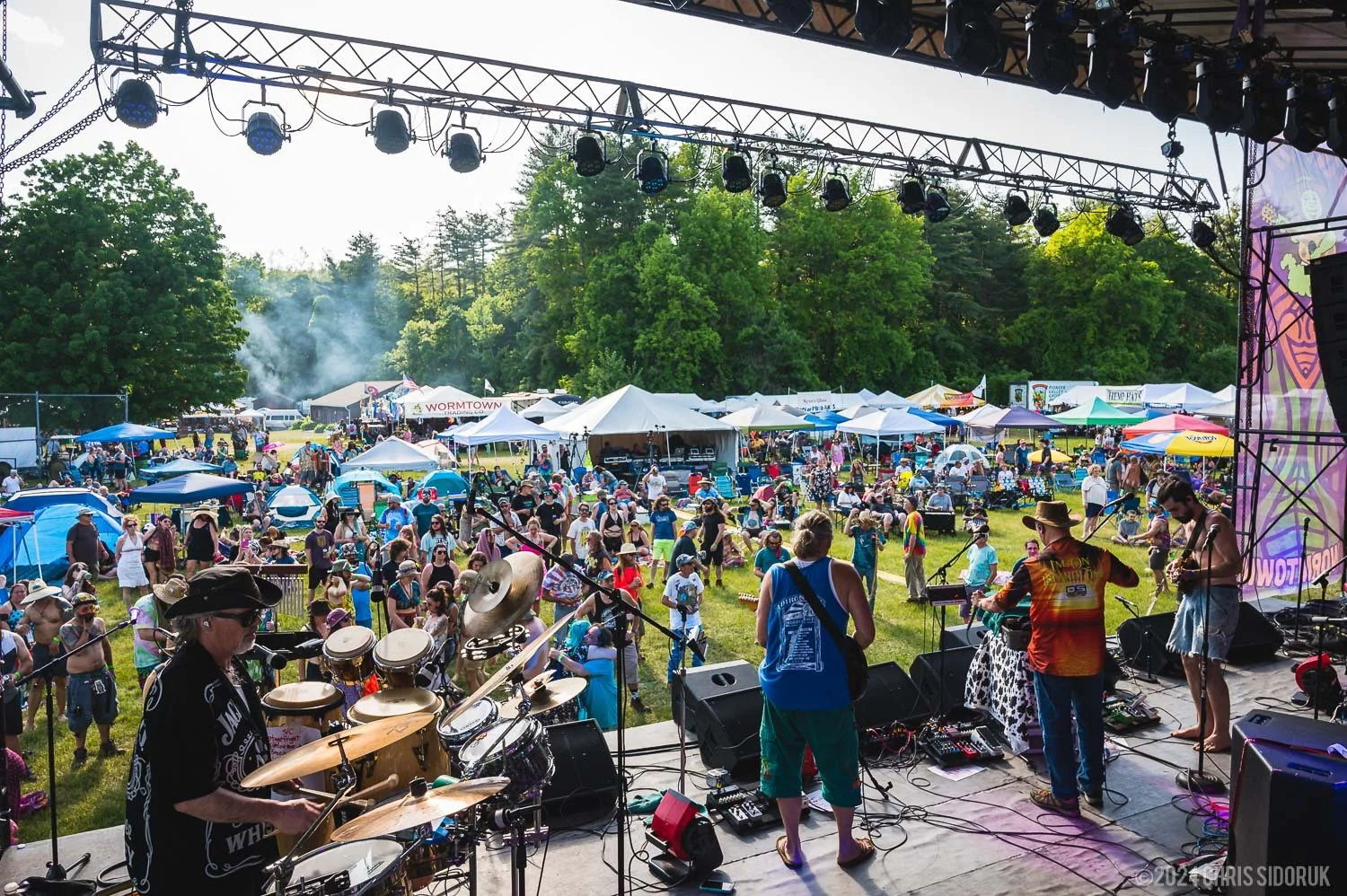
Creamery Station at Strange Creek Music Festival. Shot with the Nikon Z6. Photo- ©2024, Chris Sidoruk
Best Overall Nikon Camera for Concert Photography
Nikon Z6 III
The Nikon Z6 III is my top recommendation for most concert photographers. Its 24.5MP full-frame sensor, advanced autofocus, fast burst shooting, and strong high-ISO performance make it a versatile choice for live music.
It also offers a significant performance upgrade over the Z6 II, including a partially stacked sensor, newer processing, and improved subject detection. Those improvements are useful when photographing performers under rapidly changing stage lights.
The Z6 III is also a capable hybrid camera for photographers who shoot video alongside stills, although its video features may be less important if you primarily photograph concerts.
Why it works for concerts
24.5MP full-frame sensor
Advanced subject detection and tracking autofocus
Up to 20 fps RAW shooting in supported electronic-shutter modes
Strong high-ISO performance for dim venues
Dual card slots
6K internal RAW video recording for hybrid shooters
Best for: Concert photographers who want a well-rounded camera for clubs, theaters, festivals, and events.
Consider another camera if: You need 45.7MP resolution for extensive cropping, or you specifically want the integrated vertical grip and professional body design of the Z9.
Best Professional Nikon Camera for Concert Photography
Nikon Z9
The Nikon Z9 is Nikon’s flagship mirrorless camera and an excellent option for photographers who work regularly on demanding assignments. Its 45.7MP full-frame sensor combines high resolution with advanced autofocus and professional handling.
The integrated vertical grip provides additional controls and space for a larger battery. That design can be useful for long shooting days, especially when photographing festivals, touring artists, or multiple events in succession.
The Z9 is not automatically the best choice for every concert photographer. It is large, heavy, and expensive compared with the Z6 III. Many photographers will get better value from the smaller body and lower-resolution files of the Z6 III.
Why it stands out
45.7MP full-frame sensor
Advanced subject detection autofocus
High-speed continuous shooting
Integrated vertical grip and professional controls
Large battery for extended shooting sessions
High-resolution files with considerable cropping flexibility
Best for: Professional concert photographers, touring work, large festivals, and assignments where reliability and resolution are important.
Consider another camera if: You want a smaller kit, prefer smaller RAW files, or do not need flagship-level features.
Best Nikon Camera for Resolution and Cropping
Nikon Z8
The Nikon Z8 offers many of the Z9’s core imaging capabilities in a smaller body without an integrated vertical grip. Its 45.7MP full-frame sensor is particularly useful for photographers who frequently crop their images or need detailed files for publications, large prints, and commercial work.
For concert photography, extra resolution can be helpful when shooting from the back of a venue or working under restrictions that prevent you from moving closer to the stage. It also gives you more flexibility when composing a final image from a wider frame.
The tradeoff is file size. The Z8 produces larger files than the Z6 III, which can mean more storage use and longer import, editing, and backup times.
Why it stands out
45.7MP full-frame sensor
Advanced autofocus and subject tracking
High-speed burst shooting
Detailed files with room for cropping
Smaller body than the Z9
Useful for photographers who also shoot landscapes, portraits, sports, or commercial work
Best for: Photographers who need high resolution, crop flexibility, and professional performance without the Z9’s integrated-grip design.
Consider another camera if: Your priority is value, smaller RAW files, or the best balance of performance and price for general concert work.
Best Budget Full-Frame Nikon Camera for Concert Photography
Nikon Z5 II
The Nikon Z5 II is an important option for photographers who want a modern full-frame camera without paying Z6 III prices. Its 24.5MP sensor and EXPEED 7 processor provide a strong foundation for concert photography, while subject detection autofocus and 3D tracking help it handle moving performers.
It also supports in-camera N-RAW video recording, making it more capable as a hybrid camera than some older entry-level full-frame bodies. However, the Z5 II is not simply a less expensive Z6 III. Its shooting speed and video capabilities differ, so photographers who regularly capture fast-moving performers should compare the two carefully.
For smaller venues and occasional shows, the Z5 II can be a sensible way to enter Nikon’s full-frame Z system while leaving more room in the budget for lenses.
Why it works for concerts
24.5MP full-frame sensor
EXPEED 7 processing
Subject detection autofocus and 3D tracking
In-body image stabilization
Strong high-sensitivity capabilities
More accessible price tier than the Z6 III
Best for: Budget-conscious photographers who want a current full-frame Nikon for concerts, events, portraits, and general photography.
Consider another camera if: You frequently photograph very fast action and need the higher burst performance and more advanced video options of the Z6 III.
Best Used Nikon Camera for Concert Photography
Nikon Z6 II
The Nikon Z6 II remains worth considering if you find a good used or discounted example. Its 24.5MP full-frame sensor can deliver excellent concert photographs, and it has enough resolution for most web, editorial, and many print uses.
Compared with the Z6 III, the Z6 II has an older autofocus and processing system, slower burst performance, and fewer advanced video options. Those differences matter most when you are trying to track unpredictable movement or work in demanding conditions.
For photographers who primarily need good full-frame image quality and are comfortable working with an older autofocus system, the Z6 II can still be a worthwhile purchase.
Why it works
24.5MP full-frame sensor
Good high-ISO image quality
In-body image stabilization
Dual card slots
Access to Nikon’s Z-mount lenses
Potential savings on the used market
Best for: Budget-conscious buyers, photographers upgrading from an older DSLR, and those who find a competitively priced used body.
Consider another camera if: Autofocus tracking, speed, and newer features are major priorities. Compare used Z6 II prices with the newer Z5 II before buying.
Best APS-C Nikon Camera for Concert Photography
Nikon Z50 II
The Nikon Z50 II is my preferred APS-C option in Nikon’s current lineup for photographers who want a smaller and more affordable camera. Its 20.9MP DX-format sensor, EXPEED 7 processor, and subject detection autofocus make it a capable choice for smaller shows, rehearsals, and less demanding concert environments.
The DX crop factor can help frame distant performers more tightly with the same lens, which may be useful when you are shooting from the back of a small venue. However, cropping does not create additional optical detail, and APS-C sensors generally have less low-light flexibility than comparable modern full-frame systems.
A fast lens is especially important if you plan to shoot concerts with the Z50 II. A compact body paired with a bright prime can make a practical kit for smaller venues.
Why it works
20.9MP APS-C sensor
Subject detection autofocus for multiple subject types
Fast continuous shooting, with frame rate depending on file format and settings
Compact, lightweight body
Access to Nikon Z-mount lenses
More affordable entry into interchangeable-lens photography than Nikon’s full-frame bodies
Best for: Beginners, photographers on a tighter budget, and those who prioritize portability or shoot in smaller venues.
Consider another camera if: You regularly photograph very dark venues, need maximum dynamic range, or want the greater high-ISO flexibility of a full-frame body.
Nikon Z6 III vs. Z8 vs. Z9 for Concert Photography
The Z6 III, Z8, and Z9 are all capable of professional concert photography. The best choice depends on whether you value low-light versatility, resolution, body design, or the demands of your assignments.
| Feature | Nikon Z6 III | Nikon Z8 | Nikon Z9 |
|---|---|---|---|
| Best For | Most concert photographers | Resolution and cropping flexibility | Professional tours and demanding assignments |
| Sensor | 24.5MP full-frame partially stacked CMOS | 45.7MP full-frame stacked CMOS | 45.7MP full-frame stacked CMOS |
| RAW Burst Shooting | Up to 20 fps in supported modes | Up to 20 fps in supported modes | Up to 20 fps in supported modes |
| Autofocus | Advanced subject detection and tracking | Advanced subject detection and tracking | Advanced subject detection and tracking |
| Low-Light Performance | Excellent balance of high-ISO quality and resolution | Strong performance, with higher-resolution files | Strong performance, with higher-resolution files |
| Body Design | Compact full-frame body | Smaller body without an integrated vertical grip | Larger body with integrated vertical grip |
| Main Advantage | Balance of price, speed, and low-light versatility | 45.7MP resolution in a relatively compact body | Professional handling and extended battery capacity |
| Main Tradeoff | Lower resolution than the Z8 and Z9 | Larger files and higher cost than the Z6 III | Greater size, weight, and cost |
Nikon Z6 III
Best for: Most concert photographers
Sensor: 24.5MP full-frame partially stacked CMOS
RAW burst shooting: Up to 20 fps in supported modes
Autofocus: Advanced subject detection and tracking
Low-light performance: Excellent balance of high-ISO quality and resolution
Body design: Compact full-frame body
Main advantage: Balance of price, speed, and low-light versatility
Main tradeoff: Lower resolution than the Z8 and Z9
Nikon Z8
Best for: Resolution and cropping flexibility
Sensor: 45.7MP full-frame stacked CMOS
RAW burst shooting: Up to 20 fps in supported modes
Autofocus: Advanced subject detection and tracking
Low-light performance: Strong performance, with higher-resolution files
Body design: Smaller body without an integrated vertical grip
Main advantage: 45.7MP resolution in a relatively compact body
Main tradeoff: Larger files and higher cost than the Z6 III
Nikon Z9
Best for: Professional tours and demanding assignments
Sensor: 45.7MP full-frame stacked CMOS
RAW burst shooting: Up to 20 fps in supported modes
Autofocus: Advanced subject detection and tracking
Low-light performance: Strong performance, with higher-resolution files
Body design: Larger body with integrated vertical grip
Main advantage: Professional handling and extended battery capacity
Main tradeoff: Greater size, weight, and cost
Nikon Z6 III: Best Balance for Most Photographers
The Z6 III is the strongest all-around choice for many live music photographers. Its 24.5MP files are detailed enough for most editorial and online uses, while its autofocus and shooting speed are well suited to moving performers.
Choose the Z6 III if you:
Photograph concerts regularly but do not need 45.7MP files
Prioritize autofocus and low-light versatility
Want a good balance of price, performance, and portability
Prefer manageable RAW file sizes
Also shoot events or video
Nikon Z8: Best for High Resolution
The Z8 is a better fit if cropping flexibility and fine detail are important to your work. Its 45.7MP sensor is useful when you cannot get close to the stage or when clients need larger files.
Choose the Z8 if you:
Frequently crop concert images
Photograph large stages and festivals
Need high-resolution files for publication or prints
Want professional performance in a body smaller than the Z9
Also shoot landscapes, portraits, sports, or commercial photography
Nikon Z9: Best for Demanding Professional Work
The Z9 is designed for photographers who value a larger professional body, integrated vertical grip, and extended battery capacity. It offers the same 45.7MP resolution as the Z8, along with flagship handling and performance.
Choose the Z9 if you:
Regularly cover major tours, festivals, or long assignments
Prefer an integrated vertical grip
Value battery capacity and professional controls
Need high-resolution files and flagship performance
Can justify the additional size and cost
For most photographers, the Z6 III is the more practical purchase. The Z8 and Z9 make sense when their specific advantages are important to your work.
Best Nikon Lenses for Concert Photography
A camera body can only do so much in difficult lighting. For concert photography, a fast lens can make a bigger difference than upgrading to a more expensive camera because it allows more light to reach the sensor.
Best Nikon Prime Lens: NIKKOR Z 50mm f/1.8 S
The NIKKOR Z 50mm f/1.8 S is a strong prime lens for concert photography. Its bright maximum aperture helps in dark venues, and the focal length works well for individual performers, portraits, and tighter compositions.
It is not as flexible as a zoom when you cannot move around, but it can be a useful option for photographers building a kit on a reasonable budget.
Best Professional Zoom: NIKKOR Z 24-70mm f/2.8 S II
The NIKKOR Z 24-70mm f/2.8 S II is a versatile workhorse for concerts, festivals, and events. Its constant f/2.8 aperture is useful in low light, while the zoom range lets you move between wider stage scenes and tighter performer portraits without changing lenses.
The main tradeoff is cost and weight. If you are building your first concert kit, consider whether a fast prime or a less expensive zoom would offer better value.
Best Budget Prime: NIKKOR Z 40mm f/2
The NIKKOR Z 40mm f/2 is a compact and relatively affordable prime lens. Its bright aperture is helpful for small venues, and its lightweight design pairs well with the Z5 II or Z50 II.
The 40mm focal length is not ideal for every stage or shooting position, but it can be an excellent everyday lens for smaller shows.
Third-Party Lenses
Third-party lens options for Nikon Z mount have expanded, offering alternatives for photographers who want to control costs. Availability, autofocus support, and compatibility vary by lens, so confirm the exact model and mount before buying.
For a closer look at focal lengths and lens options, see my guide to the Best Lenses for Concert Photography.
Which Nikon Camera Should You Buy for Concert Photography?
he right camera depends on your budget, the venues you photograph, and how often you shoot live music.
Choose the Nikon Z6 III if:
You want the best balance of performance and price
You photograph concerts, festivals, weddings, and events
You need reliable autofocus and strong low-light performance
You want a camera that can grow with your photography
Choose the Nikon Z9 if:
You cover major tours, festivals, or professional assignments
You want an integrated vertical grip and professional body
You value battery capacity and high-resolution files
Budget, size, and weight are less important
Choose the Nikon Z8 if:
You want 45.7MP resolution
You regularly crop images or need detailed files
You want flagship-style performance in a smaller body than the Z9
Choose the Nikon Z5 II if:
You want an affordable current full-frame Nikon
You photograph smaller shows and events
You want modern autofocus without paying for the Z6 III
You would rather leave more money for lenses
Choose the Nikon Z6 II if:
You find a good used or discounted deal
You want full-frame image quality at a lower cost
You are comfortable with an older autofocus system
Choose the Nikon Z50 II if:
You want a compact APS-C camera
You mainly photograph smaller venues
You are starting out with interchangeable-lens photography
Portability and budget matter more than maximum low-light performance
For most concert photographers who can afford it, I would start with the Z6 III. If your budget is tighter, compare the Z5 II and used Z6 II, and consider investing the savings in a fast lens.
Who Should Consider Another Camera System?
Nikon is not automatically the best choice for every photographer. Sony, Canon, and other manufacturers also make cameras capable of excellent concert photography.
If you are comparing systems, consider the lenses you want, the autofocus features you rely on, the ergonomics you prefer, and the cost of building a complete kit. Switching brands can become expensive if you already own several lenses.
The best system is the one that meets your needs and lets you work confidently. You do not need the most expensive camera to produce professional-quality images.
For a broader comparison, see my complete guide to the Best Cameras for Concert Photography.
Final Thoughts
Nikon offers strong options for concert photography in 2026, from the professional Z9 and high-resolution Z8 to the versatile Z6 III and more affordable Z5 II. The Z50 II is also worth considering if you want a compact APS-C camera for smaller venues.
For most photographers, the Nikon Z6 III offers the best balance of autofocus, low-light performance, speed, and overall capability. If you are shopping on a tighter budget, the Z5 II or a well-priced used Z6 II may be a better starting point.
Whichever camera you choose, pair it with a suitable fast lens and learn how it handles the lighting conditions you encounter most often. Those decisions will have a major impact on the images you bring home.
Frequently Asked Questions
Is the Nikon Z6 III worth upgrading to from the Z6 II?
For many concert photographers, yes. The Z6 III has a newer partially stacked sensor, improved subject detection and tracking, faster burst shooting, and more advanced video features. If you frequently photograph moving performers or work in demanding conditions, those improvements may be worthwhile. If your Z6 II already meets your needs, upgrading may be less urgent than investing in a faster lens.
Which Nikon camera offers the best value for concert photography?
The Nikon Z6 III is the best all-around value for photographers who shoot concerts regularly and want modern autofocus, strong low-light performance, and fast shooting. The Nikon Z5 II is worth considering if you want a more affordable full-frame camera, while the used Z6 II can offer good value at the right price.
Do professional concert photographers use Nikon?
Yes. Nikon's Z8 and Z9 are capable professional cameras, and models such as the Z6 III are also suitable for demanding concert and event work. The right choice depends on the photographer's assignments, budget, and preferred workflow.
Are Nikon cameras good for concert photography?
Yes. Nikon cameras offer strong image quality, capable autofocus, and a broad selection of lenses suitable for live music. Full-frame models are especially useful in very dark venues, although a fast lens and appropriate exposure settings remain important.
Which Nikon camera is best for low-light concert photography?
The Nikon Z6 III is an excellent all-around choice for low-light concert photography because it combines a 24.5MP full-frame sensor with modern autofocus and fast shooting. The Z8 and Z9 also perform well, particularly when high resolution is important. The Z5 II is a strong alternative for photographers seeking a more affordable full-frame body.
Is the Nikon Z8 good for concert photography?
Yes. The Nikon Z8 combines a 45.7MP full-frame sensor with advanced autofocus and fast continuous shooting. It is particularly useful for photographers who need to crop images heavily or deliver high-resolution files.
Is APS-C good enough for Nikon concert photography?
Yes. Cameras such as the Nikon Z50 II can work well in smaller venues and when portability matters. The DX crop factor can help frame distant performers, but APS-C generally provides less flexibility than full-frame in very low light. Pairing the camera with a fast lens is especially important.
Which Nikon lenses work best for concert photography?
Fast primes and constant-aperture f/2.8 zooms are useful choices. The NIKKOR Z 50mm f/1.8 S is a strong prime, the NIKKOR Z 40mm f/2 is a compact budget option, and the NIKKOR Z 24-70mm f/2.8 S is a versatile professional zoom. The best choice depends on venue size, shooting position, and budget.
Is Nikon better than Sony for concert photography?
Neither brand is universally better. Both offer capable autofocus, strong image quality, and lenses suited to live music. Compare the specific camera bodies, lens options, ergonomics, and prices rather than choosing based on brand alone.
==========
All images © Chris Sidoruk. No use, copying, or redistribution without license.
Explore more: