

Behind-the-Scenes Concert Photography (Capturing Real Live Music Moments)
behind the scenes concert photography backstage
Last Updated: July 2026
Quick Jump
- What Is Behind-the-Scenes Concert Photography?
- Quick Tips for Better BTS Photos
- Recommended Camera Settings
- Best Lenses for Behind-the-Scenes Photography
- Working With Available Light
- Reading the Room & Anticipating Moments
- What to Photograph Backstage
- Building Trust With Artists
- Editing Behind-the-Scenes Photos
- Common Mistakes
- Final Thoughts
- Frequently Asked Questions
Behind-the-scenes concert photography tells a very different story than what happens under the stage lights.
While live performance photography focuses on action, lighting, and dramatic moments in front of an audience, BTS photography captures everything that happens around the performance—the preparation, anticipation, travel, conversations, and quiet moments most fans never get to see.
These images often become some of the most meaningful photographs from a tour because they show the personalities behind the performers rather than the performance itself.
Over the years, I've found that some of my favorite concert images weren't made during the biggest songs of the night. They happened while musicians tuned guitars backstage, repaired gear in hotel rooms, laughed with crew members, or simply sat quietly moments before walking on stage.
Those moments can't be recreated.
They have to be recognized.
This guide covers how to photograph behind-the-scenes moments naturally, choose the right camera settings and lenses, work in difficult lighting, build trust with artists, and create documentary-style images that tell the complete story of a concert experience.
What Is Behind-the-Scenes Concert Photography?
Behind-the-scenes (BTS) concert photography documents everything surrounding a live performance rather than the performance itself.
Instead of photographing musicians under stage lights, you're capturing the story that unfolds before, between, and after the show.
That might include:
Artists arriving at the venue
Soundcheck
Instrument preparation
Crew members setting up equipment
Conversations backstage
Quiet moments before taking the stage
Travel between venues
Post-show interactions
Fans meeting artists
Loading equipment after the concert
Unlike traditional concert photography, these moments usually aren't planned. They're spontaneous, genuine, and often emotionally meaningful.
Good BTS photography is closer to documentary photography than event coverage.
Your goal isn't to direct people.
It's to observe, anticipate, and quietly document real life as it happens.
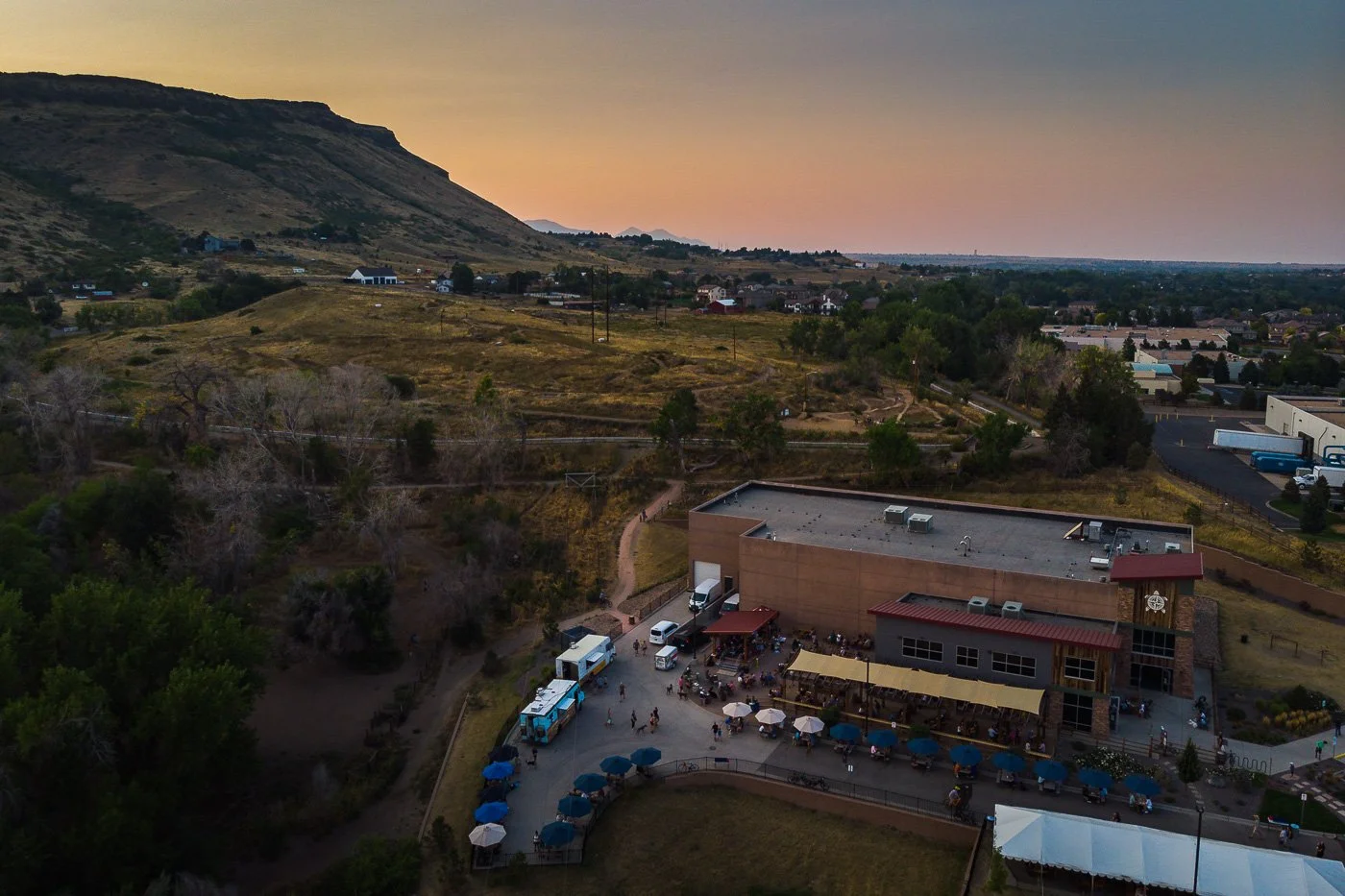
Aerial photo of the brewery & music venue, New Terrain Brewing, in Golden, Colorado.
Quick Tips for Better BTS Photos
If you're just getting started, these simple principles will improve your success immediately.
Quick Tips
✓ Stay as unobtrusive as possible.
✓ Keep your camera ready at all times.
✓ Use available light whenever you can.
✓ Shoot RAW for maximum editing flexibility.
✓ Watch interactions instead of waiting for posed moments.
✓ Anticipate emotion rather than reacting to it.
✓ Photograph the small details that tell the story.
✓ Respect personal space and private moments.
✓ Capture both wide environmental images and tighter candid portraits.
✓ Remember that authenticity is more important than technical perfection.
Many of the strongest BTS photographs aren't perfectly composed—they're simply honest moments captured at exactly the right time.
Recommended Camera Settings
Backstage environments often have unpredictable lighting. One room may be brightly lit with mirrors and dressing room lights, while another is illuminated only by a few overhead fixtures or stage spill.
Rather than chasing perfect exposure, prioritize preserving the mood of the environment.
These starting points work well in many situations.
| Situation | Aperture | Shutter Speed | ISO |
|---|---|---|---|
| Dressing room | f/1.8–2.8 | 1/160 sec | 800–3200 |
| Backstage hallway | f/2–2.8 | 1/200 sec | 1600–6400 |
| Soundcheck | f/2.8 | 1/250 sec | 400–3200 |
| Green room | f/1.8 | 1/160 sec | 1600–6400 |
| Tour bus | f/1.8–2 | 1/125 sec | 1600–6400 |
Dressing room
Aperture: f/1.8–2.8
Shutter Speed: 1/160 sec
ISO: 800–3200
Backstage hallway
Aperture: f/2–2.8
Shutter Speed: 1/200 sec
ISO: 1600–6400
Soundcheck
Aperture: f/2.8
Shutter Speed: 1/250 sec
ISO: 400–3200
Green room
Aperture: f/1.8
Shutter Speed: 1/160 sec
ISO: 1600–6400
Tour bus
Aperture: f/1.8–2
Shutter Speed: 1/125 sec
ISO: 1600–6400
Additional camera settings
File Format
Shoot RAW whenever possible. It provides significantly more flexibility when correcting white balance and recovering shadows from mixed lighting.
Focus Mode
Continuous autofocus with Eye AF works extremely well for moving subjects and changing environments.
Drive Mode
Use continuous shooting sparingly. Small bursts often help capture subtle facial expressions without creating hundreds of unnecessary files.
Silent Shutter
Electronic shutter is incredibly valuable backstage because it allows you to photograph naturally without distracting artists or interrupting conversations.
If your camera suffers from rolling shutter under certain lighting conditions, test it beforehand and switch back to the mechanical shutter if necessary.
For a deeper breakdown of exposure settings, see my guide:
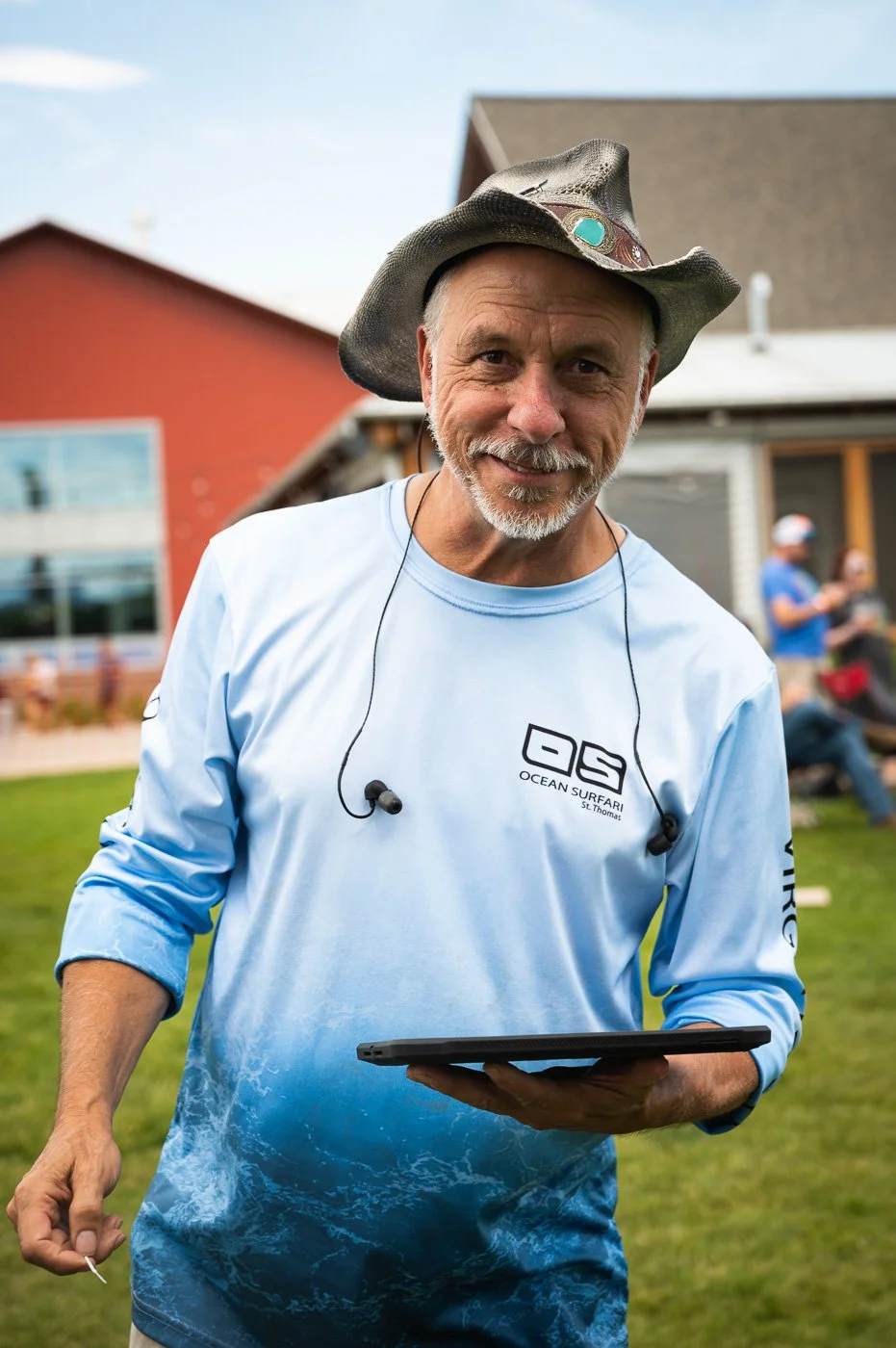
BTS photo of the Harmonica player for Creamery Station.
Best Lenses for Behind-the-Scenes Photography
Lens selection shapes the feel of your BTS photographs more than almost anything else.
Fast prime lenses are often the best choice because they perform well in low light while keeping your kit lightweight and unobtrusive.
24mm
Perfect for environmental storytelling.
Ideal for:
Dressing rooms
Stage preparation
Crew setup
Tour buses
Loading docks
It allows viewers to feel like they're inside the scene.
35mm
For many photographers, this is the best all-around BTS focal length.
It provides:
Natural perspective
Excellent storytelling
Environmental portraits
Minimal distortion
If you could only carry one lens backstage, a fast 35mm would be difficult to beat.
50mm
The classic documentary lens.
Excellent for:
Conversations
Individual portraits
Quiet moments
Detail shots
Its perspective feels natural while providing enough subject separation to draw attention where it matters.
85mm
An excellent choice when you need a little more working distance.
Perfect for:
Candid portraits
Emotional moments
Isolating subjects
Photographing without interrupting conversations
70-200mm
Although larger and heavier, a telephoto zoom allows you to capture genuine moments from farther away.
This can be useful when documenting:
Soundcheck
Crew activity
Artist interactions
Rehearsals
without becoming part of the scene yourself.
For a complete lens guide, see:
Working With Available Light
One of the defining characteristics of behind-the-scenes photography is its use of available light.
Backstage spaces often have lighting that naturally tells part of the story.
Examples include:
Dressing room mirrors
Window light
Stage spill
Hallway lighting
Practical lamps
LED accent lighting
Loading dock security lights
Open doorways
Sunset light outside the venue
Rather than trying to eliminate these lighting conditions, embrace them.
A little noise, deep shadows, or dramatic contrast often adds authenticity and atmosphere.
Flash, on the other hand, can completely change the mood of a scene.
It can distract artists, interrupt conversations, and make documentary moments feel staged.
Whenever possible:
Raise your ISO.
Open your aperture.
Stabilize your camera.
Let the existing light define the atmosphere.
Your goal isn't perfect lighting.
Your goal is preserving the feeling of the moment.
Reading the Room & Anticipating Moments
The biggest difference between an average behind-the-scenes photographer and a great one isn't camera gear—it's awareness.
Backstage environments move quickly, but the best moments often happen during the quietest parts of the day.
Instead of constantly searching for "something to photograph," spend time observing the room.
Pay attention to:
Conversations beginning naturally
Musicians warming up
Crew members solving problems
Artists sitting alone before the show
Family interactions
Moments of excitement or nervousness
Small celebrations after a successful performance
These moments usually last only a few seconds.
If you're already watching the room instead of looking at your camera, you'll recognize them before they happen.
One habit I've developed over the years is watching people's body language. Someone reaching for an instrument, sharing a laugh, or preparing to walk toward the stage often signals that something meaningful is about to happen.
The more familiar you become with a band's routine, the easier it becomes to anticipate these moments rather than simply reacting to them.
Building Trust With Artists
Great BTS photography depends on trust.
Without it, people become self-conscious, conversations stop naturally, and authentic moments disappear.
Trust isn't built by asking people to pose.
It's built by consistently showing that you respect the environment you're working in.
Some simple habits make a tremendous difference:
Introduce yourself before photographing.
Learn names whenever possible.
Avoid interrupting conversations.
Respect private moments.
Don't overshoot every interaction.
Share photos after the event when appropriate.
Stay professional, even when you're familiar with the artists.
The less attention you draw to yourself, the more natural everyone's behavior becomes.
Over time, musicians stop noticing your camera altogether.
That's when genuine storytelling begins.
Remember that backstage access is a privilege, not an entitlement.
Every interaction contributes to your reputation within the local music community.
What to Photograph Backstage
One common mistake is focusing only on the musicians.
The complete concert experience involves much more than the people holding instruments.
Try documenting a variety of moments throughout the day.
Artist preparation
Warming up vocals
Stretching
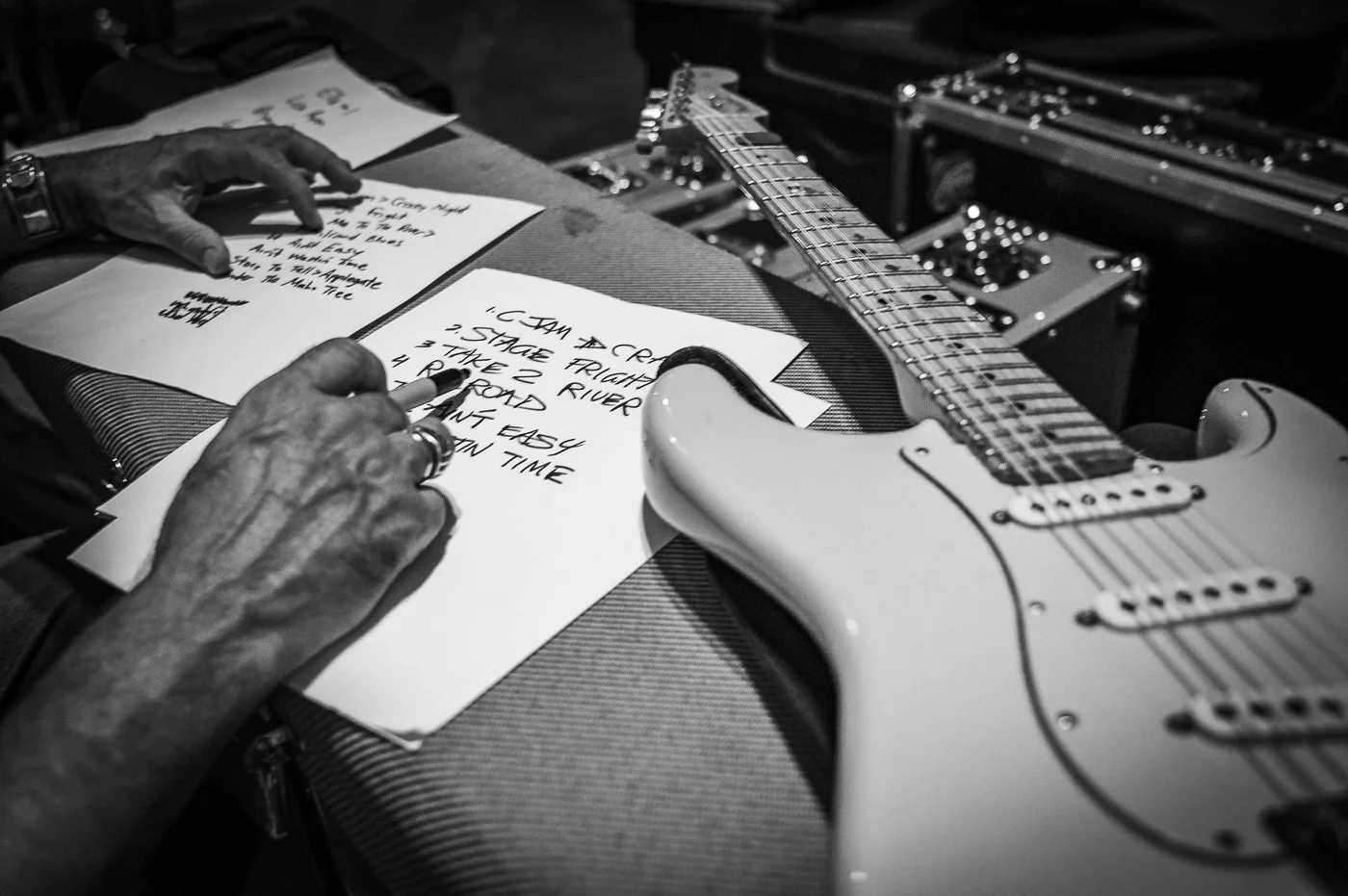
Reviewing set lists
Tuning instruments
Quiet moments alone
Last-minute rehearsals
Equipment
Guitar pedalboards
Amplifiers
Drum kits
Microphones
Set lists taped to the stage
Cases and road gear
Instrument repairs
The venue
Empty stage before doors open
Lighting rigs
Soundboard
Backstage hallways
Green rooms
Loading docks
Human moments
Conversations
Laughter
Nervous anticipation
Family visits
Meet-and-greets
Crew members working together
Post-show celebrations
Details
Often the smallest photographs become the strongest storytelling images.
Look for:
Guitar picks
Drumsticks
Wristbands
Hands tuning strings
Coffee cups on road cases
Worn boots
Tour itineraries
Handwritten notes
Set lists
These details help viewers experience the day rather than simply seeing the performance.
concert backstage detail photography gear preparation
Soundcheck Photography
Soundcheck is one of the most overlooked opportunities in concert photography.
Unlike the performance itself, artists have time to experiment, interact naturally, and move around the stage without the pressure of a live audience.
Advantages of photographing soundcheck include:
Cleaner backgrounds
Better access to the stage
More freedom to move
Relaxed expressions
Opportunity to test camera settings
Less obstructed views
It's also a perfect time to photograph interactions between musicians and the production crew.
Lighting directors, audio engineers, and stage technicians all contribute to the final show, and documenting that collaboration helps tell a more complete story.
Don't just photograph the singer.
Photograph the process that makes the performance possible.
Tour Bus & Travel Photography
Life on the road is a major part of being a touring musician.
Photographs made between venues often become some of the most memorable images in an artist's collection because they're so rarely documented.
Subjects worth looking for include:
Loading trailers
Hotel rooms
Early morning departures
Long drives
Gas station stops
Meals together
Roadside attractions
Practice sessions
Instrument maintenance
Downtime before shows
These scenes provide context that audiences rarely get to experience.
Some of my favorite photographs have been made in hotel rooms where musicians were repairing harmonicas, restringing guitars, or simply relaxing after a long drive.
Those moments reveal the reality behind touring life.
Gear Details & Instruments
Not every photograph needs a person in it.
Equipment often tells its own story.
Close-up detail images help break up galleries while adding visual variety.
Subjects to look for include:
Worn guitar finishes
Fingerprints on drum heads
Vintage microphones
Amplifier controls
Mixing consoles
Lighting fixtures
Instrument cases
Set lists
Guitar pedals
Broken strings
Drumsticks
Sheet music
These images work particularly well as supporting photographs in editorial galleries, tour recaps, and social media posts.
They're also excellent transition images between larger storytelling moments.
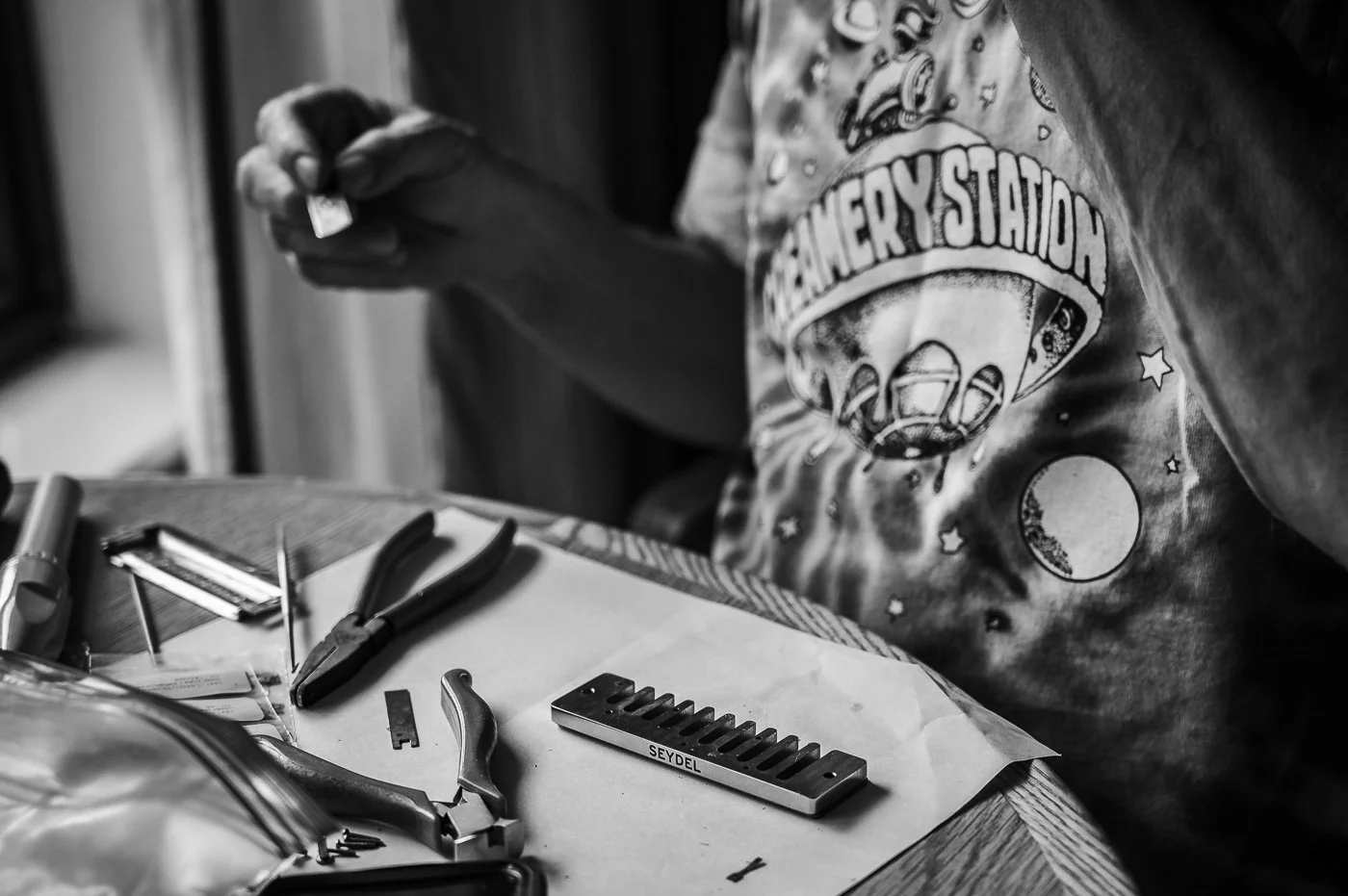
Harmonica Repair on the road in a hotel room during a cross country tour.
Crew Members & Candid Moments
Behind every successful performance is a crew that makes it happen.
Don't overlook the people working behind the scenes.
Consider photographing:
Lighting technicians programming cues
Audio engineers mixing monitors
Guitar technicians preparing instruments
Stage managers coordinating schedules
Merchandise staff
Security personnel
Venue employees
Volunteers
These photographs often become valuable to the artists because they document everyone involved in the production—not just the performers.
The strongest documentary galleries acknowledge that live music is a team effort.
Telling a Complete Story Through BTS Photography
ather than thinking about individual images, think about building a visual narrative.
If someone viewed your gallery without attending the concert, could they understand how the day unfolded?
A complete behind-the-scenes story might include:
Arrival
Venue exterior
Equipment unloading
Crew setup
Preparation
Soundcheck
Instrument tuning
Dressing rooms
Quiet conversations
Anticipation
Waiting backstage
Last-minute rehearsals
Artists preparing mentally
Performance
Entering the stage
Crowd reactions
Key performance moments
After the show
Packing equipment
Meeting fans
Crew teardown
Celebrating together
Traveling to the next destination
When viewed together, these photographs become more than isolated images.
They become a documentary of an experience.
That's ultimately what separates strong behind-the-scenes photography from simply taking pictures backstage.
Editing Behind-the-Scenes Concert Photos
Behind-the-scenes editing should support the story—not overpower it.
Unlike stage photography, where dramatic lighting and bold colors often define the image, BTS photography usually benefits from a more restrained approach. The goal is to preserve the atmosphere that existed rather than create something that feels overly processed.
I typically approach BTS edits with the same mindset as documentary photography: clean, consistent, and believable.
Basic editing workflow
Import and back up your images immediately.
Cull obvious duplicates and out-of-focus frames.
Correct exposure while preserving highlights.
Adjust white balance to maintain a natural look.
Recover shadow detail where needed.
Apply moderate contrast and clarity.
Crop only when it strengthens the composition.
Apply sharpening and noise reduction selectively.
Export consistently for web, social media, or client delivery.
White balance matters
Backstage lighting is rarely consistent.
You may encounter:
Tungsten dressing room lights
Fluorescent hallways
LED stage spill
Window light
Mixed lighting within the same room
Rather than forcing every image to the exact same color temperature, allow some of the ambient warmth or coolness to remain. Those color shifts often contribute to the mood of the scene.
Noise isn't always the enemy
Many backstage photographs are made at ISO 3200, 6400, or even higher.
Don't obsess over eliminating every bit of grain.
A small amount of noise often feels more authentic than aggressive noise reduction that removes texture and detail.
For a deeper editing workflow, see:
Color vs Black & White
Both approaches can work well, but they tell different stories.
Use color when:
Stage lighting adds atmosphere
Color contributes to the mood
Clothing, instruments, or venue lighting are important elements
You're documenting the event as it happened
Consider black and white when:
The scene contains distracting mixed lighting
Emotion is more important than color
You want viewers to focus on expressions
High ISO noise becomes distracting
Strong light and shadow define the composition
Black-and-white conversions work particularly well for intimate portraits, backstage conversations, and emotional moments before or after a performance.
Rather than converting images simply because the color is difficult, ask yourself whether removing color actually strengthens the story.
Delivering BTS Galleries to Bands
A thoughtfully organized gallery is often just as valuable as the photographs themselves.
Instead of uploading hundreds of images in random order, organize the gallery as a visual timeline of the day.
A simple structure might look like this:
Arrival
Venue exterior
Equipment unloading
Crew setup
Soundcheck
Instrument preparation
Lighting tests
Stage rehearsal
Backstage
Candid interactions
Dressing room moments
Portraits
Detail photographs
Performance
Stage images
Crowd reactions
Signature moments
After the show
Packing equipment
Meet-and-greets
Crew teardown
Travel
This approach allows artists to relive the entire experience rather than simply scrolling through individual photographs.
For delivery, provide appropriately sized files for:
Social media
Website use
Press kits
High-resolution archival downloads
Clear file naming and organization also make images much easier to find months or years later.
Common Mistakes to Avoid
Many photographers make the same mistakes when first shooting behind the scenes.
Trying to direct every moment
BTS photography is about observation.
The more you stage interactions, the less authentic the photographs become.
Using flash unnecessarily
Flash often changes the mood of a room and immediately makes people aware of your presence.
Whenever possible, work with available light.
Photographing only the musicians
Crew members, equipment, venues, and travel all contribute to the story.
A complete gallery should document the entire production.
Ignoring the environment
Look beyond faces.
Interesting compositions often include:
Doorways
Reflections
Equipment
Leading lines
Layered foregrounds
Overshooting
Holding the shutter down constantly rarely produces better storytelling.
Slow down.
Observe.
Wait for genuine moments.
Forgetting detail photographs
Close-up images of instruments, handwritten set lists, or backstage equipment often become excellent storytelling transitions within a gallery.
Ethical Considerations & Backstage Etiquette
Backstage access comes with responsibility.
Just because you have permission to be there doesn't mean every moment should be photographed or published.
Respect always comes first.
Some basic guidelines include:
Respect private conversations.
Avoid photographing sensitive situations.
Ask before entering dressing rooms.
Don't interrupt artists preparing for a performance.
Avoid blocking crew members while they're working.
Never interfere with venue operations for the sake of a photograph.
If an artist asks you not to photograph something, respect that decision immediately.
Building long-term relationships within the music community is far more valuable than capturing one photograph that damages trust.
Professionalism opens more doors than any camera ever will.
Final Thoughts
Behind-the-scenes concert photography is ultimately about storytelling.
Anyone can photograph a musician standing under stage lights.
Far fewer photographers capture everything that happens before the lights come on and after the audience goes home.
The strongest BTS images aren't always technically perfect.
They're authentic.
They document preparation, emotion, relationships, and the countless small moments that make live music possible.
If you focus on observing instead of directing, stay patient, and earn the trust of the people around you, you'll create photographs that become increasingly meaningful over time.
For me, some of the most memorable images I've made have happened far away from the stage—musicians repairing gear in hotel rooms, quiet conversations backstage, and candid interactions that lasted only a few seconds.
Those moments remind us that concerts aren't just performances.
They're experiences shared by artists, crews, venues, and audiences alike.
Frequently Asked Questions
What is behind-the-scenes (BTS) concert photography?
Behind-the-scenes concert photography documents everything surrounding a performance, including soundcheck, artist preparation, backstage interactions, travel, crew members, and post-show moments. It focuses on storytelling rather than the performance itself.
What camera settings work best for backstage photography?
A good starting point is an aperture between f/1.8 and f/2.8, shutter speeds of 1/125 to 1/250 second, and ISO between 800 and 6400, depending on available light. Shooting in RAW provides greater flexibility when editing mixed lighting conditions.
Should I use flash backstage?
In most situations, no.
Available light usually produces more natural-looking images while allowing artists to behave naturally. Flash can interrupt conversations, distract performers, and change the atmosphere of the scene.
What lenses are best for BTS concert photography?
Fast prime lenses are excellent choices.
A 35mm lens is one of the most versatile for documentary storytelling, while 50mm and 85mm lenses work well for portraits and candid moments. A 24mm captures environmental scenes, and a 70–200mm allows you to photograph quietly from a distance.
How do you photograph candid moments without interrupting people?
Remain patient, move quietly, and avoid inserting yourself into conversations.
As people become comfortable with your presence, they'll naturally stop paying attention to your camera, resulting in more authentic photographs.
Is behind-the-scenes photography better than stage photography?
Neither is better—they simply tell different parts of the story.
Stage photography captures the performance.
Behind-the-scenes photography documents everything that makes the performance possible.
Many photographers combine both to create a complete visual narrative.
Can beginners shoot behind-the-scenes concert photography?
Absolutely.
Technical knowledge helps, but success depends even more on observation, patience, respect, and anticipating moments before they happen.
==========
All photographs © Chris Sidoruk. Images are protected by copyright and may not be used, copied, modified, or redistributed without written permission.
Continue Learning Concert Photography
If you're building your concert photography skills, these guides pair well with behind-the-scenes photography:
